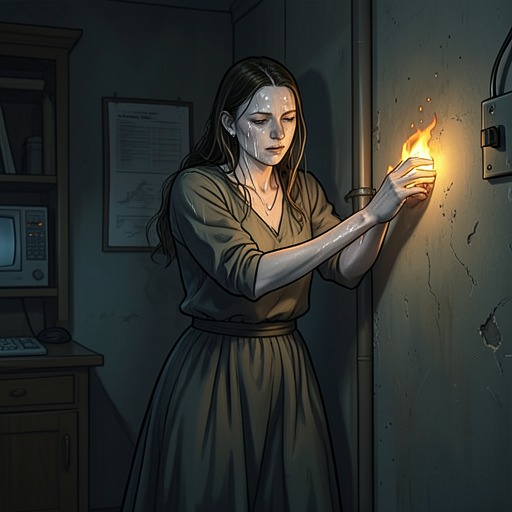
Escape from Inferno by Setting a Car Ablaze
FirebugAva’s escape from The Inferno turns Lock’s car into a deliberate spectacle: she sets it alight to pull security patrols toward one place and create confusion enough for the fugitives to get away. The plan is both practical and costly. Already exhausted and struggling to control the fires she has started, Ava spends what remains of her strength on a theatrical burst of flame, then passes out.
The Pursuit and the Need for a Distraction
Outside, Ava, Lock, and Ezra hide behind Dumpsters as guards search the parking lot. Patrols approach from different directions, with more guards visible around the edges; groups of two to four circle the lot like sharks. There are too many for the three fugitives to slip past without being seen. The danger is immediate, but so is Ava’s physical decline: the adrenaline that had sustained her is gone, the cold night air bites at her fingertips, and her wet clothes are turning icy.
The fires Ava has been trying to control are also slipping away from her. She believes they may die without her keeping them going, and holding them feels like trying to grasp handfuls of sand. The predicament makes a quiet escape increasingly unlikely. Ava reasons that the group needs to draw the patrols to one place, bring customers outside, and involve the human authorities as well. A fire in the parking lot could serve all three aims at once, transforming the guards’ search into a public commotion.
Choosing Lock’s Car
Ava asks Lock where his car is. When he suspects she intends to destroy it, she points to his insurance and says she would feel bad about burning a stranger’s car. Her justification is absurdly specific: a stranger might lack insurance or need the vehicle to transport gruel to homeless puppies. The joke gives the dangerous decision a flash of levity, but it also establishes the terms of her choice. She is willing to sacrifice a friend’s property rather than impose that risk on someone unknown.
Lock challenges the logic, and Ava reassures him that he will be fine. Neither he nor Ezra appears fully convinced. Lock remains anxious, and Ava knows he is not keen on what she is about to do. Still, he does not argue: he leans against the van beside her and gives her a hand wave to proceed, while Ezra takes up watch on the other side. Their positions make the plan a shared, if uneasy, effort. Ava supplies the fire; Lock and Ezra keep watch as the search continues.
Building the Blaze
Ava has set cars on fire before, though she does not consider herself an expert. One earlier occasion was when she had to burn a Coterie car after her mother died. This time, a mere burn will not be enough: she needs a conspicuous distraction, one that lights up the sky. The earlier fire is a grim point of comparison, while the present act is aimed at creating an opening in the guards’ search.
She divides the plan into two stages. First, she makes the car’s interior smolder and patiently raises the heat until a visible blaze takes hold. This takes work because newer cars are designed to resist fire: their upholstery is flame retardant. Ava also has to conserve energy for the larger effect still to come. Once a few people have turned toward the burning car, she expands a giant ball of flame in its gas tank.
The explosion she creates is not a natural consequence of the fuel in Lock’s car. The vehicle does not contain enough gas to produce the effect on its own, and cars do not explode as they do in movies. Ava supplies the missing force herself, making the display theatrical but convincing to observers who would not know the difference. The distinction matters: this is not simply a fire spreading beyond her control, but an intentional performance built to look like a spectacular accident.
The Cost of the Escape
Ava brings the two stages together in a towering column of flame, a display she imagines would make Prometheus blush. The image captures the scale of the finale, but the scene’s decisive consequence is bodily rather than triumphant: she passes out immediately afterward. Earlier, her energy had already been fading, and she had felt her command over the fires slipping. The climax therefore exposes the limit of what she can sustain. She can shape fire into a distraction, but the effort consumes her.
The car blaze is designed to redirect attention and draw customers and human authorities into the confusion; the passage ends before it confirms what those people do or whether the plan fully succeeds. What it does establish is the cost of making the opening. Lock gives reluctant permission, Ezra keeps watch, and Ava commits her dwindling strength to a display large enough to command the parking lot. The escape is a coordinated improvisation, but its final beat belongs to Ava’s collapse.