Florida Safehouse Attack and Lilia’s Death
FirebugThe Florida safe house attack is the childhood catastrophe that leaves Ava without her mother, Lilia, and makes survival an immediate, solitary task. When a Coterie recovery team finds them, twelve-year-old Ava’s still-developing firebug power becomes lethal under pressure; she escapes the burning cabin with Lilia, but cannot prevent her death. The episode is recalled as a nightmare, its violence framed by the ordinary refuge and lessons that precede it.
Background and the Attack
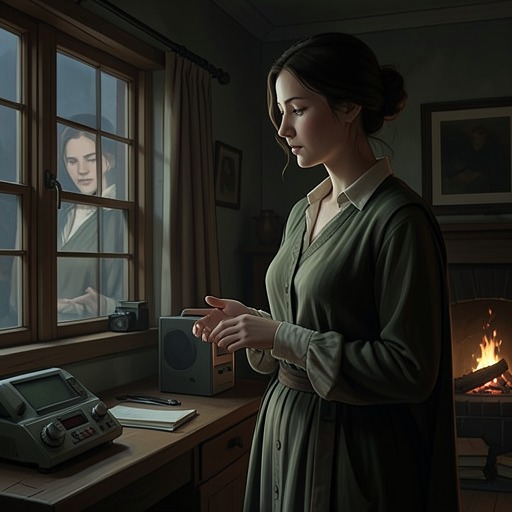
Ava, Lilia, and Benny are temporarily staying in Florida at a safe house Benny found. A firebug himself, Benny belongs to a network that helps supernatural people evade groups such as the Coterie. His scars and slight limp testify to the danger of that work, while the family’s brief stays in each hiding place reflect the fact that they cannot put down roots. Benny has been teaching Ava to control her fire: her ability has only begun to spark, and distance, restraint, and the risk of losing control remain central limitations.
One night, a knock at the front door interrupts their time together. A twig snapping by the back door reveals that the visitors have also blocked their other apparent exit. Lilia gestures for Ava to hide; used to this routine, Ava slips into a broom closet, aware that she is growing too large for such concealment. Three attackers enter—two men and a woman—and quickly overwhelm Benny, throwing him against a wall. The woman pins Lilia by the throat while one of the men breaks her fingers. Lilia refuses to give them what they want, and the attackers’ violence escalates until her head strikes the wall and blood spreads across the paint. From hiding, Ava watches, unable to know how badly her mother is hurt.
Ava Turns the Attack
The attackers’ injuries and equipment expose the danger in the room—and a weakness Ava can exploit. She recognizes the woman as a vampire and suspects the other two are were-creatures, the sort of powerful backups sent with a vampire on a Coterie recovery mission. Lilia had taught her what such teams were: their leaders were vampires chosen by Venus. The attackers are distracted by Lilia’s blood, and Ava sees the female vampire’s hunger tipping toward a frenzy. While the others focus on Lilia, Ava slips from the closet, strikes one man with a chair, and snatches the ward necklace from the other, hoping its protection is attached to it.
Ava’s fire is not yet dependable. At twelve, she has only begun to develop her ability; normally, distance and control limit what she can do. But fear and adrenaline override that uncertainty. She flicks her hands, and the man whose ward she stole bursts into flame. When he tries to beat the fire down, she feeds it instead. The second attacker is less protected than his jacket suggests: his ward is pinned to the garment, leaving his pants exposed. Ava sets them alight. He throws her against a cabinet, but the flames have already taken hold, and he burns as quickly as his companion.
The female vampire still has Lilia pinned against the wall, her head resting against chipped white paint smeared with blood. Ava sees her mother’s eyes flicker and fears she has lost consciousness. The vampire is caught between maintaining her grip on Lilia and turning to confront Ava, whose uncontrolled power has already killed her companions. She chooses the threat she can reach: keeping Lilia restrained, she pulls a long silver chain from beneath her shirt and displays the delicate ward attached to it. Then she turns away from Ava, convinced she is no longer in danger.
Ava uses the spreading fire to cover the sound of her movement. She reaches for a rusty, dull hatchet hidden between the pantry and the cupboards and drives it into the vampire’s neck. The blow does not kill her; the vampire turns with the blade lodged in her spine, still holding Lilia and grabbing Ava by the shirt. As she boasts of her strength, the chain holding her ward comes loose and drops to the floor. The hatchet has severed it. Ava takes hold of the vampire’s arms and burns her, exploiting the fatal opening created by the vampire’s confidence in her own protection.
The vampire releases both Ava and Lilia as the fire consumes her. Ava does not need to keep touching her to sustain the flames. She runs to her mother, drags her out of the cabin, then returns to check Benny. He has not moved; Ava finds no pulse, closes his eyes with the side of her hand, and says goodbye. The cabin is catching fire around them, and she gets Lilia away before it collapses. The attack has turned Ava’s developing power into a weapon, but defeating the recovery team cannot undo the damage already done to her mother.
Death, Flight, and the Necklace
Ava drives the attackers’ sedan to an emergency room, pulling into the ambulance lane and running inside for help. The doctors cannot repair the damage to Lilia: after falling into a coma, she dies. Ava absorbs the news in a numb blur of white coats, floors, and bandages, with her mother’s blood still on her hands and clothes. The escape from the cabin has saved Ava, but not the person she had gone back to rescue.
At the hospital, staff ask whether anyone can come for her. Cade is the only person Ava trusts, yet she knows that waiting would leave her exposed both to the Coterie and to Social Services. She pretends to call an aunt who does not exist, then asks to say goodbye to Lilia. The staff would rather she remember her mother as she had been, but Ava has already seen her bleeding in the car; the sight of her lying peacefully in the hospital cannot erase that memory.
Ava takes the small silver heart-and-star necklace from Lilia and puts it around her own neck. Cade had given it to Lilia when they were young, earning the money for it by mowing lawns, washing cars, and chopping firewood. To Lilia, it had been precious alongside Ava herself. It will also become the object through which Cade recognizes what has happened: he holds himself together while caring for Ava, but seeing the necklace exposes his grief.
Ava cannot leave her bloodied shirt behind. Her mother had warned her that a blood witch could track even a small amount of blood, including blood from a close relative, so leaving the shirt could lead the Coterie to her. After changing, Ava slips out of the hospital and drives away in the sedan, its keys still in her pocket. She keeps going until the car is nearly out of gas, wary that a twelve-year-old behind the wheel will attract attention; the bloodied back seat makes the journey more perilous still.
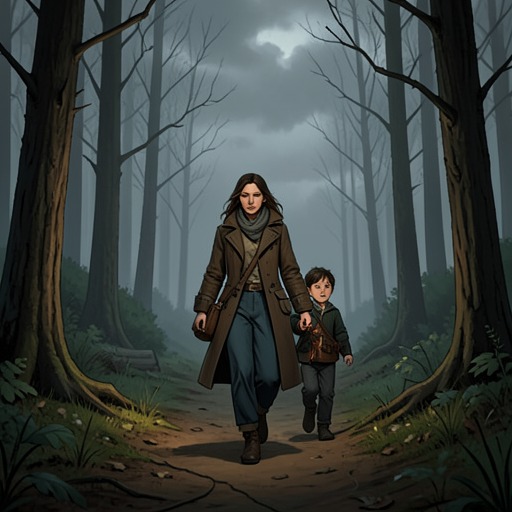
She replaces the conspicuous hospital shirt with oversized clothing from the car’s bags and gathers cash, a map, and a flashlight. At a service station she buys Gatorade, candy bars, a local map marked with a bus station, and a baseball cap to help conceal her hair. The money will not take her all the way to Cade, so she travels as far as she can by bus, then walks and accepts occasional rides. The practical precautions continue the life of flight she has known since childhood, now stripped of Lilia’s protection.
By the time Ava reaches Cade’s door, she is soaked, exhausted, hungry, and overwhelmed by grief. She collapses into his arms before explaining what happened; he understands from her sobbing and lets her cry, then finds her blankets, dry clothes, and warm food. Only when he sees Lilia’s necklace does Cade’s own grief break through. Even then, he continues to care for Ava. The attack ends not with safety restored, but with the two survivors joined by the keepsake of the woman they have lost.
Narrative Role and Legacy
The attack is presented not as a detached account of the past but as a nightmare Ava revisits after a later visit to Heaven. That frame makes the memory’s return part of its significance: the violence remains available to her without embellishment, and the episode’s ordinary details of hiding, learning, and keeping watch are inseparable from the catastrophe they could not prevent. The transition from a child who is still learning the limits of her fire to one forced to use it for survival marks a lasting break in her childhood; what follows is not a return to refuge, but flight toward the one person she trusts.