Kate’s funeral letter to Tully
Firefly LaneKate’s funeral letter to Tully is Kate’s last direct message to her closest friend: a handwritten farewell that acknowledges Tully’s grief, entrusts her with care for the family, and insists that their shared identity will endure after death. Delivered in a large black box on the day of Kate’s funeral, the letter makes friendship both intimate and practical, transforming a lifetime of shared history into a charge for the future.
Delivery and Form
On the day of the funeral, a family friend approached Tully on the bottom step and handed her a large black box. He explained that Kate had entrusted it to him to give her that day, expecting that Tully would be standing outside when the service began. Kate’s foresight is characteristic of the letter’s closeness: even in arranging its delivery, she anticipates how Tully will face the funeral.
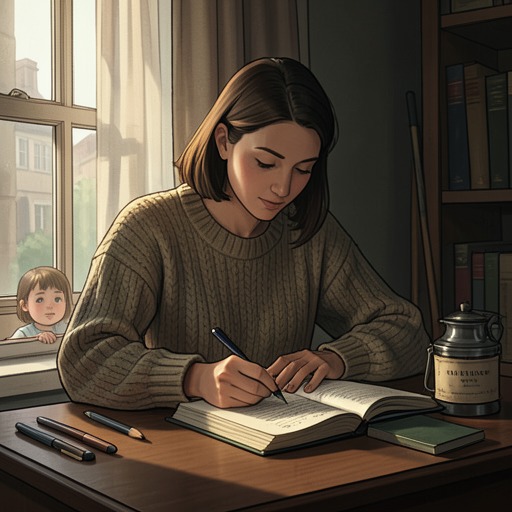
Tully carried the box across the parking lot and sat on an iron park bench. On top of its contents lay Kate’s letter, recognizable by her bold, left-slanted handwriting. The message is not a formal public tribute but a private address to Tully, written with the familiarity of a friendship in which so much has already been said. Its physical placement inside the box, and the quiet moment in which Tully opens it apart from the funeral, give the farewell a separate, personal space.
An Acknowledged Grief
Kate begins by acknowledging that Tully will not be able to stand through the funeral. She knows that her friend’s absence from the ceremony would not mean indifference; it would be another expression of how profoundly the loss affects her. The message therefore meets Tully where she is, rather than asking her to perform grief in public.
That recognition carries particular weight in light of the care that has passed between them. When Tully cried after disclosing that she had been raped, Kate answered with a quiet question and physical comfort. Later, when Tully learned that her grandmother had died, Kate held her while she broke down. The letter extends the same attentive friendship into a moment when Kate herself can no longer offer comfort in person: it names the difficulty of the funeral and gives Tully a way to remain connected to her.
A Charge for the Family
Kate asks Tully to take care of Johnny and the children. She also gives her a specific future responsibility: when they are ready, Tully is to give them Kate’s journal and tell them about her, including the truth. The request makes the letter more than a goodbye. It places Tully in the role of keeper and transmitter of family memory, with the timing entrusted to her judgment and the children’s readiness.
This charge draws on the history of Tully’s involvement in the family. She had repeatedly offered practical support, including promising to accompany Marah through a modeling-school opportunity. Her closeness to the household, however, also brought conflict: Kate insisted that she was Marah’s mother and had the responsibility of keeping her safe, while Tully argued that safety was not everything and that taking risks mattered. The funeral letter does not erase that difference or recast Tully as a replacement mother. Instead, Kate’s request gives her a distinct responsibility grounded in their friendship: to care for the family and help preserve the truth of Kate’s life.
The Continuing Bond
Kate’s closing message insists that there will always be a TullyandKate. She signs the letter “B-FF V Kate,” returning to the language of best friends forever as an intimate signature rather than a promise that death can simply be undone. The name they share condenses their lifelong relationship into a phrase that can be remembered and passed on.
The letter’s meaning is sharpened by the final period of Kate’s life. When Kate told Tully not to treat her as if she were dying and asked her to be herself, she explained that this was the only way she could remember who she was. The funeral letter carries that same insistence beyond their last conversations: it asks for ordinary continuity of care and, at the same time, records what must be carried forward. After reading it, Tully presses the letter to her chest. That gesture joins the object to its purpose: a tangible message to hold when its writer is gone, and a lasting expression of the friendship that Kate names as still belonging to both of them.