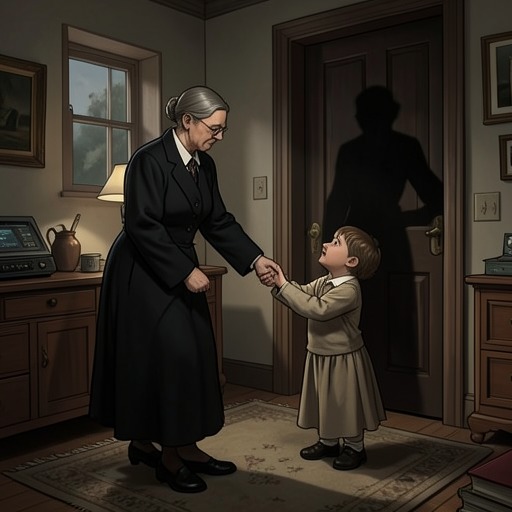
No secrets in this house
FosterNo secrets in this house is Edna Kinsella’s emphatic rule for the household: she presents openness as protection against shame, yet the girl’s later silence shows that care and disclosure do not always coincide. The rule begins as a demand for honesty and becomes a point of tension when the girl learns that some experiences need not be spoken aloud.
The Rule and Its First Test
When Edna turns the girl to face her, the girl asks whether what they are doing is a secret and whether she is not supposed to tell. Edna answers that there are no secrets in the house, insists that the girl hear her, and requires an answering affirmation. The exchange makes the rule more than a general sentiment: it is delivered directly, with an expectation that the child acknowledge it.
Edna explains the principle through a moral link between secrecy and shame. In her view, shame is an unwanted burden that the household can do without. The girl does not answer back, takes deep breaths to keep from crying, and receives Edna’s arm around her. Edna’s reassurance that the girl is too young to understand softens the confrontation without withdrawing the rule; affection and authority occupy the same moment.
Silence After the Summer
Later, back with Mary, the girl is asked what happened and answers that nothing happened. The narration makes clear that this is a considered silence: she has learned enough to know that what happened is not something she ever needs to mention, and recognizes the moment as her perfect opportunity to say nothing. Her answer therefore contrasts sharply with the household rule. The girl does not treat disclosure as an obligation simply because an adult asks for it.
The silence is followed by action rather than explanation. Hearing a car brake on the gravel, the girl runs down the lane toward John Kinsella, who has returned to close the gate. She reaches him as he opens it, and he lifts her into his arms and holds her tightly. The encounter gives the withheld account an emotional consequence without making the girl speak: her reunion with John is expressed through movement, touch, and the settling of her breath and heartbeat.
Meaning and Limits
The rule’s force lies in the difference between Edna’s household ideal and the girl’s later understanding of what can remain unspoken. Edna associates secrecy with shame and believes naming that danger can free the household from it; the girl’s experience instead gives silence a protective value. The narrative does not say that the girl’s silence abolishes Edna’s care or proves Edna wrong in every circumstance. It shows, more narrowly, that an absolute rule about speaking cannot determine what a child is ready or willing to disclose.
The contrast also shapes how the ending is told. The girl gives Mary no account, while the reader is shown the rush down the lane and the embrace with John. The rule thus stands beside a different form of communication: not confession, but a reunion that makes the girl’s attachment visible while leaving her experience unspoken.