before the summer placement
The Kinsellas’ Son Drowns
Before [Unnamed girl](entity:character-recall-character-unnamed-girl-669968b2cd52) arrives, the Kinsellas lose their only son. He follows the family dog into a slurry tank and drowns, a death that leaves [John Kinsella](entity:character-recall-character-john-kinsella-1398d0b685a9) and [Edna Kinsella](entity:character-recall-character-edna-kinsella-58bd0d91295e) bereaved and their home marked by an absence the child does not yet know how to read.
The loss later explains the boy’s clothes, the child in the bedroom wallpaper, and the couple’s careful affection toward Unnamed girl. Its grief remains largely unspoken, surfacing through gestures and silences rather than direct explanation.
before the opening Sunday
The Summer Placement Is Arranged
[Mary](entity:character-recall-character-mary-ea333e3cde9f) is pregnant and nearing her time, while the family struggles with money and the work of running its farm. She arranges for [Unnamed girl](entity:character-recall-character-unnamed-girl-669968b2cd52) to stay with relatives, and [Dan](entity:character-recall-character-dan-a3925e8b98d7) brings her a letter whose contents are not disclosed to the child.
The arrangement is presented as temporary, but its emotional stakes are already visible: Unnamed girl senses that her parents have discussed how long she might remain, while the adults leave her uncertain about what is expected.
the opening Sunday morning
The Drive Toward Wexford
After Mass in [Clonegal](entity:location-recall-location-clonegal-d59485a398cf), [Dan](entity:character-recall-character-dan-a3925e8b98d7) drives [Unnamed girl](entity:character-recall-character-unnamed-girl-669968b2cd52) through [Wexford](entity:location-recall-location-wexford-e6ae3cadd740) toward the coast and the Kinsellas’ farm. Along the way they pass [Shillelagh](entity:location-recall-location-shillelagh-bfd73c7ede59) and [Carnew](entity:location-recall-location-carnew-c66bbfc09de0), places tied to Dan’s lost red Shorthorn and his card-playing wager.
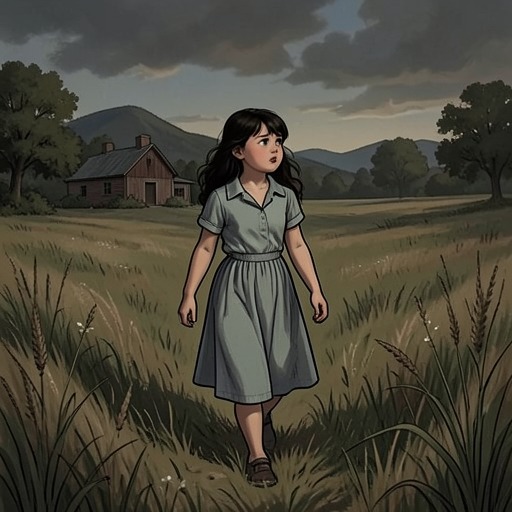
Lying across the back seat, Unnamed girl imagines the people and house waiting for her. Her guesses range from kindness and treats to hard farm work, revealing how little she knows about this temporary home or what it will mean to leave her own.
later that Sunday morning
Arrival at the Kinsella Farm
The car turns into the Kinsellas’ narrow lane and crosses a cattle grid before reaching a long white house. [John Kinsella](entity:character-recall-character-john-kinsella-1398d0b685a9) comes out to greet [Dan](entity:character-recall-character-dan-a3925e8b98d7), and the two men fall into familiar talk about weather, crops, cattle, and farming costs.
[Edna Kinsella](entity:character-recall-character-edna-kinsella-58bd0d91295e) welcomes [Unnamed girl](entity:character-recall-character-unnamed-girl-669968b2cd52) with a kiss and notices her worn clothes. The clean, orderly kitchen, the hot rhubarb tart, and the absence of any child suggest a household unlike the crowded, work-driven home she has left.
that Sunday at midday
A Meal Before the Farewell
At lunch, [John Kinsella](entity:character-recall-character-john-kinsella-1398d0b685a9) sets out food while [Dan](entity:character-recall-character-dan-a3925e8b98d7) describes [Mary’s pregnancy](entity:state-recall-state-mary-s-pregnancy-31e73e6f804a) and the family’s difficulties. He claims the hay loft is full, although [Unnamed girl](entity:character-recall-character-unnamed-girl-669968b2cd52) knows the farm at home has struggled to pay for work on the hay.
The adults agree that Unnamed girl will be welcome and will help [Edna Kinsella](entity:character-recall-character-edna-kinsella-58bd0d91295e) around the house, not be put to farm labor. Over the meal, the girl senses that this house has room and time to spare, qualities that make the coming separation from Dan feel even more uncertain.
that Sunday afternoon
Dan Leaves Without Goodbye
After eating, [Dan](entity:character-recall-character-dan-a3925e8b98d7) says he must return to spray the potatoes. [Edna Kinsella](entity:character-recall-character-edna-kinsella-58bd0d91295e) gives him rhubarb for [Mary](entity:character-recall-character-mary-ea333e3cde9f), and a stalk falls as he takes it; after a quiet standoff, [John Kinsella](entity:character-recall-character-john-kinsella-1398d0b685a9) bends to pick it up.
Dan drives away without telling [Unnamed girl](entity:character-recall-character-unnamed-girl-669968b2cd52) when he will return or even saying goodbye. When she realizes he has also forgotten her belongings, John and Edna reassure her that they can find clothes for her, but the child is left feeling abandoned and unable to name her distress.
the first afternoon at the farm
A Bath and Borrowed Clothes
[Edna Kinsella](entity:character-recall-character-edna-kinsella-58bd0d91295e) takes [Unnamed girl](entity:character-recall-character-unnamed-girl-669968b2cd52) upstairs, bathes her in water that initially feels painfully hot, and carefully cleans her hair, feet, and nails. The care is more thorough and unhurried than the girl is used to receiving.
Because [Dan](entity:character-recall-character-dan-a3925e8b98d7) left her things behind, Edna dresses her in old trousers and a new shirt. Unnamed girl says [Mary](entity:character-recall-character-mary-ea333e3cde9f) told her that the Kinsellas could keep her as long as they liked, and Edna laughs before turning quiet at the child’s open-ended understanding of the arrangement.
the first afternoon at the farm
No Secrets in the House
Before taking [Unnamed girl](entity:character-recall-character-unnamed-girl-669968b2cd52) to the fields, [Edna Kinsella](entity:character-recall-character-edna-kinsella-58bd0d91295e) asks whether the trip to the well is a secret. When the child wonders if she must not tell anyone, Edna insists that there are no secrets in the house and says that secrets bring shame.
The declaration sounds like protection, but Edna also tells the girl she is too young to understand. Unnamed girl recognizes in that answer the familiar distance between adults and children: even in this new home, some things remain beyond her grasp.
the first evening at the farm
The First Drink at the Well
Edna leads [Unnamed girl](entity:character-recall-character-unnamed-girl-669968b2cd52) across the fields with the zinc bucket and shows her [The well](entity:object-recall-object-the-well-2ab9c5510397). The girl drinks from its cool water, listening to her own breath echo in the still space and seeing herself reflected beside Edna.
The water tastes to her of [Dan](entity:character-recall-character-dan-a3925e8b98d7)’s departure and the emptiness it leaves behind. Yet as Edna pulls her back to safe ground and carries the bucket, Unnamed girl feels unexpectedly necessary to another person and wishes this home without shame or secrets could be hers.
the first night at the farm
A First Night of Uncertainty
[Edna Kinsella](entity:character-recall-character-edna-kinsella-58bd0d91295e) lets [Unnamed girl](entity:character-recall-character-unnamed-girl-669968b2cd52) keep the light from the long summer day and explains that she can use the toilet or a chamber pot. She asks about [Mary](entity:character-recall-character-mary-ea333e3cde9f), and the girl explains that her mother’s morning sickness has eased and that the family could not afford to have the hay cut promptly.
After Edna leaves, Unnamed girl thinks about her mother, sisters, and the new baby expected at home. Later, she feels Edna sit on the bed and hears her say that she would never leave a child in a house with strangers if the child were hers.
the next morning
The Mattress Is Weeping
When Edna strips the bed, she discovers that [Unnamed girl](entity:character-recall-character-unnamed-girl-669968b2cd52) has wet the mattress. Instead of blaming the child, she says the old mattress is damp and calls the accident a terrible start; together they drag it outside and scrub it in the sun.
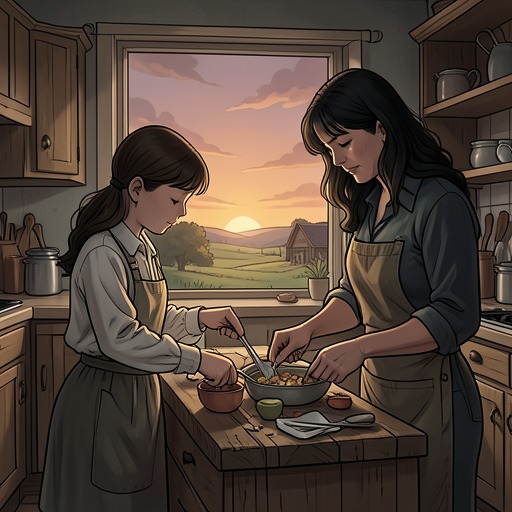
Edna turns the morning into a shared task, frying rashers and tomatoes and showing Unnamed girl how to make toast. [John Kinsella](entity:character-recall-character-john-kinsella-1398d0b685a9) joins them, and the girl’s embarrassment begins to give way to the sense that mistakes in this house need not lead to punishment.
the first full day at the farm
The Mailbox Race
[John Kinsella](entity:character-recall-character-john-kinsella-1398d0b685a9) challenges [Unnamed girl](entity:character-recall-character-unnamed-girl-669968b2cd52) to run to the post box and back, timing her first attempt. He jokes with her about the letters and about marriage, while she repeats [Mary](entity:character-recall-character-mary-ea333e3cde9f)’s warning not to accept a man’s present.
The race gives their growing connection a playful ritual. John promises they will try again and improve her time, turning a simple errand into encouragement and making the child feel noticed for her speed and effort.
the first evening after the mailbox race
Edna’s Secret Recipe
During the nine o’clock news, [Edna Kinsella](entity:character-recall-character-edna-kinsella-58bd0d91295e) tells [Unnamed girl](entity:character-recall-character-unnamed-girl-669968b2cd52) that she has a secret for keeping a clear complexion. She eats dry Weetabix and gives some to the girl, who joins in partly because pleasing Edna matters to her.
Later, Edna cleans the wax from the child’s ears and brushes her hair, counting as she works. By morning she says the girl’s complexion has already improved; the small rituals make care feel intimate, practical, and unlike the rushed attention Unnamed girl has known at home.
the days following the first night
A Household of Shared Routines
The days settle into a steady pattern of cooking, cleaning, gardening, preserving food, and walking across the fields to [The well](entity:object-recall-object-the-well-2ab9c5510397). [John Kinsella](entity:character-recall-character-john-kinsella-1398d0b685a9) works outside while Edna and [Unnamed girl](entity:character-recall-character-unnamed-girl-669968b2cd52) move through the household jobs without the frantic pace the child associates with her mother’s home.
In the evenings, the couple watch the news, and visitors sometimes arrive to play cards. Unnamed girl is included in these gatherings, where jokes, tea, and food make the house feel sociable rather than lonely, even as its loss remains unspoken.
a Sunday shortly after her arrival
Gorey Clothes and a Birthday Card
[John Kinsella](entity:character-recall-character-john-kinsella-1398d0b685a9) decides [Unnamed girl](entity:character-recall-character-unnamed-girl-669968b2cd52) needs proper clothes for Mass and urges Edna to take her to [Gorey](entity:location-recall-location-gorey-8599beca51a9). His sharp remark about whether [Dan](entity:character-recall-character-dan-a3925e8b98d7) taught her to wash herself wounds Edna, who retreats to the bathroom and emerges after crying, apologizing to the child.
In Gorey, Edna buys the girl dresses, trousers, shoes, and other clothes. She also helps her choose a birthday card for [Mary](entity:character-recall-character-mary-ea333e3cde9f), while the shopping trip brings both delight and a reminder that the clothes are only for the duration of this temporary stay.
that afternoon in Gorey
The Wake Invitation
On the way back from shopping, [Unnamed girl](entity:character-recall-character-unnamed-girl-669968b2cd52) and [Edna Kinsella](entity:character-recall-character-edna-kinsella-58bd0d91295e) encounter a neighbor who says Michael has died and asks [John Kinsella](entity:character-recall-character-john-kinsella-1398d0b685a9) to help dig the grave. John agrees, and Edna decides the child must come with her rather than be left behind.
Unnamed girl changes into her new dress and shoes before setting out with Edna. The cheerful shopping day shifts into a first encounter with death and communal mourning, though the girl has not yet been told what the Kinsellas’ own loss will mean.
the evening of the invitation
The Wake at Michael’s House
Edna takes [Unnamed girl](entity:character-recall-character-unnamed-girl-669968b2cd52) along the roads to Michael’s wake, where the kitchen is crowded with mourners, food, drink, and conversation. [John Kinsella](entity:character-recall-character-john-kinsella-1398d0b685a9) sits beside the coffin and draws the child onto his lap, offering her red lemonade while she watches the dead man.
As the girl grows restless, a woman named Mildred offers to take her home to meet her child. Edna reluctantly agrees, trusting that the visit will give Unnamed girl company while the adults remain at the wake.
on the walk home from the wake
The Dead Boy’s Clothes
Mildred questions [Unnamed girl](entity:character-recall-character-unnamed-girl-669968b2cd52) about life at the Kinsellas’ farm, then tells her that the clothes she wore to Mass had belonged to the Kinsellas’ dead son. She explains that the boy followed the dog into a slurry tank and drowned, revealing the story behind the household’s absent child.
Mildred also says the couple’s hair turned white overnight, though Edna now dyes hers black. The revelation forces Unnamed girl to reinterpret the boy in the bedroom wallpaper, the old clothes, and the tenderness she has received.
later that evening
John Comes to Collect Her
At Mildred’s cottage, [John Kinsella](entity:character-recall-character-john-kinsella-1398d0b685a9) arrives and thanks her for taking [Unnamed girl](entity:character-recall-character-unnamed-girl-669968b2cd52) home. He does not take his eyes from the child, and soon leads her back to the car and the farm.
On the way, Edna asks what Mildred said. Unnamed girl tells the couple that she now knows their son drowned and that she has been wearing his clothes. The discovery makes the family’s silence impossible to ignore, and John responds by taking the child out for a walk rather than explaining further.
the night after the wake
A Night Walk to the Sea
[John Kinsella](entity:character-recall-character-john-kinsella-1398d0b685a9) puts the boy’s jacket on [Unnamed girl](entity:character-recall-character-unnamed-girl-669968b2cd52) and walks with her toward the strand, holding her hand. She realizes [Dan](entity:character-recall-character-dan-a3925e8b98d7) has never held her hand, and the difference sharpens her awareness of how care can be given without being demanded.
At the beach, she runs among the waves while John carries her into the water and tells her not to be afraid. He speaks of Edna’s trust and of how people sometimes learn whom not to trust, then reminds the child that she never has to say anything.
the return from the nighttime beach walk
Three Lights
As John and [Unnamed girl](entity:character-recall-character-unnamed-girl-669968b2cd52) walk back along the dark strand, the moon disappears behind a cloud. John lights a lamp and searches for their footprints, but finds only the child’s, and jokes that he must have carried her.
On the dune, they look out to sea and see three lights where there had been two. John gathers Unnamed girl into his arms as though she were his own, making the moment a quiet expression of belonging that neither needs to explain.
the Thursday after a week of rain
The Letter Arrives
After a week of rain, a letter arrives from [Mary](entity:character-recall-character-mary-ea333e3cde9f). [Unnamed girl](entity:character-recall-character-unnamed-girl-669968b2cd52) has already noticed signs that school is approaching in the shops, and she knows the visit is nearing its end even before the adults read the letter.
[John Kinsella](entity:character-recall-character-john-kinsella-1398d0b685a9) times her run to the post box, where she retrieves the letter. He recognizes it as being from her mother and takes it to Edna, turning the familiar race into the messenger’s delivery of news that will change the household.
the Thursday evening the letter arrives
The Return Is Set
Edna reads the letter and tells [Unnamed girl](entity:character-recall-character-unnamed-girl-669968b2cd52) that [Mary](entity:character-recall-character-mary-ea333e3cde9f) has given birth to a nine-pound, two-ounce boy. She also explains that school starts on Monday and that Mary wants the girl home for the weekend to get ready.
Unnamed girl tries not to cry as she understands that she must leave. Edna shows her knitting patterns and begins planning a blue jumper, finding a way to offer the child something to look forward to even as their time together runs out.
the days after the letter
The Last Days on the Farm
Knowing she must go home, [Unnamed girl](entity:character-recall-character-unnamed-girl-669968b2cd52) feels both eager to get the departure over with and reluctant to leave. [John Kinsella](entity:character-recall-character-john-kinsella-1398d0b685a9) drifts through the day without finishing much, while the girl watches him and helps prepare her belongings.
She packs her clothes and the books bought in [Gorey](entity:location-recall-location-gorey-8599beca51a9), remembering how John helped her learn to read difficult words. The books have given her a new kind of freedom, and the memory of that patient attention makes the coming separation more difficult.
the day Unnamed girl is due to leave
The Final Trip to the Well
As Edna goes to finish the milking parlour for John, who has been called to help a neighbor with a calving, [Unnamed girl](entity:character-recall-character-unnamed-girl-669968b2cd52) sits alone and decides to fetch water as one last helpful act. She takes the zinc bucket and walks the familiar field path to [The well](entity:object-recall-object-the-well-2ab9c5510397).
The water has risen since her first visit. As she bends to lift the bucket, a hand like her own seems to emerge from the water and pull her in, turning the well that once represented welcome and safety into a moment of mortal danger.
the day before the return home
The Fall and Recovery
[Unnamed girl](entity:character-recall-character-unnamed-girl-669968b2cd52) comes back from [The well](entity:object-recall-object-the-well-2ab9c5510397) soaked to the skin. [Edna Kinsella](entity:character-recall-character-edna-kinsella-58bd0d91295e) turns still with alarm, then gathers her up, remakes her bed, and keeps her upstairs the next day with hot drinks, aspirin, and care for what the adults call a chill.
John says that nothing happened and that the girl is well, while Edna cannot stop thinking about what might have happened. Unnamed girl listens to rain and reads, changing the endings of her books in her imagination as she recovers from the accident.
the following Sunday evening
The Journey Back
Once [Unnamed girl](entity:character-recall-character-unnamed-girl-669968b2cd52) is well enough to travel, the Kinsellas pack her belongings and drive her back through [Gorey](entity:location-recall-location-gorey-8599beca51a9), [Carnew](entity:location-recall-location-carnew-c66bbfc09de0), [Shillelagh](entity:location-recall-location-shillelagh-bfd73c7ede59), and [Parkbridge](entity:location-recall-location-parkbridge-42d66925e590). The familiar roads return her toward home, and she points out where [Dan](entity:character-recall-character-dan-a3925e8b98d7) lost the red heifer.
At the family house, the Kinsellas bring rhubarb jam and potatoes inside. Unnamed girl sees [Mary](entity:character-recall-character-mary-ea333e3cde9f) with the new baby and her sisters, but the cramped, damp, untidy home feels changed after the ordered, spacious farm she is leaving.
that Sunday evening at home
The Family Reunion
[Mary](entity:character-recall-character-mary-ea333e3cde9f) welcomes the Kinsellas and tells them about the new baby, while [Unnamed girl](entity:character-recall-character-unnamed-girl-669968b2cd52)’s sisters study her new clothes and shoes as if she were a distant relation. Mary nurses the baby in front of [John Kinsella](entity:character-recall-character-john-kinsella-1398d0b685a9), and Unnamed girl blushes under her mother’s knowing look.
[Dan](entity:character-recall-character-dan-a3925e8b98d7) arrives after the others have begun talking. He calls his daughter the prodigal child and asks whether she caused trouble; John assures him she was good as gold. When Unnamed girl sneezes, the adults discuss her chill without revealing the frightening fall that preceded it.
later that Sunday evening
The Kinsellas Say Goodbye
[John Kinsella](entity:character-recall-character-john-kinsella-1398d0b685a9) gives [Mary](entity:character-recall-character-mary-ea333e3cde9f) a sack of potatoes and tells [Unnamed girl](entity:character-recall-character-unnamed-girl-669968b2cd52) to keep up with her schoolwork. Edna says the girl is welcome to return at any time, and the couple prepare to leave for their own farm.
After the car begins to move away, Unnamed girl hears it brake in the lane. John has turned back, and she runs toward him before the moment can pass, carrying her feelings in the speed of her body rather than in words.
the final moments of the story
A Perfect Opportunity for Silence
After the Kinsellas leave, [Mary](entity:character-recall-character-mary-ea333e3cde9f) asks [Unnamed girl](entity:character-recall-character-unnamed-girl-669968b2cd52) what happened. The child answers that nothing happened, understanding that the fall, her recovery, and what she has felt at the farm do not have to be turned into an explanation.
[John Kinsella](entity:character-recall-character-john-kinsella-1398d0b685a9) embraces her in the lane, while she clings to him and calls him Daddy. Over his shoulder she sees [Dan](entity:character-recall-character-dan-a3925e8b98d7) approaching, but something deeper than the wish to reassure Edna keeps her holding on. Her silence becomes both a protection and a measure of the bond she has formed.