
Death, Interpretation, and the Reader
Foucault's PendulumBelbo's final act and Casaubon's later understanding show how interpretation can continue after a life ends, sometimes revealing what the subject could not recognize.
increasing Bearing strength in each event
 decreasing
Bearing strength in each eventdecreasingThe Lost Moment
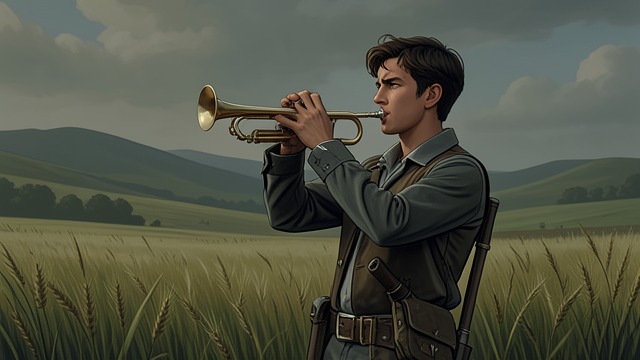
A Brief Experience of Mastery
The trumpet note
At a partisan funeral, young Belbo plays a sustained note on the trumpet and imagines holding the sun and the moment in place. For a short time, he feels fully present.
A memory misread
He later remembers the scene mainly as another lost opportunity. He does not understand that the moment was an experience he actually possessed.
A Repeated Image
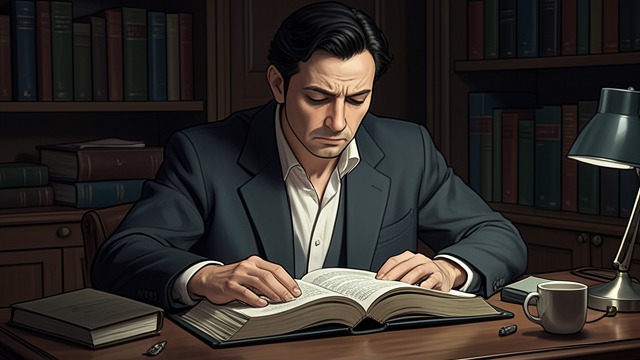
Searching for the Pendulum
The motif returns
Belbo repeatedly encounters the idea of the fixed point and associates it with his longing for certainty and creative authority. His forgotten childhood experience shadows this search.
A mistaken quest
He seeks an external Plan to compensate for what he thinks he failed to achieve. The symbol distracts him from the earlier moment of presence.
The Reader's Recognition

Casaubon Reconstructs the Memory
A recovered narrative
Casaubon reads the juvenile manuscript and recognizes the significance of the trumpet scene. Belbo had once experienced a moment of wholeness without understanding it.
Knowledge too late
The insight comes only after Belbo's death. Casaubon sees that the reader can grasp a truth the author missed, but cannot return that understanding to him.
Belbo's childhood in the final days of the war
During Belbo's adult life
After Belbo's death
