
The Rise of Informal Project Planning
Getting Things DoneThe book develops a natural, flexible planning process that moves projects from purpose and possibility to organized actions.
increasing Bearing strength in each event
 decreasing
Bearing strength in each eventdecreasingWhy Planning Stalls

The Gap in Project Thinking
Formality Without Movement
People often resist planning because it can feel artificial, irrelevant, or too elaborate. In organizations, formal outlines and meetings may fail to connect with the work people actually need to do.
An unplanned project may eventually provoke a crisis, but action under pressure is not a substitute for thinking ahead.
The Everyday Alternative
Allen proposes that useful planning need not begin with a complex document. Informal notes and conversation can surface the purpose, ideas, structure, and next steps that a project needs.
The central issue is not adopting a particular tool; it is following the way thinking naturally develops.
Purpose Sets Direction

Establishing the Why
A Reason to Proceed
Clarifying purpose defines what success means and supplies criteria for decisions. Without that reference point, participants may debate methods without knowing what they are trying to accomplish.
Purpose can align resources, motivate effort, and reveal whether a project still deserves attention.
Principles Set Boundaries
Standards and values define how the work should be done. They make expectations visible and help prevent behavior that undermines the intended result.
Together, purpose and principles give planning direction and limits before anyone chooses a solution.
The Successful Outcome

Imagining Completion
A Picture of Success
The planning process asks the person to look beyond the completion date and imagine a successful result. The picture may be a simple statement or a richer account of what the finished situation will look and feel like.
A clear outcome gives attention a destination, even when the route is not yet known.
Opening Perception
Allen argues that a defined picture helps people notice relevant information and possibilities. Imagining success is not a claim that it has already occurred; it is a way to make the desired result more concrete.
The vision phase moves planning from abstract intention toward an identifiable future state.
Ideas Before Evaluation

Expanding the Possibilities
Capturing Without Judgment
Once the outcome is clear, ideas begin to arise about how to bridge the gap between present reality and the desired result. Brainstorming captures them without demanding that each one be good or feasible immediately.
Quantity matters because useful ideas may appear only after less promising possibilities have been expressed.
Thinking Outside the Head
Writing, sketching, or mapping ideas lets a person see relationships and prompts further thoughts. Allen presents this as a practical way to sustain attention on a complex topic.
Evaluation and organization remain necessary, but they should not prematurely close the creative stage.
Structure and Movement
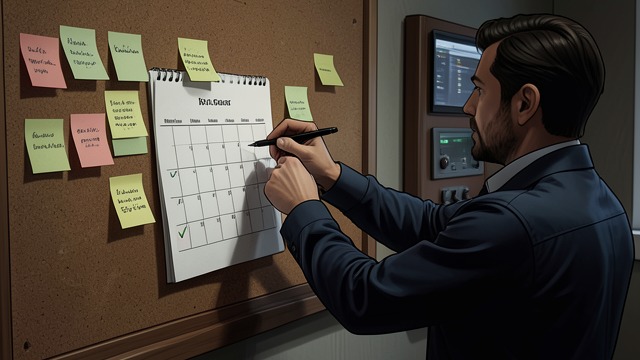
Organizing Toward Action
Components and Sequences
After ideas have been captured, the planner identifies major pieces, dependencies, priorities, and order. A project plan can be as light as a few headings or as detailed as the situation requires.
The appropriate degree of structure is the degree that makes the work understandable and manageable.
The First Physical Step
Planning culminates in deciding what can be moved now and who owns each action. If further planning is needed, that planning itself becomes the next action.
A project is ready for implementation when its currently movable parts have clear next steps.
At the start of the project-planning discussion
The first phase of the planning model
After purpose and principles are considered
During the brainstorming phase
At the final planning phases
