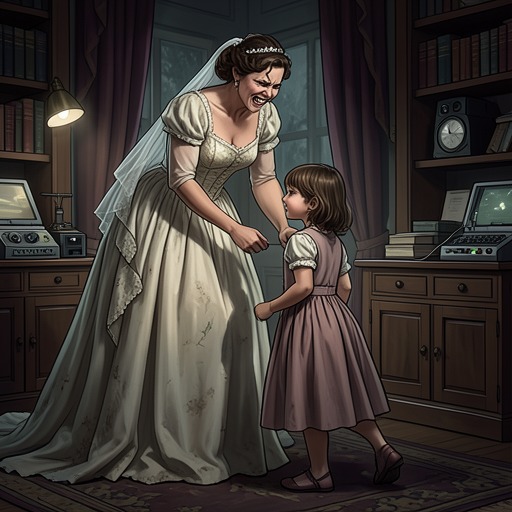
I am what you have made me
Great Expectations“I am what you have made me” is Estella’s sharpest answer to Miss Havisham’s claim that she is cold and ungrateful. At the hearth where she was raised, Estella makes her guardian answer for the character she deliberately formed: neither her successes nor her failures, she argues, can be separated from that education. The line condenses their conflict into a claim about responsibility, inheritance, and the limits of choosing who one becomes.
The Accusation and the Answer
Miss Havisham reproaches Estella for standing before her with hardness and ingratitude, recalling the tenderness she lavished on the child she took into her care. Estella refuses the premise that she alone should bear the blame. Earlier in the exchange, she tells Miss Havisham to take “all the praise” and “all the blame,” along with “all the success” and “all the failure.” Her command to accept the whole of Estella is not a denial of their bond; it is a demand that the maker acknowledge the consequences of her making.
The words are spoken in a room dense with the material remains of Miss Havisham’s arrested past. Estella stands beside the great chimney-piece while Miss Havisham invokes the hearth as the place where she reared her and poured out years of tenderness. That domestic setting sharpens the dispute: the place offered as proof of loving care is also the setting in which Estella names the formative power Miss Havisham exercised over her.
The Meaning of Being Made
Estella develops her claim through an analogy about a child taught from the beginning to regard daylight as an enemy. If that child were later expected to welcome the light, Estella asks, would the teacher be justified in being disappointed and angry when the lesson had made such a response impossible? The analogy shifts the argument from a quarrel about manners to a question of conditioning: a person cannot simply be expected to act against the disposition an upbringing has cultivated.
She then states the principle in a second form: “I must be taken as I have been made.” Success and failure, she says, are not hers alone; “the two together make me.” The formulation does not claim that every action is blameless. Rather, it refuses to let Miss Havisham claim credit for the traits she values while assigning Estella sole responsibility for the traits she dislikes. The person formed is inseparable from the acts of formation.
From Confrontation to Care
Miss Havisham makes no answer to the daylight analogy. She sinks to the floor among the faded bridal relics, her grey hair scattered among the wreckage. Pip leaves the room after drawing Estella’s attention to her; when he returns after walking through the courtyard, brewery, and ruined garden, he finds Estella seated at Miss Havisham’s knee, mending one of the old garments. The scene does not erase the confrontation, but it gives it a quieter aftermath: Estella’s rebuke is followed not by departure but by an act of care.
Estella and Pip later play cards as they did formerly, now using French games and playing with skill. The return to a familiar pastime places the argument within the history of their changed relationships, while the evening’s small domestic gestures resist any simple resolution. Estella’s words remain a demand for recognition; the scene that follows shows her still present beside the person whose influence she has challenged.