
Silence as a Wartime Landscape
Grey BeesThe novel’s changing silences show how Sergeyich adapts to bombardment without ever escaping its presence.
increasing Bearing strength in each event
 decreasing
Bearing strength in each eventdecreasingBombardment Becomes Quiet
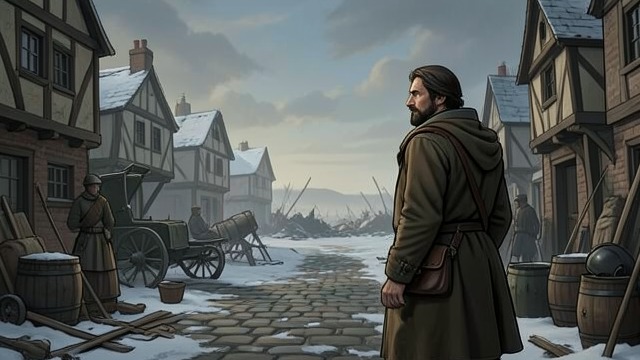
Bombardment Becomes Quiet
Aural adaptation
Sergeyich becomes accustomed to distant guns until their sound blends into his personal idea of silence. Familiar military noise no longer always interrupts his thoughts.
The cost of adjustment
This adaptation helps him endure, but it also shows how war has displaced peaceful sounds from ordinary life. Silence is not peace; it is what the listener has learned not to notice.
Snow Covers the Guns
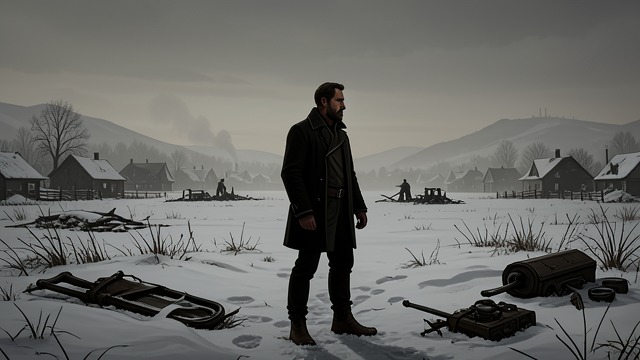
Snow Covers the Guns
A different kind of silence
Heavy snowfall muffles the distant artillery, making the village feel unnaturally quiet. Sergeyich finds this silence incomplete because the snow’s rustle replaces the familiar background of war.
Nature offers temporary shelter
He imagines spring birdsong overwhelming the guns, though he knows the quiet cannot guarantee safety. The landscape gives him brief relief without changing the conditions of the front.
A New Quiet in Crimea
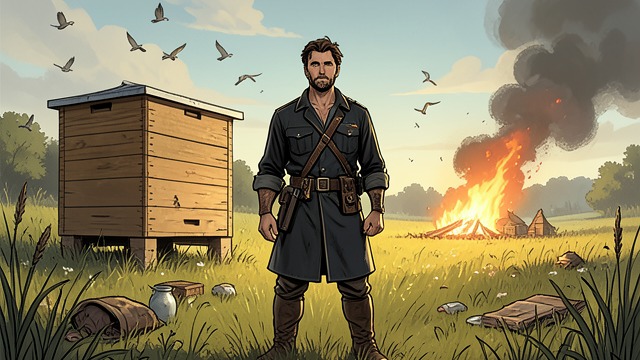
A New Quiet in Crimea
Sounds of another life
At the apiary, Sergeyich hears birds, foliage, fire, and bee wings as components of peaceful silence. Their variety contrasts with the limited soundscape of the grey zone.
Memory persists beneath calm
Even in a beautiful setting, memories of explosions and danger return. The contrast shows that physical distance can change the surrounding sound but cannot instantly undo the mind’s wartime habits.
the winter nights in Little Starhorodivka
the snowfall before the corpse is covered
the first Crimean nights
