Annie Ernaux’s clandestine abortion (1964)
HappeningAnnie Duchesne’s clandestine abortion began with a pregnancy she could neither accept nor safely end through ordinary medical care. In 1963–64, as a 23-year-old student in Rouen, she encountered doctors’ reluctance, legal prohibition, and the stigma attached to women who became pregnant outside marriage. The abortion eventually took place in a private apartment in Paris, arranged through women who shared practical knowledge unavailable from official sources. Its aftermath included a medical emergency and hospitalization; its later retelling makes the event a record of how law, class, bodily experience, and women’s mutual assistance shaped the choices available to her.
Pregnancy and the search for help
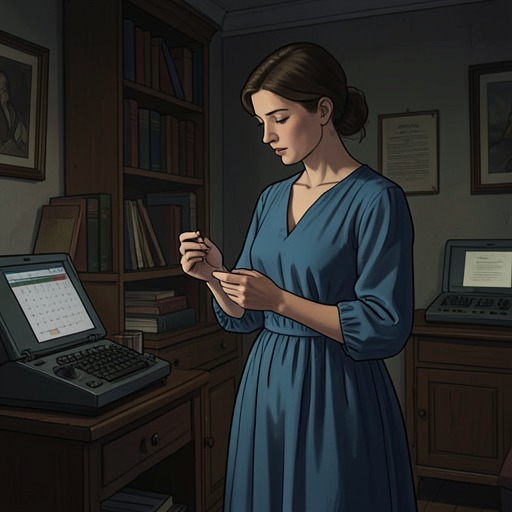
In October 1963, while waiting for her period in Rouen, Duchesne began recording each day in her diary with the word NOTHING. She had recently had sex with P, a political science student she had met during the summer, during a period she understood the Ogino method to classify as risky. The missed period first appeared to her as an unsettling possibility rather than a future she could imagine. On November 8, Doctor N confirmed that she was pregnant. He prescribed injections intended to bring back her bleeding, though he seemed doubtful they would work; when he spoke approvingly of love children, his reassurance only sharpened her distress. A university nurse gave her two injections, but her condition continued. A certificate from Doctor N set a delivery date of July 8, 1964. Duchesne tore it up.
Her decision not to continue the pregnancy was firm, but finding help was not straightforward. The abortion ban made the risks extend beyond the patient: doctors could face fines, imprisonment, and loss of their right to practise. Duchesne later understood that doctors’ silence and evasions left women with the consequences of the law while offering little reliable direction. One doctor she approached confirmed the pregnancy but did not agree to help end it. He prescribed medication that she later learned was used to prevent miscarriage. The gap between her request and the treatment she received exposed how medical authority could fail to serve her stated need.
The obstacles were also social. Duchesne understood her pregnancy through her working-class background: she was the first in her family to pursue higher education, yet education had not removed the insecurity and stigma she associated with poverty. She read the pregnancy as a mark of social failure, not simply as a private crisis. At home, she concealed her condition from her parents, maintaining the familiar routine of weekend visits, a cheerful appearance, and laundry and provisions moving between their house and her accommodation. Silence was already part of the family relationship; the law intensified the need to preserve it.
Women’s knowledge and the Paris arrangement
After a first unsuccessful attempt to find a doctor willing to help, Duchesne became increasingly prepared to act without medical assistance. She brought home two long, blue knitting needles that she had originally bought to make a cardigan and tried, unsuccessfully, to use them. She then called Doctor N and said she did not intend to continue the pregnancy and had harmed herself. Although the claimed injury was not true, she wanted him to understand that she would persist. He examined her and prescribed penicillin for use around the operation but would not identify where she was going or perform the abortion himself. His response provided a limited safeguard while leaving the central task to others.
A route to that help emerged through LB, who came to see her shortly before Christmas after Jean T had told her that Duchesne needed assistance. LB gave her the address of Madame P-R, a middle-aged paramedic working at a clinic, in Paris’s 17th arrondissement. She described a procedure involving a probe and explained that she herself had contracted septicemia after her abortion. The account did not make the arrangement safe, but it gave Duchesne practical information, a contact, and a way to reduce some risks: LB advised her to obtain antibiotics from a general practitioner. Duchesne already had penicillin. LB also offered to lend her the four hundred francs Madame P-R charged.
On January 8, Duchesne travelled to Paris to meet Madame P-R and settle the arrangements. She hitchhiked to save the cost of a train ticket, then continued by Métro. The address she had been given was called Passage Cardinet rather than Impasse Cardinet, a small correction that felt reassuring to her. Madame P-R lived on the third floor of an old building. At their meeting she asked practical questions about the date of Duchesne’s last period, explained the procedure and fee, and set the appointment for the following Wednesday, when she could bring a speculum from the hospital where she worked. Her matter-of-fact approach avoided moral scrutiny and emotional interrogation. For Duchesne, that concentration on essentials was a source of comfort amid the surrounding secrecy.
The procedure and its immediate aftermath
Before the appointment, fear increasingly occupied Duchesne’s thoughts. She told other students that she was nervous about having a large beauty spot removed, using a harmless operation as cover for the one she could not name. On January 15, she went to Paris early, waited in the neighborhood, and prayed in a church before going to a café. At Madame P-R’s apartment, the preparations were already under way. Madame P-R spoke while she worked and emphasized that she would use the probe on its own. She also recounted the recent death of a woman after an incompetent abortionist had used bleach. The warning was meant to reassure Duchesne about the care being taken, though it also made the danger of the circumstances unmistakable.
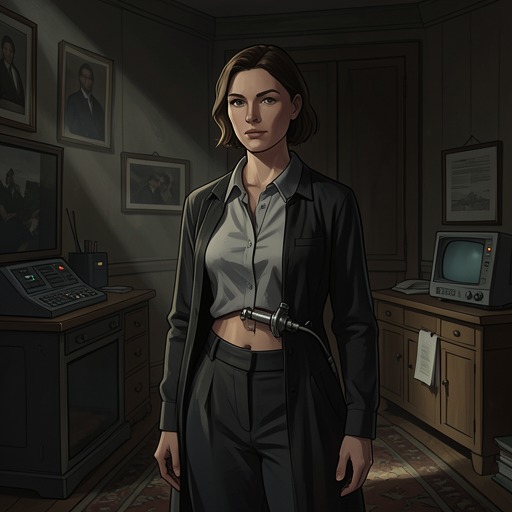
The procedure was painful, and Madame P-R urged her to let the work continue. Afterwards, she told Duchesne not to interfere with the probe and explained what to do if the expected miscarriage did not follow. She walked her to Pont-Cardinet station, concerned that she might become unwell on the way home. A second visit followed, during which Madame P-R replaced the first probe with another. This time Duchesne was not afraid and the procedure did not hurt. Madame P-R described what was happening as labor, a comparison that Duchesne had not previously made. She did not charge an additional fee, asking only that the difficult-to-find probe be returned later.
By January 19, Duchesne had been walking around with a probe inside her for five days. That day, while visiting her parents, she realized that the process had begun. She returned to Rouen and went that evening to a film-club screening with O. Increasing pain forced her to leave and return to the dormitory. Later, alone in the bathroom, she delivered the fetus. O came to her room and helped cut the cord. The two women looked at the fetus and wept; neither knew what to do. Their response was not prepared in advance, but O stayed beside Duchesne at a moment when the event had moved beyond the private arrangement with Madame P-R into an immediate crisis.
Hemorrhage, hospital, and unequal treatment
Duchesne then began losing blood. When the bleeding became alarming, she asked O to find a doctor. The doctor on night duty questioned and reprimanded her, demanded that she promise not to do it again, and sent her to Hôtel-Dieu Hospital. He also took payment from her wallet while she was unable to stand. The transfer ended her attempt to manage the abortion outside the hospital system, but medical care arrived in a setting where she faced exposure and judgment as well as danger.
At the hospital, an intern who had treated her aggressively later appeared embarrassed. Duchesne first thought he regretted his conduct, but learned that his embarrassment had another source: he had treated a college student as he would an ordinary salesgirl or factory worker because he did not know she was a student. Her student status, rather than the severity of her experience, changed how he understood his behavior. This moment made class visible inside the hospital itself, where patients were not treated independently of assumptions about their social position.
Duchesne stayed at Hôtel-Dieu for five days and was discharged on January 25. Her friends, including LB and JB, helped with the paperwork and took her to the station. Before leaving, she called Doctor N, who advised her to take penicillin because the hospital had given her no medicine. At her parents’ home she pretended to have a cold and arranged for the family doctor, Doctor V, to examine her discreetly. Doctor V then mentioned another local abortionist, information he offered only after Duchesne no longer needed it. The late disclosure reinforced the disparity between the abundance of informal knowledge and its inaccessibility when it might have helped.
Memory, solidarity, and writing
The event did not end with discharge. Duchesne did not return the probe to Madame P-R; she later drove into a forest and left it there, a decision she came to regret. She worked to repay the loan by taking evening babysitting work and staffing the switchboard for a heart specialist. She gradually resumed her studies and ordinary activities, though she could not say precisely when she had returned to normal. For years, she marked the night of January 20–21 as an anniversary. She never saw Madame P-R again, yet continued to think about her, eventually imagining the book as something that should be dedicated to the woman who had helped her cross from danger into a new stage of life.
Duchesne’s account treats the abortion not as an isolated private choice but as an experience governed by conditions around that choice. The law made assistance dangerous for practitioners and hard to locate for patients; class influenced which doors opened and how medical staff judged a patient; women’s exchanges of money, information, and practical care helped make action possible. The support did not erase the risks: LB had experienced septicemia, Duchesne’s attempt to manage the process ended in hemorrhage, and hospital treatment brought its own exposure and humiliation. The account holds these realities together without presenting clandestine assistance as a substitute for safe care.
In writing about the abortion, Duchesne also confronts the way its details had remained both vivid and difficult to express. Her diary and engagement book help establish dates, while material remnants and remembered sensations serve as evidence against the uncertainty of memory. She understands the experience as bearing on life and death, time, law, ethics, and taboo, and as something that passed through the body before becoming intelligible in language. By recounting what had been surrounded by silence, she seeks to release the event from private guilt and make an individual history available to other lives and readers.