early October 1963
The Risky Encounter
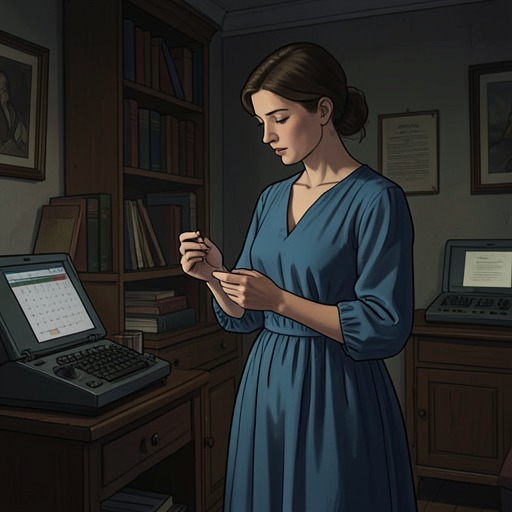
[Annie Duchesne](entity:character-recall-character-annie-duchesne-4a61ab3d13cc) made love several times with P, a political science student she had met over the summer, while visiting him in [Bordeaux](entity:location-recall-location-bordeaux-ee3c0ff08d39). She knew the [Ogino rhythm method](entity:concept-recall-concept-4a575bba62a1) marked the days as risky, but could not imagine that pregnancy would happen to her; in the moment of climax, she felt her body no different from a man’s.
Later, the rooms, streets, and cafés of Bordeaux would take on one fixed meaning: she had been there without knowing that she was becoming pregnant. The encounter began the crisis that would pull her away from the ordinary rhythms of student life.
October 1963
The Missing Period
Annie waited more than a week for her period in [Rouen](entity:location-recall-location-rouen-bcf96910455d). In her diary she recorded each evening that nothing had happened, underlining the word in large capitals; at night she woke with the certainty that it still had not come.
The warm autumn and the wait for college to resume continued around her, but her abandoned novel and ordinary plans already seemed remote. The diary became a record of time narrowing around an unnamed fear.
October 1963
Il Posto
Annie went alone to see Il Posto, a slow black-and-white film about a young man’s first office job. Watching the boy endure humiliation in his cheap raincoat, she somehow knew that her bleeding would not return.
The film gave shape to a certainty she could not yet say aloud. Her private fear entered an ordinary afternoon at the cinema, where another person’s frail existence seemed to foretell her own predicament.
October 1963
Huis Clos
Some girls from the dormitory persuaded Annie to attend a performance of Huis Clos. She sat in the packed theater, barely following the play, absorbed instead by the fact that she no longer had her period.
Her diary captured the contradiction in a short, anguished note: the performance seemed fantastic, if only she did not have this reality inside her. The body’s secret had displaced the stage as the evening’s central drama.
late October 1963
The Appointment With Doctor N
By the end of October, Annie had given up hope of her period returning and made an appointment with [Doctor N](entity:character-recall-character-doctor-n-1f91fcf2af2f) for November 8. On All Saints’ Day she visited her parents, fearing that her mother might notice the delay while sorting through her laundry.
The visit exposed how much concealment was already part of Annie’s relationship with her family. She expected her mother to suspect misconduct, though neither woman named the possibility that was consuming Annie.
early November 1963
The Queasy Morning
Annie woke queasy with a strange taste in her mouth, and a druggist gave her Hépatoum, a greenish liquid that made her feel worse. The nausea lent physical force to the fear that had previously lived mostly in waiting and speculation.
A girl from the dormitory also suggested that Annie take her place teaching French at a convent school. The prospect frightened her; after meeting Mother Superior, Annie imagined herself under the girls’ scrutiny and withdrew from the job, returning the literature textbook.
November 8, 1963
The Diagnosis
On her way to see [Doctor N](entity:character-recall-character-doctor-n-1f91fcf2af2f), Annie ran into [Jacques S](entity:character-recall-character-jacques-s-b7397691cdc7) and falsely said she was going to a stomatologist for a stomach ache. Worried he might recognize her slip and offer to accompany her, she hurried away when the bus arrived.
During the examination, Doctor N told her she was most certainly pregnant and prescribed injections intended to bring back the bleeding, though he doubted they would work. At the door he called love children the most beautiful of all, a remark Annie found terrible; she returned to her room and wrote that the pregnancy was a nightmare.
November 1963
The Pregnancy Certificate
A nurse gave Annie the first prescribed injection, and another followed the next morning. During the Armistice Day weekend, she went home and left bloodied clothing in plain view, hoping to distract her mother; the discharge proved to be a false alarm.
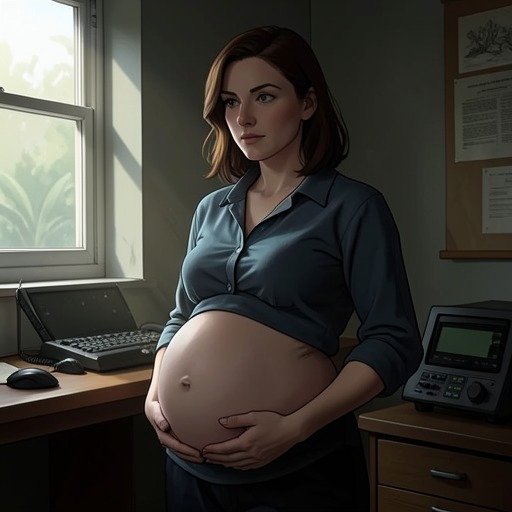
[Doctor N](entity:character-recall-character-doctor-n-1f91fcf2af2f) confirmed the pregnancy by telephone and sent a certificate naming [Annie Duchesne](entity:character-recall-character-annie-duchesne-4a61ab3d13cc) and giving a July 8, 1964, delivery date. She imagined a summer of sunshine, then tore the certificate apart. The act marked her decision that the pregnancy would not continue.
November 1963
The Letter to P
Annie wrote to P to tell him she was pregnant and intended to abort. Their relationship had never seemed especially promising, and she expected him to feel relieved that she did not plan to keep the pregnancy.
A week later John F. Kennedy was assassinated in Dallas. Annie had already lost interest in such public events, her attention consumed by the urgent private problem she could not yet solve.
November 1963
A Radiant Limbo
As she waited, Annie wandered the streets in a state she later remembered through images of voyages and journeys into the night. The months seemed to suspend ordinary judgments, and she experienced them as both indescribable and strangely beautiful.
For years afterward, fictional accounts of abortion and songs such as [La Javanaise](entity:expression-recall-expression-la-javanaise-2fe94985b960) and [J’ai la mémoire qui flanche](entity:expression-recall-expression-j-ai-la-m-moire-qu-dc53808f434e) could plunge her back into that period. The persistence of these reactions would eventually convince her that the experience had to be written rather than left buried.
late 1990s, before the book’s completion
A Resolve to Write
Annie began writing about the abortion without knowing whether she could finish. The urge to continue frightened her, but the thought of dying without having confronted the experience seemed worse. In a dream she held a published book marked OUT OF PRINT and could not decide whether the dream urged her to write or warned that writing would be pointless.
She resolved to follow the story wherever it led, as she had once resolved to proceed with the abortion after tearing up the pregnancy certificate. She intended to use her diary and engagement book as evidence and to search each remembered image until language could make the past physically present.
1963, during the search for an abortion
The Law Around Her
Annie understood that abortion was criminalized, and that the law threatened not only the woman but also anyone who helped her or advocated contraception. The ban was present in euphemisms, shame, doctors’ silences, and the widespread assumption that the law itself settled whether abortion was right or wrong.
She later recognized that the law shaped every failed attempt to obtain help. Poor students without money or connections were left to take risks, while those with careers and practices feared prosecution; the prohibition made a bodily crisis into a social and legal trap.
November 1963, as Annie confronts the pregnancy
The Class Stigma
Annie connected her situation to her working-class origins. She was the first in her family to pursue higher education and had escaped factory work and commerce, yet she felt that poverty’s inherited fatality had caught up with her through the pregnant girl’s stigma.
She did not imagine abortion as an impossible undertaking, but as a difficult ordeal other women had survived. Stories of needles, parsley, injections, dangerous rides, and backstreet practitioners had given her fragments of knowledge without revealing how life-threatening the process could be.
three days after Annie tears up the certificate, November 1963
Jean T’s Offer
Annie met [Jean T](entity:character-recall-character-jean-t-5f7addf98574), a married student involved in a movement supporting contraception and birth control, and hinted that she was pregnant. He listened with an intrigued intensity, asked who the father was, and invited her home for dinner, offering the first response that felt even remotely helpful.
At his house, Jean T told his wife Annie was in trouble. After dinner, while Annie washed dishes, he pressed against her and said there was time to make love. She pulled away; he later claimed he had only been testing her moral strength. The episode exposed how easily a woman seeking help could become an object of male curiosity or entitlement.
November 1963, two days after dinner at Jean T’s house
The Abortionist Lead
[Jean T](entity:character-recall-character-jean-t-5f7addf98574) took Annie to lunch and remained fascinated by her predicament. He joked that he and his friends could fit her with a probe, then told her of a married couple whose wife had nearly died during an abortion. He suggested Annie contact [LB](entity:character-recall-character-lb-04ff1ae888b0), a journalist who had also had an abortion.
Jean T said he could not lend money for an illegal procedure on moral grounds, despite his interest in Annie’s story. Annie recognized that he wanted to watch how it ended without paying its cost; nevertheless, LB represented a possible route to practical help.
late November 1963
Waiting for LB
Annie searched lecture halls and waited outside the offices of [Paris](entity:location-recall-location-paris-c02b439ce220)-Normandie, hoping to catch [LB](entity:character-recall-character-lb-04ff1ae888b0). She was afraid to ask inside the newspaper office and worried about troubling a woman who had already nearly died during an abortion.
One rainy evening she stood alone beneath an umbrella, scanning the street and the posted newspaper pages. Back in her room she recorded that she had waited again without success and that the pregnancy had to go. She had no other lead and felt increasingly desperate.
late November 1963
The Library Search
Unable to find practical instructions in novels, Annie searched the library index under abortion and found only medical publications. She consulted two journals, but their articles focused on the clinical consequences of criminal abortion rather than on the information she needed.
She copied the journals’ references into her address book. Years later, the blue-ink marks still seemed more materially trustworthy than memory alone, prompting her to understand physical traces as a way of approaching the reality of the past.
late November 1963
The Doctor’s Refusal
Annie walked [Rouen](entity:location-recall-location-rouen-bcf96910455d)’s streets looking for a doctor who might agree to help, studying brass plaques but unable to ring the bells. She wandered through the working-class district of Martainville, humming [Sœur Sourire](entity:character-recall-character-s-ur-sourire-7739318be57c)’s cheerful song Dominique as she lost her way.
At a general practitioner’s office on Boulevard de l’Yser, she said her period was late and asked for the bleeding to return. The elderly doctor confirmed the pregnancy, blamed men who seduced young women, and prescribed calcium and oestradiol injections. He softened when he learned she was a student, but never offered an abortion.
late November 1963
The Wrong Injections
Annie feared the university nurse might suspect her, so she asked a medical student to arrange the injections prescribed by the doctor. A fellow student gave her one without questions; the following day, Annie injected herself when neither student was available.
She recorded that the injections had done nothing. Only later did she learn that the drug was used to prevent miscarriage, an irony that deepened her sense of being trapped by medical ignorance and silence.
November 1963
The Thesis Falls Apart
Annie continued attending classes and working in the library, but her thesis on women in Surrealist writing became impossible to organize. Texts that had once seemed intellectually alive now left her staring blankly, unable to produce the synopsis and first chapter her tutor required.
She felt that she had ceased to be an intellectual, and that this collapse was more alarming than the abortion itself. Her inability to write signaled that her former life of ideas had become inaccessible while nausea and the pregnancy occupied her body and attention.
November 1963
Nausea and Dizziness
Annie’s nausea came in waves, mingling desire for food with disgust. She sometimes wolfed down food on the street, while other things seemed to rot in her mouth; once, the students around her seemed to break into shining dots, and she nearly collapsed on the stairs.
Her diary accumulated brief reports of dizziness and sickness. These bodily episodes made the pregnancy undeniable even as she continued to call it that thing or it rather than grant it a name that implied a future child.
September 1963, remembered during the crisis
The Last Photograph
A photograph taken in September showed Annie sun-tanned, smiling, and mischievous, her hair falling around her shoulders. Looking at it later, she saw the last image of herself as a young girl still caught in the invisible web of seductiveness.
The photograph made the change in her life legible by contrast. The carefree girl in the picture belonged to a time before the pregnancy had divided her from the ordinary world around her.
November 1963
A Dance at La Faluche
At a party with girls from the dormitory, Annie felt drawn to a gentle, fair-haired boy with whom she danced. It was the first time she had felt such attraction since learning she was pregnant, but she could not go further.
The desire and the bodily reality seemed grotesquely separate to her: her body could still open to sex while carrying an embryo. Her diary reduced the evening to a romantic dance that went no further, registering a changed relationship to intimacy.
November 1963
Ordinary Life Becomes Alien
Conversation and routine began to feel meaningless to Annie. A fellow student’s detailed account of her accommodation, landlady, laundry, and teaching job struck Annie as uncanny and obscene because it represented a normal life from which she felt excluded.
Annie continued visiting her parents, concealing the pregnancy through the familiar habits of her adolescence: arriving with dirty laundry, wearing a calm expression, and leaving with food. The family’s regular routines made concealment possible without making the secret less isolating.
early December 1963
The Knitting Needles
Annie returned from her parents’ house with the knitting needles she had once bought to make a cardigan. Having found no help, she decided to take the matter into her own hands.
The needles turned an ordinary possession into the instrument of a desperate plan. Annie’s decision reflected the danger created by a system that left a young woman without money or an accessible legal option.
early December 1963
The Failed Attempt
After watching a documentary about Nazi Germany with girls from the dormitory, Annie told herself that the pain she was about to inflict on herself could not compare with the suffering in the death camps. The thought gave her courage, as did knowing that many women had gone through the same ordeal.
She lay on her bed and slowly tried to insert a knitting needle, but could not find the opening of the womb and stopped when she felt pain. Enraged by her helplessness, she wept and wrote that the attempt was impossible.
December 1963, after the failed attempt
Doctor N’s Warning
Annie called [Doctor N](entity:character-recall-character-doctor-n-1f91fcf2af2f) and said she did not want to keep the pregnancy and had harmed herself, although the latter claim was a lie intended to prove her resolve. She still hoped he might help and went straight to his office.
After examining her, Doctor N said all was well and told her not to reveal where she was going. He prescribed penicillin to take before and after the operation, but did not name the abortion. Annie left believing she had failed to persuade him, while understanding that he feared she might die of infection.
December 1963
A Confidante in O
Annie’s two closest friends had left [Rouen](entity:location-recall-location-rouen-bcf96910455d), and their alarm could not give her practical help. She turned instead to O, a dormitory acquaintance whom she did not especially like and whose Catholic beliefs made her seem an unlikely confidante.
Annie realized that telling people mattered even when their beliefs or reactions could not solve anything. Her need was to confront others with the reality of her situation, rather than remain entirely alone with it.
December 1963
André X’s Plea
Annie told André X, a French department student, that she was pregnant and would do anything to abort. He urged her to follow what he called the natural way and not commit a crime, but remained absorbed by her story and struggled to leave the café.
Annie sensed that men found her decision both frightening and enticing. For André, O, and [Jean T](entity:character-recall-character-jean-t-5f7addf98574), the abortion had become a story whose ending was unknown, while for Annie it was an immediate struggle for survival.
December 1963
P’s Silence
P sent Annie occasional letters from [Bordeaux](entity:location-recall-location-bordeaux-ee3c0ff08d39), invoking obstacles to finding a solution. Annie’s diary noted that he was leaving her to cope alone, yet she lacked the courage to end the relationship and add separation to her loneliness.
She still planned to spend the Christmas vacation with him and another couple, despite suspecting that he had done little to help. His absence of practical support left Annie searching for an abortionist while trying not to lose the fragile connection to the man who had impregnated her.
a week before Christmas 1963
LB Comes to the Dorm
[LB](entity:character-recall-character-lb-04ff1ae888b0) finally came to Annie’s room after [Jean T](entity:character-recall-character-jean-t-5f7addf98574) encountered her in town and told her Annie needed help. She gave Annie the address of [Madame P-R](entity:character-recall-character-madame-p-r-c62725a256b5), a middle-aged paramedic who worked at a clinic and lived at [Passage Cardinet](entity:location-recall-location-passage-cardinet-a6a5ace7f747) in [Paris](entity:location-recall-location-paris-c02b439ce220).
LB described the procedure: Madame P-R inserted a probe through a speculum, after which the woman waited to miscarry. LB had contracted septicemia but believed antibiotics could reduce the danger. She offered to lend Annie the four hundred francs, turning an address and a few banknotes into the first workable plan.
late December 1963
The Journey to Le Mont-Dore
Despite the cost and the time it would take from the search, Annie traveled to [Le Mont-Dore](entity:location-recall-location-le-mont-dore-3e3e73eea516) in the [Massif Central](entity:location-recall-location-massif-central-3da9895ae258) to meet P. She had never been to the mountains and wanted several more weeks before confronting the abortionist.
The diary recorded dances and cafés, but Annie remembered snow, the crowded café, and the jukebox playing If I Had a Hammer. She and P argued, though she could no longer recall the words; she wanted him to recognize the abortion as a sacrifice, perhaps even an act of love.
late December 1963
Skiing Against the Pregnancy
During the vacation, Annie tried to dislodge the embryo through strenuous activity. When Annick lent her skiing gear, Annie repeatedly fell, imagining each fall might save her from having to visit [Madame P-R](entity:character-recall-character-madame-p-r-c62725a256b5).
She also climbed toward the summit of Puy Jumel in inadequate boots, driven by the belief that pushing her body to its limits could make the embryo let go. She exhausted herself in the snow, treating the mountain as a possible instrument of abortion.
December 31, 1963
The Maid’s Miscarriage
On the journey from [Le Mont-Dore](entity:location-recall-location-le-mont-dore-3e3e73eea516) back to [Paris](entity:location-recall-location-paris-c02b439ce220), Annie rode with a family who had offered her a lift. She stayed silent until the driver’s companion mentioned a girl in a maid’s room who had miscarried and moaned all night.
The remark stayed with Annie alongside the rainy journey. Sentences from strangers, frightening or comforting, had begun to serve as a kind of support as she approached the ordeal she had been unable to discuss openly.
January 8, 1964
The First Visit to Madame P-R
Annie hitchhiked from [Rouen](entity:location-recall-location-rouen-bcf96910455d) toward [Paris](entity:location-recall-location-paris-c02b439ce220) to save the cost of a train ticket, then made her way through the dark to [Passage Cardinet](entity:location-recall-location-passage-cardinet-a6a5ace7f747). [Madame P-R](entity:character-recall-character-madame-p-r-c62725a256b5) lived on the third floor of an old, dilapidated building.
Madame P-R examined Annie’s abdomen, judged that three months was about the right time, and explained that she would insert a probe without soapy water or bleach. Her brisk focus on the date, method, and fee was strangely reassuring: it left no room for moral interrogation or emotional delay.
January 8–15, 1964
Fear Before the Procedure
After the first visit to [Madame P-R](entity:character-recall-character-madame-p-r-c62725a256b5), Annie began the penicillin [Doctor N](entity:character-recall-character-doctor-n-1f91fcf2af2f) had prescribed and was overwhelmed by fear of the coming procedure. To the girls at the canteen, she said she was having a beauty spot removed from her back, an explanation that briefly let her imagine a clean operating room instead of a back kitchen.
She could not reproduce the terror precisely years later, but hostile-looking women in queues could summon it: she imagined one rummaging in her body with a foreign object. The approaching procedure became a physical dread she could neither explain nor escape.
January 15, 1964
The Probe Is Inserted
Annie arrived early for her appointment and waited in a church, praying not to suffer, then drank tea in a nearby café. Before leaving, she looked at herself in the restroom mirror and could hardly believe that this was happening to her.
[Madame P-R](entity:character-recall-character-madame-p-r-c62725a256b5) had prepared a table and boiling water in her apartment. As Annie lay with her hips raised, the woman inserted the probe and told her about a housewife who had died after an incompetent abortionist used bleach. The story was meant to reassure Annie, but it made the danger of the procedure vivid.
January 15, 1964
The Passage Cardinet Walk
The probe caused blinding pain, and [Madame P-R](entity:character-recall-character-madame-p-r-c62725a256b5) told Annie to stop screaming and let her work. When it was in place, she said the procedure was over and packed cotton between Annie’s thighs in case the waters broke.
Madame P-R walked Annie to Pont-Cardinet station, wearing her coat over her slippers. Annie felt exposed and abandoned by everyone except the older woman beside her, who seemed at once like a mother and like a witch. The walk became one of the most indelible scenes of the ordeal.
January 16–17, 1964
The Waiting Days
Annie waited for contractions and wrote to P that she never wanted to see him again. To her parents she said she would miss the weekend because she was going to see the Viennese Waltzes, using a local event as a plausible explanation.
Nothing happened. On Friday evening she called [Madame P-R](entity:character-recall-character-madame-p-r-c62725a256b5) from a post office and was told to return the next morning. Her diary recorded that the abortionist had not succeeded, and the delay renewed Annie’s uncertainty about whether the procedure would work.
January 18, 1964
The Second Probe
Annie returned to [Paris](entity:location-recall-location-paris-c02b439ce220) in bitter cold. In [Madame P-R](entity:character-recall-character-madame-p-r-c62725a256b5)’s kitchen she saw a basin of steaming water, a red tube, and a hairbrush; the probe waiting in the water looked to her like a snake.
Madame P-R replaced the first probe and exclaimed that Annie was in labor. This time it did not hurt. She did not charge extra, but asked Annie to return the probe afterward because that model was difficult to find. The procedure had begun to resemble a delivery, though neither woman had spoken of it that way before.
January 18, 1964
Doctor N Prescribes Medicine
After reaching the station, Annie called [Doctor N](entity:character-recall-character-doctor-n-1f91fcf2af2f) and said that a probe had been inserted. He paused, then suggested Masogynestril; his voice made clear that he did not want to see her or hear from her again.
Annie went into a nearby drugstore to buy the medicine, but the staff demanded a prescription. She felt that the pharmacists could see the probe through her clothes and that her inability to produce the required paper exposed her guilt. The encounter left her feeling desperate and publicly marked.
January 18–20, 1964
Waiting With the Probe
Back in the dormitory, Annie was not frightened so much as serene; she believed she had only to wait. She could not read or listen to music, and drew [Passage Cardinet](entity:location-recall-location-passage-cardinet-a6a5ace7f747) from memory as a narrow street whose façades converged toward a distant crack.
The probe had become part of her body and, in her mind, an ally, though it was not acting quickly enough. Her diary described slight twinges of pain, a bugle playing La Marseillaise, and laughter upstairs: life continued around the embryo’s slow expulsion.
January 20, 1964
The Probe Begins to Slip
Annie traveled briefly to visit her parents, fearing she might be unable to go the following weekend. At home she found her underwear soaked with blood and water, and the probe slipping out of her vagina.
The neat houses and gardens of her childhood neighborhood appeared unchanged. The sight of blood brought another memory to mind: the stain left by the family cat after it died while Annie was still at school, an earlier encounter with bodily loss that now seemed to echo her own crisis.
evening of January 20, 1964
The Film Club Spasms
Back in [Rouen](entity:location-recall-location-rouen-bcf96910455d), Annie went with O to a screening of Battleship Potemkin. Spasms began to seize her as she watched, and a disturbing image of meat crawling with worms was the last part of the film she could take in.
She rushed back to the dormitory, clung to the bedstead, and vomited. The pains became continuous. O came to her room and suggested that she breathe like a puppy, but neither girl knew what the night would bring.
night of January 20–21, 1964
The Embryo Is Expelled
Annie felt an overpowering urge to defecate and hurried to the bathroom. As she pushed, the embryo emerged at the end of a reddish cord; she saw it hanging from her body like a baby doll and carried it back to her room between her thighs.
She called softly to O, who joined her. Neither knew what to do, but Annie said they had to cut the cord. O fetched scissors, and together they examined the tiny body before placing it in an empty melba-toast wrapper and flushing it down the toilet.
night of January 20–21, 1964
O Stands Beside Annie
O wept as she helped Annie, despite her bourgeois Catholic upbringing and whatever views she might later hold about abortion. She became an improvised midwife in the dormitory room, acting when Annie had no one else beside her.
Annie later remembered the scene as one of life and death occurring in the same breath. O’s presence made the event more than a solitary bodily ordeal; it linked the two women through an act of care that neither had been prepared for.
late night, January 20–21, 1964
The Hemorrhage
After the embryo was expelled, Annie began losing blood rapidly. O handed her towels, but the bleeding continued and Annie became too weak to stand without seeing stars. She finally screamed that she needed a doctor.
O went downstairs to wake the janitor, but received no answer. When voices approached, Annie feared she had already lost too much blood. The hemorrhage ended the sense that she had managed the abortion on her own and brought the night’s danger into the hands of medical authority.
night of January 20–21, 1964
The Night Doctor’s Interrogation
The doctor on duty sat on Annie’s bed, grabbed her chin, and demanded to know why and how she had done it. Annie begged him not to let her die and promised never to do it again when he insisted on the promise.
He wrote a referral to [Hôtel-Dieu Hospital](entity:organization-recall-organization-h-tel-dieu-hospi-8c40f30b7d6a), dismissing her request for a clinic as though a hospital were the only place appropriate for a girl like her. Unable to stand, Annie watched him take payment from her desk drawer and felt that the night had shifted from the experience of life and death to exposure and judgment.
January 21, 1964
The Hospital Corridor
Annie was carried to [Hôtel-Dieu Hospital](entity:organization-recall-organization-h-tel-dieu-hospi-8c40f30b7d6a) on a stretcher, without her glasses, and left on a bed in a crowded corridor. She believed her earlier caution and antibiotics had been for nothing and wondered whether cutting the cord had caused the hemorrhage.
A young unmarried woman arrived saying she was ready to give birth, but a nurse dismissed her and the two women eventually left. Annie recognized that the pregnant girl who kept her child was treated with no more kindness than the girl who aborted; working-class women faced contempt either way.
January 21, 1964
The Surgeon’s Insult
In the operating room, Annie lay naked with her legs raised beneath a bright light, unable to understand why the doctors needed to operate when the embryo was already gone. She asked the young surgeon what he planned to do.
He shouted that he was no fucking plumber, and Annie lost consciousness under the anesthetic. The sentence stayed with her as a division between those who ruled and those who were ruled, fixing the difference between doctors and a woman who had aborted in a single humiliating outburst.
January 21, 1964
The Curettage
Annie woke at night alone in a hospital room and asked whether her ovaries had been removed. A woman reassured her brusquely that she had only been curetted; babies cried nearby while Annie’s abdomen felt like a flaccid basin.
She realized she had lost the body she had known since adolescence: the secret womb had been exposed and scraped, leaving her with a body she associated with her mother’s. The chart at her bedside called her uterus gravid, a clinical word she found offensive even after learning its meaning.
January 21–22, 1964
A Meal Like a Placenta
At the hospital, Annie was served boiled meat on tired cabbage leaves and could not touch it. She felt as though she had been given her own placenta to eat.
The food cart and its announcements about custard for breastfeeding women became part of the ward’s routine. Such ordinary hospital rituals made her feel that her own body’s reproductive processes continued to be managed and named by others, regardless of the secret ordeal that had brought her there.
during the hospital stay, January 1964
The Nurse’s Explanation
The intern who had treated Annie harshly came to her room and seemed embarrassed. Annie first assumed he was ashamed of the operating-room insult, but learned that he had only discovered she was a college student after the operation, probably through her student union card.
A night nurse told Annie she should have said she was like the doctor, meaning from the same social world. The nurse’s final assurance that Annie was better off now was the only comforting remark she received in hospital, though Annie understood it as an expression of class hierarchy as much as solidarity.
during the hospital stay, January 1964
Milk After the Abortion
Annie’s breasts swelled and hurt as her body began producing milk for a dead three-month-old embryo. Nurses wrapped her chest tightly, pressing her breasts flat, and one aide offered herbal tea as a cure for the pain.
The lactation made clear that her body continued its reproductive course regardless of the abortion. The physical discomfort became another memory of the way the experience had reached beyond the decision and into every part of her body.
during the hospital stay, January 1964
Visitors Compare Their Abortions
[Jean T](entity:character-recall-character-jean-t-5f7addf98574), [LB](entity:character-recall-character-lb-04ff1ae888b0), and JB visited Annie together. She gave them a lighthearted account of the hemorrhage and the hospital’s humiliations, leaving out the details that would haunt her, and she and LB compared their abortions.
They joked about how much Annie might have saved by using a local practitioner instead of going to [Paris](entity:location-recall-location-paris-c02b439ce220). Their laughter showed that they had survived the transgression, but it also concealed the fear and pain that Annie could not yet tell them plainly.
January 25, 1964
Discharge from Hôtel-Dieu
After five days in hospital, Annie was discharged. [LB](entity:character-recall-character-lb-04ff1ae888b0) and JB handled the paperwork and drove her to the station; from the post office Annie called [Doctor N](entity:character-recall-character-doctor-n-1f91fcf2af2f), who told her to take penicillin because the hospital had given her no medicine.
She went to her parents’ home and pretended to have a cold. Doctor N had informed their family doctor, Doctor V, who was to examine her discreetly and prescribe antibiotics. The secrecy continued even after the immediate danger had passed.
late January 1964
Doctor V’s Belated Joke
When Annie’s mother was out of hearing, Doctor V whispered excitedly and asked who was responsible. He joked that there was a local woman nearby who knew how to perform abortions, although Annie had never heard of her.
The information arrived only after Annie no longer needed it. Annie understood that a devout, right-wing doctor could safely joke with a bright former pupil once the danger had passed, while the law had kept such knowledge out of reach when it mattered.
late January 1964
The Legs of Another Woman
At her parents’ home, Annie retained one image: lying on her bed with Gérard de Nerval’s poems, looking at her legs in black tights as they rested in the sun. They seemed to belong to a different woman.
The image registered a bodily passage that neither family routine nor medical discharge could undo. Annie had returned home, but she no longer inhabited the same self she had been before the pregnancy and abortion.
February 1964
A Wordless Return
Annie returned to [Rouen](entity:location-recall-location-rouen-bcf96910455d) in a state of euphoria and acute awareness. Cars, strangers, and food seemed charged with meaning, yet words had lost their substance; she slept lightly and saw a milky water babe before her eyes.
Her thesis topic appeared radiant but could not be organized into an argument. The experience had made her feel intoxicated by a kind of wordless intelligence, far more real than the academic structures she had previously trusted.
February 1964
The Passion According to St John
Annie listened to Bach’s Passion According to St John in her room. The Evangelist’s voice seemed to recount her ordeal in a language she did not know, and the chorus’s cry of Wohin opened a horizon around the kitchen, the probe, and the blood.
The suffering she had endured became part of a larger misery and a sense of eternal death. Through the music, Annie felt saved, though she could not yet explain what the experience meant.
February 1964
The Sacred Secret
Annie walked through the streets with the night of January 20–21 held inside her as something sacred. She felt proud, as if she had ventured into a region of horror or beauty that other people feared to approach.
That mixture of pride, secrecy, and survival helped shape her later desire to write. The ordeal was not merely an episode to forget; it had become a source of knowledge about the body, death, and the limits of ordinary life.
February 1964
The Cellar Party
O took Annie to a party, where she sat at the back of a cellar and watched other people dance. Their enjoyment seemed to belong to a ritual whose meaning she could no longer share.
She remembered Annie L’s radiant face and fashionable white dress, but remained the outsider. The abortion had changed how she experienced social life even after she had returned to the routines of student existence.
February 1964
The Encounter With Gérard H
Annie followed a medical student, Gérard H, to his room. When he removed her sweater and bra, she saw her breasts, recently swollen with milk, now shrunken and drooping; she wanted to tell him about the abortionist but lost her desire for him.
They ended up eating fruitcake his mother had baked. The failed intimacy showed how differently Annie inhabited her body after the abortion, even in a private encounter that might once have seemed ordinary.
February 1964
Leaving Religion
Annie entered Saint Patrice’s Church and told a priest she had had an abortion. She soon realized the encounter was a mistake: she felt illuminated by a halo, while the priest regarded her as a criminal.
Leaving the church, she understood that she was finished with religion. The meeting made the moral condemnation she had encountered throughout the crisis explicit and ended her remaining attachment to religious authority.
March 1964
Jacques S Learns the Truth
Annie ran into [Jacques S](entity:character-recall-character-jacques-s-b7397691cdc7) at the library, where he asked how her thesis was progressing. She indirectly told him she had had an abortion, partly from pride and partly to challenge his assumptions about workers.
Jacques froze, staring at her with the fascinated expression Annie remembered in men who heard about her abortion. He repeatedly congratulated her, dazed by the revelation that the girl he had once seen as a student had crossed into an experience he could only imagine.
after March 1964
Doctor N’s Approval
Annie returned to [Doctor N](entity:character-recall-character-doctor-n-1f91fcf2af2f) for an examination. He said she had pulled through remarkably well, with a hint of pride and approval.
He gave her a diaphragm and sperm jelly for contraception. Annie recognized that his praise encouraged her to turn a painful experience into a personal victory, even though his earlier refusal to intervene had left her to face the danger largely alone.
1964, after the abortion
The Probe in the Woods
Annie did not send the probe back to [Madame P-R](entity:character-recall-character-madame-p-r-c62725a256b5). She took her parents’ car into the forest and threw it into some bushes, deciding that the high fee meant she need not trouble herself with returning it.
Later she regretted discarding it. The probe was not simply equipment but a material trace of the experience, and its destruction could not erase the memory attached to it.
1964, after the abortion
Returning to Normal
Annie gradually resumed ordinary routines. She worked on her thesis, babysat, and manned a heart specialist’s switchboard to repay the loan for the abortion; she went to films, cut her long hair, and exchanged glasses for contact lenses.
She was not sure when normality returned, but understood it as a world in which ordinary sights no longer provoked anxiety or speculation. Even the practical act of inserting contact lenses felt precarious, like fitting the diaphragm into her body.
years after 1964
Madame P-R’s Place in Memory
Annie never saw [Madame P-R](entity:character-recall-character-madame-p-r-c62725a256b5) again but continued to think of her. She came to believe that the avaricious woman, living in a poorly furnished flat, had wrenched her away from her mother and into the world.
Annie felt that the book should be dedicated to the woman who had performed the abortion. Madame P-R’s practical, unacknowledged work became central to Annie’s understanding of the women whose choices and actions had kept one another alive.
for many years after January 1964
The Anniversary
For many years Annie celebrated the night of January 20–21 as an anniversary. The date marked the passage through a night she had once believed might end in death.
She eventually understood the ordeal and sacrifice as necessary to her later willingness to have children. The experience had not made reproduction simple, but helped her accept the turmoil of carrying life and allowing future generations to pass through her.
late 1990s, while writing the book
The Experience Becomes Writing
Annie completed the effort to put an extreme human experience into words, one that had involved life and death, law, ethics, taboo, and the body. She felt she had rid herself of the guilt that the event had happened to her and that she had done nothing about it sooner.
She came to believe that these events had happened so she might recount them: that her body, sensations, and thoughts could become writing and join the lives and minds of others. Writing offered a form through which private experience might become intelligible and shared.
1999, before the writing is completed
Testing Negative for HIV
Annie went to [Lariboisière Hospital](entity:organization-recall-organization-lariboisi-re-hos-8d628c053f6a) for an HIV test, carrying essays to mark as she waited among strangers. A telephone conversation about a normal blood count sounded ominous in the quiet room, and she imagined the person on the line might be HIV-positive.
When the doctor called Annie’s name and announced that the tests were negative, she laughed and hurried back through [Paris](entity:location-recall-location-paris-c02b439ce220) in a trance. She felt saved once again and wondered whether the young blonde girl in the waiting room had received good news too.
1999, after the HIV test
The Return of the Old Terror
The HIV test had revived the same horror and disbelief Annie had experienced while waiting for [Doctor N](entity:character-recall-character-doctor-n-1f91fcf2af2f)’s verdict in 1963. Looking back, she measured her life by the interval between the [Ogino method](entity:rule-recall-rule-ogino-method-97c61ad7d214) and the era of cheap condom dispensers.
The comparison connected two different dangers: the possibility of pregnancy before reliable access to abortion and the later fear of infection. The body’s vulnerability made the past feel present again and helped set the writing in motion.
February–October 1999
The Passage Cardinet Return
Annie returned to [Paris’s 17th arrondissement](entity:location-recall-location-7f24da7dacca) to find the café where she had waited and the church where she had prayed before seeing [Madame P-R](entity:character-recall-character-madame-p-r-c62725a256b5). [Passage Cardinet](entity:location-recall-location-passage-cardinet-a6a5ace7f747) was empty; the old street plaque remained above a newer one, and Madame P-R’s building had a locked digital entry system.
She found that the church was [Saint-Charles-de-Monceau Church](entity:location-recall-location-1e8e0e558927), not the name she had remembered, and sat in a café unable to recognize its restroom. Standing on the Malesherbes platform, she realized she had returned in the hope that something might happen to her. Instead, the journey exposed the distance between present-day streets and the bodily memory that had survived them.