Heidi’s homesickness
HeidiHeidi’s homesickness in Frankfurt turns the distance between the city and the mountain into the central pressure on her daily life. What begins as a practical wish to go home with White Bread Rolls for Peter’s grandmother deepens into an almost constant longing that Heidi hides for fear of seeming ungrateful. The city’s walls and streets cannot displace her remembered mountain: its flowers, evening light, animals, and familiar obligations become both the substance of her memories and the measure of what Frankfurt denies her.
The Wish to Return and the Reasons She Gives
Heidi states her preference plainly when Clara asks whether she is pleased to come to Frankfurt. She is not; she says that she will go home the next day and take Peter’s grandmother a white loaf. Clara has expected a companion who will stay with her and share her lessons, but Heidi’s answer locates her attention elsewhere: in the mountain home and in the needs of someone who is waiting there. Clara even anticipates that Heidi’s inability to read will make lessons more entertaining, while for Heidi, reading and city life are not yet the point. Her priorities are already set by home.
During the first days, Heidi’s inability to settle into lessons makes the difference between her two worlds visible. The tutor tries to teach her the letters by comparing their shapes to familiar things, but the images that come to Heidi are goats and birds of prey, not the alphabet. The lesson gives Clara a diversion and makes the morning less tedious for her; it does not draw Heidi away from the mountain. Later in the afternoons Heidi describes her life there to Clara, and the act of recalling it intensifies rather than relieves her desire to leave. She repeatedly ends her descriptions by insisting that she must go home the next day. Clara asks her to wait until Herr Sesemann returns, and Heidi agrees, but her apparent quick recovery is sustained in part by a private consolation: every day adds two White Bread Rolls, one saved at dinner and one at supper, to the bundle she is collecting for Peter’s grandmother. She cannot bear to eat them because she knows that the old woman has no white bread and can hardly manage the hard black bread.
A Failed Departure and a Silenced Longing
Heidi’s homesickness is tied not only to affection but also to specific fears about what may happen in her absence. She imagines Snowflake crying again, Peter’s grandmother waiting, and Greenfinch being beaten because Heidi is not there to give Peter cheese. She misses watching the sun say good-night to the mountains and recalls the great bird’s complaint about people crowding together in the city instead of living high among the rocks. These concerns make her wish to return feel like a set of responsibilities, not a passing preference.
When Heidi can no longer endure the separation, she ties the rolls into her red shawl, puts on her straw hat, and heads for the hall-door. Fraulein Rottenmeier intercepts her on returning from a walk. Heidi’s bundle and readiness to leave bring an angry reprimand: she is told that she has everything she could want and is ungrateful to try to run away. Under pressure, Heidi explains her reasons, including her worry for Snowflake, Peter’s grandmother, Greenfinch, and the mountain sunset. Fraulein Rottenmeier takes this account as evidence that the child has lost her senses and orders Sebastian to bring her back inside. The episode ends the attempted departure, but it does not lessen the longing that drove it.
Its more lasting effect is to make Heidi believe that she cannot speak openly. She understands that Dete’s assurance—that she could go home whenever she wished—does not describe her real situation: she must stay in Frankfurt, perhaps for a very long time or even forever. She also fears that Herr Sesemann, Clara, and Peter’s grandmother would consider her ungrateful if she wanted to leave. Because she does not want to offend the grandmother, whose kindness matters to her, she keeps her homesickness to herself. Separation thus becomes harder not merely because she cannot return, but because she believes she has no acceptable way to ask.
Longing Written on the Body and the Seasons
As Heidi’s distress becomes private, it also becomes physical. She stops eating properly, grows paler, and lies awake for long hours. When she finally sleeps, her dreams return her to the hut, the rocks, and the snow-field reddened by the evening light. On waking, she briefly expects to run outside into the sunshine, only to find herself in the large bed in Frankfurt. She weeps quietly into her pillow so that no one will hear. The contrast between the remembered mountain and the room around her gives the homesickness a recurring pattern: return in memory, awakening into absence, and concealed grief.
The passage of the seasons sharpens that contrast instead of easing it. Heidi cannot tell whether it is winter or summer from the walls and windows she sees. She rarely goes out, and when Clara is well enough to be driven, the outings go only a short distance through streets, large houses, and crowds. Grass, flowers, fir trees, and mountains remain beyond reach. Even the change from autumn to winter and then toward spring is registered through the opposite houses: sunlight falls on their white walls, but it does not restore the landscape Heidi misses. She imagines Peter going out again with the goats and the cistus flowers glowing among the rocks at sunset. Sometimes she sits alone with her hands over her eyes, trying not to see the sun shining on the city wall, and silently struggles with the longing until Clara sends for her.
Peter’s grandmother notices that Heidi is not recovering. She waits several days to see whether the child’s downcast appearance will pass, then observes that Heidi has often been crying before she comes downstairs. When she asks what is wrong, Heidi cannot explain, answering that she cannot tell her. This silence is not evidence that the homesickness has weakened; it reflects Heidi’s fear that telling the truth would make the kind older woman think her ungrateful and withdraw her kindness. The grandmother’s attention establishes that Heidi’s concealed suffering has become visible to someone who cares for her, even before Heidi can name it aloud.
Reading, Suppressed Tears, and the Diagnosis
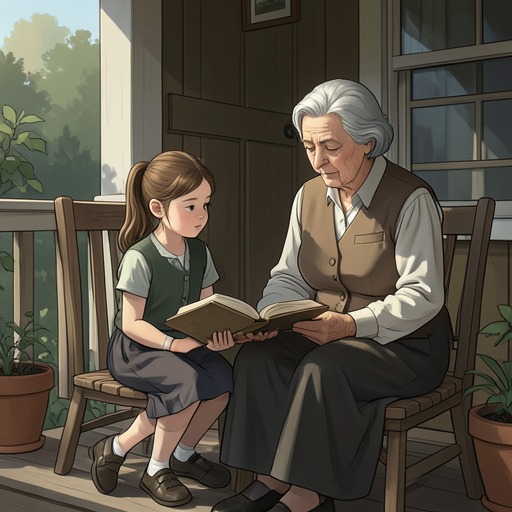
The threat of losing her book adds another constraint to Heidi’s attempts to express pain. When she weeps while reading, Fraulein Rottenmeier declares that further scenes will mean the book is taken away. Heidi is frightened because the book is her great treasure. She dries her tears and suppresses her sobs; thereafter she does not cry aloud while reading, although Clara notices the strained expressions on her face. The outward quiet is misleading. Heidi continues to lose her appetite, grows thin and pale, and cries into her pillow at night. The book remains precious, but the threat around it teaches her to make her grief less audible, not less severe.
The doctor eventually identifies the condition that the household has failed to understand. He tells Herr Sesemann that Heidi is a sleepwalker: she is the child who has been opening the front door at night and frightening the household. He also says that she is consumed by homesickness, has become nearly a skeleton, and needs an immediate change. In his judgment, the overexcited nerves and the homesickness have the same remedy: Heidi must return to her native mountain air. Her longing, which had appeared to others as disobedience or a source of lessons and conversation, is thus recognized as a serious illness with a concrete consequence.
Herr Sesemann is shocked that a child who arrived happy and healthy has become so ill in his house without anyone discovering it. He resists sending her home in such a miserable condition and asks the doctor to make her well before she leaves. The doctor rejects that order of priorities: he warns that pills and powders cannot cure the illness and urges Herr Sesemann to consider whether Heidi should return ill rather than remain away from home. The exchange marks a decisive change in the household’s understanding. Heidi’s homesickness is no longer something to correct through gratitude or patience; it is the reason she must be allowed to go back.
Narrative Significance
Heidi’s longing is given force through repeated, concrete returns rather than a single declaration. The saved rolls, the red shawl, the evening sun, the unseen goats, and the remembered flowers link domestic care to the landscape she has lost. The city is not simply unfamiliar scenery: its enclosed rooms, restricted outings, and unchanging view prevent Heidi from participating in the seasonal world by which she measures home. The mountain, meanwhile, remains active in her imagination, organizing what she fears, what she remembers, and what she hopes to do.
The progression from open insistence to silence and bodily collapse exposes the cost of misreading Heidi’s attachment as ingratitude. Her attempted departure is stopped; her explanation is dismissed; and she learns to hide her tears even from those who might help. Only when the doctor connects her nightly wandering and emaciation to homesickness does the adults’ interpretation change. The decisive consequence is that the wish she had been unable to voice safely becomes a medical necessity: her return to the mountain is not a reward for good behavior but the prescribed answer to the harm caused by keeping her away.