Cisler
HungerCisler is a music-seller in Christiania, a well-dressed, handsome man whom the narrator remembers from better days when he had money to buy sheet music. In the narrator's desperate search for a shilling to keep himself alive, Cisler's name comes to mind unbidden, and the narrator sets out for his shop, walking slowly and resting between efforts, hoping that a personal appeal might succeed where other attempts have failed.
The Encounter at the Music Shop
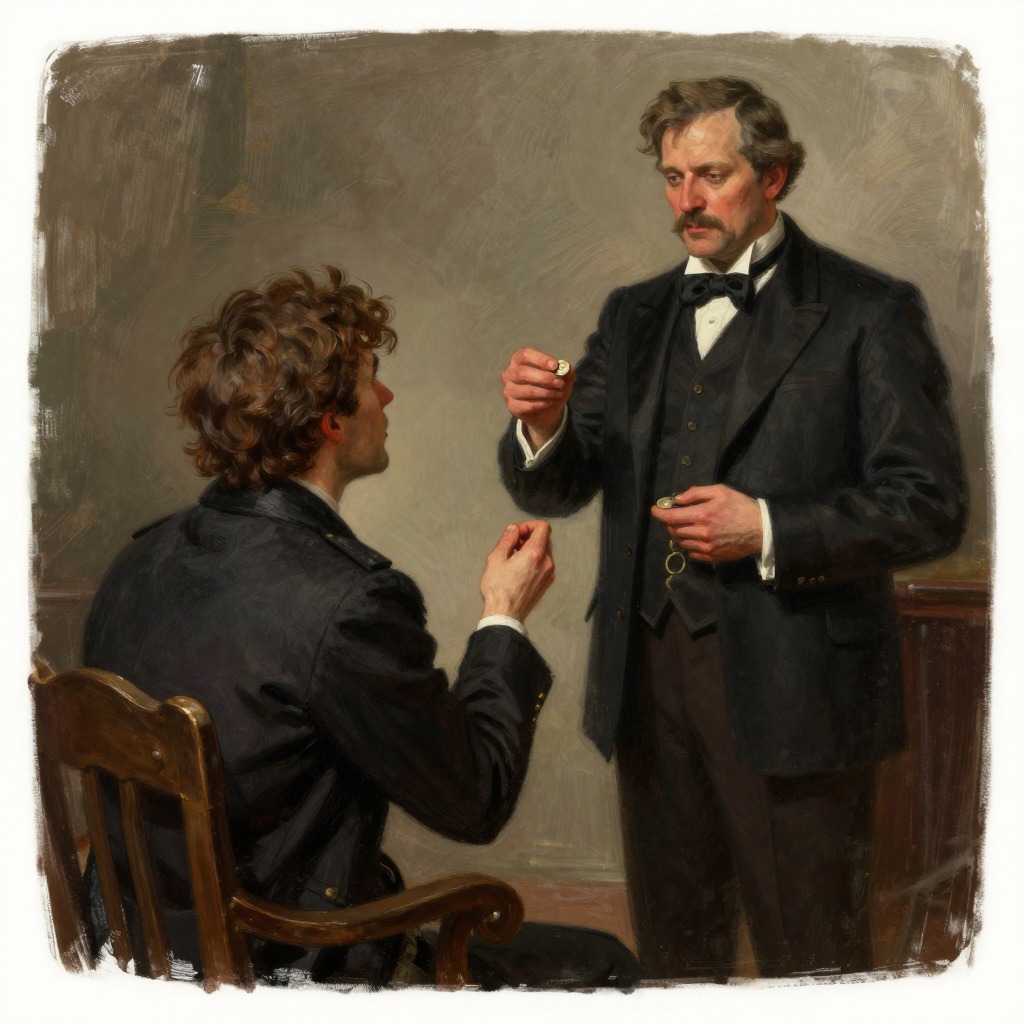
When the narrator enters the shop and asks for the chief, he is shown into Cisler's office. Cisler is seated at his desk, running down accounts, handsome and dressed in the latest style. The narrator stammers through an excuse and sets forth his errand: he is compelled by need, he says, and promises to repay the loan as soon as he is paid for his newspaper article. He frames the request as a great benefit Cisler would confer. Even as the narrator speaks, Cisler turns back to his desk and resumes his work. When the narrator finishes, Cisler glances sideways at him, shakes his handsome head, and says simply "No"—no explanation, not another word.
The Aftermath of Refusal
The narrator's knees tremble fearfully, and he supports himself against the little polished barrier. He tries once more, but Cisler cuts him off, adding, "and let me tell you, at the same time, I've had about enough of this." The narrator tears himself out of the shop, sick with hunger and boiling with shame. The encounter marks a turning point: the narrator realizes he has sunk to the lowest form of begging, that he has turned himself into a dog for the sake of a miserable bone and not even received it. He reflects that this single day has coarsened his whole mind and bespattered his soul with shamelessness, and that he has stood and whined in the pettiest huckster's shop to no avail.
Narrative Significance
Cisler's refusal is one of a series of rejections that systematically strip the narrator of his last shreds of dignity and hope. Unlike the "Commandor," who later offers the narrator half-a-sovereign without being asked, Cisler represents the cold, indifferent face of the respectable world—a man who has known the narrator in better times but will not extend even a minimal gesture of help. The encounter crystallizes the narrator's growing despair and his recognition that he has exhausted every resource, that there is no stone left unturned, and that he is utterly alone in his starvation.