No Night Eviction
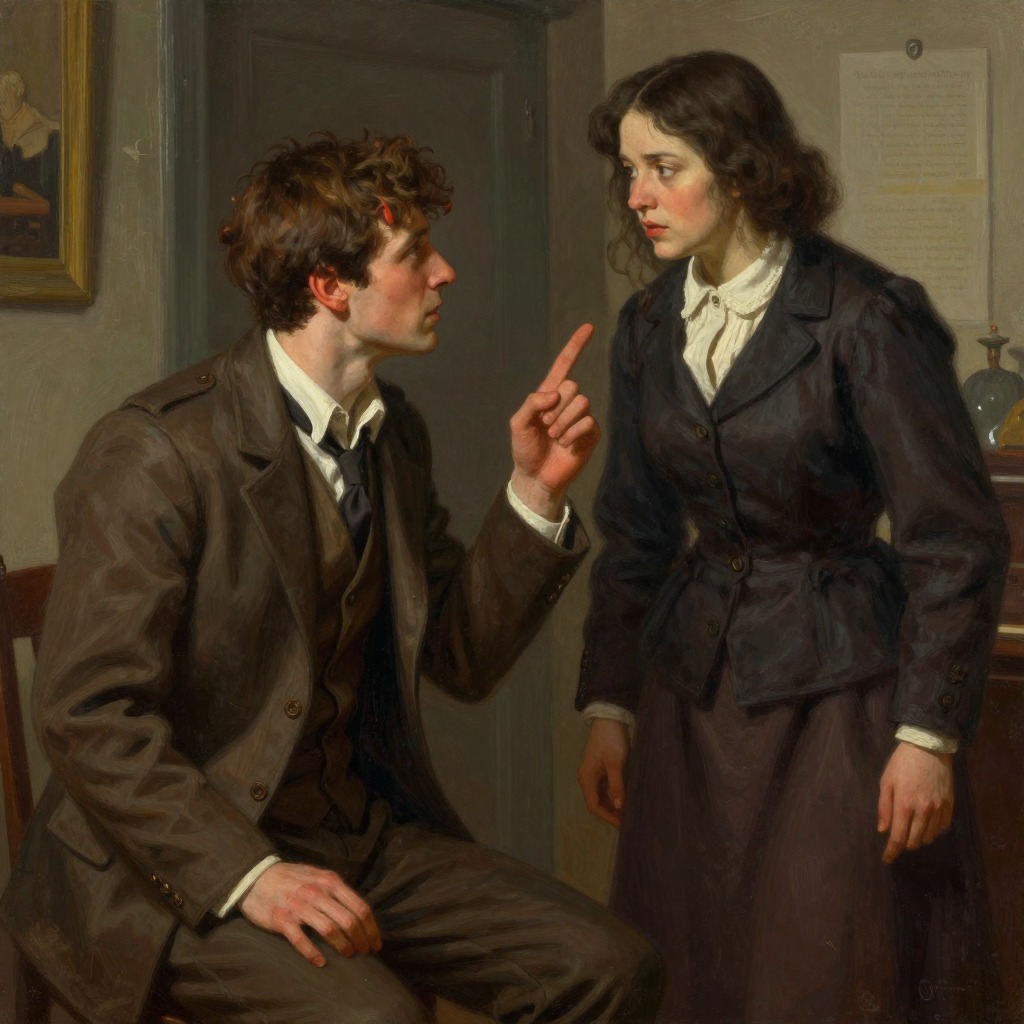
HungerNo Night Eviction is a legal principle that surfaces at a critical moment in the lodging house at Vaterland, where the protagonist, having exhausted his money and fallen behind on rent, faces expulsion on a winter night. The landlord, who had earlier threatened the protagonist himself, suddenly cites the rule to prevent his wife from carrying out the eviction, saying, "No, it won't do to turn folk out at night; do you know one can be punished for doing that?" This intervention halts the landlady's immediate action, though she later makes clear that the reprieve is only for one night.
Legal Context and Enforcement
The rule against nighttime eviction is presented as a known legal prohibition with a penalty for violation. The landlord's words imply that the law is enforceable and that he is aware of the consequences. The landlady, upon hearing this, "bethought herself quickly, grew quiet, and spoke no more," indicating that the legal threat carries weight even in a poor household where the protagonist is already treated as a burden. The rule thus functions as a rare institutional protection for the homeless, one that the protagonist himself does not invoke but that is applied on his behalf.
Contrast with Other Encounters with Authority
This moment stands in sharp contrast to the protagonist's other interactions with figures of authority. Earlier, a policeman had told him to go to the guard-house and report himself as homeless, a procedure that led to a night in a cell but no meal ticket. Another policeman had ordered him to move on from a step where he was resting, and a third had threatened to arrest him for disturbing the peace. The fire watchman had raised his axe in a gesture that terrified the protagonist. In each case, the law was used to move him along or confine him, never to shelter him. The No Night Eviction rule is the only instance where a legal principle is cited to protect him from being cast out into the cold.
The Rule's Limits
The protection is temporary and conditional. The landlady, after the landlord's intervention, places two pieces of bread and butter before the protagonist for supper, but he does not touch them, out of gratitude to the man. Later that night, she follows him to the anteroom and declares, "But this is the last night you sleep here, so now you know it." The protagonist accepts this without protest, replying, "Yes, yes." The rule has bought him one more night indoors, but it cannot secure his long-term shelter. He leaves before dawn the next morning, afraid to face the landlady again, and spends the following day wandering the streets until he finally signs on to a ship leaving Christiania.
Significance in the Narrative
The No Night Eviction rule appears at a turning point in the protagonist's decline. He has already lost his room in the tinker's workshop, pawned or sold nearly all his possessions, and been reduced to begging and theft. The lodging house in Vaterland was his last refuge, and the eviction threat forces him into the final crisis that leads to his departure from the city. The rule itself does not save him, but it delays his expulsion by a few hours, allowing him one more night of sleep before he must face the streets again. It is a small, almost accidental mercy in a world that otherwise offers him none.