Event 1
Fonny and Bell’s confrontation at the vegetable stand

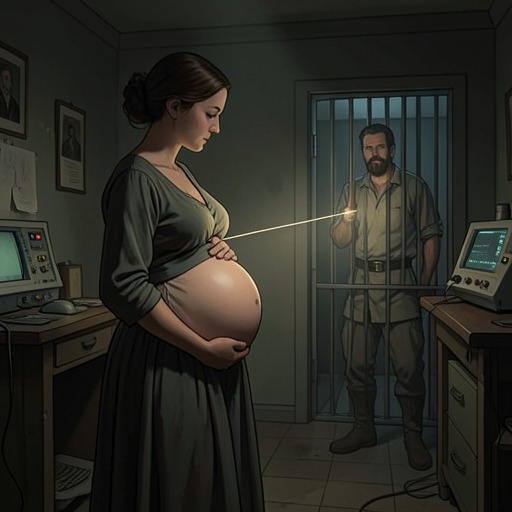
[Fonny and Bell’s confrontation at the vegetable stand](entity:event-recall-event-fonny-and-bell-s-confro-82177b2439ad) shows how quickly an attempt to protect [Tish](entity:character-recall-character-tish-b9050ff82816) can become a threat to [Fonny](entity:character-recall-character-fonny-0c86d9543580)’s freedom. While shopping, Tish is harassed by a young man; when Fonny returns, he intervenes, and [Officer Bell](entity:character-recall-character-officer-bell-c7532bd53630) moves to take him in. The shopkeeper’s testimony stops the immediate arrest, but the confrontation leaves Fonny expecting further trouble. Recalled by Tish, the episode links an intimate act of protection to the racial power operating in a crowded public space.
## Setting and Stakes
The encounter begins in an ordinary errand. Fonny dislikes shopping and leaves Tish at the store while he goes around the corner to buy cigarettes. She selects six tomatoes and looks for a scale and someone to weigh them. This small domestic task becomes a public test of whether she can control what happens to her and whether anyone nearby will support her account.
A stranger touches Tish from behind. At first, she mistakes the touch for Fonny’s, then recognizes that he would not treat her that way in public. The distinction matters: the familiarity and trust of her relationship with Fonny make the stranger’s intrusion immediately legible as an unwanted violation. The young man makes a suggestive remark, and Tish considers striking him, but she also knows Fonny may return at any moment and does not want the encounter to provoke a fight.
The setting offers no easy protection. A white police officer is approaching, while the people in the shop and on the street watch without initially stepping in. Tish understands herself as a Black woman in a crowded white street, and the officer’s presence does not reassure her. The ordinary public space is therefore structured by unequal risks: she is being harassed, but the response she fears is that Fonny will be blamed if he intervenes.
## Escalation and Intervention
Tish tries to move away and into the shop, but the young man follows her and blocks her path. When he grabs her arm, she slaps him and spits at him. Fonny enters at that moment. He takes hold of the attacker, knocks him down, and drags him back toward the sidewalk. Tish immediately tries to restrain Fonny, holding his wrists and placing herself between him and the officer, who is crossing the street at a run.
Her intervention is both protective and strategic. Tish fears that [Bell](entity:character-recall-character-bell-53a1fafacc69) may kill Fonny, and she believes her body can keep the officer and Fonny apart long enough to prevent the confrontation from turning worse. She identifies the other man as the aggressor and says that the witnesses saw what happened. The crowd, however, remains silent. Their watching does not become testimony until someone else chooses to speak, leaving Tish to face Bell without knowing whether her own account will be accepted.
Bell announces that he will take Fonny in for assault and battery. The accusation reverses the scene’s apparent roles: the person who harassed Tish recedes from the officer’s attention, while Fonny, who came back to the shop and intervened, becomes the proposed target of arrest. The threat makes plain that the question is not simply what happened, but whose version of what happened will have force.
## The Shopkeeper’s Testimony
The Italian woman who runs the store interrupts that reversal. She says that she knows Tish and Fonny as regular customers, saw Tish choose the tomatoes, and saw Fonny leave after saying he would return. She confirms that the tomatoes are still on the scale and states that the young man attacked Tish. She also offers to swear to what she witnessed. Her account supplies the independent corroboration Tish cannot get from the watching crowd.
The details of the transaction become evidence. The tomatoes left on the scale and Fonny’s brief absence establish a sequence that supports the shopkeeper’s description of events. In a scene where Tish’s words are initially unsupported, the unfinished purchase gives the witness a concrete basis for explaining what she saw. The shopkeeper does not merely express sympathy; she publicly contradicts Bell and accepts the responsibility of standing by her account.
Bell and the shopkeeper stare at one another, and the crowd snickers as he flushes. He does not take Fonny away at that moment. The shopkeeper then bags the tomatoes and stands between Tish and Bell, warning the officer away from them and telling Tish to take Fonny home. Her practical gesture returns Tish to the errand, but her position between them also makes visible the protection that the officer has failed to provide.
## Aftermath and Foreshadowing
Bell ends the encounter by looking at Fonny and saying that they will see each other again. Fonny answers that they may, or they may not. The exchange is not a resolution: the officer leaves without arresting him, but his parting remark keeps the threat alive. The shopkeeper’s testimony has changed the immediate outcome without dissolving the unequal power that made the accusation dangerous in the first place.
Later, Fonny tells Tish that Bell will try to get him. He connects that expectation to the shopkeeper’s public rebuke of the officer in front of the crowd. This is Fonny’s reading of Bell’s motive, not proof that Bell has already acted on it, but it gives the confrontation a lasting consequence: a witnessed injustice has not made Fonny feel safe. When Tish points to their anticipated move into a loft downtown, the prospect of a shared home briefly stands against that fear; Fonny agrees, but the danger remains in their conversation.
## Narrative Significance
The episode is narrated retrospectively by Tish, whose account preserves both the action and the choices that narrowed her options. She wants the harassment stopped, but she also fears that Fonny’s defense of her will expose him to police force. When Bell arrives, she must act as witness and physical barrier at once. The shopkeeper’s testimony changes the scene, while the crowd’s silence shows how little collective observation guarantees collective help.
The event also prepares the reader for Fonny’s later vulnerability to Bell’s authority. The immediate attempt to arrest him is thwarted, but the officer’s parting threat and Fonny’s subsequent suspicion prevent the shopkeeper’s intervention from becoming a secure victory. In the larger account, Tish is living with the strain of work, pregnancy, and Fonny’s confinement; that surrounding pressure sharpens the significance of a scene in which getting through an ordinary errand depends on who is believed. Protection, testimony, and public scrutiny converge here, and the episode’s uneasy ending lies in what remains unresolved after the witnesses disperse.
Event 2
Tish and Fonny conceive their child

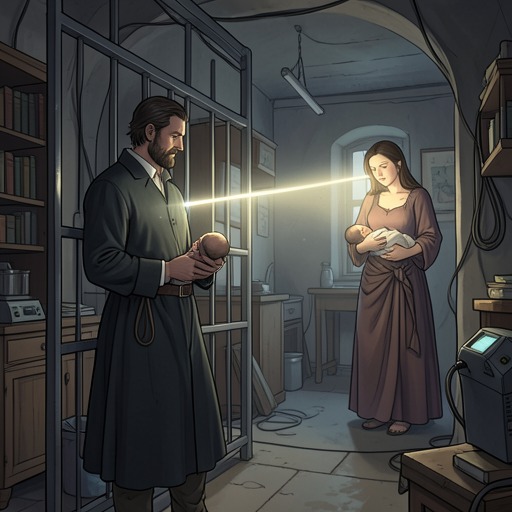
[Tish and Fonny conceive their child](entity:event-recall-event-tish-and-fonny-conceive-1938975451c5) on the night they find a loft they can imagine making a home. Recalled by [Tish](entity:character-recall-character-tish-b9050ff82816) from the pressures of her pregnancy and [Fonny](entity:character-recall-character-fonny-0c86d9543580)’s imprisonment, the event binds private hope to an uncertain future: their child begins within a relationship sustained by care, while the work of bringing that child safely into the world falls increasingly on Tish and her family.
## Finding a Home
The couple’s search ends with a loft off [Canal Street](entity:location-recall-location-canal-street-51f90da87bd2), large enough to include a workroom for Fonny and in good condition. Its two street-facing windows and two rear windows opening onto a railed roof make it more than a place to sleep: the roof suggests the possibility of dinners, evenings together, and a life shared beyond the cramped rooms they have known. The apartment gives their plans a specific shape, with space for Fonny’s work and for a future as a couple.
The landlord, Levy, is warm toward them and does not make them self-conscious about their relationship. He asks for only one month in advance. After Fonny gets into trouble, Levy offers to return the money and says he will rent the loft to no one else until Fonny is released. His response gives the couple’s prospective home a wider meaning: their plans are exposed to the consequences of Fonny’s imprisonment, but another person’s practical solidarity helps keep those plans alive.
## The Night of Conception
Tish remembers the night of conception as the night they finally found the loft. Levy’s joking encouragement that they should have children makes the prospect of a family part of the evening’s shared happiness; his ease with them lets the couple laugh together rather than feel scrutinized. The home they have just found and the child they conceive become entwined in Tish’s memory, each representing a future they want to build together.
After the couple walk home with their arms around each other, a patrol car is parked across the street. It drives away as Fonny opens the gate and unlocks the door. Neither comments on it. That quiet detail places their private moment beside the policing and danger surrounding Fonny’s life, without displacing the tenderness that Tish associates with the night.
## Pregnancy under Pressure
The later consequences make the conception more than a remembered beginning. As the pregnancy advances, the baby kicks and wakes Tish at night. With [Sharon](entity:character-recall-character-sharon-c1e11e522a83) away in [Puerto Rico](entity:location-recall-location-f4ad4d273466), [Joseph](entity:character-recall-character-joseph-a6dc2a0eb175) and [Ernestine](entity:character-recall-character-ernestine-67b397669aa2) watch over her, while Tish remains afraid to leave her job because the family needs the money. Work also means she often misses the six o’clock visit with Fonny. He understands her decision, but understanding cannot remove the isolation of waiting in prison for a visitor; Tish recognizes that a steady visit can reassure a prisoner that someone outside still cares.
The journey to work sharpens the physical and economic stakes. Tish wonders how she will manage the crowded commute as she becomes heavier and sicker, and fears that if she passes out among passengers, she and the baby could be trampled. On the street, she considers whether she may have to find another way to earn money if Fonny is not released before the baby comes. The prospect is frightening, and she cannot yet face everything that the thought implies. Her pregnancy is held between the child’s needs, the necessity of wages, and the uncertainty of Fonny’s release.
## Hope and Shared Responsibility
Tish comes to understand the baby’s growth as connected to Fonny’s determination to be free. The child’s arrival and Fonny’s release become linked hopes: she believes they will make it through, in time. This conviction does not erase the practical burdens surrounding the pregnancy. Instead, it gives those burdens a shared meaning, joining Tish’s daily labor and the family’s care to Fonny’s struggle beyond the walls of the prison.
The conception scene therefore begins a family story that is both intimate and collective. The loft represents a home Fonny and Tish mean to share; Levy’s promise keeps that possibility open; and the pregnancy draws Joseph and Ernestine into the work of protecting Tish while Sharon pursues a way to challenge Fonny’s case. The child is not a guarantee that their future will be easy, but the event establishes the future they continue to strive for.
Event 3
Fonny’s arrest and prosecution for rape
[Fonny’s arrest and prosecution for rape](entity:event-recall-event-fonny-s-arrest-and-pros-beeff6c93b17) turn an accusation into a prolonged struggle over freedom, testimony, and time. In [Tish](entity:character-recall-character-tish-b9050ff82816)’s account, the arrest begins with a knock at the family’s door; what follows is not a clear path to trial but a case in which the central witnesses become difficult or impossible to reach. The prosecution’s identification procedure, the family’s dependence on an overburdened defense, and [Fonny](entity:character-recall-character-fonny-0c86d9543580)’s confinement all make the accusation a force that reaches far beyond the courtroom.
## The Arrest and Immediate Confinement
On the night Fonny is arrested, [Daniel Carty](entity:character-recall-character-daniel-carty-ab63b12e6b00) is at the house. He is upset as he revisits the trauma of his own imprisonment, including having witnessed and suffered sexual violence in prison. Fonny supports him when he is close to falling, while Tish goes to make coffee. Then someone knocks at the door. The account gives no detailed description of the arrest itself: the abrupt knock marks the shift from a family gathering to state custody, and the next view of Fonny is from inside a cell.
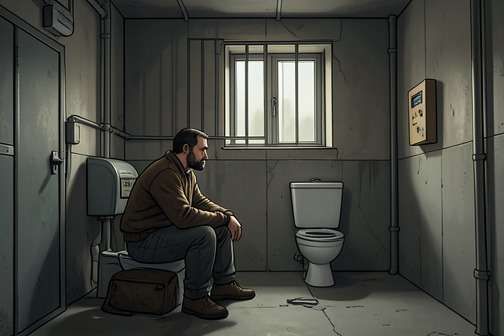
Fonny is initially alone in a cell at the top of the prison, a temporary placement before an expected move to a larger cell with other men. The cell has a toilet that works poorly, and Fonny is frightened both by his isolation and by the prospect of being moved among other prisoners. He cannot find a stable response to confinement: withdrawing into himself and trying to act do not release him from fear. The arrest therefore begins not only a legal case but a daily ordeal whose conditions are already shaping his sense of time, safety, and control.
## The Case and Its Racialized Identification
The accusation rests on [Victoria Rogers](entity:character-recall-character-victoria-rogers-9d2d9ae2c841)’s identification of Fonny. Tish later explains that Fonny had not encountered Victoria before the police lineup, where he was the only Black man among white, Puerto Rican, and lighter-skinned Black men. Tish sees the lineup’s composition as a central weakness in the prosecution’s case: if Victoria was seeking a Black assailant, the arrangement made Fonny conspicuous before any question of reliable identification could be resolved. The charge thus depends on an identification procedure that Tish understands as racially structured, not neutral.
Fonny’s own assessment is grim: if Victoria continues to accuse him, he expects to remain imprisoned for some time. Tish tells him that [Hayward](entity:character-recall-character-hayward-4c1bed9d206b) may be able to challenge the testimony and that the lineup could provide grounds to contest the case. She also says Hayward will bring [Officer Bell](entity:character-recall-character-officer-bell-c7532bd53630)’s record and conduct before the jury. These are possibilities, not guarantees; Fonny’s uncertainty makes plain how little control he has over whether the evidence will be heard or how the case will proceed.
The defense is further weakened by the separation of witnesses from the people who need to speak with them. Daniel Carty had been with Fonny and Tish in the room on [Bank Street](entity:location-recall-location-bb430e1abfa8), but the [District Attorney’s Office](entity:organization-recall-organization-district-attorne-62fb646c424c) has arrested him and holds him incommunicado. Hayward has not been allowed to see him. Hayward suspects that officials intend to pressure Daniel to change his testimony, though he presents this as an inference rather than established fact. For the defense, Daniel’s account matters, but his confinement makes it unavailable at precisely the moment it could help establish Fonny’s whereabouts.
## Family Costs and the Weight of Waiting
When Tish discusses Fonny’s condition with Hayward, she has to translate the simple question of how he is into the reality of a man trying to endure prison. She resents being asked to explain what she feels the lawyer should already understand, yet recognizes that an account of Fonny’s state may matter to the case. Her answer holds both facts together: Fonny hates being imprisoned, but is trying not to let the experience break him. The family’s emotional knowledge of him must become information for legal strategy.
Hayward identifies Victoria’s refusal to reconsider her testimony as the greatest obstacle and reports that she has disappeared. He believes she may have been taken back to [Puerto Rico](entity:location-recall-location-f4ad4d273466), while acknowledging that locating her would require special investigators. Tish immediately understands the practical consequence: finding a witness requires money. Hayward’s promise to do what he can is constrained by the expense of pursuing evidence, so the family’s hope depends not only on what is true but on whether they can afford to make that truth usable in court.
The account connects these legal delays to the family’s calendar. At one meeting, the family understands its immediate task as buying time. Fonny is serving time in custody while, in six months, Tish expects their baby to arrive. The narrative places their love and their future child inside a chronology controlled by the case: Fonny is separated from Tish, and the family cannot make the wait move faster by wanting him home. Time becomes more than the interval before trial; it is measured in confinement, pregnancy, and the life they are trying to preserve together.
Tish’s pregnancy also sharpens the material stakes of waiting. On her way to work, she worries about continuing to travel as she becomes heavier and sicker, and fears that if she collapses in the crowded subway, no one will protect her or the baby. She considers whether she may have to find another way to earn money if Fonny is not released before the birth. The prosecution’s effects therefore reach into her body, employment, and financial choices, even though she is not the person in the cell.
## Witnesses, Reversals, and Significance
[Sharon](entity:character-recall-character-sharon-c1e11e522a83)’s encounter with Victoria further exposes the human conflict beneath the identification. Sharon tells her that Fonny is twenty-two, wants to marry her daughter, and is Black; she challenges Victoria’s claim by insisting that the lineup was the first and only time she saw him. When Sharon invokes the cross and God, Victoria screams, runs from the room, and calls for Sharon to leave. An older woman takes the weeping Victoria away, while Sharon exits carrying a photograph of Fonny and Tish. The encounter does not produce a recantation or a recovered witness; it ends in separation, leaving the central dispute unresolved.
Later, Sharon reports that Victoria has been taken to a place in the mountains called [Barranguitas](entity:location-recall-location-barranguitas-ec4b38711b13) and, according to [Jaime](entity:character-recall-character-jaime-992f1113f488), will never be seen again. The prosecution has now lost its principal witness, creating a slim opening for the defense. But Daniel remains inaccessible after being transferred to a prison upstate, and the family cannot even locate him without help. The likely next steps are to ask for the charge to be dismissed or, failing that, seek bail if the state agrees and the family can raise the money. The disappearance changes the case’s immediate prospects without undoing the imprisonment or restoring the missing testimony.
The episode’s central reversal is that the pursuit of truth does not itself secure freedom. Hayward explains that a case is decided by who wins, while insisting that he believes Fonny is innocent and will continue to work for him. His distinction between truth and victory captures the family’s predicament: evidence must be found, witnesses reached, expenses met, and time endured before innocence can have legal force. The arrest is therefore both a personal separation and the beginning of an institutional struggle whose delays become part of the punishment.
Event 4
Sharon’s mission to Puerto Rico

[Sharon’s mission to Puerto Rico](entity:event-recall-event-sharon-s-mission-to-pue-99a517b5996e) is an urgent effort to reopen the question of [Victoria Rogers](entity:character-recall-character-victoria-rogers-9d2d9ae2c841)’s identification of [Fonny](entity:character-recall-character-fonny-0c86d9543580), who is imprisoned in New York. [Sharon](entity:character-recall-character-sharon-c1e11e522a83) travels to find Victoria and asks [Pietro Alvarez](entity:character-recall-character-pietro-alvarez-954b0c8c9771) to help reach her, carrying a photograph of Fonny as evidence she hopes will prompt reconsideration. The mission brings her face to face with both the limits of persuasion and the human cost of pursuing the case: she leaves Victoria’s dwelling without an answer and returns to a failed attempt to meet Pietro.
## Purpose and Urgency
Sharon arrives on an evening flight with a precise awareness of how much money she has and how quickly she must act. The trip is therefore shaped by more than distance: every delay consumes resources while time continues to weigh on the effort to free Fonny. She brings only a small overnight bag, avoiding a wait for luggage, and carries the address of a small hotel in [San Juan](entity:location-recall-location-san-juan-99ba366c80e5) that [Hayward](entity:character-recall-character-hayward-4c1bed9d206b) has reserved for her. These practical details establish a mission planned around speed and limited means rather than a leisurely visit.
After landing, Sharon crosses the field among hundreds of other passengers. The night sky and the air recall [Birmingham](entity:location-recall-location-birmingham-a4a4e6efdf8b), a place she has not seen in a long time. The brief memory connects her journey to an earlier home without changing its immediate purpose: she has come to pursue a case that has placed her future son-in-law in prison. Her movement from the plane to the hotel and then to the meeting with Pietro is governed by the same pressure to use each opportunity quickly.
## Seeking Pietro Alvarez
At the club, Sharon initially tells the staff that she is early for a meeting because her intended flight was overbooked and she had to take an earlier one. She asks to be seated out of the way, then identifies her business more directly: she is waiting for Pietro Alvarez and gives her name as Mrs. Rivers, from New York. Seated against a wall, she orders a screwdriver. The small, managed exchange gives her a place from which to wait, but the meeting requires her to explain why she has come.
When she speaks to Pietro, Sharon clarifies that she wants to see Victoria, not merely meet him. She identifies herself as the mother-in-law-to-be of the man Victoria has accused of rape and says that Fonny is in prison in New York. Pietro responds by praising Fonny as a son-in-law, but that response does not itself offer assistance. Sharon has made the stakes explicit: the accusation is not an abstract matter to her, because the imprisoned man is to marry her daughter.
Sharon asks Pietro to take a photograph home to Victoria and urge her to examine it carefully. She appeals to him as a man who might understand what another man knows, while stating her belief that Victoria was raped but that Fonny did not rape her. She also asks Pietro to call her the next day and gives him her hotel name and telephone number. He studies the number and the photograph, then pushes both back toward her and leaves. His refusal closes the route Sharon had hoped would lead to Victoria through him, but it does not end the mission; the next morning she goes in person.
## Finding Victoria
[Jaime](entity:character-recall-character-jaime-992f1113f488) is ready on time, and by nine thirty he has brought Sharon to the favella. He knows roughly where the particular dwelling is, though he is uncertain whether he knows Victoria herself. Hayward had warned Sharon that the place would be difficult to describe and that she might not want to try afterward. The settlement stands beside a garbage dump under an otherwise bright sky, with dwellings built in varied ways and children throughout. Jaime accompanies Sharon as her protector, though he is uneasy about the errand. The setting makes the distance between a hotel appointment and the conditions of Victoria’s life part of the encounter rather than a detail Sharon can ignore.
At the dwelling, Victoria first tries to end the visit by saying she has work to do and does not know any Mrs. Rogers. She points out that there are many places in the settlement, implying that Sharon could search for a long time. Sharon does not accept the denial as an end to the conversation. She says she has a photograph of Victoria and brings it out. As Victoria moves toward the door, Sharon moves away from it and into the room. Victoria objects that Sharon is not a North American lady; Sharon’s presence and the photograph have made clear that the visitor has come prepared to challenge the attempt to send her away.
Victoria asks Sharon to leave, and Sharon sees that she is trembling and close to tears. Sharon answers by naming her purpose plainly: she is trying to get a man out of prison, that man is going to marry her daughter, and he did not rape Victoria. She takes out the photograph of herself with Fonny and asks Victoria to look at it. The picture is not presented as proof of what happened at the assault; it makes Fonny visible as a young man connected to a family and a future, rather than only as the accused person in a case.
## Confrontation and Outcome
When Victoria says that Sharon is a mother, Sharon changes the way she addresses her. She speaks to Victoria as a daughter and as a woman, acknowledging that terrible things happen and that people can do terrible things. She warns that Victoria must answer for lies, and stresses that Fonny is twenty-two, wants to marry her daughter, and is Black. Sharon then identifies the central dispute as she understands it: Victoria saw Fonny in a police lineup, and that was the first and only time she saw him. Victoria counters that she did see him. The exchange leaves the crucial question contested; the evidence of this encounter does not establish that Victoria withdraws or revises her identification.
Sharon touches the crucifix as she appeals to Victoria in the name of God. Victoria screams, breaks away, and runs through the open door, demanding that Sharon leave. Doors open and people gather. An older woman takes Victoria into her arms as Victoria weeps, then leads her away. The people in the corridor stare at Sharon, who has no words that can resolve the scene. Carrying her handbag and the photograph of Fonny and [Tish](entity:character-recall-character-tish-b9050ff82816), she makes her way down the stairs and out to the street. Jaime opens the taxi door, and he drives her away without speaking. The mission has brought Sharon to Victoria, but not to an agreement or a usable statement.
That evening, Sharon goes to the club again. The doorman tells her that Pietro will not be there, that there are no tables for single women, and that the club is full. The sequence ends with her efforts to reach him still blocked and Victoria’s response unresolved. Sharon has made the accusation’s personal stakes unmistakable and has confronted the witness directly, yet neither encounter secures the reconsideration she sought. The mission’s significance lies in that difficult gap between speaking for Fonny and being able to change the course of his case.
Event 5
Victoria’s miscarriage and the trial postponement

[Victoria Rogers](entity:character-recall-character-victoria-rogers-9d2d9ae2c841)’s miscarriage makes the prosecution’s case against [Fonny](entity:character-recall-character-fonny-0c86d9543580) more precarious but does not end his imprisonment. When Victoria becomes unavailable, the state seeks to postpone the trial, while the Rivers family asks for the charge to be dropped and prepares to seek bail. The event converts an already fragile prosecution into a contest over time: the family sees an opening, but Fonny remains in custody as the parties wait on a witness who has disappeared from reach.
## Background and the Witness
Victoria is central to the case because her identification of Fonny supports the accusation against him. During [Sharon](entity:character-recall-character-sharon-c1e11e522a83)’s visit, Victoria insists that she has seen Fonny, and Sharon answers that their only encounter was at the police lineup. Sharon tells her that she has put a young Black man in jail although she had never seen him before that identification, and stresses that Fonny wants to marry Sharon’s daughter, [Tish](entity:character-recall-character-tish-b9050ff82816). Victoria’s claim and Sharon’s response expose the human stakes of the prosecution: the case rests not simply on a formal identification but on a young man’s freedom and the future of a family.
The confrontation does not produce a usable reversal of Victoria’s testimony. When Sharon invokes her own experience as a mother and asks Victoria to reckon with the consequences of her account, Victoria breaks away, cries out for Sharon to leave, and runs from the room. An older woman takes Victoria into her arms while the people gathering in the building watch Sharon depart. The scene ends without a new statement retracting the identification. Sharon leaves carrying the photograph of Fonny and Tish, but she has not secured the change in testimony that could immediately resolve the case.
## Miscarriage and Disappearance
Sharon later tells Tish that Victoria miscarried. [Pietro Alvarez](entity:character-recall-character-pietro-alvarez-954b0c8c9771) carried Victoria down the steps, and she was taken to the mountains to a place called [Barranguitas](entity:location-recall-location-barranguitas-ec4b38711b13). Sharon relays [Jaime](entity:character-recall-character-jaime-992f1113f488)’s assessment that Victoria will not be seen again. The account supplies no direct access to Victoria’s thoughts or to the circumstances beyond what Sharon reports; the reader learns the event through the family’s conversation after Sharon returns.
The miscarriage changes Victoria’s availability as a witness, not the record of what she has said. Her earlier insistence that she saw Fonny remains part of the case, while her absence prevents the prosecution from proceeding as planned. Sharon’s report thus carries two different kinds of uncertainty: the family knows where Victoria was taken, but not how to reach her, and it knows that the trial has been disrupted, but not whether that disruption will lead to Fonny’s release.
## The Trial Is Postponed
Tish describes the prosecution as having lost its principal witness and sees a narrow possibility that the case can be dismissed. The family’s immediate position is to ask that the charge be dropped and the case dismissed. It also prepares to accept bail as a lesser outcome if the state will agree and they can raise the money. The distinction matters: the witness’s disappearance weakens the prosecution’s ability to proceed, but it does not automatically erase the charge or secure Fonny’s freedom.
The state seeks additional time, tying the trial’s progress to Victoria’s possible return. At the same moment, the family has little access to another potential source of help. [Daniel Carty](entity:character-recall-character-daniel-carty-ab63b12e6b00) might still matter to the defense, but the family cannot see him and does not know where he is; he has been transferred to an upstate prison, and [Hayward](entity:character-recall-character-hayward-4c1bed9d206b) is trying to locate him. The case is therefore stalled on two fronts: the prosecution awaits its absent witness, while the defense tries to recover access to Daniel and to persuade the court to dismiss the charge or grant bail.
## Consequences for the Families
[Joseph](entity:character-recall-character-joseph-a6dc2a0eb175) explains the postponement to [Frank](entity:character-recall-character-frank-aae9eaa69e27), who understands that the state may keep Fonny in jail until Victoria is able to participate. Joseph says bail might be possible, but cannot promise that the court will accept the family’s plea. He also warns that the prosecution might try to make the charge heavier because Victoria has lost her pregnancy and appears to have suffered a mental collapse. That prospect turns the miscarriage into a legal vulnerability as well as a disruption: what the family hopes will expose the weakness of the case may also be used to justify a harsher accusation.
The conversation takes place while the women’s laughter can be heard from the kitchen, a domestic sound set against the men’s grave discussion. Frank is silent as he absorbs the prospect of his son remaining jailed; Joseph, watching him, grows increasingly uneasy. The scene gives the postponement a consequence beyond the court calendar. The family must continue to bear the uncertainty together, balancing a possible dismissal against the more immediate needs of bail and the fear that the state may intensify its case.
## Narrative Significance
The event offers no clean resolution. Victoria’s miscarriage removes her from the prosecution’s immediate reach, but neither her earlier identification nor the charge against Fonny vanishes. The family’s hope is deliberately conditional: dismissal is requested, bail may be sought, and the state may instead secure a delay. The same development can therefore appear as an opening and a setback, depending on whether attention falls on the prosecution’s missing witness or on Fonny’s continued confinement.
The episode also links intimate loss to institutional time without presenting the two as equivalent. Victoria’s miscarriage is reported through Sharon’s account; its legal consequence is measured in postponement, custody, and possible changes to the charge. For Tish and her family, the delay is not abstract procedure: Fonny remains away while they wait for decisions they cannot control. The event’s force lies in that unresolved interval, where a disruption to the prosecution creates hope but cannot yet deliver release.
Event 6
Frank’s disappearance and discovery in the woods
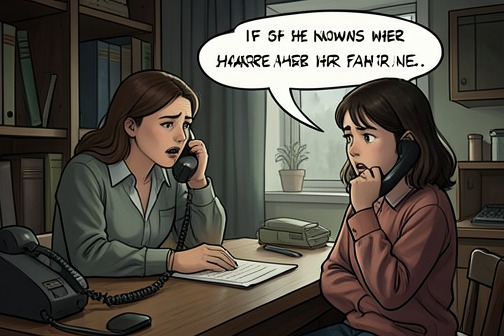
[Frank’s disappearance and discovery in the woods](entity:event-recall-event-frank-s-disappearance-a-564e05c6f929) turn a family’s fear of his absence into the stark fact of his being found alone in a locked car. The episode is disclosed through [Adrienne](entity:character-recall-character-adrienne-05958df8fb72)’s frightened call to [Tish](entity:character-recall-character-tish-b9050ff82816) and, later, the arrival of Tish’s father with news of the search’s outcome; its force lies in the gap between not knowing where [Frank](entity:character-recall-character-frank-aae9eaa69e27) is and learning where he has been found.
## The Circumstances of Frank’s Disappearance
Adrienne tells Tish that Frank was fired from his job two days earlier. He had been accused of stealing and threatened with jail, and, already distressed over [Fonny](entity:character-recall-character-fonny-0c86d9543580), came home drunk and cursed everyone. He then went out, and no one had seen him since. The sequence ties his disappearance to a sudden loss of work and the strain surrounding Fonny’s imprisonment, without making either circumstance a complete explanation for what Frank did next.
Adrienne’s call makes the family’s uncertainty immediate. She asks Tish whether she knows where her father is, then asks her to call if she sees him. Tish says she has not seen him and promises to get in touch if she does. Adrienne admits that she is scared before hanging up. The request gives Tish a practical role in the search, but the call offers no lead or reassurance about Frank’s location.
## Tish and Adrienne’s Exchange
Adrienne begins by acknowledging that she knows Tish does not like her. Tish answers that their earlier fight was only a fight, and that she would never deliberately hurt Adrienne. She connects that reassurance to Fonny: because she loves him, she must also love his sister. The exchange briefly sets their past conflict against the immediate crisis, as Tish offers kinship and care without claiming to know where Frank has gone.
The call leaves Tish shaken. She remembers the moment as one in which everything seemed to stand still, and puts a hand to her heart to make it beat again. That bodily reaction gives the disappearance a private consequence before the family receives any news: Frank’s absence is not merely a missing person to be located but a fear that arrests Tish in place.
## Discovery and Aftermath
Later, while Tish is at home with [Sharon](entity:character-recall-character-sharon-c1e11e522a83), the doorbell rings. Something in Sharon’s voice makes Tish stand abruptly and drop her brandy glass. Sharon is standing behind Tish’s father, [Joseph](entity:character-recall-character-joseph-a6dc2a0eb175), when Tish remembers seeing both their faces. Joseph tells the family that Frank has been found far upriver, in the woods, sitting in his car with the doors locked and the motor running.
The discovery answers the question of where Frank went, but the account does not state what he intended or explain why he remained in the car. Tish sits down after hearing the news and asks whether Fonny knows. Her first recorded response turns toward her imprisoned partner, linking Frank’s crisis back to the family’s shared concern for Fonny. The episode thus ends with Frank located, while the question of how the news reaches Fonny remains open.
Event 7
Fonny’s assault and solitary confinement
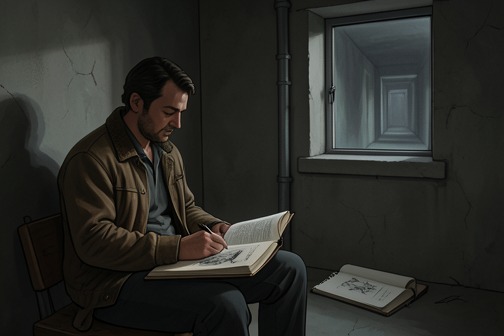
[Fonny’s assault and solitary confinement](entity:event-recall-event-fonny-s-assault-and-sol-fdf6eb2ffdf5) mark a severe turn in his imprisonment: after he resists a sexual assault, he is placed in solitary, and the experience leaves him injured and fundamentally changed. Yet confinement does not end his efforts to remain connected to life beyond prison. The expected arrival of his child becomes a reason to endure and a future he intends to reach.
## Assault and Solitary Confinement
[Fonny](entity:character-recall-character-fonny-0c86d9543580) is placed in solitary because he refuses to be raped. The assault leaves him with serious physical injuries, and the narration describes an inward hardening that will not be undone. The episode makes the prison’s violence concrete without presenting it as a consequence of anything Fonny has done; it is an imposed danger he must confront while incarcerated.
## A Changed Way of Facing Prison
After he begins to understand his situation differently, Fonny stops turning away from the people and conditions around him. He reads books, sketches on paper that has been obtained for him, and starts talking with other incarcerated men, making a place for himself among them. These acts do not remove the danger he recognizes, but they show a shift from withdrawal toward engagement: he faces what may happen rather than pretending it cannot.
## The Child as a Future Commitment
Fonny holds the coming birth of his child before himself as a reason to stay alive. He makes a promise to endure until the baby arrives, fixing his attention on a future beyond the prison ordeal. The commitment gives his resistance a particular shape: survival is not an abstraction but a way to keep an appointment with his child.
## Aftermath and Narrative Significance
The account later returns to Fonny through [Tish](entity:character-recall-character-tish-b9050ff82816)’s visit after a long period when she has been unable to see him because he is in solitary. She finds him markedly thin and bruised, and his eyes register the suffering she cannot undo; when he grins, she recognizes the lover she knew. The reunion places the prison’s damage beside the persistence of their bond. Meanwhile, [Arnold Hayward](entity:character-recall-character-arnold-hayward-688c0e3cc9d0) arranges the possibility of bail, though the amount is high, leaving release uncertain as the summer advances.
Event 8
Tish gives birth

[Tish gives birth](entity:event-recall-event-tish-gives-birth-2efe042f88b4) at the culmination of a pregnancy lived under pressure: she must keep working, worries about getting through crowded streets and public transit as she grows heavier, and fears what providing for the baby may require if [Fonny](entity:character-recall-character-fonny-0c86d9543580) does not come home. The birth is rendered not as a detailed medical scene but as a threshold: [Tish](entity:character-recall-character-tish-b9050ff82816) waits, loses her breath, and then the child’s insistent cry enters the narrative.
## Pregnancy and the Approach of Labor
Earlier, Tish rises after a nearly sleepless night and goes to work despite her exhaustion. Walking through streets crowded with people and piled-up garbage, she considers how she might support the child if Fonny is still away when the baby comes. The thought is frightening enough that she cannot yet face what lies beneath it.
On the subway, her anxiety becomes physical. She worries that, as she grows heavier and sicker, she might pass out in the packed car and be trampled with the baby. She grips the pole and reminds herself that Fonny is counting on her to bring the child safely into the world. The commute makes pregnancy inseparable from her need to keep earning and from the conditions of crowded public life.
## The Moment Labor Begins
Near the end, Tish is so tired that she can hardly speak. She sits watching the sky, unable to move, with the sense that something is about to happen; all she can do is wait. The scene holds her at the edge of change without explaining what she feels in advance or turning the birth into a clinical account.
[Sharon](entity:character-recall-character-sharon-c1e11e522a83) tells her that [Ernestine](entity:character-recall-character-ernestine-67b397669aa2) may have the rest of the money, obtained through an actress. Before Tish can respond, the doorbell rings. [Joseph](entity:character-recall-character-joseph-a6dc2a0eb175) comes in and reports that [Frank](entity:character-recall-character-frank-aae9eaa69e27) has been found far upriver in the woods, sitting in his locked car with the motor running. The news interrupts the family’s conversation, but the narrative does not say that it causes Tish’s labor.
## The Child’s Arrival
After Joseph sits down, Sharon asks Tish how she feels. Tish opens her mouth to answer but cannot catch her breath. In that instant, everything else disappears from her awareness; she sees her mother’s eyes, then sees Fonny. She screams, and understands that her time has come.
The account then cuts to Fonny working with wood and stone, whistling and smiling. From far away, the baby cries repeatedly, the sound growing nearer. The passage does not identify the child’s sex or describe the mechanics of the birth; it makes the cry itself the decisive confirmation that the baby has arrived.
## Narrative Significance
The scene brings the long uncertainty of pregnancy to a physical turning point. Before labor, Tish’s thoughts move between the baby’s safety, her own capacity to keep working, and the possibility that she may have to find another means of supporting the family. At the climax, those practical fears give way to breathlessness, recognition, and the child’s cry.
The contrast between Tish’s sudden labor and the image of Fonny at work preserves the family’s separation within the moment of arrival. The baby’s voice crosses that distance in the closing image, joining the child’s beginning to the life Tish and Fonny have been trying to sustain. The book then gives the date [Columbus Day, October 12, 1973](entity:time-recall-time-columbus-day-october-12-e5251fe3e36f), followed by St. Paul de Vence; these closing markers frame the ending but do not establish the place or date of the birth itself.