Bill McGovern
InsomniaBill McGovern is Ralph Roberts's downstairs neighbor and longtime friend, a retired history teacher whose sharp wit, theatrical cynicism, and deep loneliness mask a capacity for kindness and a tragic vulnerability that ultimately leads to his death at the hands of the rogue entity Atropos.
Identity and Background
McGovern is a retired history teacher who once taught at Derry Community College, where he had John Leydecker as a student and praised his term paper on the Children's Crusade. He lives in the downstairs apartment of the two-storey house on Harris Avenue that he shares with Ralph Roberts. A lifelong bachelor, McGovern is openly homosexual, a fact he reveals to Ralph only once, during a conversation about his old friend May Locher, when he describes his younger self as "a wee bit lavender" and recalls that in that era "gay was how you described your Christmas tree after it was decorated." He is a man of literary allusions and theatrical mannerisms, known along the street for his caustic bons mots and his signature Panama hat, which he wears in summer and which becomes a recurring symbolic object in the story. He is also a heavy complainer about the indignities of aging, regarding his vanished youth as a general would regard deserters on the eve of a battle.
Life and Plot Trajectory
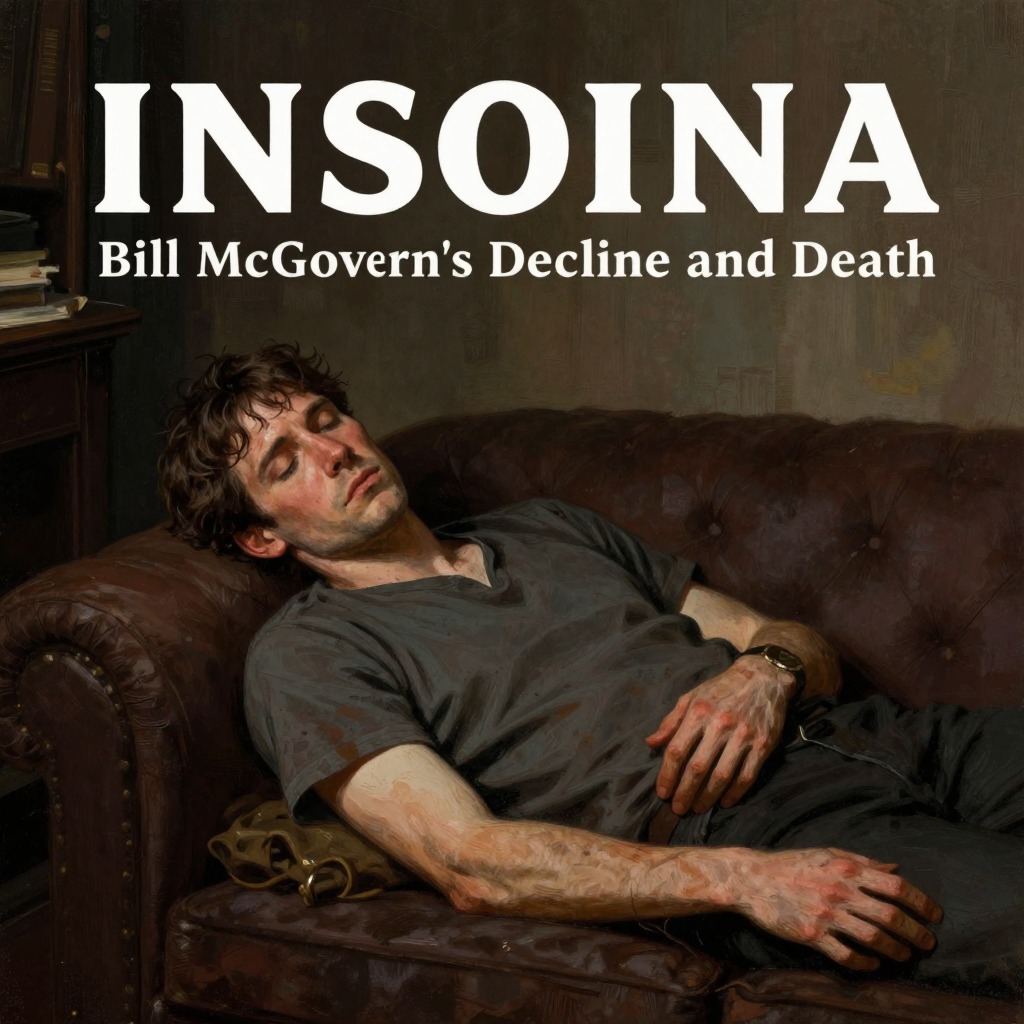
McGovern is present at several key moments in the narrative. He is the one who finds Carolyn Roberts after her seizure and calls 911, telling Ralph, "Thank God! Carolyn's having . . . well, I guess it's some sort of seizure. I just dialed 911, asked them to send an ambulance." He is also present at the Red Apple when Helen Deepneau staggers in, beaten by her husband Ed, and he accompanies Ralph to confront Ed afterward, though he hangs back nervously. When Ralph tells McGovern about the auras he has been seeing and about the two men he witnessed leaving May Locher's house on the night of her death, McGovern reacts with disbelief and concern, telling Ralph, "You're starting to sound too much like Ed Deepneau for comfort" and urging him to see a doctor. This leads to a heated argument on the front lawn, witnessed by neighbors. Later, McGovern leaves a note apologizing, explaining that his old friend and mentor Bob Polhurst is dying and that "this thing with Bob has completely wrecked my nerves." He spends much of the day at Derry Home Hospital, sitting with Polhurst. It is there, in the hospital corridor, that Atropos kills him. Ralph and Lois, on the roof with Clotho and Lachesis, witness the event through a vision: McGovern stops, braces himself against the wall, puts one hand to his chest, and crumples to the floor.
Key Actions and Objectives
McGovern's primary objective throughout the story is to maintain his dignity and his role as a sharp-tongued observer of life's absurdities, while also trying to be a good friend to Ralph. He offers Ralph folk remedies for his insomnia, suggesting whiskey and honey. He is fiercely loyal to his old friends, visiting May Locher regularly as she dies of emphysema and sitting vigil with Bob Polhurst. He also shows a capacity for unexpected kindness, as when he helps Ralph carry Carolyn after her seizure. However, his cynicism often gets the better of him, as when he dismisses Ralph's experiences as hallucinations brought on by sleep deprivation.
Relationships and Conflict
McGovern's relationship with Ralph is the central friendship of the novel, but it is a complex one. Ralph values McGovern's wit and intelligence but is often frustrated by his condescension and his tendency to see Lois Chasse as "Our Lois," a shallow, gossipy woman. The conflict between them comes to a head when McGovern refuses to believe Ralph's account of the little bald doctors, telling him, "At our age, mental illness is common! At our age it's common as hell, so GO SEE YOUR DOCTOR!" Ralph feels that McGovern is taking pleasure in his distress, hearing "a weird, shrewish pleasure" in his voice. Despite this, Ralph later feels a deep sense of loss when McGovern dies, reflecting that "Bill McGovern would never watch Lisette Benson again, or forget to lock the front door." McGovern also has a fraught relationship with Lois, whom he patronizes with theatrical gallantry, once dropping to one knee before her and crying, "Would that our lives might be united by the starry bonds of love!"
Change and Ending
McGovern's arc is one of tragic stasis. He does not change or grow; rather, his pre-existing traits—his cynicism, his fear of aging, his need to be the cleverest person in the room—are amplified and then abruptly terminated. His death is not a natural one but a murder, a deliberate act of vengeance by Atropos, who had earlier threatened Ralph: "I'll fuck you over, Shorts. I'll fuck you over big-time. And I'll fuck your friends over." Ralph realizes that Atropos killed McGovern simply to hurt him, to punish him for interfering. The death is witnessed by Ralph and Lois from a higher plane of reality, and it is a key piece of evidence that convinces Ralph of the stakes of his conflict with the rogue entity. McGovern's Panama hat, which he lost earlier in the story, is later found in Atropos's underground lair, with a crescent bitten out of the brim, a grotesque souvenir of the creature's malice.
Thematic Significance
McGovern embodies the novel's themes of aging, loneliness, and the fragility of life. His constant complaints about growing old—"I hate being old—I guess maybe that's all it really comes down to. I mean big-time"—are a mask for a deep-seated fear of irrelevance and death. He is a man who has spent his life observing and judging others, but who is ultimately unable to see the supernatural reality that is unfolding around him. His death serves as a brutal reminder that in the world of the novel, the stakes are literal life and death, and that the forces of the Random and the Purpose do not discriminate between the cynical and the innocent. His lost Panama hat, which becomes a trophy for Atropos, symbolizes the way that even the most personal and cherished objects can be stolen and corrupted by forces beyond human understanding.