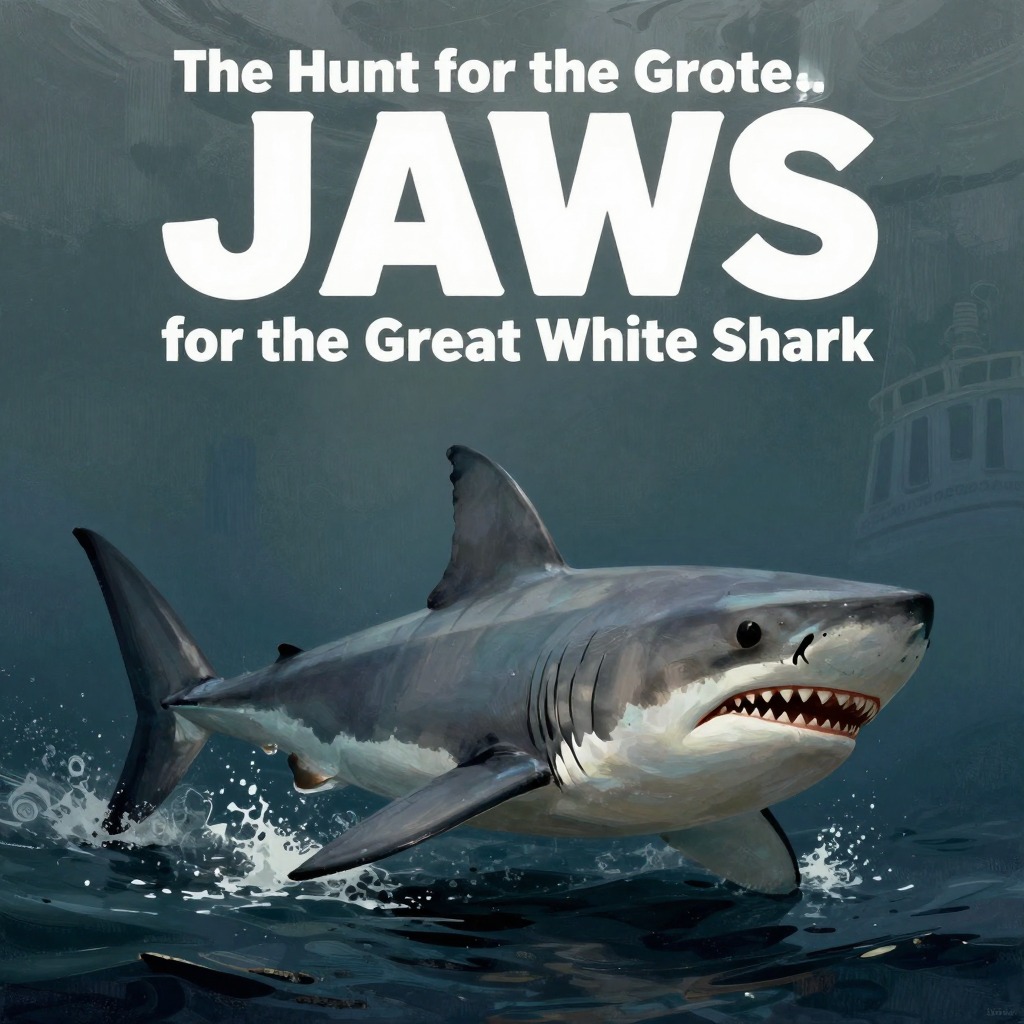
Blue shark
JawsThe blue shark is a recurring secondary presence in the waters off Amity, a species distinct from the great white that terrorizes the town. It is described as an "acrylic blue" fish, typically around eight feet long, with "long pectoral fins" and a slender build. Unlike the great white, which is portrayed as a unique and almost supernatural antagonist, the blue shark represents the ordinary, predictable, and often victimized marine life that exists alongside the novel's central threat. Its appearances serve to contrast the routine dangers of the sea with the extraordinary menace of the man-eater, and to expose the casual brutality of the human characters who encounter it.
Physical Description and Typical Behavior
The blue shark is depicted as a creature of a certain beauty, with Matt Hooper, the ichthyologist from Woods Hole, exclaiming, "He's beautiful, isn't he?" when one is caught. The novel emphasizes its sleek form and distinctive coloration, noting that it swims "slowly from side to side, no longer struggling" when hooked. Its behavior is that of a common predator, drawn to chum slicks and baited lines. The blue shark is not a man-eater in the context of the story; it is a fish that can be caught, killed, and discarded, a routine part of the fisherman's world. This mundanity is underscored by Quint's casual treatment of the species, which he views primarily as a source of entertainment for his clients or as a nuisance to be dispatched.
Quint's Brutal Treatment and the "Feeding Frenzy"
The most vivid and disturbing depiction of the blue shark occurs during the first day of the hunt for the great white aboard the Orca. When a blue shark takes a baited line, Quint instructs Brody to reel it in, then shoots it three times in the head with an M-1 rifle. The bullets make "clean round holes" but only stun the fish. Quint then hauls the shark's head out of the water, jams a knife into its mouth to pry it open, and, in a display of calculated cruelty, slits its belly open from the anal fin to the jaw, spilling its entrails into the sea. He then cuts the leader, releasing the disemboweled shark to thrash in its own blood and innards, biting at any morsel that passes into its maw. Quint explains this is done for the "folks" to enjoy, predicting that other blue sharks will arrive to "help him eat himself," creating a "real feeding frenzy" that he calls "quite a show." This scene, which Brody watches "spellbound," transforms the blue shark from a simple fish into a symbol of Quint's philosophy of domination and waste, where living creatures are mere props for human amusement and profit. The subsequent frenzy, in which smaller sharks tear at the dying fish, is a grotesque spectacle of nature red in tooth and claw, orchestrated by Quint for his own ends.
Contrast with the Great White and Narrative Significance
The blue shark functions as a crucial narrative and thematic counterpoint to the great white. Where the great white is unique, intelligent, and seemingly invincible, the blue shark is common, instinct-driven, and easily killed. Quint's effortless dispatch of the blue shark contrasts sharply with his prolonged, desperate, and ultimately fatal struggle with the great white. The blue shark is a creature that can be caught on hook and line, shot, and gutted without consequence; it is a known quantity in the fisherman's world. The great white, by contrast, defies all of Quint's rules and expectations, bending hooks, attacking the boat, and refusing to die. The blue shark, therefore, establishes a baseline of normal, manageable predation against which the great white's extraordinary and terrifying nature is measured. It also serves to highlight the casual violence inherent in the fishing industry, a violence that Quint applies without thought or remorse, setting the stage for the reader to question the ethics of the hunt itself, even before the great white becomes the target.
Ecological and Thematic Role
Beyond its narrative function, the blue shark embodies the novel's broader ecological themes. It is a species that is plentiful and, in the world of the novel, treated as expendable. Hooper's objection to Quint's cruelty—"I don't like to see things die for people's amusement"—is met with Quint's pragmatic retort: "It ain't a question of liking it or not. It's what feeds me." This exchange encapsulates the central conflict between a conservationist or scientific perspective and an extractive, commercial one. The blue shark, as a common and unremarkable species, becomes a stand-in for all marine life that is exploited without thought for the future. Its death is a small, almost invisible act of environmental violence, a "slow violence" that accumulates unnoticed. The novel uses this minor creature to foreshadow the larger, more dramatic confrontation with the great white, suggesting that a worldview that treats any living thing as a disposable resource is ultimately unsustainable and self-destructive.