Event 1
1997 Korean financial crisis
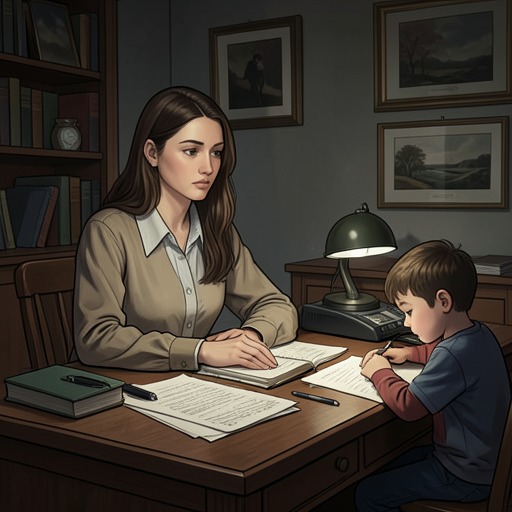
The [1997 Korean financial crisis](entity:event-recall-event-1997-korean-financial-c-a01de237a88e) enters the family history of [Kim Jiyoung](entity:character-recall-character-kim-jiyoung-26c1d6511fbc) not as an abstract economic measure but as a rupture in the security her father had built his identity around. A low-level civil servant who believed downsizing and early retirement affected other sectors was asked to quit when restructuring reached the civil service. The shock unsettled his confidence in a dependable livelihood and set in motion a series of choices that changed the balance between him and his wife.
## A Secure Career Under Threat
The crisis reached a household whose father had treated public service as stable work. He did not earn a great deal, but raising a family was his greatest source of pride. He was described as steadfast, conscientious, meticulous, and a model employee; faced with the threat to his livelihood, he appeared visibly shaken and at a loss. The scene makes the crisis consequential through the collision between his belief in job security and the prospect of losing the work on which his family depended.
The pressure was not limited to his employment. [Kim Eunyoung](entity:character-recall-character-kim-eunyoung-686ef3407f07) was in twelfth grade, and the family had two younger children whose expenses continued to mount. Their mother weighed the worsening economy and the uncertain future of her husband’s job against her eldest daughter’s prospects, considering teacher training college because it could lead to stable employment and cost less in tuition. The crisis thus sharpened the family’s attention to education as both a personal ambition and a hedge against economic insecurity.
## Early Retirement and a Second Act
The father eventually chose early retirement despite having years of service left. The working world had changed: computers were now available to every employee, while he, from the pre-computer generation, still typed with his index fingers. He had served enough consecutive years to qualify for a pension, and his severance pay was a decent sum. These conditions made retirement possible, but not unambiguously safe. Even Kim Jiyoung, who knew little about the wider world, worried about the timing: one child had just entered college while the younger two still required substantial support.
The father framed his departure as the beginning of a second act. His decision was therefore more than a response to a threatened position; it was also an attempt to choose what came next. Yet the family had little room to treat the severance money as surplus. The same payment that could support a new undertaking represented a resource earned through years of work and needed by a household facing uncertain expenses.
## The Proposed Investment and Family Rift
After retiring, the father considered putting most of his severance pay into a business. A former colleague who had left work around the same time was organizing a China import-export venture with college friends and invited him to join. The father told his wife of his intention to invest; she firmly opposed it and urged him to use the money for himself after years of supporting the family. Her resistance placed the practical stakes of the decision plainly before him: retirement might be a new beginning, but risking most of the severance could expose the family to further insecurity.
The disagreement marked a change in their marriage. They were not demonstrative in their affection, but they traveled alone together at least once a year and sometimes went out for a late movie or drinks. They had never had a major quarrel in front of their children. In consequential family decisions, the mother usually advised with care and tact, and the father generally followed her counsel. His retirement was the first major decision he had made unilaterally in twenty years of marriage; his determination to continue toward the investment widened the difference between them into what the narrative describes as an unbridgeable rift.
## Significance in the Family Narrative
The crisis’s effects are traced through linked vulnerabilities: a secure job proves insecure, education becomes a route toward dependable work, and retirement money becomes the object of a dispute over risk and family responsibility. The father’s character as a conscientious provider makes the shock especially legible: the threat is not simply to income but to the role and certainty on which he had taken pride. At the same time, his wife’s opposition shows her practical influence within the marriage, even as his first unilateral decision in two decades changes their usual pattern of negotiation. The event therefore shapes the family not through a single financial statistic, but through the altered choices and strained relationship that follow.
Event 2
Abolition of the hoju system

The [Abolition of the hoju system](entity:event-recall-event-9698870ae18d) was a landmark legal reform that dismantled a family-registration framework organized around a male patriarch. In the novel, its history is set against [Kim Jiyoung](entity:character-recall-character-kim-jiyoung-26c1d6511fbc)’s ordinary decisions about marriage and a future child: the law makes a different choice possible, but does not make that choice socially uncomplicated.
## The system and the push for change
Under the hoju system, all members of a family had to be registered under its patriarch. The challenge to the arrangement gathered force in the late 1990s, when organizations began arguing for its abolition. Some people publicly used both parents’ surnames; celebrities also spoke about painful childhood experiences of being singled out for having a different surname from their fathers. These accounts made the system’s rules visible in family life, where official registration could shape how a child’s belonging was understood.
The novel also describes resistance to reform. A popular television drama about a single mother who risked losing custody of the child she had raised to an unreliable father helped Kim Jiyoung recognize what was absurd about the system. Yet some people feared that abolishing it would turn blood relatives into strangers and make society savage. The debate therefore concerned more than administrative procedure: it exposed competing ideas about whether family identity depended on a male-line registry.
## Constitutional ruling and legal abolition
In February 2005, the [Constitutional Court of Korea](entity:organization-recall-organization-ea29e06880ca) found the hoju system incompatible with the Constitution’s gender-equality clause. The system was abolished in January 2008 and replaced by a new law. The sequence matters in the novel’s account: the court’s ruling challenged the legal basis of the arrangement before the formal replacement took effect.
The reform also changed the form of family identification. The old family registry gave way to an individual identification system, and a newborn was no longer required to take the father’s surname. When registering their marriage, a couple could choose for a child to take the mother’s surname and family origin instead. The possibility was real but uncommon: the narrative reports only 200 cases of children taking their mother’s name since abolition in 2008.
## The reform in Kim Jiyoung’s family
The change enters the story through the marriage-registration form Kim Jiyoung and [Jung Daehyun](entity:character-recall-character-jung-daehyun-ab9b8550b5d1) complete at their dining table. One section asks whether a future child will take the mother’s surname and family origin. Jung Daehyun remarks that Jung is a decent surname. Kim Jiyoung explains that most people still use their father’s surname and that a child with the mother’s name would invite assumptions and require repeated explanations. Jung Daehyun nods, and Kim Jiyoung checks no.
Her response is not presented as the absence of a legal option: the form explicitly offers one. Rather, the ordinary interaction shows how custom can narrow the practical meaning of a right. Kim Jiyoung feels uneasy as she marks her answer, recognizing that a changed law has not by itself changed the expectations surrounding family names. The form puts the reform’s promise and its limits side by side: a choice newly permitted by law, and the social friction attached to exercising it.
## Significance
The abolition is a clear instance of formal reform confronting the persistence of everyday convention. The legal rule no longer makes the father’s surname compulsory, but the rarity of maternal surnames and Kim Jiyoung’s anticipation of scrutiny show that removing compulsion does not erase a norm. By connecting national legal history to a small mark on a marriage form, the narrative measures change not only by what the law allows, but also by what people can choose without explanation or social cost.
Event 3
Schoolgirls’ uniform ambush and capture of the flasher
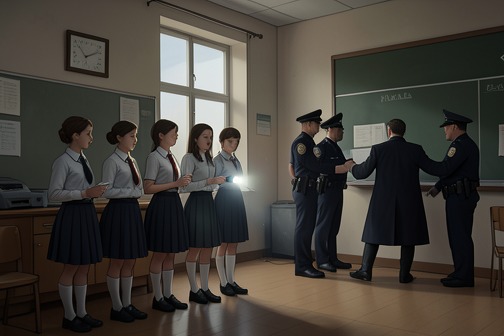
The [Schoolgirls’ uniform ambush and capture of the flasher](entity:event-recall-event-44a87915f7dd) is an episode from [Kim Jiyoung](entity:character-recall-character-kim-jiyoung-26c1d6511fbc)’s eighth-grade years in which five students acted against a local man who had repeatedly exposed himself near their school. The girls took him to a police station, and he never returned, but the school punished them rather than treating their action as a reason to reconsider its response to the danger.
## Background and the Classroom Incident
The flasher had appeared at the school gate and along the route to school for years. On cloudy days, he sometimes positioned himself in an empty lot opposite the windows of an all-girls’ eighth-grade classroom. The students dreaded being assigned to that room, even as the notoriety of the situation became a source of nervous joking.
Early in spring, after rain and fog had settled over the city, several girls called toward the lot from the classroom window. Kim Jiyoung remained at her desk, too far away to see and too shy to approach the window. A friend later told her that the man had responded to the girls’ calls. The commotion ended when the Head of Student Discipline entered the room and ordered the girls near the window to come forward.
## Punishment and the Ambush
The girls protested that some had been sitting in their seats and had neither shouted nor looked out. The teacher nevertheless selected five and took them to the teachers’ office. They missed fourth period to do drills and write apology letters. When the class bully returned at lunchtime, she was still angry that the students had been punished instead of the man whose conduct had prompted the incident.
Afterward, the five girls, who had habitually arrived late, began coming to school before everyone else and sleeping through morning classes. Teachers noticed a change but left them alone because they were not causing other trouble. Their purpose became clear when the bully encountered the flasher in an alley early one morning. Four girls hidden behind her joined her in subduing him with clotheslines and belts; together, the five tied him up and took him to a nearby police station.
## Aftermath and Significance
The account does not say what happened to the man at the police station. It does establish that he disappeared for good. The five girls, meanwhile, were suspended for a week. They wrote apology letters in the Student Discipline room, cleaned the school field and toilets, and did not discuss what had happened. Teachers continued to reprimand them as they passed, treating their conduct as a disgrace to the school.
The episode turns on a sharp reversal: the students who had faced a recurring threat were first disciplined for responding to it and then punished again after they took action. The outcome is divided—the flasher is gone, but the school’s sanctions and the girls’ enforced silence leave their intervention officially marked as misconduct. Kim Jiyoung’s position in the classroom matters too: she witnesses the episode’s beginning but does not join the five, keeping the remembered account distinct from the girls’ act of capture.
Event 4
Kim Jiyoung’s bus-stop harassment incident
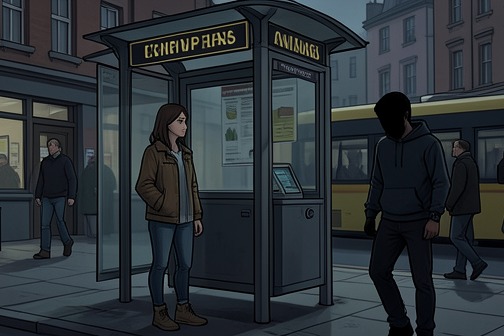
[Kim Jiyoung’s bus-stop harassment incident](entity:event-recall-event-a9d4396af426) is a formative episode in which a male student follows Jiyoung late at night and a stranger helps her escape. Its consequences extend beyond the encounter: Jiyoung withdraws from ordinary contact with men and avoids bus stops after dark, while the woman who intervenes gives her a response that challenges the blame placed on her. The incident exposes both the danger Jiyoung faces and the competing ways adults explain that danger to her.
## Setting and approach
The incident begins after Jiyoung’s cram school lets out late. She has finished both her regular classes and a special seminar and is waiting beneath a bus-stop sign. A male student makes eye contact and greets her. He looks familiar, but she cannot place him; assuming he attends the cram school, she gives him an awkward nod. He gradually moves closer. As the other people waiting at the stop leave, he ends up standing beside her.
He asks which bus she is taking, and Jiyoung responds with hesitation. She wants to ask who he is and how he knows her, but fear keeps her from continuing the conversation. She avoids his gaze and looks toward the distant headlights. Her uncertainty is important to what follows: she does not recognize him as someone with whom she has an established relationship, even though he later treats routine encounters as evidence of intimacy.
## Following her onto the bus
When Jiyoung’s bus arrives, she pretends it is not hers and boards at the last moment. The student follows her on. Watching the reflection of his back in the bus window, she becomes afraid that he is watching her too. A tired woman who appears to be returning from work notices that Jiyoung is pale and sweating and offers her seat. Jiyoung tries to enlist the woman’s help without alerting the student. When the woman asks whether she needs to go to a hospital, Jiyoung signals that she needs a phone.
The woman understands enough to hand over her large mobile phone. Jiyoung hunches over it and texts her father, asking him to meet her at the bus stop and hurry. At Jiyoung’s stop, however, her father is not there. The male student is just behind her, and she is afraid to get off; she also cannot continue into an unfamiliar neighborhood late at night. She steps onto the deserted street, and he gets off too. With only the two of them there and a broken streetlight darkening the stop, Jiyoung freezes as he approaches.
The student accuses her of flirting with him. He cites seeing her sit in front of him and smile when she passes handouts, as well as her greetings in the hallway. Jiyoung cannot recall who sits behind her or what expression she makes when passing someone a handout. What he interprets as intentional attention is, from her perspective, ordinary conduct whose details she does not even remember.
## The woman’s intervention
The bus stops farther down the road, and the same woman gets off, calling after Jiyoung and waving a scarf she has pretended the girl left behind. The implausible pretext draws attention to the stop. The male student insults them and walks away. Jiyoung collapses and begins to cry; her father then comes running out of an alley. She explains that the student may be in her class, but she has no memory of seeing him and believes he has mistaken ordinary politeness for flirtation.
Jiyoung, her father, and the woman sit together on the bus-stop bench and wait for the next bus. Her father says he came out in such a hurry that he brought nothing, apologizes for being unable to pay for a cab, and promises to reward the woman for helping. The woman refuses the idea that a cab would have been a better option and tells him to console Jiyoung. Her intervention does not undo the fear of the encounter, but it places an adult witness beside Jiyoung who recognizes that she needs comfort rather than blame.
## Blame and reassurance
That night, Jiyoung’s father gives her an earful. He questions why her cram school is so far away, why she talks to strangers, and why her skirt is so short. His response echoes the rules Jiyoung has grown up hearing: she should be cautious, dress conservatively, behave in a ladylike manner, and avoid dangerous places, times, and people. In this account, safety becomes a responsibility assigned to her, and failing to avoid danger becomes grounds for reproach.
Jiyoung’s mother later calls the woman to offer compensation, a small gift, coffee, or tangerines; the woman declines. Jiyoung calls again because she wants to thank her. The woman says she is glad Jiyoung is safe and tells her the incident was not her fault. Drawing on her own encounters with men who behave this way, she places responsibility on the men rather than on the women they target. Jiyoung begins to cry and cannot answer. The woman also reminds her that there are many good men in the world. Her reassurance does not erase the assault or its consequences, but it gives Jiyoung an alternative to the belief that she caused what happened.
## Aftermath and significance
Jiyoung quits the cram school. For a long time she cannot go near a bus stop after dark. She stops smiling at people and avoids eye contact with strangers; her fear broadens to men in general, and she sometimes screams when she unexpectedly meets her younger brother in the stairwell. The episode thus changes more than her route home: it alters how she moves through public spaces and how she interprets everyday contact.
The woman’s words remain with Jiyoung alongside those changes. She thinks of the reassurance that the incident was not her fault and that good men exist; the narrative states that, without hearing it, she would have lived in fear for even longer. The episode also sits within a wider pattern in Jiyoung’s school years, where male teachers cross students’ physical boundaries and girls with jobs face harassment from employers and customers. Against that backdrop, the stranger’s intervention is significant not because it makes public space safe, but because she refuses to treat Jiyoung’s fear as evidence of Jiyoung’s wrongdoing.
Event 5
Cha Seungyeon’s death in childbirth
[Cha Seungyeon’s death in childbirth](entity:event-recall-event-35b6012351e0) is both a sudden loss in its own right and a grief that returns through [Kim Jiyoung](entity:character-recall-character-kim-jiyoung-26c1d6511fbc)’s later dissociative episodes. Seungyeon died from an amniotic fluid embolism while giving birth to her second child. The news reached Jiyoung during postpartum depression, binding the loss to a period when even ordinary responsibilities had become difficult.
## Friendship and the Circumstances of Their Meeting
Seungyeon and Jiyoung became friends through the university hiking club, though neither actually enjoyed hiking. Seungyeon was kind to the club’s female members, and she and Jiyoung stayed close after Seungyeon graduated, keeping in touch and meeting frequently. Their friendship therefore extended beyond the club that brought them together.
Seungyeon’s wedding reception was where Jiyoung first met [Jung Daehyun](entity:character-recall-character-jung-daehyun-ab9b8550b5d1). Although Daehyun and Seungyeon had entered university in the same year, Jiyoung was three years behind them. Daehyun had been away from university for military service and then returned to [Busan](entity:location-recall-location-busan-0eebc38d6b82) to work part-time; Jiyoung was active in the club during his absence. The reception, rather than their shared university connections, became the occasion that brought Jiyoung and Daehyun together.
## The Death and Its Immediate Effect
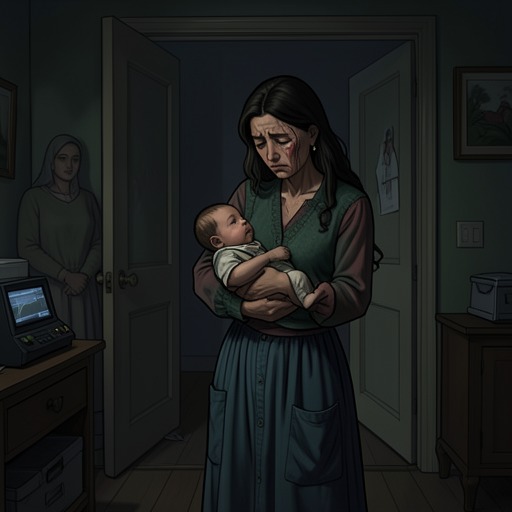
Seungyeon died giving birth to her second child because of an amniotic fluid embolism. The account identifies the medical cause but offers no further explanation of the event. Its emotional force in Jiyoung’s life comes through the circumstances in which she learned of it: she was already experiencing postpartum depression, and the shocking news compounded the strain she was under.
In the aftermath, Jiyoung struggled to handle everyday tasks. The loss did not arrive as an isolated grief that she could set apart from new motherhood; it landed amid an existing difficulty in managing daily life. The narrative places the death in that overlap, showing how news of a friend’s death could deepen an already precarious period.
## Return Through Jiyoung’s Dissociative Episodes
The account of Seungyeon’s death emerges as part of the explanation for Jiyoung’s later behavior. A few days after imitating her mother, Jiyoung says that she is Seungyeon, speaking as the friend who died a year earlier. The shift brings a past loss into the present of the couple’s life with their baby, linking Jiyoung’s postpartum distress to a friend whose own death occurred in childbirth.
The narration sets out their history and Seungyeon’s death before returning to the couple’s present, so the episode is understood through the relationship and grief behind it. Seungyeon’s death is not merely background to Jiyoung’s impersonation: it marks a loss that had already made daily life harder when she heard the news, and that returns when she speaks in her friend’s identity.
Event 6
Kim Jiyoung’s Chuseok conflict with her in-laws
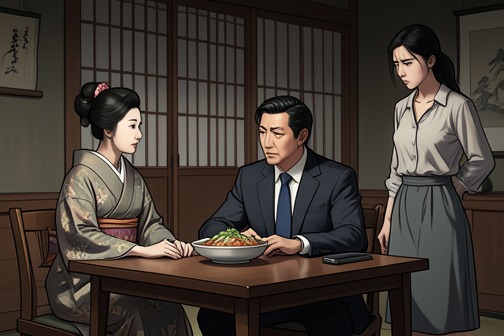
[Kim Jiyoung’s Chuseok conflict with her in-laws](entity:event-recall-event-58c612c860be) turns an argument about holiday food into a public challenge to the unequal expectations governing family visits and care. When Daehyun’s mother asks whether the holiday work has been too much for Jiyoung, Jiyoung answers in her own mother’s voice, voicing a complaint that the family’s customs have left unspoken. Her intervention unsettles the gathering, but it also gives direct form to the imbalance: her husband’s family treats its holiday traditions as shared family time while her own family’s claims remain secondary.
## The dispute over holiday work
Jiyoung’s mother-in-law has prepared food at home, including dishes that Jiyoung thinks could instead be bought at the market or a shop. Jiyoung objects that the household does not even hold ancestral rites and that making so much food is hard on her. Her mother-in-law responds that cooking for one’s family does not feel like work and presents making and eating food together as the point of the holidays. She then asks Jiyoung whether the work has been too much for her.
That question opens a space for Jiyoung to answer, but her response comes through a changed identity. She speaks as though she were her own mother, addressing Mrs. Jung and describing Jiyoung as exhausted by the holidays. The shift makes the family’s polite exchange difficult to contain: a complaint that could have been dismissed as a daughter-in-law’s unwillingness to help is voiced instead as a mother’s concern for her daughter. The scene’s tension lies in the collision between the language of family togetherness and the labor required to produce it.
## A challenge to the family’s priorities
Daehyun tries to redirect attention by pointing out that [Jung Jiwon](entity:character-recall-character-jung-jiwon-5cc7fec242ef) needs a diaper change. Jiyoung then turns to him, calling out his part in the arrangement: he spends the holidays in [Busan](entity:location-recall-location-busan-0eebc38d6b82) and visits her family only briefly for a meal. She asks him to come earlier the following year. Her rebuke makes the conflict more than a disagreement between a daughter-in-law and her husband’s parents; it identifies Daehyun’s own participation in the pattern that privileges his family’s gathering.
Daehyun’s father responds angrily. He argues that his children and the rest of his family meet only a few times each year and treats the complaint as an unreasonable objection to spending time together. His response frames the existing arrangement as an ordinary family custom rather than an unequal distribution of holiday time. Jiyoung answers him directly. She acknowledges that holidays are occasions for families to gather, but insists that they belong to her family as well as his. Because her family members are busy and cannot easily meet at other times, she says their daughter should be allowed to visit Jiyoung’s family when Daehyun’s sister comes to visit his.
The argument exposes a practical asymmetry beneath the abstract appeal to family. Daehyun’s relatives are together for the holiday, while Jiyoung’s family is not given equivalent time with her and their daughter. Her demand is not that his family stop gathering; it is that the same principle of family connection apply to both sides. In challenging his father, she makes visible the assumption that her role is to accommodate her husband’s family, even when doing so limits her own family’s access to her.
## The rupture and immediate aftermath
Daehyun tries to explain that Jiyoung is not well, but cannot find a way to begin. Jiyoung continues speaking, and he eventually stops her and takes her out of the room. He tells his parents and his sister that she has not been well lately and promises to explain later. The family leaves in haste, without time to button their coats. Daehyun is overwhelmed by what has happened, while Jiyoung sings to their daughter as if nothing has changed. His parents do not come out to say goodbye; his sister carries her brother’s bags to the car.
The departure does not resolve the argument. Instead, it leaves Daehyun to manage two problems at once: the family’s anger and the symptoms he says Jiyoung has been experiencing. He is described as baffled, sad, and scared rather than angry with her. Soon afterward, he visits a psychiatrist alone to discuss her symptoms and possible treatment. He tells Jiyoung that he has arranged a therapy session because she has not been sleeping well and seems stressed. She thanks him and says that she has felt low and enervated, suspecting maternity blues. The consultation supplies a clinical aftermath to the confrontation without explaining away the substance of what she said about the family’s unequal expectations.
## The wider stakes of care and family time
The dispute gains further context from the couple’s discussions about having a child and arranging care. Jiyoung worries that she may not be able to continue her career while raising a child, especially because both she and Daehyun work late and on weekends and their parents cannot reliably help. When she asks what Daehyun would give up, she names her youth, health, job, colleagues, social networks, career plans, and future as things placed at risk by motherhood. His anticipated sacrifices, by contrast, include fewer evenings with friends, discomfort about work dinners, and the burden of helping after work. The contrast clarifies why an apparently limited disagreement over holiday time carries broader weight: family duties already fall unevenly, and expectations that Jiyoung will adjust are not confined to the holiday table.
When the couple later evaluates childcare arrangements, they consider returning to work immediately, taking a year of maternity leave, or not returning to work. Sending their child to Daehyun’s parents in Busan proves impractical because they are elderly and his mother has had back surgery; hiring a live-in nanny raises concerns about cost and bringing a stranger into their daily life. They conclude that one parent must stay home, and Jiyoung becomes that parent because Daehyun’s work is more stable and better paid, as well as because it is more common for husbands to work and wives to care for children. Later, when Jung Jiwon starts daycare, Jiyoung’s limited time without the child is largely consumed by laundry, dishes, tidying, and preparing food. These circumstances show how the conflict’s argument about who gets family time is connected to a wider division of paid work and unpaid care.
## Significance
The confrontation is a moment of both disclosure and disruption. Jiyoung’s changed voice makes her distress unmistakable to the people around her, while the content of her speech remains a lucid demand for reciprocity: the holidays cannot count as family time only when they serve Daehyun’s family. The scene does not show the in-laws accepting that demand; Daehyun removes her from the gathering, and the family leaves without a farewell from his parents. Its immediate consequence is a hurried departure and a later psychiatric consultation, but its social argument remains intact. The episode places Jiyoung’s symptoms within a household where care, work, and access to relatives are unevenly assigned, rather than treating the family dispute as a simple failure of manners.
Event 7
Birth of Jung Jiwon

The birth of [Jung Jiwon](entity:character-recall-character-jung-jiwon-5cc7fec242ef) is a turning point in [Kim Jiyoung](entity:character-recall-character-kim-jiyoung-26c1d6511fbc)’s life: a long, induced labor gives way not to rest but to round-the-clock infant care, physical pain, and housework. The account makes childbirth a bodily event with an extended domestic aftermath, showing how Jiyoung’s recovery is constrained by the work of caring for her baby and maintaining the household.
## Induction and labor
Jiyoung was well past her due date, and the baby was growing larger while the amniotic fluid was running low. She and her doctor therefore agreed that labor should be induced. The night before she went to the hospital, Jiyoung and [Jung Daehyun](entity:character-recall-character-jung-daehyun-ab9b8550b5d1) shared grilled pork belly for four and each ate a bowl of rice before going to bed early. But she could not sleep. Memories surfaced in small, ordinary fragments: her older sister doing her homework, her mother forgetting pickled radish in her school-picnic kimbap, and a colleague bringing plain rice puffs when morning sickness was at its worst. As each memory returned, so did the feelings and sensations associated with it. Jiyoung finally fell asleep close to dawn and dreamed several times about giving birth.
At the hospital, Jiyoung changed into hospital clothes and was placed in the pre-delivery room. She received an enema and labor-induction treatment, with a fetal-movement monitor strapped around her belly. Whenever she began to doze, nurses and a doctor came in to examine her cervix. The repeated examinations made her feel as though her body had become the site of an intrusive procedure; she compared the sensation to a natural disaster unfolding inside her. Pain spread from her tailbone, intensified, and arrived at shorter intervals. She tore the corners of her hospital pillow and howled.
The labor was long, but her cervix was not dilated enough and the baby had not begun to descend. As the contractions grew stronger, Jiyoung pleaded repeatedly for an epidural. It gave her and Daehyun two and a half hours of respite. After that pause, however, the pain returned with greater intensity. The brief relief does not resolve the labor so much as mark a contrast within it: rest is temporary, while the physical ordeal continues.
## Jung Jiwon’s birth and its immediate aftermath
Jung Jiwon, a baby girl, was born at four in the morning. Jiyoung cried even more than she had during labor, overwhelmed by how sweet the baby seemed to her. The arrival of her daughter is presented as an intense emotional moment, but not as an ending to the physical demands of childbirth. [Jiwon](entity:character-recall-character-jiwon-98ee84d70f9f) cried day and night until someone picked her up, and Jiyoung carried her while doing chores, going to the toilet, or trying to nap.
Feeding every two hours meant Jiyoung could not sleep for more than two hours at a time. She washed the baby’s clothes and fabrics, cleaned the house more thoroughly than before, and tried to eat well enough to produce milk. She cried more than at any other time in her life and hurt all over. The sharp contrast between the infant’s sweetness and the mother’s exhaustion defines the immediate aftermath: affection and suffering coexist, while care fills the hours that might otherwise have been used for sleep or recovery.
## Recovery, housework, and the value of domestic labor
Jiyoung’s wrists became so painful that she could not move them. One Saturday morning, she left the baby with Daehyun and went to a nearby orthopedist, a clinic she had previously visited after hurting her ankle. The doctor said her wrists were inflamed but that the condition was not serious. When he learned she had given birth recently, he attributed the problem to weakened joints after childbirth. He would not prescribe anything too strong while she was breastfeeding and asked whether she could attend physical therapy. Jiyoung shook her head; she had no time. When advised to rest her wrists, she quietly explained that she still had to care for the baby, wash clothes, and clean.
The doctor answered by contrasting her life with that of women in the past, who had done laundry with clubs, boiled baby clothes over fires, and scrubbed floors on their hands and knees. Since modern households had washing machines and vacuum cleaners, he suggested, women had little to complain about. Jiyoung’s unspoken response identifies the labor hidden by that comparison: laundry does not load or unload itself, hang itself up to dry, or put away the effort required to clean. Nor does a vacuum wash the floor with a rag and then clean and dry the rag. The machines reduce some physical tasks, but they do not remove the person’s work of operating them or caring for the household.
The episode broadens from Jiyoung’s sore wrists to the way domestic labor is judged. People may dismiss staying home as idleness or praise it as work that sustains life, yet neither attitude necessarily assigns it a monetary value. The comparison with technological change in other kinds of work sharpens the point: advances are readily recognized as reducing labor in workplaces, while the work of maintaining a home is more easily treated as though it has disappeared. Jiyoung’s postpartum injury makes that overlooked effort bodily and immediate.
## Family support and the time after birth
Jiyoung’s mother, [Oh Misook](entity:character-recall-character-oh-misook-45830463c9a0), could not help her recover because the porridge shop needed her labor. Business had slowed as more restaurants opened in the commercial building, and cutting staff to reduce costs meant longer hours for Misook. The shop still earned enough to support Jiyoung’s younger brother, who was extending his education. When she could, Misook brought Jiyoung leftovers from the shop. The support was real but limited: it arrived as food when available, not as sustained relief from the daily care of the baby.
Misook praised her daughter for raising and breastfeeding a child despite being thin and without her mother’s help, calling it the power of maternal love. The praise captures both affection and an expectation that a mother will endure. Jiyoung’s account of aching wrists, interrupted sleep, and unending chores places that ideal beside the concrete labor it can conceal.
When Jung Jiwon started daycare a little after twelve months, she adjusted surprisingly well. Her routine ran from a 9:30 a.m. drop-off through a snack, playtime, lunch, and collection before 1 p.m. That gave Jiyoung roughly three hours to herself, excluding the time spent dropping off and picking up her daughter. Most of those hours went to laundry, dishes, tidying, and preparing food for the baby; she hardly had time to sit and enjoy a cup of coffee. Statistics cited in the narrative estimate that a stay-at-home mother with a child under two has four hours and ten minutes to herself each day, while a mother whose baby attends daycare has four hours and twenty-five minutes—a difference of only fifteen minutes. Daycare changed where Jiyoung did the housework, and gave her a stretch in which to complete it without the baby beside her, but did not turn that time into substantial leisure. The teacher’s suggestion that Jung Jiwon might nap at daycare and stay later prompted Jiyoung to consider beginning something new, a small opening created by the possibility of a little more time.
## Narrative significance
The birth is narrated through precise bodily and domestic details: the monitor around Jiyoung’s belly, the examinations that wake her, the torn pillow corners, feeding at two-hour intervals, and wrists too painful to move. Those details carry the story beyond the dramatic moment of delivery. The event continues in interrupted sleep, cleaning, laundry, breastfeeding, and the lack of time to attend physical therapy. Motherhood appears not as a single emotional revelation but as an ongoing allocation of labor, with Jiyoung’s body absorbing costs that the household’s appliances and the language of maternal devotion do not erase.
Event 8
Kim Jiyoung’s resignation from her marketing job

[Kim Jiyoung’s resignation from her marketing job](entity:event-recall-event-06646a7619cf) is presented not as a retreat from work but as the outcome of a family decision made under sharply unequal pressures. As her due date approached, she and [Jung Daehyun](entity:character-recall-character-jung-daehyun-ab9b8550b5d1) compared childcare plans and costs; they concluded that one of them would have to stay home, and that the person would be [Kim Jiyoung](entity:character-recall-character-kim-jiyoung-26c1d6511fbc). Her departure ends a job she enjoyed and a source of independence, while exposing how employment, income, and gendered expectations shape who absorbs the practical costs of raising a child.
## The Work She Was Leaving
Kim Jiyoung had adjusted relatively well to her first official job. She liked her colleagues and found the work enjoyable, even though dealings with clients could be difficult. The agency worked for client companies whose older male executives brought sexist humor and assumptions into professional interactions. Kim Jiyoung and her colleagues had to manage these encounters without a response that reliably ended them: laughing could invite more, while not laughing could prompt questions about her mood. The workplace thus offered genuine collegial support alongside an external professional environment that made her position less comfortable.
A business dinner made that imbalance especially plain. After Kim Jiyoung and her team had helped organize a client company’s anniversary event, the client’s marketing team invited them to dinner. At the restaurant, senior male staff directed Kim Jiyoung to sit beside their division head despite her insistence that she wanted to remain with her colleagues. Her male coworker could offer little more than a nervous presence, and [Kim Eunsil](entity:character-recall-character-kim-eunsil-36300e44a812) arrived after Kim Jiyoung had already been seated. The division head pressured her to drink and made demeaning remarks about her appearance and private life. The incident belongs to a wider pattern of workplace interactions in which clients treated women’s discomfort as something to be managed rather than a reason to stop. It helps explain why the job’s value cannot be measured only by whether the work itself was rewarding.
Yet the agency was also a place of friendship, accomplishment, and self-support. Kim Jiyoung had more good colleagues than bad, and felt closer to many of them than to her college friends. Completing assignments gave her a sense of achievement; earning her own money gave her a measure of control over her life. She did not leave because she was incompetent or lazy, and the work had not simply been a burden. That contrast gives the resignation its particular weight: a meaningful first step into working life was lost even though Kim Jiyoung valued it and had found a place within it.
## The Childcare Decision
Before the birth, Kim Jiyoung and Jung Daehyun considered three possibilities on a large sheet of paper: returning to work immediately, returning after a year of maternity leave, or not returning at all. For each plan, they discussed who would care for the baby, what that care would cost, and the advantages and disadvantages. Their regular late nights and weekend work made relying on daycare or babysitters alone difficult, while their parents could not provide the needed support. The available options narrowed to sending the child to Jung Daehyun’s parents in [Busan](entity:location-recall-location-busan-0eebc38d6b82) or hiring a live-in nanny.
Neither arrangement offered a workable resolution. Jung Daehyun’s parents were willing to raise the baby, but they were elderly and his mother had recently undergone back surgery. A live-in nanny would share the family’s daily life as well as care for the child, and the couple worried about the cost, finding someone suitable, and how long they would need that arrangement. They also considered the years of childcare before the child could manage school, after-school activities, and meals more independently. The couple concluded that one parent would have to stay home. Jung Daehyun’s job was more stable and paid more; beyond those economic considerations, it was also more customary for husbands to work while wives cared for children and ran the home. The choice was discussed together, but its consequences fell on Kim Jiyoung.
The unequal stakes had already surfaced in their conversation about having a child. Kim Jiyoung worried that she might not be able to keep her career and felt guilty at the thought of someone else caring for a baby they had not yet had. When Jung Daehyun offered to help with childcare and household tasks, she asked what he would be giving up. She named her youth, health, job, colleagues, social networks, career plans, and future as things placed at risk. His anticipated losses included seeing friends less often, coming home earlier, and feeling constrained by work dinners and chores; he also described financial support as a major responsibility. Kim Jiyoung tried not to react emotionally, but felt that his potential sacrifices were slight beside the possibility of her life being thrown off course. That earlier exchange clarifies the imbalance behind the later decision.
## Leaving the Agency
As the due date drew closer, Kim Jiyoung went back and forth between taking maternity leave and quitting altogether. Taking the longest possible leave and deciding later seemed sensible, but was not ideal from the company’s and her colleagues’ perspectives. In the end, she did not return to work. Jung Daehyun suggested that, once their child was older, they could use babysitting and daycare to give Kim Jiyoung time to study or seek another job, and described the transition as a chance to begin a new chapter. She recognized his sincere support, but objected to the language of helping: childcare, household work, and finding her another job were being framed as tasks he would assist her with, rather than shared responsibilities for their home and child.
Kim Jiyoung did not cry when she told the company head she was quitting. She did not cry when Kim Eunsil said she hoped they would work together again, while she brought her belongings out of the office a little at a time, at the farewell party, or during her final commute home. The grief arrived the next morning. After seeing Jung Daehyun off, she returned to bed and woke around nine, mentally arranging an ordinary working day: breakfast near the station, lunch at the Jeonju Diner, perhaps a movie, and a trip to the bank. Then she realized there was no office to go to. The loss became real not in a dramatic farewell, but in the collapse of a routine she had expected to continue.
## Aftermath and Significance
The narrative places Kim Jiyoung’s personal decision alongside the broader pattern of women leaving employment after marriage, pregnancy, childbirth, childcare, or the education of young children. Around the time she left, in 2014, one in five married women in [Korea](entity:location-recall-location-korea-9147647abb66) had quit for reasons of this kind. The reported employment rate for women fell from 63.8 percent among those aged twenty to twenty-nine to 58 percent among those aged thirty to thirty-nine, before rising to 66.7 percent among women over forty. The figures frame her resignation as more than an individual preference: the decision takes place within a recurring pattern of career interruption around childbearing and care.
After [Jung Jiwon](entity:character-recall-character-jung-jiwon-5cc7fec242ef) began daycare shortly after turning one, Kim Jiyoung had about three hours to herself between drop-off and pickup. Most of that time went to laundry, dishes, tidying, and preparing food and snacks; even with daycare, she could hardly sit down for coffee. The account notes a small statistical difference in reported daily time to oneself: four hours and ten minutes for a stay-at-home mother with a child under two, compared with four hours and twenty-five minutes for a mother who sent a baby to daycare. The difference was only fifteen minutes, with the main change being whether the housework was done alongside the child or without the child present. Daycare eased one pressure and gave Kim Jiyoung space to consider starting something new, but it did not erase the domestic labor that had helped displace her from paid work.
The resignation therefore marks both an ending and a continuing condition. Kim Jiyoung loses a workplace that had offered income, achievement, and belonging; she takes on the daily care and housework that the couple’s employment arrangements could not accommodate. The narrative does not equate leaving a job with lacking ambition, nor does it treat caring for a child as evidence that a mother has no career passion. Instead, it keeps both truths in view: Kim Jiyoung loves and cares for her child, and the loss of her work and future plans remains a loss.
Event 9
Marketing Company Women’s Restroom Spy-Camera Scandal
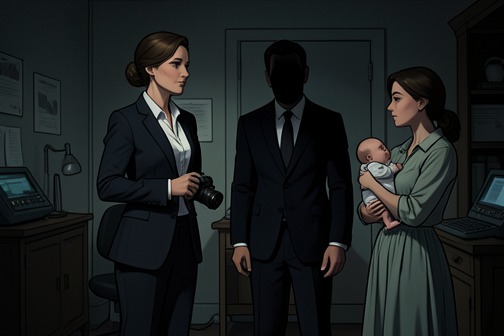
The [Marketing Company Women’s Restroom Spy-Camera Scandal](entity:event-recall-event-8a3f354dde85) exposed a chain of privacy violations inside [Kim Jiyoung](entity:character-recall-character-kim-jiyoung-26c1d6511fbc)’s former workplace: a building security agent secretly recorded women in restroom cubicles, images were posted online, and male employees circulated them among themselves rather than alerting the women or authorities. The women who learned of the abuse organized to find the cameras and report the case, while the company’s response became a further source of conflict.
## Installation and Discovery
About two years before the scandal came to light, the commercial building’s business association changed security firms, and the older guards on the ground floor were replaced by younger agents. Some people said they felt safer with younger security staff; others found the agents more unsettling than burglars. One of the agents, a man in his twenties, had hidden cameras in the women’s restroom cubicles. He repeatedly uploaded the resulting images to a pornography website.
The scandal was uncovered not because the security agent came forward, but because a male section manager at Kim Jiyoung’s company recognized the restroom layout and women’s clothing in images on the site. He shared the images with male colleagues instead of notifying the police or the women depicted. The number of men who saw or passed on the images, the duration of their circulation, and the conversations around them remained unclear.
One male employee who had seen the images urged a female colleague, with whom he was secretly in a relationship, to use a restroom on another floor. His warning prompted her to question him until he disclosed what had happened. Because their relationship was secret, she felt unable to report the matter directly to the authorities. After agonizing over what to do, she confided in her closest colleague, [Kang Hyesu](entity:character-recall-character-kang-hyesu-c84eebfa1525). Hyesu then notified the women in the office; they searched for cameras together and reported the case to police.
## Effects on Employees
The discovery left the women at the company dealing not only with the exposure of the images but with the uncertainty of who had seen them and whether they might be recognized. Kang Hyesu sought therapy and described how ordinary encounters with strangers had become difficult to interpret: eye contact could prompt fear that someone had seen the images, while a smile could seem like ridicule. Many of the women sought therapy or medication. One employee required emergency medical care after an overdose of sleeping pills, and two assistant section managers from General Affairs, Choi Hyeji and Park Seonyoung, left the company.
The news also unsettled Kim Jiyoung, who had already left the workplace by the time the cameras were installed the previous summer. She considered that, had she remained, her own image might have been recorded and circulated, and that she too might have faced the distress experienced by her former colleagues. The possibility transformed the scandal from a report about a crime at her old office into a threat she could readily imagine having reached her own life.
The employees accused of passing the images around minimized their responsibility by distinguishing themselves from the security agent who had installed the cameras and taken the pictures. They argued that they had only viewed material posted on a publicly accessible website, while the women regarded circulation as complicity in the abuse. The dispute revealed a further imbalance: the women had to contend with exposure and its lasting effects, while some of the men treated their own role as incidental.
## Company Response and Resistance
The company’s male director refused the victims’ demands for an official apology, preventive measures, and punishment for those responsible. He wanted the case contained to protect the company’s reputation, and invoked the accused employees’ families and the possibility that the women’s images might become known. His response shifted attention from the violations to the damage that accountability might cause the men and the organization. The director was considered progressive and sensible by comparison with his peers, making his defense of silence an especially stark measure of the workplace’s limits.
[Kim Eunsil](entity:character-recall-character-kim-eunsil-36300e44a812), the team leader, challenged that reasoning: employees’ family ties made their conduct more, not less, serious, and concealing the incident risked allowing another one. She also pointed out that the company had not held its mandatory sexual-harassment seminars. Eunsil and the other women pressing for a response were themselves frightened and exhausted, and wanted the matter resolved so they could return to their lives; the accused men, by contrast, feared losing only part of their privilege, while the victims risked losing much more. With advice from a women’s organization, Eunsil and several victims were preparing to leave and start a business with other female staff. The scandal thus produced both a collective effort to seek accountability and an attempted exit from a workplace whose leadership prioritized quiet over repair.
## Investigation and Unresolved Aftermath
Hyesu told Jiyoung about the scandal when she took a day off during the store’s peak season. By the time she described the women’s search and police report, the security agent and employees who had circulated the images were being investigated. The account establishes that authorities were involved, but does not say what the investigations ultimately concluded.
The episode’s movement from hidden recording to online posting, workplace circulation, discovery, and reporting makes clear that the harm did not depend on a single person’s actions alone. The security agent installed the cameras, but a section manager and other employees extended the images’ reach, while the company director resisted the victims’ requests for accountability. The women’s joint search and report interrupted that chain; the unresolved investigation leaves the limits of that intervention visible.
Event 10
Jiyoung’s “Mom-Roach” Incident
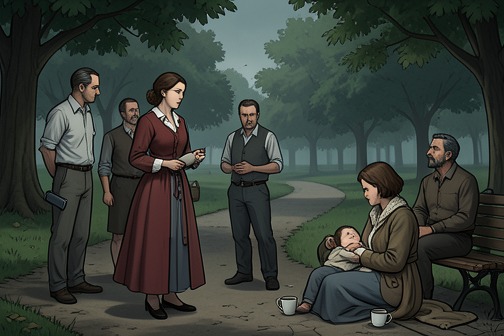
[Jiyoung’s “Mom-Roach” Incident](entity:event-recall-event-jiyoung-s-mom-roach-inc-4c793bca2586) makes an abstract contempt for stay-at-home mothers suddenly personal: in a neighborhood park, [Kim Jiyoung](entity:character-recall-character-kim-jiyoung-26c1d6511fbc) hears men her own age describe women like her as idle dependents. The encounter sends her home in shock and leaves her struggling to explain what has been taken from her. Its force lies not only in the insult, but in the ordinary scene around it: a mother, a sleeping child, an inexpensive coffee, and a small interval of time that does not feel like rest at all.
## Background and Setting
The encounter comes after Jiyoung has left paid work to care for her daughter, [Jung Jiwon](entity:character-recall-character-jung-jiwon-5cc7fec242ef). Before having a child, she had worried about whether she could combine childcare with her career. Daycare and babysitters seemed insufficient for a couple who regularly worked late and on weekends, while neither set of parents was available to provide sustained help. She was also uneasy about the prospect of relying on someone else to care for a child they had chosen to have. [Jung Daehyun](entity:character-recall-character-jung-daehyun-ab9b8550b5d1) listened as she tried to explain these fears and offered to take on tasks such as changing diapers and feeding the baby.
When Jiyoung asked what he would give up, his anticipated losses included seeing friends less often, coming home earlier, and finding it difficult to help with chores after work. He also described financial support as a major responsibility. Jiyoung, by contrast, saw her youth, health, job, colleagues, social connections, career plans, and future at stake. The later insult meets this unequal accounting at street level: others see the household arrangement as an easy life for Jiyoung, while she experiences it as a profound interruption of her own.
By the time of the park scene, [Jiwon](entity:character-recall-character-jiwon-98ee84d70f9f) has started daycare and is adjusting well. Her routine gives Jiyoung roughly three hours between drop-off and collection, but most of that time goes to laundry, dishes, tidying, and preparing food. She scarcely has time to sit with a cup of coffee. Statistical comparisons in the narrative sharpen the point: mothers of children under two who stay home have an average of four hours and ten minutes to themselves, while those who send a child to daycare have four hours and twenty-five minutes. The fifteen-minute difference suggests that daycare changes where a mother does the housework more than whether she gets to rest.
## The Park Encounter
After a heatwave gives way to autumn weather, Jiyoung collects Jiwon from daycare and takes her in a stroller to a nearby park. Jiwon falls asleep on the way. Rather than turn back, Jiyoung continues because the weather is pleasant, buys an Americano from a newly opened café across the street, and sits on a bench. For the first time in a long while, she drinks coffee in the park while her daughter sleeps nearby.
Office workers at the next bench are drinking coffee from the same café. They appear to be around Jiyoung’s age. One man glances over and whispers to his colleagues. Jiyoung cannot make out every word, but catches remarks depicting her as someone living off her husband’s wages, idling over coffee, and enjoying an easy life. Their comments also connect this judgment to a broader rejection of marrying Korean women. The men turn a brief, quiet pause into a public verdict on Jiyoung’s worth and on women who care for children at home.
Jiyoung rushes out of the park, spilling her coffee as she pushes the stroller home. Jiwon wakes and cries, but Jiyoung does not notice. The shock continues through the afternoon: she feeds the baby cold soup, forgets a diaper, and has to change Jiwon’s soiled clothes. Later, after putting her daughter to bed, she realizes that she forgot a load of laundry and hangs the wrinkled clothes to dry. These lapses show how sharply the encounter has unsettled her; the insult does not remain a painful thought but disrupts the practical sequence of care that fills her day.
## Telling Daehyun and Its Consequences
Jung Daehyun returns after midnight from a business dinner carrying red-bean-filled goldfish cakes. Jiyoung realizes she has eaten neither lunch nor dinner and tells him that people called her a Mom-Roach. He initially assumes the term belongs to online comments written by foolish teenagers and doubts that anyone would use it face to face. Jiyoung corrects him: she heard it herself from suited office workers in their thirties at the park across the street.
As she recounts what happened, Jiyoung flushes and her hands shake. She points to the coffee’s price—1,500 won—and rejects the idea that her choice to spend money earned by her husband is anybody else’s concern. Her account reaches beyond the price of a drink. She connects the insult to the pain of giving birth and to the routine, career, dreams, and sense of self she believes she has surrendered to raise their child. The gap between a modest purchase and the scale of that perceived sacrifice gives the incident its emotional weight: even a small pleasure has been recast as evidence against her.
Daehyun draws her toward him, puts an arm around her shoulders, and pats her back, repeating that the insult is not true and urging her not to think that way. His response offers immediate comfort, but the scene has already revealed the distance between his earlier assumption—that the term belongs to online chatter—and Jiyoung’s firsthand experience of it. The incident makes visible a form of contempt that is not merely digital or distant. It is spoken by men in public, directed at a mother they do not know, and absorbed by someone whose daily labor they cannot see.
## Significance
The park episode echoes Jiyoung’s earlier encounters with sexist remarks in professional settings. At a client lunch, a senior male client used a misogynistic label after she ordered soybean-paste sauce with rice. Unsure whether he meant to joke or mock her, Jiyoung and a colleague smiled awkwardly and changed the subject. In another business setting, she was steered toward a male client’s seat and subjected to unwanted attention while her male colleague could do little beyond watching nervously. Those workplace scenes required her to manage other people’s discomfort and keep business moving. At the park, the speakers are strangers, and the insult lands without the institutional decorum that had previously required her to smile.
The episode also complicates the praise and idealization surrounding motherhood. Jiyoung has been made to feel that exhaustion should be answered with pride in her maternal devotion, even though the work is demanding and often invisible. The men at the park dismiss that labor in one stroke, treating a mother’s moment with coffee as proof that she has it easy. Their judgment erases both the work itself and the career and social life left behind. Jiyoung’s flight, the disrupted afternoon, and her effort to make Daehyun understand show how a casual public insult can expose the larger conflict between the appearance of leisure and the lived burden of care.
Event 11
Jiyoung’s Psychiatric Diagnostic Reassessment

[Jiyoung’s Psychiatric Diagnostic Reassessment](entity:event-recall-event-jiyoung-s-psychiatric-d-1681543cd244) marks a shift from treating [Kim Jiyoung](entity:character-recall-character-kim-jiyoung-26c1d6511fbc)’s distress as a familiar postpartum condition to questioning how much of her suffering a diagnosis alone can explain. As treatment continues, the psychiatrist listens to her recollections, revisits his own assumptions about domestic work and motherhood, and recognizes that he may have mistaken a complex life for a straightforward clinical case.
## Clinical course and changing diagnosis
In [2016](entity:time-recall-time-2016-7dc5d4756c47), the psychiatrist describes Kim Jiyoung’s history as reconstructed from her account and her husband [Jung Daehyun](entity:character-recall-character-jung-daehyun-ab9b8550b5d1)’s. She attends 45-minute appointments twice a week. Her symptoms have become less frequent, but they have not disappeared; to address depression and insomnia, he prescribes antidepressants and sleeping pills. Treatment is underway, but improvement in frequency does not settle the question of what her condition means.
Before meeting her, he had suspected dissociative disorder after hearing Jung Daehyun describe her symptoms, a condition he had previously encountered only in case studies. After his initial session with Kim Jiyoung, however, he concluded that she had a typical case of postnatal depression that had progressed into childcare depression. As the sessions continue, his confidence in that diagnosis fades. He does not decide that his first assessment was simply false. Rather, he recognizes that it may have been hasty, and that the scenes Kim Jiyoung chooses to recount do not fit comfortably inside the explanation he began with.
Her manner in the sessions complicates any easy account of what he is hearing. He does not describe her as guarded or antagonistic, and she does not repeatedly complain about the injustice of her present circumstances or dwell on childhood trauma. She needs encouragement to begin, but once she does, she retrieves long-buried memories herself and describes them calmly and logically. The reassessment grows from this contrast: a patient who does not present her suffering as a complaint nevertheless recounts a sustained history that changes how her doctor understands it.
## The life behind the symptoms
The earlier decision to seek help begins with Jung Daehyun’s concern. He visits the psychiatrist alone to discuss his wife’s symptoms and treatment options, then tells her he has booked a therapy session because she has not been sleeping well and seems stressed. Kim Jiyoung appears not to recognize the condition he is worried about, but thanks him and says she has been feeling blue and enervated; she suspects maternity blues. The exchange sets out two perspectives without making them identical: her husband sees a need for care, while she names a possible explanation for how she feels.
Her memories of paid work show that distress cannot be separated from the conditions in which she has had to work. At the marketing agency, she likes her colleagues and adjusts relatively well to the job itself, but interactions with reporters and client-company staff remain awkward and wearing. Older male clients repeatedly subject her to jokes she cannot comfortably answer: laughing encourages them, while not laughing prompts them to ask what is wrong. At a business dinner, client managers steer her into the seat beside a division head despite her repeated insistence that she would rather sit with her colleagues. He makes comments about her appearance and sex life, presses her to drink, and she secretly empties her beer into the other cups and bowls on the table. These episodes make the pressure to manage other people’s reactions part of the work she is recalling, not a symptom that can be understood in isolation.
Domestic labor provides another point of friction between the psychiatrist’s assumptions and Kim Jiyoung’s account. When she says that she cannot rest her wrists because she must care for the baby, do the laundry, and clean, he responds by comparing modern appliances with the harder physical methods women used in the past. Her unspoken rebuttal is practical: washing machines do not load, unload, or hang the laundry, and vacuum cleaners do not wipe floors or clean their own rags. The narrative extends the contrast to other work that technology has made less physically demanding, arguing that domestic labor is still unusually liable to be dismissed or idealized rather than valued in monetary terms. That observation supplies a social context for what the clinical encounter risks overlooking: appliances may change the tools, but they do not remove the labor or decide who must perform it.
## Caregiving, time, and the doctor’s blind spots
The daycare routine makes that labor measurable. After [Jung Jiwon](entity:character-recall-character-jung-jiwon-5cc7fec242ef) starts daycare a little past twelve months, she is dropped off at 9:30 in the morning, has a snack and playtime, eats lunch, and returns before 1 p.m. The arrangement gives Kim Jiyoung about three hours without her child, but most of that interval goes to laundry, dishes, tidying, and preparing food and snacks. She has hardly a moment to sit with coffee. The broader statistics cited in the account estimate that a stay-at-home mother with a child under two has four hours and ten minutes a day to herself, compared with four hours and twenty-five minutes for a mother whose child attends daycare: a difference of only fifteen minutes. Daycare changes whether a mother does household work with her baby beside her, not whether the work is waiting.
The psychiatrist’s reassessment also draws on his own family, which makes his change in perspective personal without turning it into an answer for Kim Jiyoung’s case. He reflects that, as an average man in his forties, he might have gone through life without understanding women’s experience, especially that of mothers. His wife had moved from pursuing a tenure-track professorship in ophthalmology to contract work and, eventually, giving up her career. With the couple’s parents living far away, she relied on a succession of nannies while continuing to work. When their son’s behavior at school raised a question of ADHD, she challenged the psychiatrist’s confidence: he could not know the boy’s condition from only a few minutes together each day, especially while looking at his phone. He accepts that her criticism is true. She then suspends her work to manage the child’s routines and care; after arranging a possible return with a senior colleague, she calls to cancel because their son has not improved.
A related blind spot appears in the psychiatrist’s response to a clinic employee, [Lee Suyeon](entity:character-recall-character-lee-suyeon-7e257d3285dc). After six years of marriage and years of trying to conceive, she becomes pregnant but is warned that the pregnancy is unstable; following several scares, she gives up her job temporarily. The psychiatrist initially wonders why she could not take only a couple of months off. Although he recognizes her as an excellent employee, he focuses on the patients who leave rather than transfer to another counselor, calling her departure a loss to the clinic. He concludes that he should replace her with an unmarried employee. The thought reveals how readily a professional workplace can treat pregnancy and childcare as a problem caused by women employees, even as the psychiatrist is beginning to see the unequal conditions behind such decisions.
## Significance and unresolved outcome
The reassessment does not announce a definitive replacement diagnosis or claim that treatment has ended. Instead, the psychiatrist records a more limited but consequential realization: he is not necessarily saying his earlier judgment was wrong, but he has become aware of a world he had not known. Kim Jiyoung’s calm, detailed recollections, the daily work that appliances do not abolish, and the career compromises of women close to him all unsettle the apparent simplicity of his first diagnosis.
That change in awareness is part of the event’s significance. Clinical care can address depression and insomnia, and the psychiatrist continues to prescribe medication and see Kim Jiyoung regularly. Yet his own account shows how treatment can narrow a social history into an individual condition if the clinician does not notice the labor, gendered expectations, and caregiving arrangements surrounding the patient. The reassessment does not erase the diagnosis; it makes the psychiatrist less certain that the diagnosis, by itself, is an adequate account of her life.