Josie and Sal's relationship
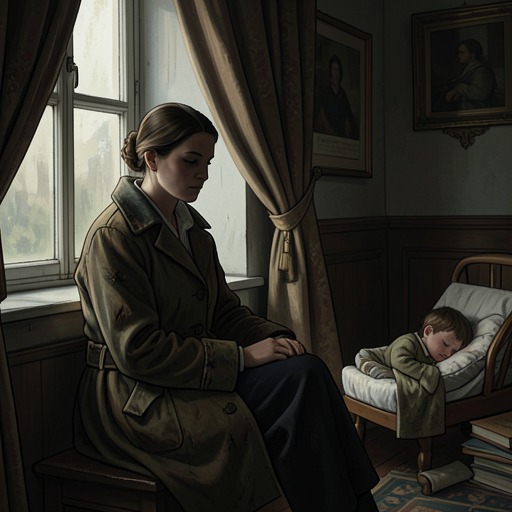
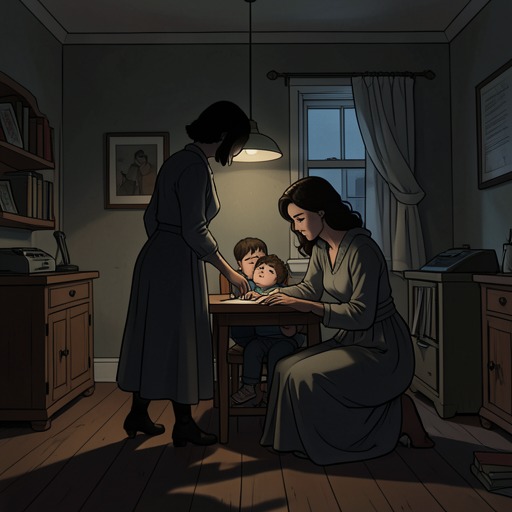
Klara and the SunJosie and Sal's relationship persists in the novel through a photograph, a few spare disclosures, and the different meanings the family assigns to a loss Josie says she scarcely remembers. Sal is Josie's dead older sister, but her absence is not simply a private memory: it remains vivid for the Mother and turns Josie's confidence that she will recover into a source of fear as well as hope.
A Sister Preserved in Photographs
Josie introduces Sal through a collection of printed photographs she keeps in a cardboard box under her bed. The images, in different sizes, spill across the rug; most show Josie when she was younger, alongside the Mother, Melania Housekeeper, and people Klara does not know. Among them Klara notices a picture of Josie and the Mother at Morgan’s Falls, with a third girl sitting at their table. The girl, about eleven by Klara’s estimate, faces away from the photographer, so her identity is not immediately legible from the image.
When Klara asks who the girl is, Josie answers that she is Sal, her sister. She lets the photograph fall back onto the others and moves her hands over the scattered pictures before repeating that Sal was her sister. The gesture and pause give the identification a gravity not present in Josie’s first matter-of-fact reply: Sal is part of the family history arranged around her, even though the image offers Klara no view of Sal’s face.
The photograph also attaches Sal to Morgan’s Falls. Josie presents it while telling Klara that the family is going there on Sunday, and describes the place as beautiful, a setting she has enjoyed on earlier trips. Later, the Mother emphasizes that the family used to go there with Sal and that Sal loved it. For Josie, the photograph is one of several old images she keeps close to cheer herself; for her mother, the same remembered outings preserve a family life that included the daughter who died.
Death and Uneven Memory
Josie tells Klara plainly that Sal died. Asked what happened, she says Sal became sick with an illness unlike her own and that Sal’s illness was much worse. The distinction matters: Josie does not identify the two sisters’ conditions as the same, and she treats Sal’s death as a different history from the illness she herself is facing.
Josie also says she was small when Sal died and does not remember her much. She adds that she does not miss Sal, a blunt qualification that sits beside the photographs and the repeated naming of her as a sister. The evidence does not resolve this tension by declaring that Josie secretly grieves; instead, it shows the limits of her recollection alongside the continued presence of Sal in the family’s images and conversations.
Klara encounters Sal first through indirect evidence: a figure turned away in a photograph, then the short account Josie gives of her death. The relationship is consequently presented less as a sequence of shared scenes than as a past reconstructed from traces. Josie’s own account is concise, while the objects and places around it allow the loss to occupy more space than her stated memories do.
The Mother’s Memory and Josie’s Illness
At Morgan’s Falls, the Mother tests what Josie has told Klara about the place. When Klara confirms that Josie spoke of enjoying visits there, the Mother asks whether Josie also said that the family always came with Sal and how much Sal loved it. Her intense attention to the old photograph, which she remembers Melania Housekeeper taking at a bench with herself, Sal, and Josie, contrasts with Josie’s limited recollection. The place acts as a point of return for the Mother: it carries the past in which both daughters were present.
Sal’s death becomes an explicit warning when Josie assures the Mother that she will get well soon and knows how it will happen. The Mother reacts by invoking Sal’s promises: Sal had made promises too, she says, but could not keep them, and she urges Josie not to do the same. Josie responds that Sal had a different illness and insists that she will recover. Their exchange reveals a conflict between Josie’s confidence about her own future and her mother’s knowledge of a previous loss; Sal’s story makes reassurance difficult for the Mother to accept without fear.
That fear sits alongside active care rather than replacing it. During an early-morning episode when Josie’s posture and breathing seem unusual, Klara raises the alarm; the Mother summons Dr Ryan, and Melania Housekeeper calls again to hurry him. After he examines Josie and says there is nothing to worry about, the Mother tells Josie to stop drinking an energy drink, then says that worrying about her is her work and credits Klara with responding well. The episode does not equate Josie’s illness with Sal’s, but it shows how close attention to Josie’s health is shaped by the family’s experience of a daughter who became sick and died.
Continuing Presence and Significance
Sal’s place in the family is unevenly distributed. Josie states that she remembers little and does not miss her, yet she keeps old photographs close and identifies the sister pictured with her at Morgan’s Falls. The Mother supplies a fuller emotional history, remembering Sal’s love for the place and recalling the photograph’s circumstances. Their different accounts leave Sal neither erased nor fully recoverable: she is at once a sister Josie barely recalls and a lost daughter whose memory changes how the Mother hears Josie’s promises.
The relationship’s importance lies in that difference, not in an abundance of remembered detail. Sal’s death is a concrete precedent in a family living with Josie’s serious illness, but the narrative carefully distinguishes their illnesses and does not present Sal’s fate as a prediction of Josie’s. Instead, her memory makes hope contested: Josie asserts that she will get well, while the Mother fears another promise that cannot be kept. A photograph, a place, and a brief exchange therefore carry the continuing weight of a sister whose absence is experienced differently by the two people who remain.