Humbert's diary
LolitaHumbert Humbert's black imitation-leather pocket diary, covering most of June 1947, is the central textual artifact through which he records his obsessive pursuit of Dolores Haze during his first weeks as a lodger at 342 Lawn Street. The diary functions both as a secret confessional for his ungovernable lust and as a tactical logbook for his predatory schemes, and its eventual discovery by Charlotte Haze precipitates the chain of events that leads to her death and Humbert's assumption of control over Lolita.
Physical Description and Composition
The diary is described as a "pocket diary bound in black imitation leather, with a golden year, 1947, en escalier, in its upper left-hand corner" — a "neat product of the Blank Blank Co., Blankton, Mass." Humbert explains that he actually wrote the diary twice: first he jotted down each entry in pencil on the leaves of a "typewriter tablet," with many erasures and corrections, and then he copied it out "with obvious abbreviations in my smallest, most satanic, hand" into the little black book. The original physical diary was destroyed five years before the time of his writing the memoir, and what the reader examines is "but its brief materialization, a puny unfledged phoenix" reconstructed from Humbert's "photographic memory." The diary's microscopic script was such that "only a loving wife could decipher" it.
Content and Function
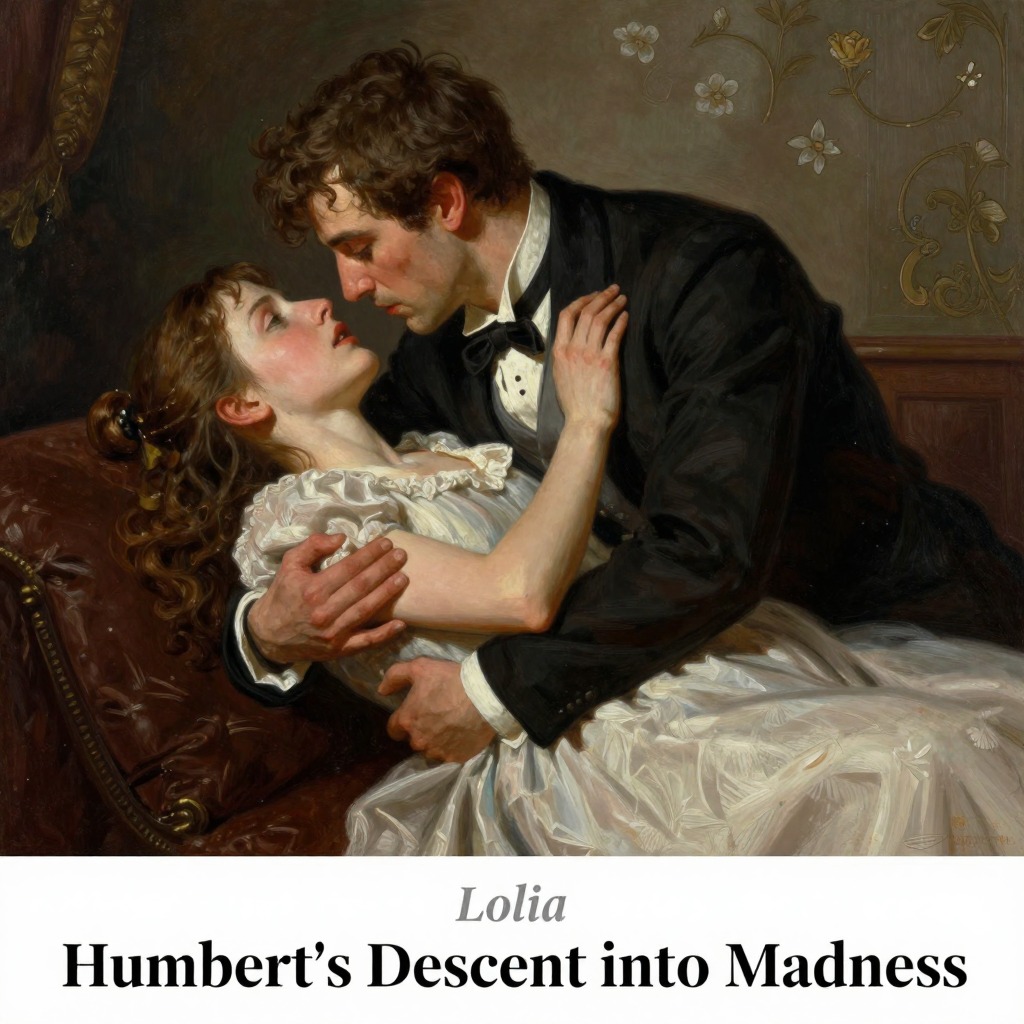
The diary covers the period from late May through mid-June 1947, beginning with the observation that an epidemic of "abdominal flu" forced Ramsdale to close its schools for the summer, and that Humbert had moved into the Haze house "a few days before that." The entries form a day-by-day chronicle of Humbert's escalating obsession with twelve-year-old Dolores Haze, whom he calls "Lolita," "my Lolita," and "my darling." He records minute physical details — the "silky shimmer above her temple grading into bright brown hair," the "little bone twitching at the side of her dust-powdered ankle," the "glistening tracery of down on her forearm" — and his physiological reactions to her presence: "Every movement she made in the dappled sun plucked at the most secret and sensitive chord of my abject body." The diary also serves as a tactical planning document. Humbert notes his strategic positioning on the piazza to watch Lolita sunbathe, his "stealthy maneuvering" to encounter her alone in her mother's bedroom, and his calculated caresses during a darkened evening on the piazza when he "dared stroke her bare leg along the gooseberry fuzz of her shin." He records his frustration at being thwarted by Charlotte Haze's constant presence and his schemes for future opportunities, including a planned picnic at Hourglass Lake where he hoped to "plunge with my nymphet into the wood." The diary also contains Humbert's self-justifying reflections on the nature of nymphets, his literary pretensions, and his fantasies of disaster that would eliminate Charlotte.
Discovery and Consequences
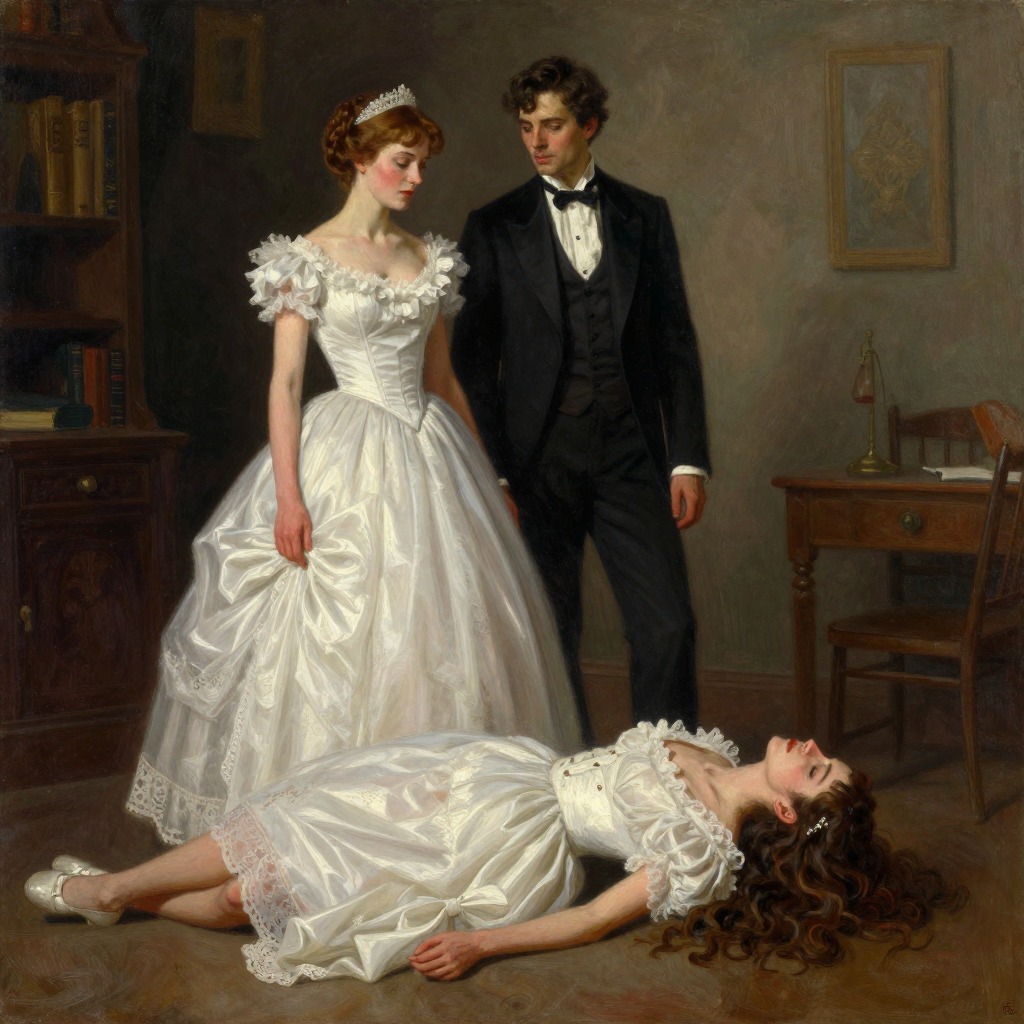
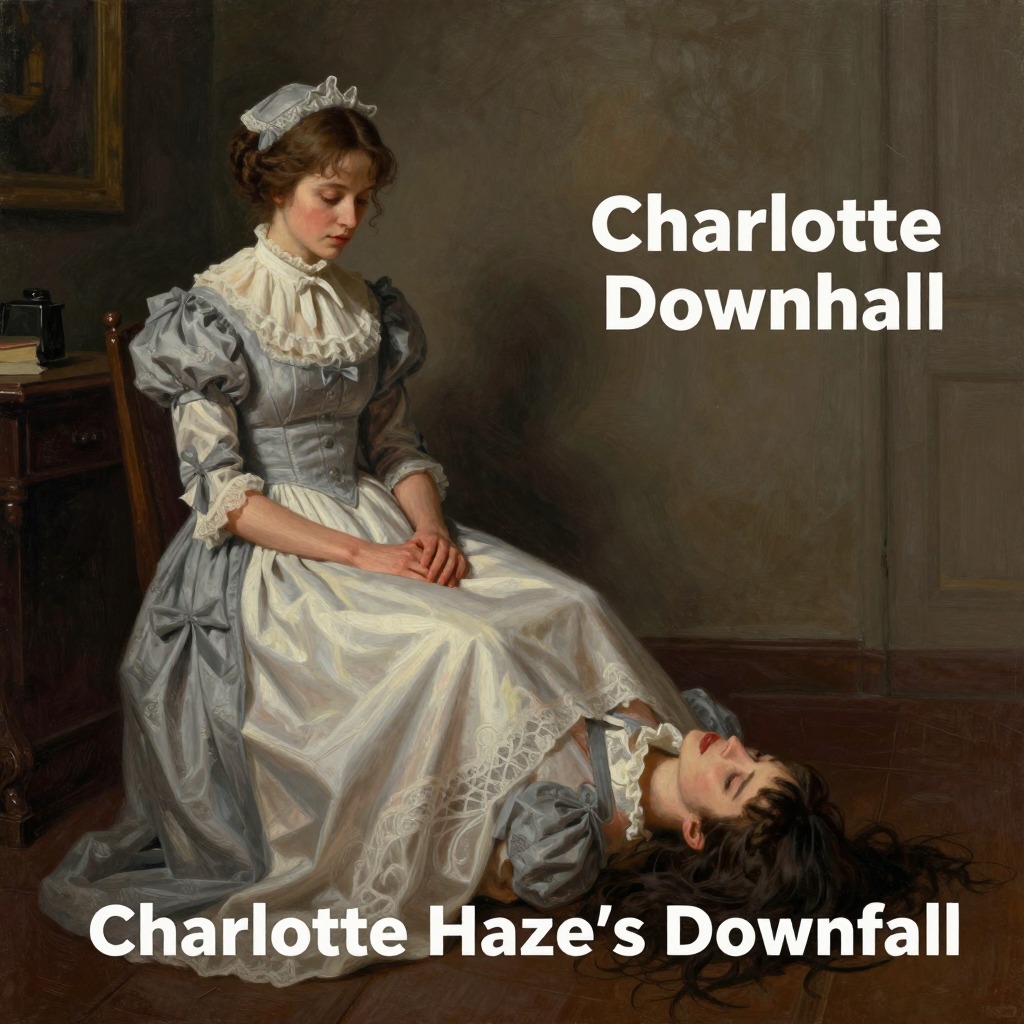
The diary's discovery by Charlotte Haze is the pivotal event that shatters the household. Humbert had hidden the key under his old expensive safety razor in a small trunk where he kept business papers. Charlotte, during one of her homemaking campaigns, found the key and read the diary. When Humbert returned home on a Thursday afternoon, he found her at the corner bureau writing letters, her "face, disfigured by her emotion, was not a pretty sight." She confronted him: "The Haze woman, the big bitch, the old cat, the obnoxious mamma, the—the old stupid Haze is no longer your dupe." She called him "a monster," "a detestable, abominable, criminal fraud," and declared she was leaving that night, threatening that he would "never, never see that miserable brat again." Humbert retreated to his former room, then went to the Humberts' bedroom and "calmly removed my diary from under her pillow into my pocket." He attempted to defuse the situation by claiming the diary was "fragments of a novel" and that Charlotte's and Lolita's names were "put in by mere chance." But Charlotte, in her fury, rushed across the street to mail three letters — one to Lolita, one to a boarding school, and one to Humbert — and was struck and killed by the Beale car. The diary's contents thus indirectly cause Charlotte's death, and Humbert, having retrieved the diary, destroys it along with the letters, tearing them "to fragments in my trouser pocket."
Narrative and Thematic Significance
The diary is the textual embodiment of Humbert's double life: the respectable scholar and lodger on the surface, the calculating predator beneath. Its destruction marks the end of one phase of his pursuit and the beginning of another, as he moves from secret observation to direct control over Lolita. The diary also exemplifies Humbert's characteristic self-dramatization and unreliability as a narrator. He presents the diary as "Exhibit number two" for an imaginary jury, framing his confessions as legal evidence while simultaneously admitting to its "satanic" handwriting and the "hideous hieroglyphics" of his "fatal lust." The diary's existence — and its eventual discovery — demonstrates that Humbert's carefully constructed facade of normalcy is always vulnerable to exposure by the written record of his own desires.