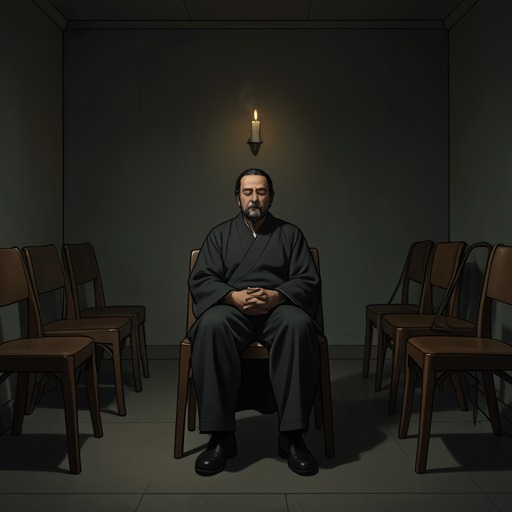
Meister Eckhart’s heresy proceedings
LongingMeister Eckhart’s heresy proceedings tested whether a popular preacher’s language of inner transformation and union with God could be reconciled with the Church’s fear of heresy. The investigation threatened his standing during the final years of his life, but its judgment came only after his death, leaving a complicated record: condemnation of propositions attributed to him, followed by papal absolution of Eckhart himself.
Background and the climate of suspicion
Eckhart was a Dominican theologian and preacher whose influence extended beyond learned audiences. He preached in Germany and parts of Switzerland to friars, nuns, beguines, and ordinary people seeking a deeper transformation in God. His ministry emphasized detachment and mystical union with God; his teaching about the ground of the soul described an inward depth where the human ground could come together with God’s. The birth of the Word in the soul was among the ideas later drawn into the controversy.
The case unfolded amid heightened anxiety about mystical claims. The Brethren of the Free Spirit were said to teach that people who had experienced union with God were no longer bound by moral teachings and could commit no sin. That belief had, in the book’s account, poisoned the atmosphere for mysticism. The archbishop of Cologne pursued suspected heresy, and authorities feared that unfamiliar or unusual theological language could mislead people who lacked the education to assess it. Eckhart’s preaching to broad audiences therefore gave the dispute a public dimension beyond the examination of an academic theologian’s ideas.
From Cologne to Avignon
In late 1323 or early 1324, Eckhart moved from Strasbourg to Cologne, a major intellectual center of the Dominicans in Germany. His three years there brought controversy. In 1326 he appeared before a diocesan commission to answer a charge of heresy. Questioning theologians about their ideas was not unusual, but a heresy case before the Inquisition marked a dangerous escalation. Eckhart was prepared to renounce errors in his preaching or writing, yet that willingness did not satisfy the inquisitors.
The pope had appointed two commissions to investigate his ideas. Eckhart wanted the case sent to Avignon, where the papacy then resided. Accompanied by members of his religious order, he undertook the long journey to France. In 1327 he was at the papal court, where the charges were examined. The investigation began with 150 articles and reduced them to twenty-eight. Eckhart denied having preached two of those articles, while remaining willing to retract error. The proceeding thus involved both the interpretation of propositions attributed to him and his own distinction between mistaken thought and deliberate adherence to heresy.
Eckhart’s defense and his preaching
Eckhart argued that a person could be in error without being a heretic: error, he said, belonged to the intellect, whereas heresy belonged to the will. The distinction mattered in a climate where unusual mystical ideas could attract suspicion, but it did not end the case. The concern was not only what a trained theologian intended; it was also what less educated listeners might understand from sermons about the soul’s relation to God.
That concern helps explain Eckhart’s choice to preach and write increasingly in German rather than the customary Latin. He wanted ordinary people to be educated, not left to misunderstand unfamiliar teaching. His use of the vernacular widened access to his ideas while also placing them before audiences whom church authorities feared might not be equipped to interpret them. The trial therefore exposed a tension in his ministry: the same effort to make spiritual teaching accessible that served his listeners could intensify institutional anxiety about its meaning and effects.
Judgment, death, and absolution
Eckhart did not live to see the final papal judgment. He was near the end of his life during the proceedings and died the following year. A papal bull issued after his death listed the twenty-eight articles: seventeen were judged heretical and the remaining articles were said to bear the mark of heresy. Since Eckhart was already dead, the authorities no longer regarded him as a present threat. The judgment against the propositions did not, however, settle the question of his personal standing.
The pope ultimately absolved Eckhart, stating that at the end of his life he had professed the orthodox faith and had revoked and deplored twenty-six of the articles he had preached. The record therefore does not reduce to a simple acquittal or conviction. It preserves the condemnation of many propositions alongside a declaration that Eckhart had returned to orthodox belief before his death. His followers considered the authorities’ treatment a misunderstanding of his teaching.
Aftermath and significance
The proceedings did not extinguish Eckhart’s popularity. Those who had known him continued to value his ministry and the possibility of recognizing an inner union with God. His most important teaching, as the account presents it, located the ground of the soul in a depth touched by nothing other than God. He also urged self-denial of the soul: freedom from inadequate images and ideas of God, so that the search for God might turn inward rather than rest on limited representations.
The case consequently reveals the vulnerability of mystical teaching when it crossed institutional and educational boundaries. Eckhart’s distinction between intellectual error and heretical will attempted to define a space for imperfect understanding without equating it with deliberate rebellion. The proceedings narrowed and judged particular articles, but the later absolution and the continuing regard of his followers kept open the broader dispute over how language about the soul’s transformation should be understood. His trial belongs both to the history of church scrutiny and to the afterlife of a preacher whose central concern remained the realization of the soul’s relation to God.