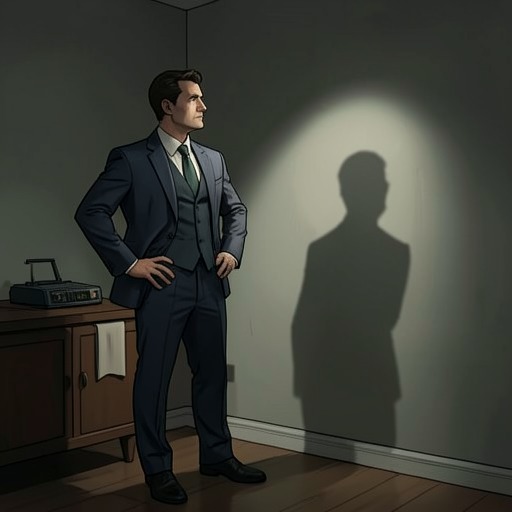
Thomas Kelly’s Failed Harvard Dissertation Examination
LongingThomas Kelly’s failed Harvard dissertation examination brought a painful collapse of his academic hopes, yet the setback became part of a profound change in how he understood and spoke about religious experience. The book presents the failure not as a simple triumph over adversity, but as a crisis followed by an experience of Divine Presence that Kelly believed had come to him rather than been sought.
Background and Expectations
While Kelly was in Hawaii on a one-year appointment, Haverford College offered him a position. He regarded it as an opportunity of a lifetime: a chance to fulfill his ambitions and renew his connection with the Quaker community. At Haverford he developed friendships with Rufus Jones and Douglas Steere, the philosophy department chair; both shared his interest in the mystical tradition.
The appointment also brought Kelly to the point of taking his dissertation examination at Harvard University. The book describes the examination as a disaster but gives no account of its questions or proceedings. The evidence therefore places the emphasis not on the examination’s academic particulars, but on the blow it dealt Kelly and the consequences that followed.
Failure and Immediate Aftermath
The result was a stunning blow. Kelly’s son later recalled that “It was as if the world had caved in on him.” His wife feared that the shock might lead to a fatal breakdown, suicide, or a depression from which he would not recover. These fears convey the gravity of the crisis for his family, without suggesting that any of those outcomes occurred.
Douglas Steere and Haverford’s president reassured Kelly that the failure would not affect his standing at the college and would not be made public. Their assurances separated the private force of the setback from its professional consequences: Kelly could remain at Haverford, and the failure would not become public knowledge. The examination was still a personal catastrophe, but it did not end his academic position there.
An Unbidden Experience of Presence
In late 1937, Kelly described “being shaken by the experience of Presence, something that I did not seek, but that sought me.” The account marks a change in the direction of his spiritual life: the decisive experience was not presented as the result of deliberate pursuit. The book suggests that the Harvard failure may have made him more receptive to God, while keeping that connection tentative rather than claiming the setback caused the experience.
The book’s wider account of Christian mysticism helps distinguish this experience from visions or other sensory phenomena. It describes mystical experience as a direct consciousness of God’s presence, which may occur without a vision or other sensory event. Kelly’s description centers on Presence, not on seeing or hearing something, and frames the encounter as something that came upon him rather than something he produced by will.
A Change in How He Spoke
The change was evident when Kelly addressed a Young Friend’s group in January 1938. His son observed that he was no longer an erudite professor describing experiences he had read about or seen in others; he was sharing the intimacy of his own life. From then on, Kelly wrote and spoke out of his own experience of Divine Presence.
The examination’s significance thus lies in the contrast between the scholarly distance that had characterized Kelly’s earlier accounts and the personal testimony that followed. The failure did not itself constitute a mystical experience, nor does the account establish it as the sole cause of Kelly’s change. It stands instead as a severe interruption in his life, followed by an unbidden encounter that altered the grounds from which he taught and wrote.