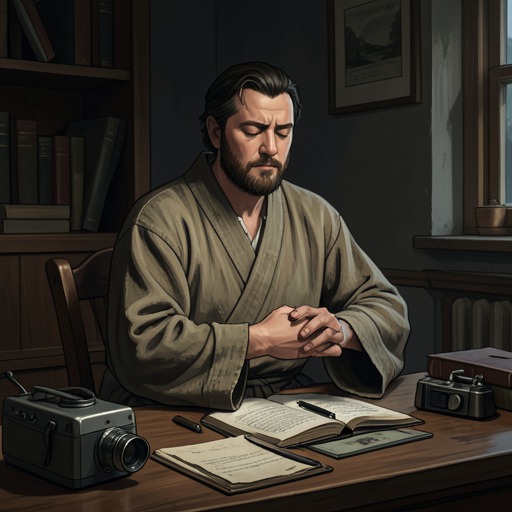
Quaker silent worship
LongingQuaker silent worship is a gathered practice of listening rather than a service led by professional clergy. Its silence is purposeful: Friends attend to the Holy Spirit, and a participant may speak when moved to share faith. The practice gives communal form to the Quaker conviction that the Inner Light is present in everyone and that people remain capable of experiencing God’s presence.
Form and guiding belief
The meeting’s defining feature is its open, largely silent form. There are no sacraments, professional ministry, official doctrine, or creed prescribing what worshippers must say or believe. Instead, the community waits together; speech may arise, but it is not required. The motto “When in doubt, wait” expresses the discipline of not forcing words or action before a person feels inwardly moved.
This practice rests on the belief that revelation did not end with the closing of the New Testament canon. Each person has the potential to experience God’s presence. Silence is therefore not simply an absence of speech or a pause before a formal service begins: it is a way of making room for continuing spiritual guidance.
Experience and inward change
Robert Barclay, a seventeenth-century Quaker intellectual, described the meeting as a place where a power shared among the worshippers reached the individual heart. He wrote, “When I came into the silent assembly of God’s people, I felt a secret power among them, which touched my heart, and as I gave way to it, I found the evil in me weakening and the good raised up.” His account connects the inward discipline of listening with moral change: the meeting’s effect is experienced personally, yet within an assembly.
Douglas Steere likewise emphasized the meeting’s capacity to alter relations among its members. He described a process of “melting down” that knit worshippers together, and recalled silent worship leveling a group divided by an ugly barrier between two people and beginning their movement toward asking forgiveness. In this account, silence does not keep participants apart. It can expose division and make reconciliation possible.
Practice beyond the meeting
The book places Quaker silence within a wider account of spiritual practice without equating every form of prayer with Quaker worship. A monk at the Abbey of Gethsemani advised a student seeking a deeper prayer life to pray the Psalms; the author adopted that counsel as a steady practice. Elsewhere, the book describes prayer, meditation, study, and silence as simple practices whose cumulative effects can shape a life over time, even when particular days feel dry or fruitless. These examples underscore a shared emphasis on sustained attention, while the Quaker meeting remains distinctive in its gathered silence, its openness to spoken ministry, and its reliance on inward prompting rather than a prescribed liturgy.
The practice also belongs to a broader Quaker witness that joins spiritual inwardness to social service and pacifism. Its significance lies in holding individual attention and communal responsibility together: the meeting waits for guidance, but the account of its effects includes weakened wrongdoing, repaired relations, and a continuing openness to God.