
The Benefit Performance
Loveboat, TaipeiThis flow traces how a typhoon’s destruction of Mei-Hwa Pan’s home village turns Ever’s evolving dance project into a collective relief effort that brings their separate talents into public view.
increasing Bearing strength in each event
 decreasing
Bearing strength in each eventdecreasingThe Flooded Village
A Storm Made Visible
The ruined landscape
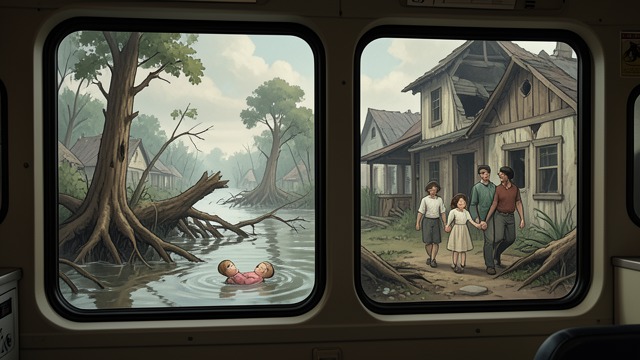
As Loveboat students travel through Taiwan during typhoon season, their bus passes flooded villages and damaged landscapes. The destruction makes the consequences of storms concrete: water has taken homes, possessions, and ordinary signs of life, including a doll swept into the floodwater.
Mei-Hwa’s news
At a resort blackout, Mei-Hwa Pan learns that her home village in Taitung has been devastated. Her family is safe, but the village has lost its belongings, and she worries about how her parents and younger siblings will survive. She must leave the program and return home, carrying the fear that her family’s resources will not be enough.
The disaster shifts Ever’s attention from the freedoms and dramas of the summer toward the people around her who have far less room to recover from a crisis. Mei-Hwa is no longer only the counselor who translates and supervises; she is a friend facing the same kind of family responsibility Ever knows in another form.
A Purpose for Dance
Turning Concern into Action
A modest beginning
Ever offers to help Mei-Hwa and begins gathering support from her friends. She understands that sympathy alone cannot replace the clothes, furniture, and photographs lost in the flood. Mei-Hwa’s worry about money makes the need to offer practical aid urgent.
The performance grows
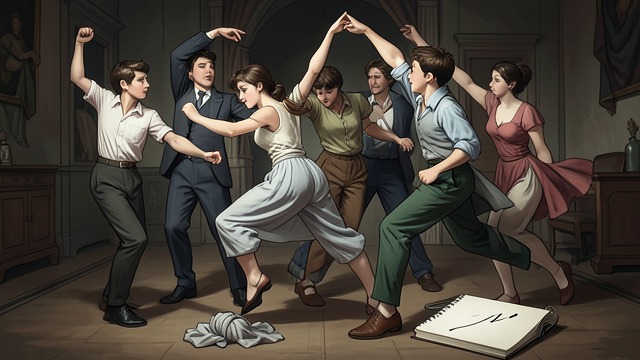
Ever and her fellow students develop a talent-show dance, and the idea of performing for a benefit begins to take shape. Sophie uses her connections and organizational skill to approach her aunt and uncle, who can help secure access to the National Theater. The students’ talents are no longer being assembled only to entertain their programmates.
The project gives Ever a way to connect her artistic ability with a responsibility beyond her family. Her emerging confidence as a choreographer gains a concrete purpose: the dance can gather people and direct their attention and resources toward a community they might otherwise never consider.
A Larger Stage
The Talent Show Expands
An opening appears
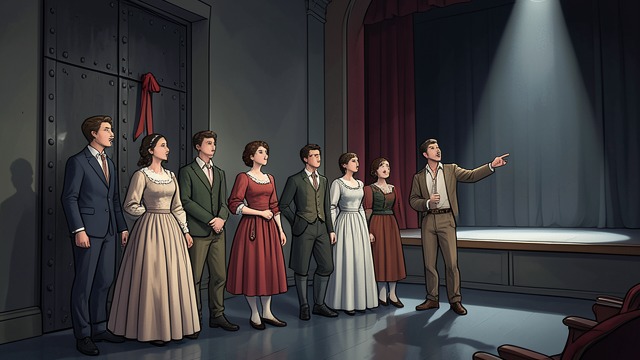
A scheduled acrobatic performance at the National Theater is canceled, giving Sophie a chance to secure a Friday-night opening for the students’ show. She proposes moving the full talent show there and opening it to the public, transforming an intimate program event into a citywide fundraiser.
Many forms of contribution
Ever encourages the group to donate auction items as well as performances. Xavier Yeh agrees to contribute paintings, while other students bring music, comedy, and performance skills. Sophie coordinates the event, and the program director approves the plan because it benefits the whole community.
The expanded event reveals how much capacity has accumulated among the students. Their work is not a solitary rescue effort led by Ever; it depends on Sophie’s organizing, Xavier’s art, the performers’ varied talents, and the support of the program and local community.
The Night of Performance

Art Meets Audience
A city gathers
The students’ benefit takes place at the National Theater, where a large crowd fills the seats and the auction draws attention to Xavier’s paintings. The program includes comedy, music, cultural performances, and the Gang of Five’s playful beauty-contest act, turning the show into a wider celebration of creative possibility.
The final dance
Ever presents The Wanderer, a dance she has created with her classmates. Its opening uses “Orchid Grass,” and its movement draws together ribbons, fans, jazz, drums, and a staged bo fight with Rick. Ever’s father watches from the audience, and the performance ends in a standing ovation.
The show makes individual expression collective. Ever’s choreography gives the students’ different forms of talent a shared structure, while the benefit directs the audience’s attention toward families affected by the typhoon. The success demonstrates that the summer’s artistic work can be both personally liberating and materially useful to others.
Money for Taitung
A Community Responds
The auction’s result
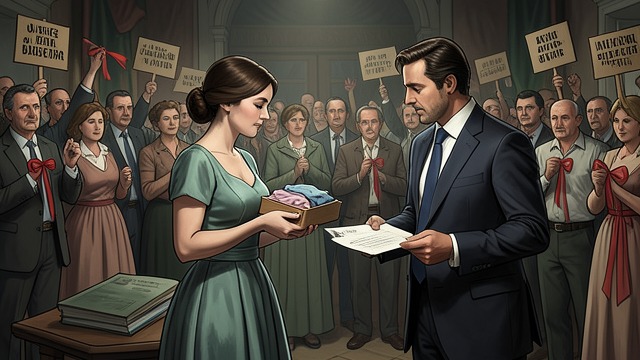
Xavier’s mural sells for a substantial sum, and the benefit raises more than five hundred thousand New Taiwan dollars overall. Students and organizers learn that the combined performance and auction have generated meaningful assistance for the families affected by the flooding.
Help reaches home
Ever calls Mei-Hwa, who is relieved that the money will support her village. Mei-Hwa later returns to school with the help of the funds raised by the group. The outcome gives the performance a life beyond its applause and allows the students’ temporary community to make a lasting difference.
The fundraiser does not undo the destruction or remove the family’s hardship. It does show what collective effort can accomplish when people with different skills work toward a shared purpose. For Ever, dance becomes not an escape from responsibility but one of the ways she can accept and act on it.
During the Tour Down South, late in the program
The morning after the village flood is reported
During the Tour Down South, before the return to Taipei
The final night in Taipei, before the students leave Taiwan
After the final performance and auction
