Mr. White Subdues Robert and Signals the Police
MasqueradeMr. White Subdues Robert and Signals the Police turns a dangerous standoff into a chance for rescue: rather than flee with Victoria Belle, Mr. White attacks Robert Rothman, restrains him, and signals the police with a fire visible from the air. The scene links a personal choice to a practical chain of consequences. Mr. White’s insistence on staying, the damage to Rothman’s phone, and the severed landline leave a fire as the quickest available means of calling for help.
Causes and Immediate Stakes
Rothman’s capture had become a central concern of the Federal Bureau of Investigation after he abducted Kaye Swan. During the operation at the Pines Way Motel, John Brice devised a decoy arrangement that included extra vehicles and agents posing as motel staff; Robyn Dyer was assigned to manage the operation there. Claire Rothman arrived with an agent made up to resemble her, part of the effort to draw her husband out. These preparations establish the wider pursuit surrounding the later confrontation, though the struggle between Mr. White and Rothman takes place elsewhere.
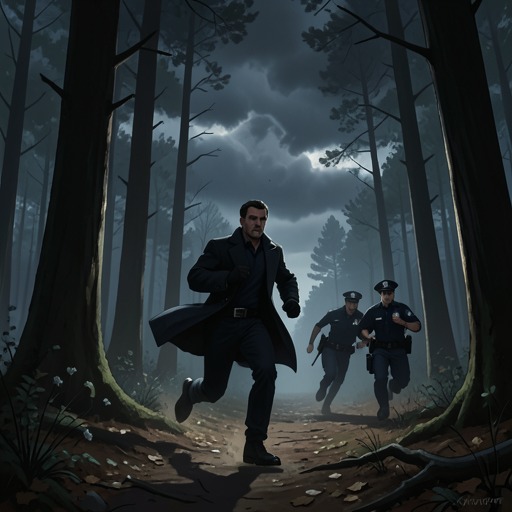
By the time of the standoff at the old man’s house, a helicopter has passed overhead, and Mr. White recognizes that the search is closing in. Victoria Belle urges Rothman and Mr. White to leave through the woods before they are found. Rothman refuses: he intends to trade his two captives for a chance to speak with Claire, whom he says he must see again. His fixation on that meeting keeps him at the house even as the danger of remaining becomes unmistakable. Belle departs into the woods, leaving Rothman and Mr. White behind.
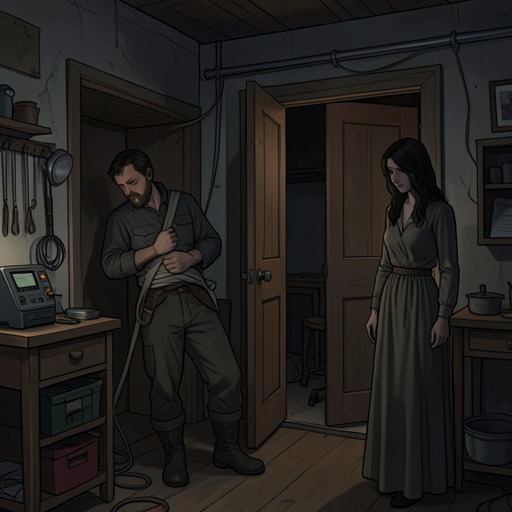
Mr. White’s decision is shaped by a different immediate objective. With Rothman’s back turned, he silently gets up despite still being handcuffed. The old man warns him that Rothman has the rifle, making clear that a direct attack could fail. Mr. White advances anyway. His move is not an attempt to escape alongside Belle; it is the start of an effort to stop Rothman and bring outside help to the house.
The Confrontation
Mr. White charges Rothman while his hands remain secured behind him. Rothman raises the small rifle to use against him, but Mr. White’s forward rush carries both men over the deck railing and down to the grass below. The fall leaves each of them hurt and temporarily disoriented. Mr. White recovers first, a difference the narration attributes to his being younger and fitter, and knocks Rothman down with a kick.
The reversal changes who controls the weapons, the keys, and the next move. Mr. White searches Rothman’s pockets for the key to his cuffs and finds it in Rothman’s right front pocket, along with a cell phone. The phone has been damaged in the fall and cannot provide a reliable way to call for help. Mr. White frees himself, then drags Rothman to a red brick grill and handcuffs Rothman’s uninjured wrist to its iron rack. Restraint replaces pursuit: Rothman, who had intended to use his captives as leverage, is now the person held in place.
Turning the House into a Signal
The old man says he has no cell phone and that Belle has cut the wires to his landline. He can offer a route to help—a neighbor’s house half a mile away—but that would take longer. Mr. White chooses a more immediate alternative. He takes lighter fluid and matches from the grill, goes to a stack of firewood on the other side of the yard, and pulls away the blue plastic tarp covering part of it.
He pours lighter fluid over the wood and lights a match. The resulting fire sends smoke upward where the helicopters searching the area can see it. This is not simply a marker placed beside the captive: it is a substitute for the ordinary communication channels that have failed. Rothman’s phone is broken, the house’s landline has been cut, and the neighbor is some distance away. Mr. White turns available household materials into a conspicuous appeal for help, while keeping Rothman handcuffed to the grill.
Consequences and Significance
The signal reaches the search team. Over the helicopter’s speaker, its pilot reports that the fire is a signal and that a man handcuffed to a brick grill is nearby. The pilot identifies the restrained man as Rothman. This response confirms that the fire has connected the house to the airborne search and directs attention to the person Mr. White has secured. The evidence establishes recognition from above; it does not describe the authorities’ subsequent arrival or the final disposition of the captives at the house.
The scene’s decisive change is from isolation to discoverability. At first, Mr. White is cuffed, the old man’s landline is unusable, and the available mobile phone has been damaged. By the end, Rothman is restrained and smoke is rising for the helicopters to see. Mr. White’s choice to stay and fight, rather than follow Belle into the woods, supplies the human pivot; his use of the fire turns that choice into an effective signal.
The action also sharply contrasts Rothman’s purpose with the outcome. He stays in hopes of negotiating access to Claire, but his refusal to leave gives Mr. White an opening to act. What Rothman treats as a final chance to see his wife becomes the circumstance in which he is subdued and located by the police. Mr. White’s intervention therefore resolves the immediate danger by reversing the captor-captive relationship and gives the search a visible point of contact, without itself narrating the later arrest.