Event 1
The Rothman Farm Home Invasion
[The Rothman Farm Home Invasion](entity:event-recall-event-the-rothman-farm-home-i-21aeea2c36f2) turns a nighttime robbery at the Rothman property into a family tragedy and a revelation about Robert Rothman. At 12:17 a.m. in [Turtle Creek, Indiana](entity:location-recall-location-turtle-creek-indiana-6595fa730c9f), [Claire Rothman](entity:character-recall-character-claire-rothman-1acb168394c8) wakes to an intruder’s hand over her mouth and a flashlight in her eyes. The men say they want money, but the encounter soon shifts to the barn, where Robert’s hidden alarms have alerted him to their arrival.
## The Intruders Reach the Barn
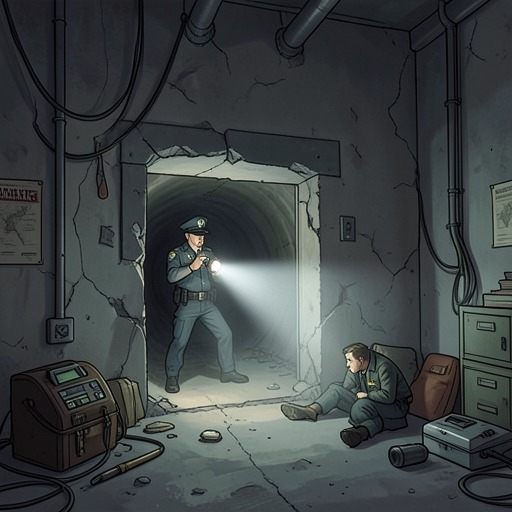
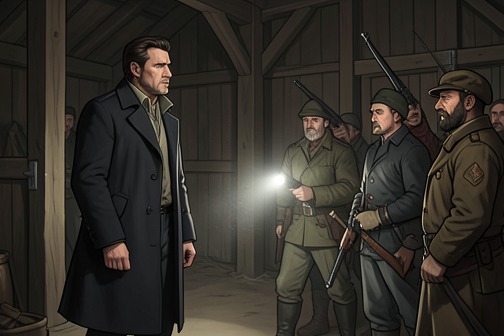
Robert Rothman is caught off guard when the barn’s side door is forced open: although the alarms have warned him, he has not had time to close and cover the trapdoor to his underground lair. Three men approach with Claire and her mother, Susan Wylie. Robert takes stock of the men and their weapons, then sees that Claire is wet and shivering. When one of the intruders twists her arm after she tries to speak, Robert silently resolves to kill them. The men treat him as no threat, an assumption that sharpens the danger of the encounter.
## The Attempted Escape and Its Consequence
As Robert edges toward the intruder whose weapon remains holstered, Susan Wylie makes a bid to get help. She takes the cell phone from the black intruder’s belt and runs for the barn’s open side door. Though seventy-eight, she is described as healthy, but not quick enough to escape. The black intruder fires twice, and Susan dies on the barn floor still holding the phone.
Her attempt to reach the door turns a robbery into a family tragedy. Claire cries out at her mother’s sudden death; Robert, seeing her grief and shock, slides the chisel from his pocket. The phone that might have summoned help instead remains with Susan, while the intruders’ violence gives Robert an immediate reason to act on the threat he has already made to himself.
## From the Farm to a Predatory Double Life
The invasion’s revelation of Robert Rothman’s hidden lair acquires a darker meaning through his later conduct. At a shopping center, he sought out the parking area used by customers of Lady Lite Fitness Center, found an unlocked luxury car, and studied the dance CDs and photographs inside. The images showed six smiling young adults, and he inferred that the car’s owner was likely young and affluent. He hoped she was the redhead among them. That deliberate search for a target stands in sharp contrast to the family man confronted at the farm: Robert was not only capable of violence when Claire was threatened, but also a predator who selected victims and arranged opportunities to abduct them.
[Kaye Swan](entity:character-recall-character-kaye-swan-211ac09ad090), a twenty-three-year-old law student and redhead, was the woman he found. Robert hid in her car’s trunk, cutting a narrow gap in the folded rear seats so he could see when she returned. His own thoughts frame this behavior as the expression of an enduring nature: he imagines a world divided between predators and prey, and regards his impulse to possess and control as stronger than sympathy. He believes he has been made this way and no longer questions it. Read against the farm invasion, that self-conception transforms the hidden lair from a secret suggesting danger into part of a larger pattern: Robert’s concealed life is organized around predation, while his outward role as husband and family protector obscures it.
## Later Operations and the Recurrence of Concealed Danger
The later effort to draw Robert Rothman into a trap turns the farm invasion’s hidden alarms and exposed trapdoor into part of a wider pattern: apparent security depends on what the people guarding a place can see. At the [Pines Way Motel](entity:location-recall-location-pines-way-db3a37f5677e), [John Brice](entity:character-recall-character-john-brice-78038418ca26) and [Robyn Dyer](entity:character-recall-character-robyn-dyer-89314e6c2ea1) arrived to find the No Vacancy sign lit, though the lot held only their SUV and two police cars. Brice planned to make the motel look occupied by placing ten cars supplied by his brother-in-law’s dealership in front of the rooms. Two female agents would pose as maids, while a deputy would act as a handyman, giving him a reason to move around unnoticed.
The plan also used a human decoy. Robyn Dyer was to command the motel operation while Brice watched Claire Rothman at the [FBI Safe House](entity:location-recall-location-9867f9a0dd76); [Jessica White](entity:character-recall-character-jessica-white-828d7abf4527) and her husband would join him there. Claire arrived at the motel alongside an agent made up to resemble her, intended to serve as bait. Like the men at the farm who underestimated Robert, the operation relied on controlling what an adversary would perceive—but its disguises and staged signs of ordinary occupancy could not guarantee that the danger would follow the script.
That vulnerability becomes concrete when Kaye Swan reaches the rear steps of the FBI Safe House seeking help. Agent Martin Cantwell sees her and calls the other agents from the living room. Treating her appearance as a possible ruse, he assigns one agent to remain with Claire and another to guard the front and contact Brice, then opens the back door himself. Swan warns him that [Victoria Belle](entity:character-recall-character-victoria-belle-3622b7776607) is approaching, but Belle has concealed a knife behind her back. She attacks Cantwell as he reaches for his weapon, takes the gun after it falls, and runs through the kitchen while gunfire breaks out at the front of the house.
The later scenes do not belong to the farm invasion itself, but they extend its central reversal: a guarded place can still be breached when danger is hidden in plain sight, and a precaution can fail at the moment it is most needed. At the farm, the intruders’ assumption that Robert was harmless proved mistaken; at the safe house, Cantwell’s caution about a possible ruse left him exposed to the actual attacker. Across these episodes, concealment shapes both sides of the conflict—Robert’s secret lair and predatory methods, the FBI’s staged motel and decoy, and Belle’s hidden weapon—while protection repeatedly proves less reliable than it appears.
Event 2
The Discovery of Robert Rothman’s Torture Chamber
The discovery of Robert Rothman’s Torture Chamber exposes the hidden scale and duration of his crimes: beneath the surface, investigators find bodies spanning very different periods of time, including a young woman [Dan Stevens](entity:character-recall-character-dan-stevens-a35addd8445c) recognizes as a missing student. The chamber turns suspicion into a physical record of repeated violence, and its oldest remains force Stevens to consider that the activity may have continued for years, possibly decades, before he calls in the [Federal Bureau of Investigation](entity:organization-recall-organization-federal-bureau-o-f1c5664278d2).
## Descent and Setting
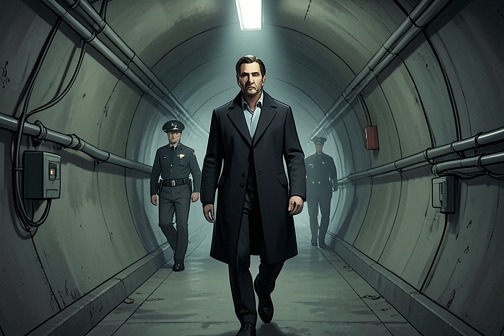
The investigators are directed down into what is called the crypt, where the rest of the bodies are said to be. The passage is low enough that they have to stoop as they walk. Ahead, Dan Stevens can make out artificial light and hear the subdued voices of his deputies, signs that the search has already reached the underground space before he enters it. The descent therefore brings him toward a scene being examined by his own officers, rather than toward an unknown chamber entirely untouched by the investigation.
The passage’s cramped dimensions make the discovery a movement from ordinary search into concealed interior space. The investigators proceed through a tunnel to a chamber holding bodies and equipment. One of them asks whether this is where Robert Rothman kept the women, but the evidence presented here does not supply an answer to that question. What the scene does establish is that the underground room contains both human remains and devices Stevens understands as instruments of torture. The crypt is not merely a hiding place for bodies; it is evidence of a place where violence was carried out.
## The Victims and Physical Evidence
Among the dead is Heather Alue, an eighteen-year-old missing student from a college two towns away. Stevens had received an alert about her disappearance a week earlier and had memorized her face. Recognizing her gives the chamber an immediate connection to an active missing-person investigation: the missing student is no longer only a name and image in an alert, but one of the victims in the room. Her death also makes the scale of the scene personal for the officer who had been searching for her.
Stevens finds the condition of Heather’s body deeply upsetting and turns his attention away from it to survey the rest of the chamber. On a table, he sees an assortment of devices whose design suggests an earlier era and whose apparent function is unmistakable to him: torture. The implements supply a different kind of evidence from the bodies. The remains show that people have died there; the tools point to deliberate suffering as part of what happened in the chamber. Together, they make the room evidence not just of concealment but of an organized setting for abuse.
## The Barrels and the Timeline
The investigators’ examination of the barrels extends the case backward in time. One, identified as number forty-two, holds the remains of a young woman who died only a few weeks earlier. Another, barrel number one, contains a body so old that an investigator initially mistakes its appearance for that of a mummy; the estimate is that it had been inside for years. The contrast between these two containers is crucial. The recent death shows that the chamber’s use was not confined to a distant past, while the oldest remains make it impossible to treat the latest discovery as an isolated episode.
Stevens asks whether each barrel contains a body. That question registers the discovery’s accumulating scale: the barrels are not incidental objects around a single victim but part of a larger collection of remains. The available evidence establishes both the presence of multiple bodies and a wide difference in their apparent ages, though it does not establish a complete count or identify every victim. The chamber thus offers a partial chronology rather than a full account. Its contents show that the crimes reach back years, while leaving the precise beginning and extent unresolved.
## Recognition, Consequences, and Significance
The scene changes the meaning of the investigation for Stevens. Before descending, the case concerns reports and missing people; within the chamber, those reports connect to identified remains, physical tools, and containers holding bodies from different periods. Heather’s recognition links one victim to a specific alert Stevens received only a week earlier. The older remains then widen the frame beyond that recent search, suggesting a pattern that had remained hidden over a much longer span.
Stevens reflects that what lies below may have been happening for years, perhaps decades, directly under the community’s notice. His conclusion is an assessment prompted by the evidence, not a confirmed account of the crimes’ full duration. The distinction matters: the oldest body supports a history of years, while the possibility of decades remains his broader inference. Faced with a case that exceeds what his local investigation can address, he decides that the next step is to call the Federal Bureau of Investigation. The discovery’s decisive consequence is therefore institutional as well as evidentiary: a concealed chamber becomes the basis for escalating the investigation beyond the local authorities.
Event 3
Robert Rothman’s Abduction of Kaye Swan

Robert Rothman’s abduction of [Kaye Swan](entity:character-recall-character-kaye-swan-211ac09ad090) begins with a deliberate search for an accessible target and ends with Swan held captive in her own home. The episode also exposes the logic Rothman uses to choose victims and recast his violence as an expression of an unchangeable nature; later, he intends to use Swan as a distraction for the FBI.
## Selection and Approach
On a weekday, Rothman bought two disposable cell phones at a busy convenience store, then continued through the shopping center looking for an opportunity. He turned toward the parking area designated for the Lady Lite Fitness Center. There he found an unlocked luxury car containing modern dance music and photographs of six smiling, fit young adults. The photographs showed three women and three men, including one redhead. Rothman inferred that the car’s owner was young and financially comfortable, and hoped she was the redhead.
The owner was Kaye Swan, a twenty-three-year-old law student and a redhead. Rothman hid in the car’s trunk, where he had cut a narrow opening in the folded rear seats so he could watch for her return. When Swan drove home, he remained concealed through the journey and emerged in the attached garage of her two-story house. The entry door was unlocked, but a chirping alert sounded as he opened it. Rothman expected Swan to react; when she did not, he searched the house and found her upstairs in the shower.
## Capture and Control
Rothman had taken duct tape and a length of blue-and-white clothesline from the garage, intending to restrain Swan and question her before her husband returned. While he was occupied with thoughts of his wife, [Claire Rothman](entity:character-recall-character-claire-rothman-1acb168394c8), Swan entered the room and noticed the rope. Rothman struck her from behind, restrained her to the bed, and covered her mouth before she could call for help. The capture took less than a minute. The unlocked house and its entry alert had not prevented him from reaching her; once inside, he turned the household’s ordinary rooms and objects into instruments of confinement.
Rothman interpreted his control over Swan through a predator-and-prey framework. He recognized that she might suffer and claimed to feel some sympathy, but described that feeling as weaker than his desire to possess and control her. He treated his conduct not as a choice for which he was responsible but as the expression of a nature he believed he had been created with, and said he had stopped questioning it. The episode thus presents his self-definition as part of the violence: he converts a deliberate act against a particular woman into an apparently inevitable law of nature.
Swan’s captivity continued as Rothman tried to manage the risk of discovery. He learned that her husband was expected home between six and seven, depending on which train he took. When Swan screamed after he removed the tape, Rothman threatened her and used his knife to punish her. He later cut the rope from one of her arms but made clear that this was not freedom: she was to treat her injuries in the bathroom while he waited outside, and he conditioned her survival on obedience. His promise that she might live and see her husband again was therefore another means of keeping her under control, not a release from captivity.
Rothman eventually described Swan as useful because he planned to make her a distraction for the FBI. Her abduction consequently became more than an attack on an isolated target: he intended to exploit his captive as part of a larger effort to misdirect the agents searching for him. The shift from selecting Swan for access to using her in his escape plan shows how his control over her served both his immediate predatory aims and his wider conflict with law enforcement.
## The Distraction and Its Reversal
Swan’s captivity eventually became part of Rothman’s effort to misdirect the FBI. But when she reached the [FBI Safe House](entity:location-recall-location-9867f9a0dd76), still with her wrists bound, an agent saw her through the kitchen window and alerted the others. Her arrival briefly appeared to be a plea for help; Swan then saw [Victoria Belle](entity:character-recall-character-victoria-belle-3622b7776607) charging toward the house and warned the agents to shut the door. Belle had concealed a knife behind her back, and the warning came too late to prevent her from attacking an agent at the entrance and forcing her way inside.
The sequence turns Rothman’s use of Swan against the FBI into a point of vulnerability: the captive’s appearance drew the agents’ attention, while Belle’s sudden approach transformed that response into the opening for an assault. Swan’s abduction thus connects Rothman’s private violence to the wider confrontation with law enforcement, but the safe-house attack also shows that the plan’s consequences were not under his control.
## Narrative Function and Contrast
Swan’s abduction also places Rothman’s private theory of himself beside another predator’s judgment. Rothman had once fought against what he considered his nature, while Victoria Belle openly embraced predation and, unlike him, made no effort to blend into ordinary society. When Belle later recognized Rothman as one of her kind, her assessment gave his self-description an external counterpart; his insistence that he would never be like her, however, preserved a distinction between them. The episode’s significance therefore extends beyond Rothman’s claim of inevitability: his actions make him legible to Belle, while his resistance to her identification exposes a tension between the identity he has adopted and the one he still rejects.
Event 4
Victoria Belle’s Murder of the Rodgers Sisters
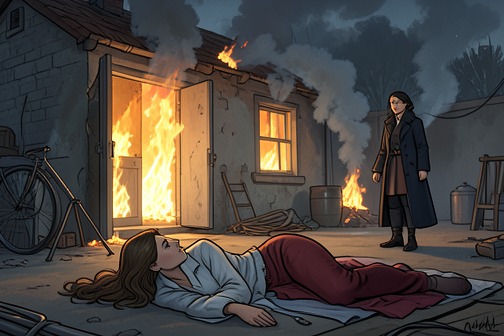
[Victoria Belle’s Murder of the Rodgers Sisters](entity:event-recall-event-victoria-belle-s-murder-b53aa8b8e5ff) is the account of Belle’s first victims and the moment when, at fifteen, she understood herself as a killer. The sisters’ deaths follow a deliberate sequence: Belle travels back to the town she had left, enters their home at night, reveals her identity, and sets a fire. She escapes before their parents can see her. The episode joins personal revenge to a larger pattern in Belle’s life: rather than conceal or resist her violence, she comes to regard it as her nature.
## Background and Motive
Sissy and Kelli Rodgers had bullied Belle at the grade school she attended before moving to [Turtle Creek, Indiana](entity:location-recall-location-turtle-creek-indiana-6595fa730c9f), in her freshman year of high school. The account presents that history as the reason she chose them, and her return to their town as purposeful. At fifteen, Belle sneaked out of her home one night and took her mother’s car to make the trip. Her preparation and choice of victims make the attack more than a sudden confrontation: she set out to reach the sisters and wanted them to understand who had come for them and why.
The narrative later places this childhood crime within Belle’s longer record. At eighteen, she is already described as a predator who has murdered numerous times; elsewhere, the account says her victims eventually numbered well over a hundred. The Rodgers sisters are therefore not simply two victims in a larger tally. Their murder is identified as her first, and Belle’s response to it marks an early point in the development of the identity that governs her later life.
## The Attack
Belle arrived just after two in the morning and entered the sisters’ home through a basement window. Dressed in black and wearing a ski mask, she reached their bedroom while they slept. She carried a large water pistol and fired at them, an initially strange gesture that precedes the scene’s more direct threat. When Sissy turned on the bedside lamp, Belle raised her mask and showed her face.
Kelli recognized her by the unkind nickname the girls had used. Belle was pleased that they remembered her: she had feared that, in the year since she moved away, they might have forgotten her. Recognition was part of what she wanted from the attack. She told the sisters that they had chosen the wrong person to antagonize, then lit a match. When the girls detected the danger and Sissy identified the presence of gas, the wet carpet made clear that the fire had been prepared across the room. Belle dropped the match, and the resulting heat nearly injured her as well. The scene establishes the sisters’ deaths as the outcome of a planned arson attack, not an accidental fire.
## Escape and Immediate Aftermath
As the fire took hold and the sisters screamed, Belle fled through the hall and down the stairs. On the landing she saw their parents rushing toward the burning bedroom. They did not notice her; their attention was fixed on their daughters and the emergency unfolding upstairs. Belle continued back through the basement window by which she had entered, ran to the car, and drove home. Her escape depended on the parents’ arrival being directed toward the bedroom rather than toward the intruder.
The account gives no suggestion that Belle was caught or confronted after the killing. Instead, it follows her departure with a striking description of her reaction: she laughed repeatedly during the drive and felt whole for the first time in her life. That response makes the aftermath consequential beyond her successful flight. The killing does not appear to produce remorse or a retreat from violence; in Belle’s own developing sense of herself, it brings a feeling of completion.
## Identity and Narrative Significance
The episode’s defining tension is between the sisters’ recognition of Belle and her use of that recognition. Their recollection of the nickname confirms that the childhood conflict persisted in their minds, while Belle takes their memory as proof that she has not been forgotten. She wants the victims to know the identity and reason behind the attack, turning revenge into a staged disclosure. The mask briefly conceals her, but she removes it before setting the fire; anonymity is not her aim at the decisive moment.
The later account describes Belle as someone who embraced her identity as a predator and never sought the ordinary social disguise that Robert Rothman maintained. The Rodgers murder anticipates that contrast: Belle’s pleasure in being remembered, her deliberate revelation, and her feeling of wholeness after the attack all align with a self-conception built around violence rather than concealment. The narrative also sets her actions beside the broader predator-and-prey language used in the book, in which violent characters describe their impulses as ancient and their victims as prey. That language explains how the story frames their self-understanding; it does not make the sisters’ deaths less deliberate or less consequential. As the origin point of Belle’s recorded killing career, the episode shows revenge becoming an early expression of a much wider and lasting pattern.
Event 5
Victoria Belle’s Murders of Sally-Anne Wilkes and Daryl Jones
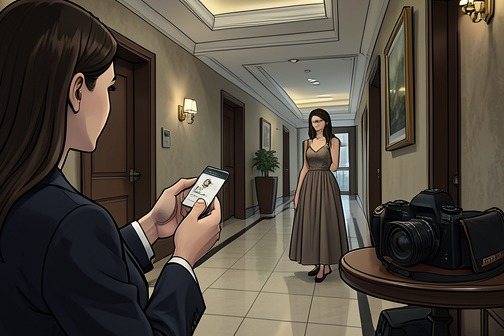
[Victoria Belle’s Murders of Sally-Anne Wilkes and Daryl Jones](entity:event-recall-event-victoria-belle-s-murder-ea64e33b64c8) are a linked pair of killings committed as Belle evaded capture and sought to help Robert Rothman. By targeting a visiting news crew, she obtained an identity and vehicle that could serve her immediate plans; the murders also expose the predatory logic through which she treated other people as usable resources.
## The News Crew as a Target
After abandoning a stolen Honda in a Burger King parking lot, Belle crossed the highway to a hotel where news organizations were staying while covering the Rothman case. From the lobby, she watched the parking lot and studied the occupants of a news van that had arrived from another state. She followed the reporter and cameraman upstairs, learned the reporter’s room number from her key card, and waited near an ice machine before approaching the room. The sequence turns ordinary hotel details—a key card, a hallway, a wait—into steps in Belle’s selection of an accessible target.
The reporter, Sally-Anne Wilkes of Channel 17, Kentucky, opened the door and greeted Belle as a stranger asking for help. Belle incapacitated her and killed her, then changed into one of Sally-Anne’s dresses and searched her purse for identification. The disguise and stolen ID made the killing part of a practical plan: Belle was taking over the reporter’s place as well as removing her. When the cameraman arrived, Belle answered the door and led him to believe Sally-Anne had briefly stepped out, using his trust in the familiar setting to draw him inside.
## The Cameraman and the Stolen News Van
Belle incapacitated the cameraman when he arrived at Sally-Anne’s room, then restrained him while she used the reporter’s identity. When he regained consciousness, he asked where Sally-Anne was; Belle told him she was dead and explained that she had needed her identification. His discovery of the murder did not lead to rescue: Belle later sexually assaulted and killed him. The second killing completed the removal of the two people whose news van and identities had become useful to her.
Two hours later, Belle drove the stolen van to [Kaye Swan](entity:character-recall-character-kaye-swan-211ac09ad090)’s garage, where Robert Rothman greeted her. She told him that she had killed both the reporter and the cameraman, and that they would be missed, so they should not keep using the van for more than a day. The practical limit matters: the vehicle had helped Belle reach Rothman, but the public attention around the missing news crew made it a temporary asset rather than a safe disguise.
The murders also place Belle’s violence alongside Rothman’s without making their methods identical. She had earlier recognized a resemblance between the cameraman’s restraint and the way Rothman had held Kaye Swan; afterward, she described herself as having acted on her own predatory nature. The episode thus links her opportunistic use of other people to the language by which she defines herself, while the stolen vehicle carries the consequences of the killings into the pair’s next move.
## Disguise and Predatory Self-Definition
The brief assumption of Sally-Anne’s identity sits in tension with Belle’s broader refusal to build a conventional life behind a sustained mask of normality. Here, clothing and identification serve as temporary instruments: she uses them to occupy the dead reporter’s place long enough to carry out her immediate plan. The disguise is practical rather than assimilative, allowing her to exploit the expectations attached to a news crew without changing the predatory outlook that governs her actions.
That contrast sharpens the event’s significance. Belle’s conduct makes people into means—an identity to borrow, a vehicle to use, and witnesses whose presence threatens the plan—while her wider self-description casts such behavior as an embrace of her nature. The murders therefore mark more than a means of evading capture: they show how readily her self-conception translates into calculated action, even when the borrowed signs of ordinary professional life briefly conceal it.
## Predatory Identity and the Murders’ Significance
The killings fit a pattern broader than the immediate disguise and escape plan: Belle understood predation as an identity to inhabit, not a temporary departure from ordinary life. After an earlier killing, she had felt whole; the book describes her as having taken no conventional job, owned no car, or bought a house, and as having killed well over a hundred people. Against that history, Sally-Anne’s clothing and identification function as short-lived tools, not the beginnings of a social mask. The contrast makes the news-crew murders revealing: Belle could borrow the signs of a reporter’s life while remaining committed to a self-conception built around exploiting others.
The narrative also places her self-definition beside Robert Rothman’s changing account of himself. He had struggled against what he called his nature before ceasing to question it, while Belle had already embraced hers; later, she recognized him as a fellow predator, even as he recognized a threat in her. The murders therefore establish both a practical link between Belle and Rothman and a difference in how each relates to the identity they share. Her admission that she killed the two news workers, coupled with her warning that the van could not safely be used for long, carries that identity into a concrete consequence: the stolen vehicle advances their plan, but the people it displaces make the disguise temporary.
Event 6
The FBI Safe-House Attack
[The FBI Safe-House Attack](entity:event-recall-event-the-fbi-safe-house-atta-7a7e4879f0e3) turns an FBI operation designed to protect [Claire Rothman](entity:character-recall-character-claire-rothman-1acb168394c8) and draw in Robert Rothman into a violent breach that leaves agents down and [Jessica White](entity:character-recall-character-jessica-white-828d7abf4527)’s husband in the attackers’ hands. Its central reversal is that Robert cannot reach the wife he came for, so he takes another person as a substitute bargaining piece.
## The Plan and Its Vulnerabilities
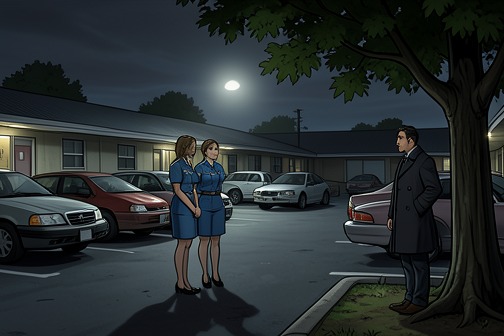
At the [Pines Way Motel](entity:location-recall-location-pines-way-db3a37f5677e), [John Brice](entity:character-recall-character-john-brice-78038418ca26) arranged a decoy operation intended to make the motel look occupied and let agents move without attracting suspicion. His brother-in-law was sending ten used cars to park outside the rooms; two female agents were to pose as maids, while Joe Perkins would act as a handyman. [Robyn Dyer](entity:character-recall-character-robyn-dyer-89314e6c2ea1) was assigned to lead the motel operation. Brice planned to watch over Claire at the [FBI Safe House](entity:location-recall-location-9867f9a0dd76), where Jessica and her husband were also to stay.
The plan depended on keeping the real Claire safe while presenting Robert with a convincing target. Claire arrived at the motel alongside an agent made up to resemble her and serve as bait. Earlier, in an interrogation room, Dyer had asked Claire to tell the FBI if she knew where her husband was. Claire, grieving her murdered mother and confronting the discovery that her husband had deceived her, said she knew nothing and broke down. The operation thus placed a distressed witness under protection while attempting to turn her likeness into a means of controlling Robert’s movements.
## The Breach at the Safe House
The attack began when [Victoria Belle](entity:character-recall-character-victoria-belle-3622b7776607) brought [Kaye Swan](entity:character-recall-character-kaye-swan-211ac09ad090) out of the woods toward the FBI Safe House. Swan, whose hands were bound, reached the back steps seeking help. Agent Martin Cantwell saw her from the kitchen and treated the approach as a possible ruse: he told two other agents to remain with Claire Rothman and guard the front while he dealt with Swan. Swan told him she had been kidnapped and sexually assaulted. Cantwell freed her hands and covered her with his shirt, but the apparent rescue had opened the way for Belle to follow.
Swan recognized Belle as she charged toward the house. Belle had concealed a knife behind her back; she attacked Cantwell, took his gun, and entered the kitchen as gunfire sounded from the front. The agents’ precautions divided the defenders between the front of the house and Claire, while the crisis at the rear forced Cantwell to respond alone. The decoy operation had been designed to draw Robert Rothman toward a controlled target, but at the safe house the attackers turned the agents’ effort to protect Claire into a point of entry.
Outside, Robert used a gun taken from Swan’s nightstand to shoot the agent who confronted him by a news van. He then met Belle and set out to get his wife. John Brice arrived with Jessica White and her husband in his SUV; Robert fired at the vehicle, shattering its windshield and disabling its tires. Brice was wounded and lost his weapon, leaving Robert able to approach him. Jessica’s husband drove a vehicle into Robert, knocking him down, but Belle intervened before he could be subdued and ordered Robert to escape with her. Robert looked toward the house, then dragged Jessica’s husband to the van, intending to trade him for Claire. Jessica broke free of Brice and ran after them, but the van escaped, leaving her at the driveway as the attack ended in her husband’s abduction.
## Kaye Swan’s Place in the Attack
The assault’s path to the safe house began with Robert Rothman’s choice of a victim at the Lady Lite Fitness Center. He searched the center’s designated parking area and found an unlocked luxury car. Photographs clipped to its sun visor showed three women and three men; Robert took the group’s apparent youth and affluence as signs that the car’s owner might live somewhere private and well insulated. He hoped its owner was the red-haired woman in the pictures.
That owner was Kaye Swan, a twenty-three-year-old law student. While waiting in the car’s trunk, Robert cut into the back of the fold-down rear seats to make a narrow viewing gap, then watched Swan return and drive home. Her presence in the safe-house crisis therefore connected the FBI’s defensive operation to Robert’s earlier predatory search: Belle’s approach with Swan was not incidental, but part of the chain of violence that brought the attackers to the protected house.
## Consequences and Significance
The breach turned the safe house’s divided defense into a sequence of losses: Martin Cantwell left the other agents to respond to Kaye Swan at the rear, where Victoria Belle overcame him and entered the house, while Robert Rothman shot and killed an agent outside by the news van. When John Brice arrived, Robert’s gunfire wounded him in the shoulder and knocked his weapon out of reach. The attackers had not simply slipped past the operation’s precautions; they had left its defenders unable to protect one another across the separate fronts of the attack.
Robert’s failure to reach Claire did not end his attempt to use her as leverage. He seized Jessica White’s husband instead, saying he could trade him for his wife later, and Belle drove them away in the van. Jessica broke free of Brice’s restraint and ran after the vehicle, but could not catch it. The operation meant to protect Claire and draw Robert toward a decoy ended with a dead agent, Brice wounded, and Jessica’s husband abducted: the protected house became the setting for a reversal in which the FBI’s intended bait was never secured and another person became the hostage.
Event 7
Robert Rothman’s Capture and Victoria Belle’s Disappearance
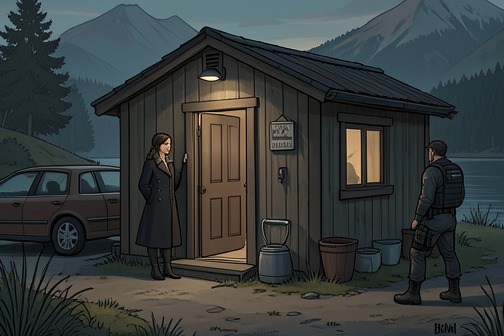
[Robert Rothman’s Capture and Victoria Belle’s Disappearance](entity:event-recall-event-robert-rothman-s-captur-5b430be65d25) brings the pursuit to two sharply different outcomes. Robert abandons the chance to flee because he wants to see [Claire Rothman](entity:character-recall-character-claire-rothman-1acb168394c8) again; [Jessica White](entity:character-recall-character-jessica-white-828d7abf4527)’s husband eventually subdues him and alerts the authorities, while [Victoria Belle](entity:character-recall-character-victoria-belle-3622b7776607) evades the deputies by jumping into a gorge. The water carries her out of sight, and her body remains unrecovered the following morning.
## The Trap and the Safe-House Breach
At the [Pines Way Motel](entity:location-recall-location-pines-way-db3a37f5677e), the FBI prepared a decoy operation for Robert. The No Vacancy sign was lit despite a nearly empty parking lot, and Chief Stevens explained that ten borrowed cars would be placed outside the rooms to suggest that guests were staying there. Two female agents were to pose as maids, while deputy Joe Perkins would act as a handyman. Special Agent [Robyn Dyer](entity:character-recall-character-robyn-dyer-89314e6c2ea1) was put in charge of the motel operation; Agent Brice would keep watch over Claire at the lakeside safe house, where Jessica White and her husband were also due to be present.
The plan included a decoy made up to resemble Claire. Brice told Chief Stevens that the real Claire and her double were on their way, and the arrival of the two women made the deception visible to the people assembling at the motel. The operation depended on disguises and an apparently ordinary setting to conceal the FBI’s preparations from Robert.
That controlled arrangement gave way when [Kaye Swan](entity:character-recall-character-kaye-swan-211ac09ad090) reached the rear of the safe house while fleeing Belle. Agent Martin Cantwell saw her from the kitchen and warned the other agents that there was a situation at the back of the house. He cautioned that it might be a ruse, directed one agent to remain with Claire, and sent another to guard the front and contact Brice. As Cantwell approached Swan, Belle came charging after her with a knife concealed behind her back. Belle attacked Cantwell before he could draw his weapon, took the gun, and ran through the kitchen as gunfire sounded at the front of the house.
## Flight, Hostages, and Robert’s Choice
After escaping the safe house, Victoria Belle and Robert Rothman took refuge in the first house they reached, a cedar-shingled split-level. Belle went to the door alone; when an elderly resident answered, she forced him inside at knifepoint and motioned for Robert to follow. Jessica White’s husband entered soon afterward and urged Belle not to kill the man. Belle kept the resident under threat while the three men were brought into the kitchen.
Belle searched the refrigerator, took a piece of chicken, and announced that she would check the house for anyone else, find a bandage for her leg, and cut the phone lines. Robert said he would watch the hostages. He struck Jessica White’s husband and pushed him down beside the resident, then used the remaining duct tape from Belle’s purse to bind the older man’s wrists. The resident told them that he had heard a radio report identifying Robert and saying the authorities were looking for him; the news made their hiding place feel temporary, not secure.
Belle argued that they should leave through the woods before the search reached them. Robert refused. He said he would trade the two hostages for a chance to speak with Claire Rothman, insisting that he had to see her again even though Belle warned that he would be imprisoned for life. His decision transformed the house from a brief refuge into a point of deliberate confrontation: escape remained possible, but Robert chose the prospect of seeing Claire over flight.
## The Capture and the Gorge
Robert’s refusal to flee left him and the two hostages in the old man’s house as the search closed in. Although warned that Robert had a rifle, Jessica White’s husband advanced with his hands still cuffed behind him and charged when Robert turned. They went over the waist-high railing together and fell twelve feet to the grass. Robert was hurt and his wrist was broken; White, despite pain of his own, recovered first, brought Robert down, and searched his pockets for the handcuff key. He found it alongside Robert’s cell phone, which had been damaged in the fall.
The old man’s landline could not help: Victoria Belle had cut its wires, and he had no mobile phone. White freed himself, then handcuffed Robert’s uninjured wrist to the iron rack of a red-brick grill. Rather than wait for someone to make the half-mile trip to a neighbor’s house, White used lighter fluid and matches to ignite a stack of firewood beneath a blue tarp. The rising smoke was a deliberate signal to the searchers overhead. At the FBI safe house, [John Brice](entity:character-recall-character-john-brice-78038418ca26) told Jessica White that her husband had sent them a sign, and the helicopter pilot’s voice soon came through the speaker.
Victoria Belle did not see the smoke until the fire had been put out; trees had screened it from her path. When she reached a clearing and then saw White approaching with the rifle she had given Robert, she concluded that Robert was either dead or captured. She ran into the woods, limping from her leg wound, and kept her knife ready as she searched for someone who might serve as a hostage or shield. At a gorge, she crossed a tree that spanned the divide, then dragged and kicked it from the edge as White arrived on the opposite side. The trunk fell into the water and began drifting downstream, cutting off that route across.
White told Belle that Robert was alive and would be imprisoned. He fired the rifle skyward, not to hit her across the gorge but to alert the troopers; its report brought Chief Stevens’s deputies toward her. Belle disappeared over a rise, only to reappear running along the gorge with the two deputies closing in behind her. When ordered to stop and discard her knife, she complied until it hit the ground, then jumped from the cliff. The rapids carried her downstream and out of sight. White saw her struggling in the water and then lost sight of her as the stream curved; the deputies treated the leap as fatal, but her body had not been recovered when White and Jessica White left for home the following morning.
## Aftermath and Unresolved Fate
By the following morning, Robert had been subdued and the authorities alerted, while Victoria Belle had vanished into the rapids. Jessica White and her husband left for home, but Belle’s body had still not been recovered. The deputies regarded her leap as fatal; the unresolved search left her death presumed rather than confirmed, making the event’s two outcomes sharply unequal: Robert’s capture was tangible, while Belle’s disappearance remained an open question.
Event 8
Jessica White Discovers the Hidden Chamber in Her Husband’s Studio
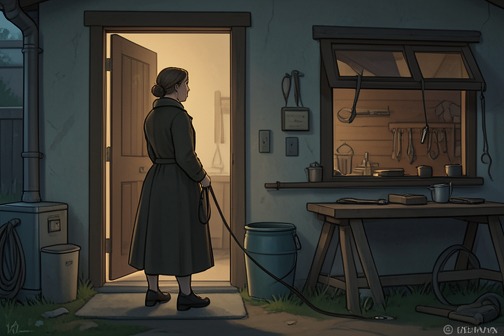
[Jessica White](entity:character-recall-character-jessica-white-828d7abf4527)’s discovery of the hidden chamber beneath her husband’s workshop transforms an ordinary return home into a confrontation with the secrecy inside her marriage. The concealed room contains no instruments of torture and no body, yet its existence confirms that her husband built a space and kept it from her. The discovery ends with Jessica on her knees, weeping over a betrayal that an empty room cannot undo.
## The Return and the Workshop
After they arrive home from the airport, Jessica tells her husband that she feels fatigued and asks whether he will collect their dog, Stitches, from the kennel alone. He agrees, places her in a cab, and goes to retrieve their car. Once home, Jessica thanks the driver and watches him leave. Instead of going inside, she stays by the front door and looks toward her husband’s workshop studio, where he now spends much of his time.
The pause outside the house carries the force of a change in attention. Jessica had paid little notice to the workshop while it was being built and had seldom interrupted her husband there. Now, thinking of [Claire Rothman](entity:character-recall-character-claire-rothman-1acb168394c8), she considers how ignorance and blind trust had left Claire unaware of horrors perpetrated for decades under her own nose. Jessica recognizes in that history a warning about confidence founded on love: intimacy has not necessarily made her an informed witness to her husband’s life. Her steps toward the workshop are hesitant, and at the keypad she finds that she does not know the combination.
## The Concealed Entrance
Inside the studio, Jessica walks among the worktables, feeling foolish but relieved. As she heads toward the door, she notices the disproportion between the room and its refrigerator: the appliance seems too large for the small space. Its interior is meagerly stocked, and the freezer is completely empty. Those details make the refrigerator stand out not as a useful household object but as something whose placement needs explaining.
Looking more carefully, Jessica sees that the appliance rests on a platform an inch thick. She tries to push it from the narrow space between the refrigerator and the counter, but it will not move. Then she spots a switch on the wall behind it. When she flips it, a loud click sounds; on her next attempt, the refrigerator slides aside easily. The concealed opening changes the meaning of the room around it: the workshop’s apparently ordinary equipment has been arranged to mask access to a space below.
## Descent and Revelation
Fluorescent lights crackle on, revealing a metal ladder descending into the earth. Jessica remains at the opening for more than a minute, imagining terrible scenes below. Her fear is anticipatory: before she has seen the chamber, she has already populated it with possible evidence of what her husband might have hidden. With her heart beating wildly, she climbs down.
The chamber itself is stark and bare. It contains only a wall of empty shelves; its floor is concrete and its walls are cinderblock. The room’s plainness shocks Jessica as much as the fact that it exists. She is relieved not to find instruments of torture or a body, but that relief does not dispel the fear growing inside her. The discovery establishes the room’s existence and concealment, not what it was built for or what may once have happened there. Its emptiness leaves those questions unresolved rather than making the hidden space harmless.
## Betrayal and Aftermath
Jessica understands one fact with certainty: her husband built the chamber and kept it hidden from her. The physical room gives her no direct answer about its purpose, but the secret itself is consequential. The workshop she had barely attended to becomes evidence of a boundary within her marriage, and the concealed descent makes that boundary literal: a private space has been constructed beneath a place where her husband spends much of his time, without her knowledge.
She sinks to her knees, holding herself as she weeps. The scene’s final movement is not toward an explanation or a discovery of what lies beyond the bare shelves; it is toward Jessica’s bodily response to betrayal. Her earlier relief at finding no body or torture equipment remains real, but it cannot restore trust. The chamber’s emptiness and her grief coexist: there is no visible horror below, yet the fact of concealment is enough to leave her afraid and devastated.