Village Library
MatildaThe Village Library is the refuge Matilda finds when the books she wants are absent from home. She first goes there after her father refuses to buy her a book, and the visit grows into a daily reading practice. The library offers more than access to books: in a household where she is often left alone and her interests are dismissed, it gives her a quiet place in which curiosity can set its own pace.
Setting and First Visit
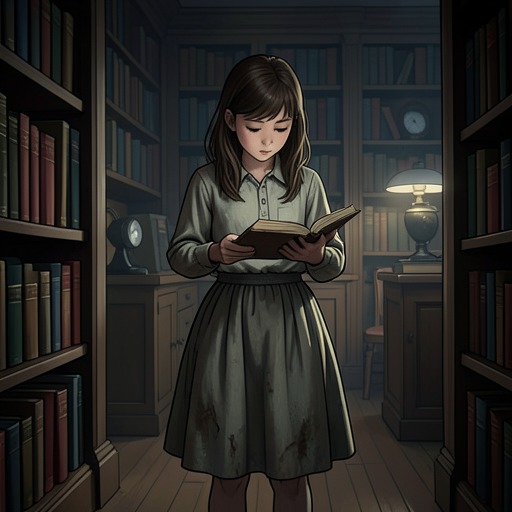
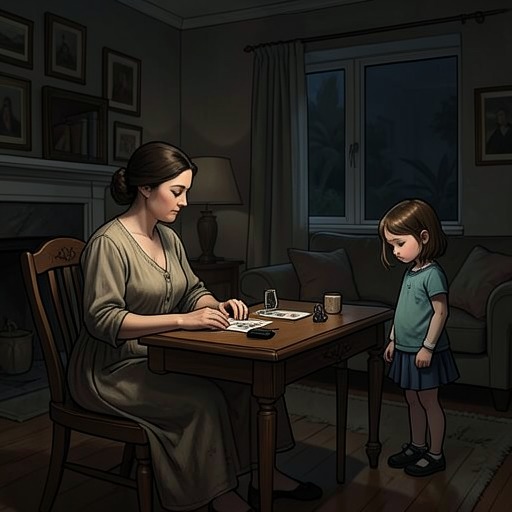
Nearly every afternoon, Matilda is home by herself. Her brother, five years older, is at school; her father is at work; and her mother goes twelve kilometres away to play bingo, five afternoons a week. The day after her father refuses her request for a book, Matilda sets out alone for the village library. The librarian is surprised to see such a small child arrive without a parent, but allows her to stay and read.
Matilda asks where the children’s books are, which are kept on the lowest shelves. When the librarian offers to choose one with plenty of pictures, Matilda politely declines and says she will find one herself. The exchange establishes the character of her visit: she is young enough to prompt adult concern, but already determined to make her own choices as a reader. The library’s welcome is modest but decisive; unlike the response at home, it makes room for her stated interest.
A Daily Reading Place
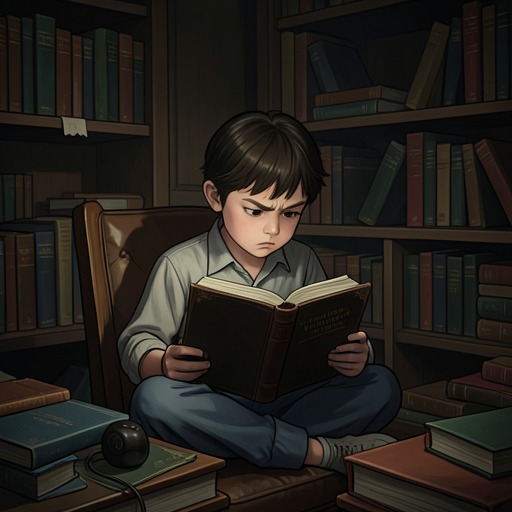
From that day on, Matilda walks to the library when her mother leaves. The journey takes ten minutes, leaving her two hours to sit quietly in a cosy corner and devour one book after another. The routine turns an otherwise empty stretch of the afternoon into protected time for reading. The librarian watches her over the following weeks, noticing how consistently she returns and how quickly the books disappear from the children’s shelves.
When Matilda has finished all the children’s books, she begins wandering in search of something else to read. The librarian comes out from behind her desk to help. Matilda explains that she has run out of children’s books; the librarian is impressed by her pace and introduces her to the works of Charles Dickens. Matilda finishes the 411-page edition of Great Expectations in less than a week. She tells the librarian she loved it and asks whether Dickens wrote anything else, turning the library’s next step into a conversation between an eager reader and an adult who has begun to recognize the scale of her appetite.
From Library to Bedroom
The librarian eventually tells Matilda that she may borrow books and take them home, rather than reading only on the premises. She explains that Matilda should bring each chosen book to her desk to be recorded, and that a book may be kept for two weeks; Matilda can borrow more than one at a time. Matilda had not known this was possible. Once she learns the rules, her visits change: she goes once a week to collect new books and return the old ones.
The library’s reading space is then carried into Matilda’s small bedroom, which becomes her reading room. She spends nearly every afternoon there with a book, often with a cup of hot chocolate beside her. Because she cannot reach everything in the kitchen, she fetches a small crate from the pantry to stand on. She warms milk in a saucepan on the stove and adds cocoa, sometimes making Ovomaltine instead. These practical details show the independence required to sustain her reading, as well as the small comforts she assembles around it in an otherwise empty house.
Books and Significance
In her bedroom, books take Matilda beyond the limits of the village: she sails on old ships with Joseph Conrad, goes to Africa with Ernest Hemingway, and travels to India with Rudyard Kipling. The contrast is between the confined, quiet room and the breadth of the lives and places she encounters through reading. The library makes that imaginative range possible first by giving her somewhere to read, then by letting her carry books home.
The importance of the Village Library also appears later when Matilda tells her teacher that she has read every children’s book in the library on the High Street. This recollection confirms that her early visits were not a brief diversion but the foundation of an exceptional reading life. The librarian’s initial surprise and later attention frame the library as a place where Matilda’s ability is noticed without being treated as a nuisance. Its most lasting consequence is not simply that she finishes one collection: she gains a means of choosing what to read, keeping books close, and making private space for the intellectual life her family does not encourage.