Chiyo’s status as a maid
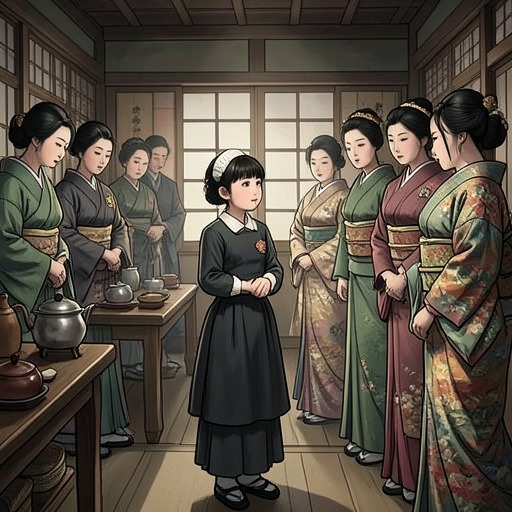
Memoirs of a GeishaChiyo’s status as a maid is the consequence of a failed escape and the Nitta okiya’s decision to stop paying for her geisha training. For more than a year and a half, she is left with chores instead of lessons, burdened by debts that include her acquisition, food, instruction, medical care, and expenses attributed to her. The position looks like an enforced dead end, but it also makes visible how the okiya converts training, care, and domestic work into an economic account. Chiyo eventually returns to the path toward becoming a geisha, though not before the prospect of remaining a maid has come to define what she fears losing.
Debt and Demotion
Before her training is halted, Chiyo learns that becoming a geisha would mean repaying the okiya for her meals, lessons, medical fees, and even the money spent to acquire her. The disclosure changes the meaning of her earlier suspicion that money had changed hands when she and her sister Satsu were taken from home: Chiyo herself is expected to repay the cost of her acquisition. Debt is not simply a record of what she has already spent. It gives the okiya an ongoing claim on her future work.
That claim grows when Mother adds costs Chiyo cannot control. After Hatsumomo’s scheme involving a kimono and an emerald obi brooch, the brooch’s price is charged to Chiyo despite her insistence that she never saw or touched it. Mother also adds her medical expenses after Chiyo breaks her arm, as well as a sum the mistress of the Tatsuyo Okiya had owed for Satsu. Mother names the price paid for Chiyo as seventy-five yen and tells her that the combined debt is greater than she will ever repay. Her estimate that repayment might take ten or fifteen years as a successful geisha makes the setback especially stark: success is presented as the condition for paying off a debt that now helps keep her from training.
The immediate change is practical as well as financial. Mother orders the front door locked after Yoko confirms that Chiyo had left the okiya when she should not have. Auntie keeps the key around her neck, and Chiyo loses her evening duty at the door, which is given to Pumpkin instead. Her other duties continue: she is expected to polish woodwork and sweep corridors, and is reproached when she drags the cloth or broom rather than working properly. The locked door and the reassignment of a task she had once performed turn the household’s daily routine into a visible system of restriction.
The Maid’s Future
Hatsumomo makes the demotion crueler by telling Chiyo that Pumpkin will become a geisha while Chiyo will not. Chiyo has already spent a year and a half doing a maid’s work. At the school garden, she watches girls her age stream past together and imagines them moving from one purposeful part of life to another, while she will return to scrubbing the courtyard stones. The contrast is not merely between two occupations: to Chiyo, the girls’ movement suggests that time is carrying everyone else forward and leaving her behind.
She sees the same apparent momentum in the streets. Banners announce the Kabuki play Shibaraku at the Minamiza Theater, crowds climb the steps, and geisha move among the men in their dark suits and kimono. Even the Shirakawa Stream seems to follow its own purposeful course toward the Kamo River, Osaka Bay, and the Inland Sea. Against this movement, Chiyo imagines herself as an abandoned island with neither a past nor a future. The image gives her maid status its emotional force: it is not only work she does not want, but a fear that her life has stopped while the surrounding world continues.
The possibility of leaving the position remains constrained by both money and reputation. Mother argues that Chiyo is a poor investment after running away and that the incident reflects badly on the okiya mistress, who may be judged unable to keep even her maids from leaving. Chiyo, for her part, tells Mameha that she would give anything to undo her mistakes and has waited more than two years for an opportunity. The distinction matters: training has stopped not because Chiyo’s teachers judged her incapable—Mameha says they had reported that she was doing well—but because Mother fears another investment in a girl who might escape again, and because the flight has damaged the household’s standing.
A Route Back to Training
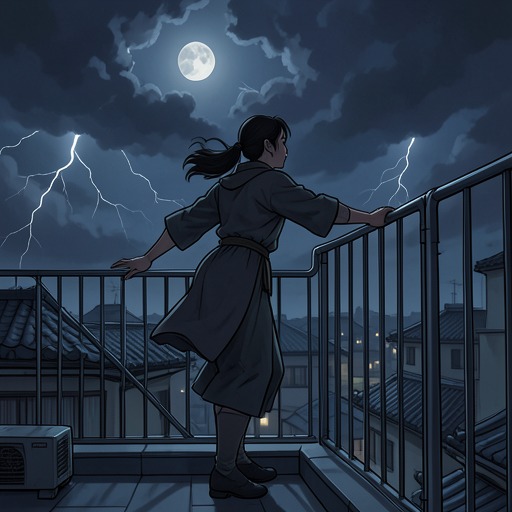
Mameha’s intervention begins by asking directly why Chiyo is no longer training. Chiyo explains the debts, including the kimono and brooch charges. Mameha also learns that Chiyo climbed onto the roof, a failed attempt that left Mother afraid to spend more on her lessons. She explains that the consequences reach beyond the risk of losing the investment: a girl who runs away makes her okiya mistress look bad in the eyes of Gion. The return to training must therefore address both Chiyo’s prospects and Mother’s financial and reputational concerns.
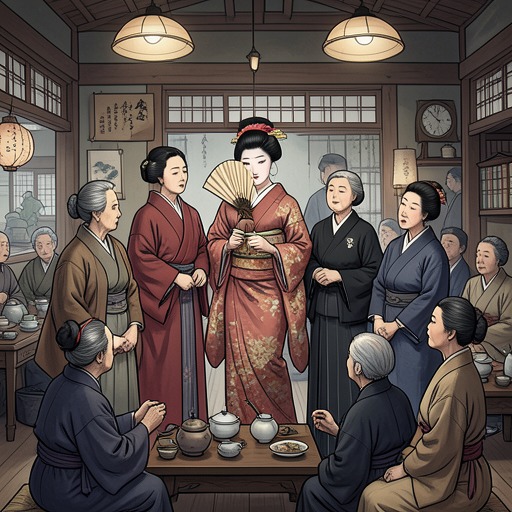
Mother initially calls Pumpkin the safer investment, reasoning that Chiyo’s debts will grow before they diminish and that Mameha, as an older sister of high standing, would command a larger share of her younger sister’s earnings. She offers Mameha only half the usual amount from Chiyo’s future income. Then she proposes a contingent bargain: if Chiyo repays her debts by twenty, Mother will give Mameha the remainder of her customary share and an additional thirty percent. The exchange reveals the economic terms behind Chiyo’s return. Her training can resume because Mother and Mameha negotiate over its cost and expected future earnings; opportunity arrives not outside the debt system, but through a new arrangement within it.
From Maid to Sayuri
Chiyo’s subsequent debut shows how sharply her status has changed. At her first banquet, she attends the Kansai International Hotel beside Mameha, introduces herself as a novice, and otherwise says little; the guests do not speak to her. Her place is now inside the professional world from which maid duty had excluded her, though she enters it as a beginner whose role is largely to shadow her older sister. Later, she learns by watching Mameha manage conversation at parties, turning even a guest’s remark about warm weather into an opportunity to guide the interaction. The movement from chores to banquets is also a movement into practiced social and emotional labor.
The eventual financial resolution does not mean that Chiyo simply becomes free of the okiya’s claims. After her mizuage, Mother adopts her. The fee is sufficient to repay Chiyo’s debts, but adoption ensures that the money belongs to the household: her debts cease to exist because the okiya absorbs them, while her profits go to the okiya thereafter. Her given name has already changed to Sayuri; with adoption, she becomes Nitta Sayuri. The arc from maid to geisha therefore brings a real change in status and work, but not an escape from economic dependence. The debts that once helped confine Chiyo as a maid are cleared through a transaction that binds the adult Sayuri’s earnings to the same household.