Dance as a Metaphor for Intimacy and Conflict
Mr. & Mrs. SmithDance as a Metaphor for Intimacy and Conflict describes how movement between Jane Smith and John Smith carries both the memory of their attraction and the reality of their mutual danger. Their tango is at once a return to the beginning of their relationship and a confrontation in which touch, timing, and practiced movement cannot be separated from surveillance and violence.
The Inscription and the Past
The motif first gathers force through the message on John Smith’s silver flask. After reading the inscription, “OM DE DANS TE ONTSPRINGEN. LIEFS, JANE,” he wonders whether Jane had understood from the start that one day he would have to dodge her bullets. The affectionate sign-off and the warning implied by the phrase occupy the same object: what might once have been a loving gift now seems capable of carrying foreknowledge of their present hostility.
John’s response is not to discard the flask. He loses his appetite for the drink, screws the cap back on forcefully, and decides to keep the object as a reminder of the fool he believes himself to have been. The inscription therefore makes remembered intimacy difficult to dismiss. It does not settle whether Jane intended a warning; instead, John’s uncertainty changes the memory, making the past feel newly shadowed by the violence that followed.
The Dance Begins Again
At the restaurant, an alto saxophone draws Jane and John into a dance after a cautious smile passes between them. Jane is surprised: they have not danced since their first night in Bogotá. John’s old claim that he disliked dancing is exposed as part of his cover, a small disclosure that connects their present encounter to the concealments on which their marriage was built.
Their invitation is also tactical. Before rising, they put their fabric-hidden weapons down on the table. John then pulls Jane into a passionate embrace, and she does not resist as his hands move across her shoulders, waist, and hips. The gesture works simultaneously as an embrace and a search; Jane experiences the frisking as intensely charged even while its practical purpose remains present. Their bodies recover an intimacy that speech cannot safely restore, but the intimacy is inseparable from the need to account for concealed weapons.
Tango as Contest
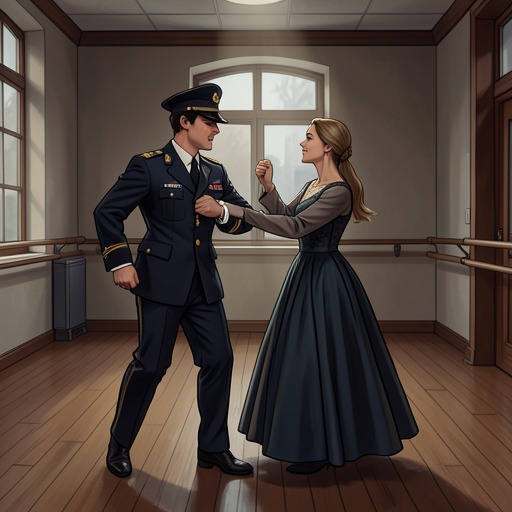
As they begin to move, John asks whether their story will have a happy ending. Jane answers that happy endings belong only to stories that are not over yet. His response is to turn her across the floor in a heated embrace, making the dance an answer in movement rather than a reassurance in words. The scene does not resolve their conflict: it gives physical form to the fact that attraction persists inside it.
Jane reads their tango as both a dance and a duel. John knows the steps of what she understands as a sequence of unspoken passion, anger, regret, and grief. The choreography lets the couple express feelings they do not reconcile verbally, while its shared structure also gives them a way to oppose one another. Jane feels tormented in his arms and fights back, drawing on what she had learned to do when in pain. The dance’s closeness does not cancel antagonism; it gives antagonism a partner, a rhythm, and a visible shape.
The Music Ends
The dance ends when the music stops, the other patrons applaud, and they return to their tables. That public interruption breaks the spell of the embrace, but not the tension between them. Jane says she cannot bear to remain in John’s arms and cannot free herself from them; John, too, seems unable to let her go. The scene’s ending holds bodily attachment and separation in the same moment, before John’s cold, sharp voice insists that they can finish things there or outside and that, as far as he is concerned, this is it.
The return to dancing is significant precisely because it cannot provide a happy resolution. The first night in Bogotá remains the measure of their shared past, while the present tango shows how thoroughly that intimacy has been transformed by deception and violence. Their steps briefly make a common language possible, but the music ends and the contest remains. Across the motif, the marriage’s domestic and romantic gestures are never wholly distinct from performance or threat: movement can draw the spouses together, expose what they still feel, and stage the conflict that keeps them apart.