The Smiths’ six-year marriage
Mr. & Mrs. SmithThe Smiths’ six-year marriage is at once a shared history and a strained domestic performance: a whirlwind beginning in Bogotá has hardened into a household of routines, withheld conversation, and escalating quarrels, even as danger forces the spouses to confront what their life together still means. The marriage’s duration is repeatedly corrected, counted, and invoked, turning an ordinary measure of time into a measure of intimacy, disappointment, and survival.
A swift beginning, recalled
Jane remembers meeting John in Bogotá six years earlier. John’s account places him there five years earlier, ostensibly on work for his engineering business, seated at the bar of the Americana Hotel as the city erupted after the Barracuda was shot. The discrepancy between the remembered six years and John’s five is not resolved in the marriage-counseling conversation; what is unmistakable is how differently the spouses tell their shared past.
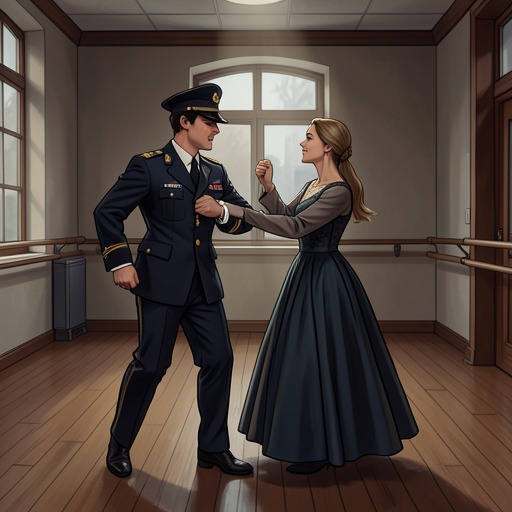
The courtship was brief. Six weeks after meeting, John invited Jane to an elegant restaurant, and she remembers being frightened by the prospect. They married at city hall without time for a large celebration. Jasmine stood as Jane’s witness, while Eddie was John’s; both witnesses seemed furious, though the newlyweds were too absorbed in the moment to pay much attention. When John placed the ring on Jane’s finger, their hands trembled. For Jane, the promise mattered because it was the first time anyone had promised her anything.
The marriage as a routine under strain
Years later, John tries to describe their marriage as a vehicle due for an interim inspection: after roughly five or six years, he says, they could look under the hood, change the oil, and replace a few valves. Jane immediately corrects his estimate: six. The correction makes the duration itself a point of tension, while John’s mechanical metaphor offers a way to discuss the relationship as something serviceable without directly naming its emotional damage.
The interview notes that Jane describes John as physically present but emotionally absent. Her examples are deliberately small: an argument over curtains, a lack of conversation at dinner, and bickering over who should pass the salt or which side of the table it belongs on. Their apparent triviality is precisely the point. Domestic manners and furnishings become visible signs of distance because the couple cannot—or does not—address the larger absence directly.
At home, Jane tries to maintain an ideal life through concentrated effort. She applies the ambition and diligence of her work to the house, garden, and meals, preparing elaborate dinners for two every evening. John, meanwhile, returns from a day that feels worlds away from the one awaiting him at home and sits in the car, listening to the engine before composing himself. He wonders whether the years have changed them or whether everything has simply faded, like a newspaper left in the sun.
Small disputes and unspoken needs
The couple’s household disagreements accumulate through objects and chores. John brings home salted butter when Jane wanted unsalted; she explains the distinction and says she will improvise, while he inwardly resents being given errands whose results never satisfy her. Jane’s new green curtains generate another chain of decisions: a checked sofa cover, a different rug, and more changes to a room that was already fully furnished. John sees the sequence as an unnecessary domestic project and proposes keeping the old curtains. Neither the butter nor the curtains can account for the marriage’s crisis by itself; together they show how little practical disputes have become the available language for dissatisfaction.
Dinner repeats the same pattern. John eats peas, offers a perfunctory compliment, then gives up trying to navigate Jane’s reaction and continues eating in silence. When he asks her to pass the salt, even that simple request becomes a contest in which he believes she must win. The marriage-counseling recollection of salt at the table thus returns in the lived scene: the small gesture is not merely a household task but another occasion for a conflict that the spouses have not learned to discuss openly.
Their evenings also fail to produce the conversation Jane wants. Sometimes she goes to bed while John works in his office, hobby room, or shed; sometimes she stays up with kitchen chores or an old black-and-white film, and may fall asleep on the couch. John usually leaves her there, later saying he did not want to wake her. Jane sometimes wishes they would simply go to bed together and really talk. Instead, their shared time is organized around separate rooms, separate tasks, and habits that substitute for intimacy.
Even a routine they perform side by side offers little relief. A few evenings after the crisis has begun to surface, they do the dishes together, as they do every day: John rinses plates under running water while Jane loads the dishwasher. The work proceeds without a word. The ritual demonstrates coordination, but not communication; the same repeated arrangement that keeps the household functioning makes their silence more palpable.
Six years brought to a breaking point
The number returns with force when Jane drives away from the house. She mutters that it has been six years, then repeats the words as she accelerates down the street. John appears in her headlights, having taken a shortcut through the neighbors’ gardens and ended up straddling a fence like a fleeing prisoner. Jane watches him fall into the mud. The years they once marked through a wedding promise now accompany a comic, physical image of their marriage in disarray.
The conflict is no longer confined to furniture, food, or silence. Their concealed professional lives bring lethal danger into the home, and the domestic setting becomes part of their confrontation. A small grenade drops through a vent and rolls across the floor; Jane recognizes that the object is real, not a toy, while John cries that she is dead. The scene turns the marriage’s games and performance into an immediate struggle for life, with the household no longer a safe refuge.
The house’s destruction is measured through the things that once embodied its domestic order. During the fight, gunfire smashes glasses and opens cabinets; Jane’s cherished teapot and its companion kettle are hit. She pauses in disbelief before the wreckage of her favorite room, where the appliances, cabinets, and decorations are gone. The kitchen that had represented Jane’s relentless labor to sustain an ideal home has become a casualty of the couple’s violent collision.
Partnership under pressure
The marriage’s trajectory does not end with that domestic ruin. In a home-goods store, John and Jane recognize secret agents entering the building. John’s hand on Jane’s elbow signals that they should move; as the lights go out, they leap from a swing in time to evade the agents. They run through the store past a bin of teddy bears, where Homey, the life-size mascot with a house-shaped hat, moustache, and sawed-off shotgun, rises unexpectedly. The spouses each shoot the oversized mascot in the head; its weapon fires into the ceiling as it falls. What was meant to be a skirmish with an undercover agent becomes a conspicuous public event.
That escape gives their partnership a form it had lacked in the quiet household scenes: their movements are coordinated, their danger shared, and their decisions immediate. The book does not erase the marriage’s six years of silence or convert every domestic grievance into a misunderstanding. Instead, it places the old routines beside scenes in which the pair must act together. The duration that once sounded like a maintenance interval, and later like an accusation, becomes the history against which their renewed cooperation can be seen.