Rouran
MulanRouran appears in two sharply different contexts: as an invading force in Ba’s account of his warrior years, and as a band of mounted warriors who arrive at the close of Xianniang’s story. The contrast gives the group significance beyond its limited description: it belongs both to the martial history that shaped Mulan’s family and to the uncertain future Xianniang chooses for herself.
Earlier Conflict and Family Memory
Ba recounts that after the defeat of Emperor Zhou, the new emperor needed warriors to fight the invading Rouran. Ba served in that fighting and badly damaged his leg. His injury remains visible in the bindings Mulan sees as she passes her sleeping parents, making the account of war present in the household rather than distant history.
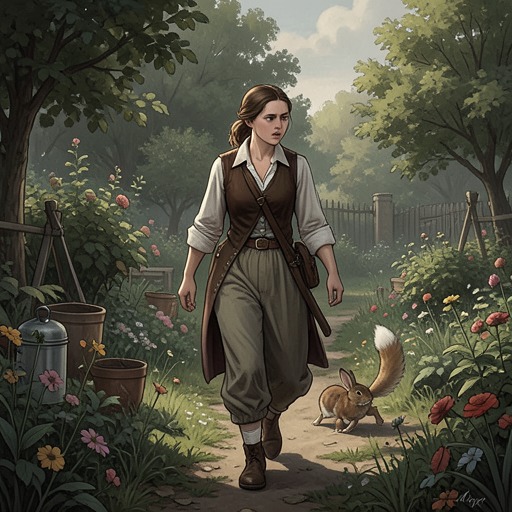
Ba’s story also frames military service as a matter of family honor. He says he would make the same sacrifice again to honor his ancestors. Mulan had listened to his recollections with admiration, and during her journey she imagines him racing across the same fields and passing the same trees she now travels through. Thinking of the Rouran in this context, she feels wistful guilt that she may not be able to bring honor in the way her father did.
That memory sits beside the expectations Mulan has heard from Ma: a daughter brings honor through caring for her family, not through boldness. When Xiu lies ill, Mulan must decide whether leaving home to seek help is an act of care or a departure from her mother’s instruction. Rouran does not directly cause that choice, but the remembered war supplies one of the models of courage against which Mulan measures her own actions.
The Mounted Warriors
Rouran appears again near the end of Xianniang’s story. A storm of dust rises in the distance, followed by the silhouette of a man on horseback; more men and horses join him. One carries a banner that Xianniang cannot see clearly, but she recognizes that it bears a wolf’s head. The scene establishes the arriving group through movement, numbers, and its banner, without explaining its command structure or the purpose of this particular approach.
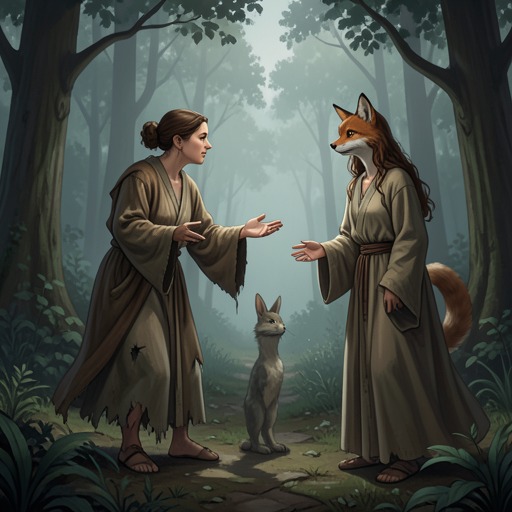
Xianniang knows the horsemen are Rouran warriors. Their arrival follows her decision that she will not imitate Daji’s deception or conceal herself. Recalling that people called her a witch, she resolves to show them what a witch can do, then steps onto the burning sands to join the warriors. The narrative confirms her choice to go with them; it does not describe their response or what role she takes among them.
Contrasting Associations
The two references place Rouran on opposite sides of different personal histories. In Ba’s recollection, they are invaders against whom the new emperor calls for warriors, and fighting them leaves Ba with a lasting injury. In Xianniang’s final scene, Rouran are the people she approaches by choice. The text does not explain whether this is the same conflict or historical moment as Ba’s campaign, so the connection is one of contrast rather than a stated continuity.
For Mulan, the Rouran belong to the family memory that makes her father’s sacrifices an ideal she longs to match. For Xianniang, their arrival marks a possible direction after Daji’s death: she goes toward the warriors without pretending to be someone else. The group thus links inherited martial honor to a separate act of self-determination, while remaining deliberately spare as a political or military organization.