In the mythic age
The Full-Moon Decree
The [Jade Emperor](entity:character-recall-character-jade-emperor-0e57a7f5ce8e) decrees that the full moon of the seventh month will be sacred. On that night, beings from Heaven and the spirit world may roam Earth, and every mortal creature must offer food to anyone who is hungry.
The decree makes hospitality a matter of honor, binding animals as well as people. Its test will reveal which creature is willing to give most freely.
On the first sacred full-moon night
The Rabbit’s Offering
The Rabbit worries that grass will be a poor meal for a hungry visitor, so he works to gather food from other animals. His collection becomes a generous feast, far richer than any he could have prepared alone.
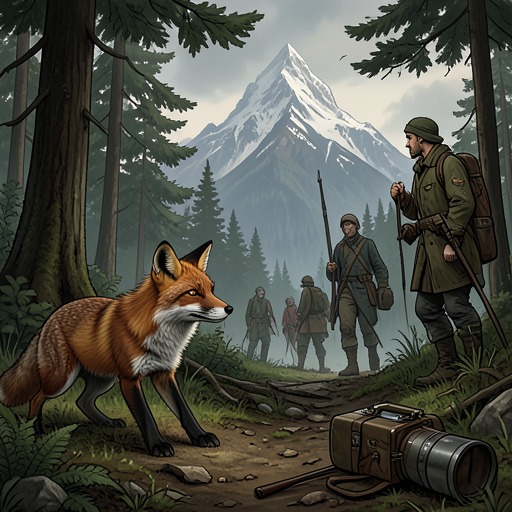
The White Fox refuses to help and mocks his efforts. Her contempt foreshadows the self-interest that will place her at odds with the Rabbit for centuries.
That same full-moon night
The Rabbit’s Sacrifice
A beggar rejects the animals’ raw offerings. When the Rabbit discovers that the White Fox has stolen his feast and replaced it with grass, he apologizes for having nothing suitable and offers himself as food instead.
He leaps into the fire. The beggar reveals himself as the [Jade Emperor](entity:character-recall-character-jade-emperor-0e57a7f5ce8e), restores the Rabbit to life, and makes him immortal. The White Fox watches with jealousy and vows to gain comparable power.
Centuries before Mulan’s journey
A Forbidden Marriage
[Lu Ting-Pin](entity:character-recall-character-lu-ting-pin-83e7f8977545) falls in love with [Yellow Peony](entity:character-recall-character-yellow-peony-41a18d0e9a15), a mortal woman, and secretly marries her. To hide their home from the other [Eight Immortals](entity:character-recall-character-eight-immortals-a3423740bf9e), he surrounds it with a lake, keeping Yellow Peony apart from the world.
The Immortals discover the lake and expose the marriage. They strip Lu Ting-Pin of much of his power, separate him from Yellow Peony, and impose a long penance for his selfish interference in her life.
After Lu Ting-Pin and Yellow Peony’s separation
The Unwanted Daughter
[Yellow Peony](entity:character-recall-character-yellow-peony-41a18d0e9a15) gives birth to [Lu Ting-Pin](entity:character-recall-character-lu-ting-pin-83e7f8977545)’s daughter, but the child becomes a reminder of the shame and betrayal surrounding the secret marriage. Yellow Peony’s resentment falls on the girl, who grows up known as the Unwanted Girl.
Lu Ting-Pin hears of his daughter’s suffering but cannot intervene without violating his punishment. His guilt over her childhood will shape his later efforts to help her—and his grief when those efforts fail.
During the Reign of Emperor Zhou
Daji’s Imperial Reign
The White Fox takes the form of [Daji](entity:character-recall-character-daji-3938d5fac177) and captivates [Emperor Zhou](entity:character-recall-character-emperor-zhou-c8a869429f8a). He indulges her extravagant demands, forcing villages into labor and draining the kingdom’s wealth to satisfy her whims.
Her cruelty extends beyond luxury: she presses the emperor into torture and bloodshed for her amusement. When she demands to watch another battle, people revolt, Zhou is killed, and Daji escapes by leaving a bamboo stalk in place of her body.
Centuries before Mulan’s journey
The Scholar’s Oracle Bone
The White Fox finds one of the [Jade Rabbit](entity:character-recall-character-jade-rabbit-fcb0c61a33ba)’s discarded bones, an oracle bone holding stories from the past and future. Disguised as a noblewoman, she tries to hire a scholar to translate it, but he refuses because he longs to return to his wife.
[Daji](entity:character-recall-character-daji-3938d5fac177) lures him into her power, keeps him working for years, and feeds him poisoned sweets. When he recognizes the danger and destroys the bone, she turns him to stone, leaving him stranded far from home.
After the Scholar disappears
The Waiting Wife
A [Butterfly Fairy](entity:character-recall-character-butterfly-fairy-38394ef46723) gives up her favored place among the [Queen Mother of the West](entity:character-recall-character-queen-mother-of-the-20fc78c051ba)’s attendants to marry a mortal scholar. Though they live simply, she is content until a warning says his spirit will depart unless she is beside him before the magnolia blooms.
When her husband fails to return, she waits by the river through the seasons. After the magnolia blooms, she vanishes and a strange stone remains in her place, as if grief has frozen her outside ordinary life.
Many centuries before Mulan’s journey
The Old Dragon’s Departure
On [Green Island](entity:location-recall-location-green-island-a44c2987422c), an immortal healer known as the [Old Dragon](entity:character-recall-character-old-dragon-e76b7ab7657f) serves the islanders and earns their devotion. When he says he must leave, the villagers try to hold him back by pulling at his beard.
The hairs fall with tiny drops of blood and take root across the island, becoming [Dragon Beard Grass](entity:object-recall-object-dragon-beard-grass-324d0dd126de). The plant’s abundance reflects the island’s peaceful heart and later makes it essential to the cure Mulan must find.
Long before Mulan’s journey
A Brother’s Illness
The Unwanted Girl’s youngest brother, Bouyue, falls gravely ill. The [Jade Rabbit](entity:character-recall-character-jade-rabbit-fcb0c61a33ba) arrives as a healer, but the medicine he carries cannot save the child; a more complicated remedy requires a journey to the [Queen Mother of the West](entity:character-recall-character-queen-mother-of-the-20fc78c051ba)’s garden.
The girl begs to go with the Rabbit. He sees her determination and longing to belong, and agrees to take her, hoping the journey might help both her brother and her.
During the Unwanted Girl’s journey with the Jade Rabbit
The Peach’s Price
At the [Garden of Splendors](entity:location-recall-location-garden-of-splendors-2328b29fe7d4), the [Jade Rabbit](entity:character-recall-character-jade-rabbit-fcb0c61a33ba) obtains permission to pick a healing herb but warns the Unwanted Girl not to touch the [Fruits of Longevity](entity:object-recall-object-fruits-of-longevity-9c5f295db54b). Left briefly alone, she eats a peach, hoping its power can save Bouyue.
The garden’s force throws her and the Rabbit out before they can complete the remedy. Bouyue dies, and the White Fox claims the girl as her servant; she becomes the Red Fox, bound to [Daji](entity:character-recall-character-daji-3938d5fac177)’s will.
Years before the story’s present
Mulan’s Childhood Gift
As a child, Mulan chases a runaway chicken across the village, leaving a trail of disorder and breaking a shrine statue before narrowly escaping a fall from a roof. The villagers disapprove, and Mulan expects another reprimand from her father.
An unfamiliar old woman instead gives her an embroidered cloth rabbit. Mulan later gives the toy to [Xiu](entity:character-recall-character-xiu-abf2aa90a353), whose attachment to it will eventually connect the sisters’ peril to the [Jade Rabbit](entity:character-recall-character-jade-rabbit-fcb0c61a33ba)’s long-hidden history.
Years before Xiu’s poisoning
The Hua Family Prophecy
While translating the oracle bone, the scholar uncovers a prophecy: a bud in the Family of Flower will begin to bloom in the tenth moon of the [Year of the Rabbit](entity:time-recall-time-year-of-the-rabbit-55921e92a80e) and shield the Son of Heaven. The White Fox realizes the prediction may threaten her plans.
She interprets the prophecy as pointing to a Hua daughter who will one day save the Emperor. The prophecy gives her a reason to pursue [Xiu](entity:character-recall-character-xiu-abf2aa90a353) and try to prevent the foretold future.
At the opening of the story
The Nine-Legged Spider
The White Fox and her servant, the Red Fox, approach two sisters in spider forms. [Daji](entity:character-recall-character-daji-3938d5fac177) wants the girl who might fulfill the prophecy, not the sister she dismisses as clumsy and unsuitable.
The White Fox bites [Xiu](entity:character-recall-character-xiu-abf2aa90a353) with a nine-legged spider’s fangs. Xiu cries out and identifies the creature, while Mulan rushes in and finds her sister suddenly stricken.
Immediately after Xiu is bitten
Mulan Rides for a Healer
Old Auntie Ho tells Mulan that [Xiu](entity:character-recall-character-xiu-abf2aa90a353) needs help beyond her own skill and sends her to fetch a visiting healer from the Lu family village. Mulan races across the fields on [Black Wind](entity:character-recall-character-black-wind-0b4b8f2ad7b9), taking a shortcut home because she cannot bear to lose time.
Her fear for Xiu crowds out her usual shame at being scolded for riding. The journey becomes Mulan’s first urgent act of care, though she still believes the bite may be an ordinary spider’s.
That evening
The Healer’s Arrival
Mulan reaches the healer, a silver-bearded man in a brilliant lord’s robe, and brings him back to the village. The villagers wait anxiously as she rides through the tulou, but Big Wan’s solemn face tells her that [Xiu](entity:character-recall-character-xiu-abf2aa90a353) has worsened.
Inside, the healer examines the wound and asks about spiders. When Mulan says Xiu described a nine-legged creature, his alarm confirms that this is no ordinary bite.
That evening, at Xiu’s bedside
The Poisoned Wound
The healer identifies the poison as deadly and prepares a packet of herbs, explaining in low tones that it is reaching [Xiu](entity:character-recall-character-xiu-abf2aa90a353)’s vital organs and destroying her chi. Mulan hears enough to understand that her sister may die.
He sends Mulan to make a decoction, separating her from the private conversation. The herbs release a cloud of mist that swallows the kitchen and changes the world around her.
Moments after the healer’s herbs billow
The Village Falls Still
When the mist clears, Mulan discovers that her parents, Auntie Ho, and the entire village are frozen mid-motion. The healer alone moves through the silver-lit stillness and leaves the tulou.
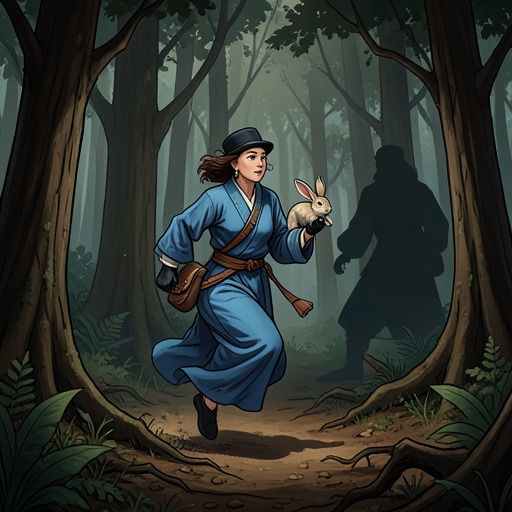
Mulan follows him beyond the village boundary, where the wind and birds continue as usual. She watches the tall healer shrink and change until he becomes a silver rabbit carrying a medicine bag.
That night, outside the village
The Foxes Attack
Two foxes ambush the Rabbit as he flees toward the forest. The White Fox attacks him, and Mulan throws stones to drive her away; the red fox watches before retreating into the dark.
The Rabbit is badly wounded and asks Mulan to bind his leg with a blue bandage from his bag. The cloth disappears into the wound, healing it enough for him to speak with her.
That night, after the attack
The Jade Rabbit’s Story
Mulan recognizes the Rabbit as the [Moon Lady](entity:character-recall-character-moon-lady-f8c920b9c3a6)’s companion. He tells her how the [Jade Emperor](entity:character-recall-character-jade-emperor-0e57a7f5ce8e) tested the animals’ generosity and how he leapt into the fire rather than leave a hungry visitor unfed.
The Rabbit’s tale explains his immortality and the White Fox’s jealousy. It also establishes the history behind the old rivalry that has now brought Mulan into the conflict.
That night, after the Rabbit’s revelation
A Race Against the New Moon
The Rabbit explains that [Xiu](entity:character-recall-character-xiu-abf2aa90a353) is dying of hupo poison. Her cure requires [Dragon Beard Grass](entity:object-recall-object-dragon-beard-grass-324d0dd126de) and a freshly picked blossom of the [Essence of Heavenly Majesty](entity:object-recall-object-essence-of-heavenly-ma-45532901434a) before the poison reaches her vitals.
The grass can be found on [Green Island](entity:location-recall-location-green-island-a44c2987422c), while the flower grows in the [Queen Mother of the West](entity:character-recall-character-queen-mother-of-the-20fc78c051ba)’s garden. The Rabbit cannot travel there under his own power after the fox’s attack, so Mulan insists on helping him reach the ingredients.
That night, while Mulan prepares to leave
The White Fox’s Old Grievance
The White Fox remembers an earlier journey with the Rabbit. She had once asked to accompany him, believing he might help her find a place where she could be wanted; instead, she felt his pity and grew to hate it.
Now she recognizes the Rabbit and returns to [Daji](entity:character-recall-character-daji-3938d5fac177), who orders her to keep the journey from succeeding. The White Fox’s grievance is personal as well as strategic: she wants to thwart the prophecy and control the people who have repeatedly challenged her.
Before dawn after Xiu is bitten
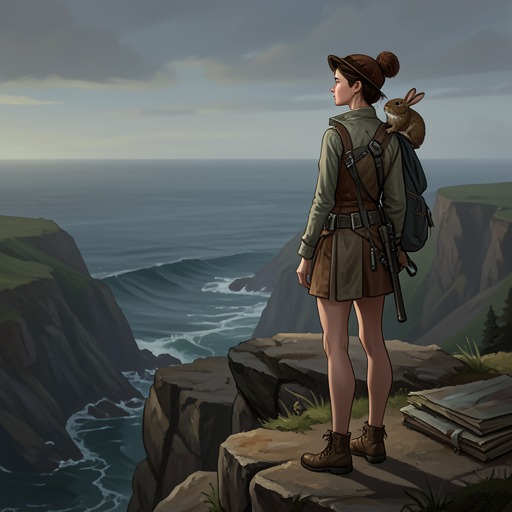
Mulan Leaves Her Family
Mulan quietly packs food and clothes while her parents and [Xiu](entity:character-recall-character-xiu-abf2aa90a353) remain frozen in the village. She remembers [Ba](entity:character-recall-character-ba-a65efa061955)’s belief that sacrifice can bring honor and [Ma](entity:character-recall-character-ma-9cb60cf0594d)’s lesson that a daughter should serve her family through care rather than boldness.
Unable to wait for approval, Mulan takes [Xiu’s cloth rabbit](entity:object-recall-object-xiu-s-cloth-rabbit-0a193c1b86f4) and bows farewell to her sleeping family. She chooses the dangerous journey because saving her sister is the truest form of care she can offer.
Before dawn, at the village gates
The Rabbit Joins Mulan
Mulan meets the Rabbit outside the tulou and summons [Black Wind](entity:character-recall-character-black-wind-0b4b8f2ad7b9). As she prepares a blanket sling for him, he asks about [Xiu](entity:character-recall-character-xiu-abf2aa90a353)’s toy and listens to the story of how it came into the family.
The Rabbit’s interest in the old embroidered toy hints at a connection Mulan does not yet understand. Together, Mulan, the Rabbit, and Black Wind leave the frozen village for the [City of Rushing Water](entity:location-recall-location-city-of-rushing-wate-5ee9f0dd44d4), where the Rabbit hopes to find an old friend.
During the first days of the journey
Daji Offers Her Help
While Mulan gathers firewood, a beautiful woman appears in the forest and introduces herself as [Daji](entity:character-recall-character-daji-3938d5fac177). She praises Mulan, gives her wood and a flask of honey, and claims that the Rabbit does not understand or care for mortals as she does.
Mulan feels strangely silenced and captivated, yet the woman’s attention unsettles her. Hidden nearby, [Xianniang](entity:character-recall-character-xianniang-ee88926bd53d) remembers being similarly drawn in by Daji’s promise of care and realizes how the poisoned honey once helped bind her.
The morning after Daji’s first visit
The White Fox Steals the Supplies
Mulan wakes to find the bags, supplies, and the Rabbit’s medicines gone. She admits that she had untied the red thread fastening their belongings together while searching for [Xiu](entity:character-recall-character-xiu-abf2aa90a353)’s toy the night before.
The Rabbit understands that the foxes exploited her mistake, but he does not scold her. The stolen bag contained the [Dragon Beard Grass](entity:object-recall-object-dragon-beard-grass-324d0dd126de), forcing the travelers to detour to [Green Island](entity:location-recall-location-green-island-a44c2987422c) and costing them precious time.
During the journey, as the Rabbit explains the White Fox’s pursuit
The Scholar’s Stone Fate
The Rabbit recounts how the White Fox stole his old oracle bone and trapped a scholar with honeyed food and an illusion of his wife. The scholar worked for years before discovering that the woman was a fox spirit and destroying the bone.
The White Fox turned him to stone. Mulan realizes that the same fox has been tormenting [Xiu](entity:character-recall-character-xiu-abf2aa90a353) for years, disguising herself as the nine-legged spider that bit her.
During the same journey
The Hua Sisters’ Prophecy
Mulan connects the prophecy’s Family of Flower to the Hua family and understands that the tenth moon of the [Year of the Rabbit](entity:time-recall-time-year-of-the-rabbit-55921e92a80e) is near. She believes [Xiu](entity:character-recall-character-xiu-abf2aa90a353) is the bud destined to mature and save the Emperor.
The Rabbit agrees that the White Fox has interpreted the prophecy this way and wants to kill Xiu before it can come true. Mulan’s guilt about teasing her sister gives way to resolve: she will protect Xiu’s chance to fulfill that future.
Several days into the journey
The Storm Pursuit
[Daji](entity:character-recall-character-daji-3938d5fac177) destroys the travelers’ clothing and herbs, then uses a flask of water to conjure a storm. Mulan and the Rabbit ride [Black Wind](entity:character-recall-character-black-wind-0b4b8f2ad7b9) through the approaching darkness as wind and rain batter them like thrown stones.
They take refuge in an abandoned house. There Mulan finds rice, preserved eggs, and a note saying the home is shelter for travelers, left by someone who hoped for mercy on a journey of their own.
During the storm, at the abandoned house
The Butterfly Fairy’s House
The Rabbit recognizes the shelter as the home of the [Butterfly Fairy](entity:character-recall-character-butterfly-fairy-38394ef46723), who gave up immortality to marry a mortal. He tells Mulan how she left the [Jade Palace](entity:location-recall-location-jade-palace-5fd48f3917f9) and built a poor but loving life with her husband.
When her husband traveled to take the Emperor’s examinations, she waited for him through the winter. The magnolia bloomed before he returned, and she became a stone, leaving her home open to future travelers.
The morning after the storm
The Waiting Wife’s Loss
Mulan wonders who could have arranged the unlikely shelter and the dates she finds nearby. [Daji](entity:character-recall-character-daji-3938d5fac177) appears again, praising Mulan’s potential and telling her that a peach in the Queen Mother’s garden will save [Xiu](entity:character-recall-character-xiu-abf2aa90a353) and make Mulan the daughter her family wants.
Mulan is tempted by the promise, but Daji’s words exploit her deepest insecurities. [Xianniang](entity:character-recall-character-xianniang-ee88926bd53d), watching, remembers that the same peach once drew her toward a choice that helped destroy her own life.
After the travelers leave the abandoned house
The Bee Swarm
A vast cloud of bees pursues Mulan, the Rabbit, and [Black Wind](entity:character-recall-character-black-wind-0b4b8f2ad7b9) across open country. With nowhere to hide, Mulan follows the Rabbit’s command to pull hair from his poisoned leg and throw it at the swarm.
The hairs become metal needles in her hand, piercing the bees and transforming them into butterflies. Mulan’s first deliberate use of extraordinary strength saves the party and reveals that her rough power can become a gift when she learns to direct it.
Immediately after the bee attack
The Rabbit’s Poison
Mulan notices that the Rabbit’s wounds resemble [Xiu](entity:character-recall-character-xiu-abf2aa90a353)’s and presses him to admit the truth. He confirms that the White Fox poisoned him with the same hupo poison and that he, too, may die by the new moon.
Mulan now understands that the quest must save both her sister and the Rabbit. The revelation makes their dwindling time more urgent, even as his weakening powers leave them vulnerable to further attacks.
After the bee attack
The Canyon Crossing
The road to the [City of Rushing Water](entity:location-recall-location-city-of-rushing-wate-5ee9f0dd44d4) ends at a vast gorge created by the White Fox’s landscape illusion. The Rabbit and [Black Wind](entity:character-recall-character-black-wind-0b4b8f2ad7b9) jump across, then urge Mulan to trust them and herself.
Mulan runs and launches herself over the chasm, but doubt about [Daji](entity:character-recall-character-daji-3938d5fac177)’s promise and the honey in her sleeve breaks her momentum. She falls into darkness and catches a ledge, surviving alone beneath the cliff.
The morning after the failed jump
Mulan Is Rescued
After a night of despair, Mulan hears the Rabbit calling from above. He stretches his leg down the cliff and hauls her safely back to the road, never treating her failure as a reason to abandon her.
Mulan apologizes for being mortal, but the Rabbit explains that his earlier regret about bringing someone on a journey was not truly about her. He begins telling her about the Unwanted Girl, whose life he once tried to change.
In the Rabbit’s earlier journey
The Unwanted Girl’s Journey
The Rabbit recalls a girl rejected by her mother and feared by neighbors for strange abilities. When illness strikes her family, he cures everyone except her youngest brother, whose condition requires a difficult journey for rare ingredients.
The girl insists on accompanying the Rabbit. He sees her iron spirit and her longing to belong, and hopes that traveling with him may help her as well as her brother.
At the end of the earlier journey
The Unwanted Girl Becomes the Red Fox
The Rabbit and the Unwanted Girl reach the Queen Mother’s garden, where he seeks permission to pick the herb needed for her brother. While he gathers it, she eats a Fruit of Longevity despite the warning not to touch the fruit.
The garden expels them, the remedy is lost, and the brother’s chance is gone. Waiting outside, the White Fox claims the girl, who transforms into the Red Fox and becomes her servant.
Near the end of the first journey’s overland leg
The City’s Bride Deception
At the [City of Rushing Water](entity:location-recall-location-city-of-rushing-wate-5ee9f0dd44d4), a crowd seizes Mulan and takes her to the river. The magistrate and a hag claim that the River King demands a bride and that Mulan’s arrival on a black horse proves she is the chosen one.
The supposed ceremony is a scheme built on the city’s fear of flooding. Mulan protests that the hag is trying to get rid of her, but the mob’s desperation leaves her in immediate danger.
At the river landing
Lu Ting-Pin Arrives
[Lu Ting-Pin](entity:character-recall-character-lu-ting-pin-83e7f8977545) appears with [Black Wind](entity:character-recall-character-black-wind-0b4b8f2ad7b9) and challenges the magistrate’s story. He asks why the supposed emissary will not go to the river herself and exposes how the magistrate has profited from frightened families.
The crowd turns against the hag, who jumps into the water and escapes in the form of a fish. Lu Ting-Pin reunites Mulan with Black Wind and becomes an ally in the quest.
After the mob disperses
A Boat from a Sword
[Lu Ting-Pin](entity:character-recall-character-lu-ting-pin-83e7f8977545) recognizes that the Rabbit is gravely poisoned and agrees to help them reach [Green Island](entity:location-recall-location-green-island-a44c2987422c) and the Queen Mother’s garden. He sends [Black Wind](entity:character-recall-character-black-wind-0b4b8f2ad7b9) home with a magical red thread, then asks Mulan to choose a rock for ballast.
Mulan selects the odd-shaped boulder that resembles a hunched figure. Lu Ting-Pin throws his wooden sword into the river, where it becomes a boat, and the three travelers set out across the water.
During the sea voyage
Lu Ting-Pin’s Confession
[Lu Ting-Pin](entity:character-recall-character-lu-ting-pin-83e7f8977545) tells Mulan that he secretly married [Yellow Peony](entity:character-recall-character-yellow-peony-41a18d0e9a15) and tried to keep her isolated in a home surrounded by a lake. The [Eight Immortals](entity:character-recall-character-eight-immortals-a3423740bf9e) discovered his deception, took his flying whisk, and made his sword peach wood.
His penance requires the sword to destroy ten thousand demons. He hopes the White Fox will be the final one, freeing his daughter from her service, though he knows his past actions helped cause her rejection and suffering.
Several days into the voyage
Daji’s Fog
The White Fox surrounds the boat with a suffocating fog that stops the wind and traps the travelers in a gray stillness. [Lu Ting-Pin](entity:character-recall-character-lu-ting-pin-83e7f8977545) blows a gale through the mist, clearing it and driving the boat onward.
The fog has cost them four days. With only three days remaining before the new moon and a usual voyage of seven or eight days still ahead, Mulan understands that the timetable may be impossible to meet.
After the fog clears
Green Island’s Decline
[Green Island](entity:location-recall-location-green-island-a44c2987422c) appears brown and barren rather than covered in the [Dragon Beard Grass](entity:object-recall-object-dragon-beard-grass-324d0dd126de) the Rabbit remembers. The travelers search the hills and find no trace of the plant, learning that a blight changed the island’s soil about twenty years earlier.
The Rabbit says the land’s heart must be in turmoil. Mulan notices that the blight began around the time the Stone Statue appeared, and suspects that the statue and the island’s lost fertility are connected.
During the search on Green Island
The Island’s Old Legend
The Rabbit explains that [Dragon Beard Grass](entity:object-recall-object-dragon-beard-grass-324d0dd126de) grew from the [Old Dragon](entity:character-recall-character-old-dragon-e76b7ab7657f)’s beard after the islanders pulled at it as he departed. The grass once spread across the island, nourished by its peaceful heart.
Mulan realizes that the island’s barren state is not simply a shortage of plants. Something has disrupted the land itself, and the nearby cave and weathered statue may hold the answer.
During the Green Island search
A Baker’s Inherited Fortune
[Lu Ting-Pin](entity:character-recall-character-lu-ting-pin-83e7f8977545) takes Mulan to a bakery run by a family he once helped. Li Jing recounts how her grandfather shared food with a beggar, who rewarded his kindness with a magical powder that made his rice cakes irresistible.
The beggar was Lu Ting-Pin in disguise. His generosity transformed the family’s fortunes, and Mulan finds comfort in the ordinary warmth of the bakery while the quest’s urgency presses on them.
That night on Green Island
The Lovers’ Stone
Mulan learns that a strange statue appeared about twenty years earlier, near the time the island’s blight began. She leads [Lu Ting-Pin](entity:character-recall-character-lu-ting-pin-83e7f8977545) to the figure and recognizes a connection to the odd rock they carried from the [City of Rushing Water](entity:location-recall-location-city-of-rushing-wate-5ee9f0dd44d4).
The two stone forms are placed together, touching like lovers. By morning they have crumbled into dust, and green shoots rise from the ground where they stood, with the red roots of [Dragon Beard Grass](entity:object-recall-object-dragon-beard-grass-324d0dd126de) among them.
The morning after the stones are joined
Green Island Turns Green
Mulan gathers the [Dragon Beard Grass](entity:object-recall-object-dragon-beard-grass-324d0dd126de) and runs to show it to [Lu Ting-Pin](entity:character-recall-character-lu-ting-pin-83e7f8977545) and the Rabbit. The lovers’ release has restored the island’s soil, and the land begins to green again as the dust spreads away.
The discovery secures one half of the cure and confirms Mulan’s intuition. The party leaves [Green Island](entity:location-recall-location-green-island-a44c2987422c) with the grass, but the new moon is now close and the [Essence of Heavenly Majesty](entity:object-recall-object-essence-of-heavenly-ma-45532901434a) remains to be found.
The day before the new moon
The Sea Monster Attacks
As the boat nears [Kunlun Mountain](entity:location-recall-location-kunlun-mountain-ff38f5c0f39c), the sea turns black and a gigantic many-limbed creature rises from the water. [Lu Ting-Pin](entity:character-recall-character-lu-ting-pin-83e7f8977545) fights it without his sword, which has become the boat, while Mulan struggles to keep the vessel from being overturned.
Mulan drives the boat with the enchanted yuloh and rams its bow into the monster. Lu Ting-Pin repeatedly forces the boat deeper until the beast dies, but the fight leaves the boat damaged and the travelers exhausted.
The day before the new moon, at Kunlun Mountain
Kunlun’s Sinking Waters
The travelers reach Kunlun’s waters, where ordinary vessels cannot float. Their boat begins to sink, and [Lu Ting-Pin](entity:character-recall-character-lu-ting-pin-83e7f8977545) admits that he cannot carry mortals through the air after losing much of his power.
Mulan tears the sail from the mast, knots its ropes into a harness, and orders Lu Ting-Pin to blow wind into it. The sail lifts her and the Rabbit above the sinking water; Lu Ting-Pin flies after them, and all three reach shore safely.
The day before the new moon
The Queen Mother’s Audience
Guards escort Mulan and [Lu Ting-Pin](entity:character-recall-character-lu-ting-pin-83e7f8977545) to the [Queen Mother of the West](entity:character-recall-character-queen-mother-of-the-20fc78c051ba). Mulan explains that the Rabbit and her sister are dying of hupo poison and asks for the [Essence of Heavenly Majesty](entity:object-recall-object-essence-of-heavenly-ma-45532901434a).
The queen reveals that she has quietly helped their journey, guiding Mulan toward the [Butterfly Fairy’s house](entity:location-recall-location-butterfly-fairy-s-ho-c150346426f0) and the reunited stone lovers. In return, she permits Mulan to enter the garden and pick one item, but insists that only Mulan may choose it.
Late afternoon, on the day before the new moon
The Peach’s Temptation
Mulan and [Lu Ting-Pin](entity:character-recall-character-lu-ting-pin-83e7f8977545) search the enormous garden for a purple flower, the best clue they can derive from the name [Essence of Heavenly Majesty](entity:object-recall-object-essence-of-heavenly-ma-45532901434a). Mulan discovers the tree bearing the Queen Mother’s Peaches of Immortality and remembers [Daji](entity:character-recall-character-daji-3938d5fac177)’s insistence that she take one.
Though a peach could keep [Xiu](entity:character-recall-character-xiu-abf2aa90a353) alive, Mulan understands that it may also give Daji control over her sister’s prolonged life. She turns away from the tempting fruit, choosing not to fulfill Daji’s plan even though the Rabbit remains silent and the cure still seems out of reach.
At sunset, on the day before the new moon
The Toy Reveals the Flower
The weakened Rabbit pushes [Xiu’s cloth rabbit](entity:object-recall-object-xiu-s-cloth-rabbit-0a193c1b86f4) out of Mulan’s carrier. Studying its worn embroidery, Mulan recognizes the flower pattern from the medicinal pouch the Rabbit once gave her and realizes that the toy has preserved a clue.
Its flower has nine pointed petals, matching one of the purple blooms [Lu Ting-Pin](entity:character-recall-character-lu-ting-pin-83e7f8977545) has found. Mulan identifies the plant as the [Essence of Heavenly Majesty](entity:object-recall-object-essence-of-heavenly-ma-45532901434a) and races with him to retrieve it before night falls.
At sunset, in the Queen Mother’s garden
Daji’s Final Ambush
As Mulan reaches the flowers, bees burst from the blossoms and transform into the White Fox and the Red Fox. [Lu Ting-Pin](entity:character-recall-character-lu-ting-pin-83e7f8977545) pins the Red Fox with his gourd and confronts [Daji](entity:character-recall-character-daji-3938d5fac177) with his peach-wood sword.
Daji turns her daggers into lotus blossoms with each deflection. When her attack fails, she adopts [Yellow Peony](entity:character-recall-character-yellow-peony-41a18d0e9a15)’s face and uses her accusations about Lu Ting-Pin’s past to break his resolve, making him drop the sword.
At the final sunset of the new-moon deadline
Mulan Kills the White Fox
[Daji](entity:character-recall-character-daji-3938d5fac177)’s deception leaves [Lu Ting-Pin](entity:character-recall-character-lu-ting-pin-83e7f8977545) on his knees while the White Fox prepares to kill him. Mulan grabs the fallen peach-wood sword and faces the fox, resisting its threats and attacking with all the force she can summon.
Celestial blue flames consume the White Fox, whose body dissolves into poisoned black ooze and then into swarms of vermin. Mulan’s action fulfills the sword’s final requirement and ends the White Fox’s power over the journey.
Moments after the White Fox’s death
Mulan Frees the Red Fox
Mulan sees the Red Fox trapped beneath [Lu Ting-Pin](entity:character-recall-character-lu-ting-pin-83e7f8977545)’s gourd and recognizes her pain beneath her anger. Rather than kill her, Mulan takes the [Essence of Heavenly Majesty](entity:object-recall-object-essence-of-heavenly-ma-45532901434a) and tells her that the prophecy is now set and that [Xiu](entity:character-recall-character-xiu-abf2aa90a353) must be left in peace.
She removes the gourd and lets the Red Fox go. The two meet each other’s eyes in understanding, and the Red Fox escapes into the night, no longer bound to [Daji](entity:character-recall-character-daji-3938d5fac177)’s commands.
Immediately after the garden battle
The Cure for the Rabbit
Mulan and [Lu Ting-Pin](entity:character-recall-character-lu-ting-pin-83e7f8977545) prepare a decoction from the [Dragon Beard Grass](entity:object-recall-object-dragon-beard-grass-324d0dd126de) and the freshly picked [Essence of Heavenly Majesty](entity:object-recall-object-essence-of-heavenly-ma-45532901434a). The first mouthful produces no response, and Mulan fears that they have arrived too late.
The Rabbit finally stirs and asks for more. Several sips restore his strength, his silver fur, and his ability to move, confirming that the cure has worked for him as well as it can work for [Xiu](entity:character-recall-character-xiu-abf2aa90a353).
That evening, after the cure
Lu Ting-Pin’s Penance Ends
With the White Fox defeated by Mulan, [Lu Ting-Pin](entity:character-recall-character-lu-ting-pin-83e7f8977545)’s sword has destroyed its required ten thousandth demon. The sword returns to metal, and Lu Ting-Pin regains his former vitality.
He offers Mulan a cloud to carry her and the Rabbit home. The Rabbit complains that Lu Ting-Pin could have made a cloud from a lotus, but the friends part warmly, with Lu Ting-Pin acknowledging that Mulan has already discovered her own worth.
That night, after leaving Kunlun Mountain
Mulan Returns to the Frozen Village
Mulan’s journey on the cloud ends in her own kitchen, where the village is still frozen in the moment she left. The Rabbit’s decoction remains in her hands, but the adventure feels almost impossible to have been real.
The healer appears, takes the bowl, and confirms that the medicine is ready. He returns [Xiu’s cloth rabbit](entity:object-recall-object-xiu-s-cloth-rabbit-0a193c1b86f4) to its place above the bed, quietly reconnecting the miraculous quest to the ordinary room where it began.
At dusk, after Mulan’s return
Xiu Wakes
The healer gives [Xiu](entity:character-recall-character-xiu-abf2aa90a353) the decoction while Mulan and her parents wait. At first there is no response, and Mulan’s hope begins to fail as darkness enters the sky.
Then Xiu’s breathing steadies, warmth returns to her face, and she opens her eyes. Her family rushes to embrace her, and Mulan promises that the spider will never trouble her again.
Later that night
The Healer’s Farewell
As celebration fills the tulou, the healer slips away unnoticed by everyone except Mulan. [Black Wind](entity:character-recall-character-black-wind-0b4b8f2ad7b9) returns, bearing [Lu Ting-Pin](entity:character-recall-character-lu-ting-pin-83e7f8977545)’s red thread, confirming that the journey was real and that the Rabbit has restored him to his healer’s disguise.
The Rabbit warns that mortals’ memories of Immortals fade, though Mulan may remember the adventure as a strange dream. He tells her plainly that she is a mighty warrior; Mulan watches his rabbit shape disappear into the night before returning to her family.
After the White Fox’s death
Xianniang Chooses a New Life
Freed from [Daji](entity:character-recall-character-daji-3938d5fac177), [Xianniang](entity:character-recall-character-xianniang-ee88926bd53d) wonders why Mulan spared her. She understands that Mulan saw more than a dangerous servant: she recognized someone wounded by rejection and manipulation, but met her with understanding rather than pity.
Xianniang decides she will neither imitate Daji’s cruelty nor hide behind a borrowed identity. When [Rouran](entity:organization-recall-organization-rouran-63a30c7bad20) warriors appear across the desert, she steps toward them, ready to use her power openly and on her own terms.