British armed forces' inadequate readiness in 1938
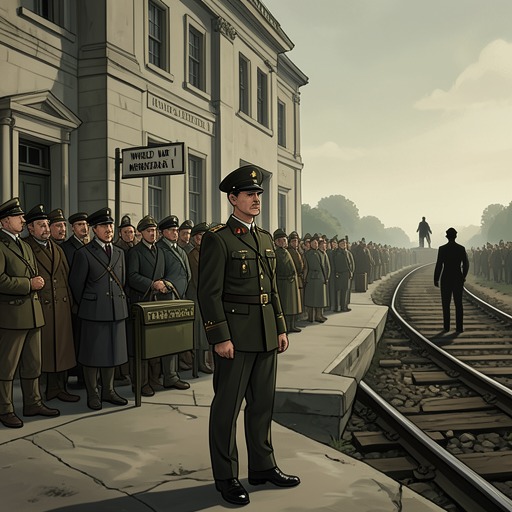
MunichThe British armed forces' inadequate readiness in 1938 is revealed at the moment Neville Chamberlain must weigh military commitments against the threat of an imminent German invasion of Czechoslovakia. In a Cabinet-room briefing, the Chiefs of Staff describe forces short of modern equipment, personnel readiness, and essential defensive resources. Their disclosures make the crisis more than a test of diplomatic resolve: Britain may have to signal that it will fight before it has finished preparing to do so.
The Crisis and the Military Briefing
The assessment takes place as the planned orderly transfer of the Sudeten territory, subject to a plebiscite, is overtaken by Adolf Hitler’s ultimatum. Chamberlain tells the assembled officers that Hitler has refused to wait even a week and intends to invade on Saturday. Sir Horace Wilson has warned him that Britain would be obliged to support France if France fulfilled its treaty obligations to Czechoslovakia. According to a telegram from the British ambassador in Berlin, Hitler has answered that he is prepared for every eventuality and expects war by the following Monday if France and Britain strike.
The urgency is sharpened by a later report of Hitler’s position: he has set Saturday as the deadline for settling the crisis, claiming that Czechoslovakia threatens European peace and that a quarter of a million refugees have fled the Sudetenland into Germany in recent days. He demands that Britain, France, and Italy guarantee the beginning of the Czech evacuation on that day, or Germany will march in. Sir Horace Wilson’s impression is that Hitler is not bluffing and that the question must be settled that day. This compressed timetable leaves little room for military shortcomings to be corrected before a decision is forced.
The Army and Air Defence
Lord Gort says that Britain has already agreed to send two divisions to France as a demonstration of solidarity. They could reach position within three weeks, but would be ready to fight only eighteen days after that. The French, he explains, intend no more than token raids against Germany before the following summer; he doubts they will even carry those out, expecting them instead to remain behind the Maginot Line. Sir Cyril Newall adds that the French are waiting until British forces arrive in greater strength. The proposed commitment is therefore both delayed in becoming militarily effective and bound to an ally whose immediate action Gort regards as limited.
The air-defence figures make the danger more immediate. Newall reports that twenty-six squadrons are available for home defence on paper, but only six have modern aircraft. One squadron has Spitfires; the other five have Hurricanes. When Chamberlain asks whether they are ready to fight, Newall can say only that some are. The Hurricanes also have a technical fault: their guns freeze above fifteen thousand feet. Chamberlain leans forward in disbelief as Newall explains that a solution is being sought but may take time. The distinction between forces listed on paper and forces usable in combat becomes stark: nominal strength does not guarantee dependable protection.
Gort describes a parallel weakness in ground-based defence. Britain has only about a third of the guns believed necessary to defend London, and most are obsolete weapons left over from the previous war. Searchlights are also scarce, while ranging and communication equipment is absent. The Army, like the Air Force, had expected another year in which to prepare. Chamberlain turns to his papers while Gort is still explaining the deficiencies, and the atmosphere becomes uncomfortable; the facts exceed what administrative composure can readily absorb.
Naval Shortages and the Cost of Mobilisation
The First Sea Lord’s account extends the problem to the Navy. Britain lacks sufficient escort vessels and minesweepers. Capital ships still need fuel and armament, and some crews are on leave. To be operational by 1 October, the Navy would have to announce mobilisation that very day. Chamberlain recognizes that this would mean Britain mobilising before Germany.
The proposal is explicitly for partial mobilisation, not a claim that the fleet is fully ready. Its advocates argue that it could show Hitler that Britain is not bluffing and is prepared to fight if necessary; the demonstration might make him reconsider. Yet the same signal carries the opposite risk. Chamberlain believes Hitler cannot tolerate losing face and worries that mobilisation might push him into war. The decision is therefore shaped by the very weakness it seeks to address: Britain needs a credible signal of resolve, but its incomplete readiness makes both the signal and the consequences of escalation uncertain.
Readiness, Delay, and Deterrence
Chamberlain states that British planning has been based on the assumption that there would be no conflict with Germany before 1939 at the earliest. The deficiencies are not presented as isolated failures arising on the day of the meeting; they are the result of preparation scheduled for a later crisis colliding with one that has arrived early. The Army’s obsolete guns and missing equipment, the Air Force’s limited modern squadrons and faulty Hurricane armament, and the Navy’s shortages all reveal different dimensions of the same gap between expected warning time and actual events.
That gap recurs as the crisis moves through the twenty-four-hour pause in German mobilisation. At seven minutes past two, Sir Nevile Henderson telephones from Berlin with news that Benito Mussolini has sent Adolf Hitler a message promising Italian support if war comes, while asking him to postpone mobilisation for twenty-four hours so the situation can be reconsidered. Hitler has agreed. The pause offers time for diplomacy, but it does not repair Britain’s deficiencies or remove the Saturday deadline reported by Wilson. Readiness remains a strategic vulnerability even while the immediate timetable shifts.
The episode presents military preparedness as part of diplomacy rather than a separate technical matter. Britain’s commitments to France and its warnings to Hitler have meaning only against the forces available to carry them out; yet mobilisation itself could provoke the conflict it is meant to deter. The contrast between Chamberlain’s orderly briefing and the concrete shortages gives the crisis its central tension: Britain must communicate resolve while knowing that its armed forces are not ready for the war its leaders are trying to prevent.