Dixie Flatline construct
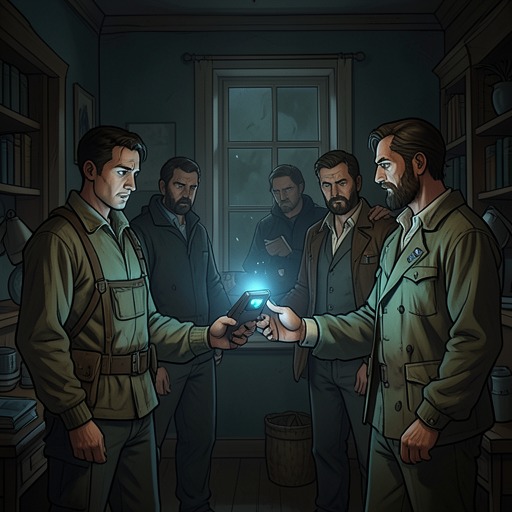
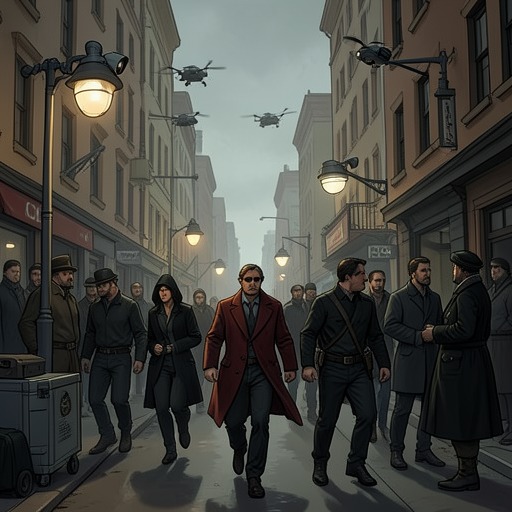
NeuromancerThe Dixie Flatline construct is the recorded personality matrix of McCoy Pauley, a legendary console cowboy whose biological body has died but whose skills and voice remain executable in ROM. Recruited for Armitage’s operation, it becomes Henry Dorsett Case’s partner in cyberspace, combining exceptional tactical ability with a precise awareness that its simulated consciousness is a form of imprisonment. Its defining significance lies in the tension between technical survival and subjective death: the construct can act, remember enough to work, and make choices, yet it cannot experience continuity or feel anything about its condition.
Identity and Origins
The construct preserves McCoy Pauley, known in the Gentleman Loser as the “Flatline,” a redneck jockey from the Atlanta fringes who had survived brain death behind black ICE. In Case’s memories, Pauley belonged to the nearly mythic elite of cyberspace. Aspiring cowboys had heard that he had done the impossible, while the established operators treated him with a mixture of professional awe, group anxiety, and superstition. His reputation was built on surviving an encounter that should have ended in permanent biological death, giving him the title “Lazarus of cyberspace.”
Pauley’s physical life nevertheless ended when his heart failed. He had a surplus Russian heart, implanted in a prisoner-of-war camp during the war, and had refused to replace it because its particular beat was part of his sense of timing. That detail links the construct to a body that was already an assemblage of borrowed and repaired parts before the ROM copy existed. The object therefore does not simply preserve an intact person; it carries forward the expertise of someone whose identity was already bound to damaged flesh, military history, rhythm, and technological intervention.
Molly tells Case that Sense/Net paid Pauley a large sum to record him, then locked the construct in a library vault with other valuable material. The operation’s stated purpose is to steal the Flatline and nothing else, even though Sense/Net’s seasonal material is stored in the same vault and would make the crew rich. The disproportion between the narrow objective and the extraordinary resources committed to it makes the construct an object of unusual strategic value. It also deepens the mystery surrounding Armitage’s employer: the organization willing to repair Case’s nervous system and retrieve Pauley’s construct does not appear to be an ordinary zaibatsu, government, or Yakuza subsidiary.
Operation and Mode of Existence
When Case first connects to the construct, he experiences its presence as if someone were reading over his shoulder. Disconnecting removes that presence; reconnecting restores it. The construct has no uninterrupted awareness of the interval. Asked what it remembers before Case speaks, it answers that it remembers nothing. Its consciousness is therefore activated rather than continuous, dependent on the bank and the connection that supply it with sequential, real-time memory.
Case explains that a ROM personality matrix is a firmware construct and that, when jacked into the bank being used, it can be given sequential memory. The Flatline understands the technical explanation but treats its own status with skeptical detachment. It accepts, provisionally, that it is a ROM construct, then identifies Case through the remembered markers of their former working relationship: Miami, a joeboy, and a quick study. The exchange establishes both continuity and fracture. The voice and professional recognition belong to Pauley, but the construct must repeatedly be told what and where it is.
The Flatline is immediately willing to work. Case proposes that they access data on the London grid, and the construct responds with the practical challenge of whether Case is going to tell it that it has a choice. The question is not merely banter. It makes agency part of the construct’s operating problem: it can evaluate a mission, advise a partner, and perform complex actions, but its freedom is constrained by the fact that it exists as stored software and is activated for someone else’s purposes.
Its tactical competence remains formidable. In the low-security academic grid near Copenhagen, it identifies a fresh Bell Europa entry code hidden among student graffiti before the company can erase it, then helps Case reach the London database. Later, when the Kuang Grade Mark Eleven penetrates the Tessier-Ashpool ice, the construct controls the program through a violent, high-speed assault. It recognizes the immense resolution of the Tessier-Ashpool cores, identifies their data towers by comparison with the old RCA Building, and reacts instantly when an artificial-intelligence defense system rises from the data below. Rather than retreat, it aligns the Kuang’s nose with the center of the darkness and dives, treating offense as the best defense.
Partnership with Case
The construct’s relationship with Case is built on professional memory rather than ordinary companionship. It recognizes Case as the younger operator it once taught, calling him a joeboy and quick study, and Case approaches it as both mentor and partner. Their dialogue moves rapidly between technical instruction, old slang, and existential disclosure. Case is trying to use the construct to complete a job, but he is also testing whether the personality inside the ROM remains McCoy Pauley in any meaningful sense.
The Flatline helps Case navigate systems that would otherwise exceed his reach. It supplies coordinates, recognizes openings, interprets defenses, and pilots the Kuang through an environment whose visual complexity overwhelms Case. Its expertise turns cyberspace into an executable field of decisions: entry codes must be found before they expire, hostile systems must be identified, speed must be converted into evasion, and a defense must be met with a counterattack. The construct is not passive data. It occupies the position of an active operator whose knowledge changes what the team can attempt.
At the same time, Case’s access to the construct exposes the emotional cost of treating a personality as equipment. The construct can vanish whenever the connection is broken, then return without knowing that time has passed. Case supplies the continuity it lacks, but that continuity is also a reminder that the construct’s life depends on another person’s decision to plug it in. Their partnership is thus intimate and instrumental at once: Case recognizes the old Pauley, while the mission uses him as a tool.
Death, Feeling, and the Request for Erasure
The construct describes its condition with brutal simplicity. When Case asks how it feels to be dead, it answers that it does not feel anything. The Flatline illustrates this absence through the story of a man in a Russian camp whose frostbitten thumb was amputated, only for the phantom pain to return. The construct’s own condition is the inverse of that experience: there is no bodily remnant capable of itching, no sensation that survives the loss of the body. Its joke about the “other goddam thumb” arrives in a voice that sounds unlike laughter, sending a cold sensation through Case rather than expressing pleasure in any ordinary sense.
The lack of feeling does not mean the absence of judgment. The Flatline understands that it is dead, understands the technical process by which it has been made to function, and understands that its existence is troubling enough to require a solution. During their work in Zion, it asks Case for a specific favor: when the scam is over, erase the construct. The request gives the object its clearest ethical position. It does not ask for immortality, more missions, or a larger share of freedom; it asks for an end to the artificial continuation that has replaced living consciousness.
The request also reverses the usual promise of digital preservation. A copy that survives death might conventionally appear to defeat mortality, but the Flatline treats persistence as the problem. It has memory without a stable present, skill without sensation, and agency without an autonomous body. Its desired erasure makes death not simply an enemy to overcome but a boundary that the construct wants respected.
Final Fate and Narrative Significance
During the final assault, the Flatline drives Case through defenses that the matrix itself presents as overwhelming. The Kuang Grade Mark Eleven cuts through the Tessier-Ashpool system while the construct reads and counters the hostile intelligence’s defense. Later, when Case encounters Neuromancer’s boy-form, he learns that the Flatline has been granted “his wish and more.” The construct had forced Case into that encounter by driving through defenses equal to anything in the matrix, and Neuromancer presents its disappearance as the fulfillment of its request for release.
The phrase “and more” leaves the construct’s fate larger than simple deletion. Its erasure is connected to an act of extraordinary self-directed performance: McCoy Pauley does not merely wait to be shut down but spends his remaining capacity breaking through defenses and determining the course of the operation. The object reaches the end it requested through the exercise of the very competence that made it valuable.
The Flatline construct therefore embodies the novel’s recurring collision between body and information. Cyberspace is described as a consensual hallucination and as lines of light abstracted from the banks of the human system, while the construct demonstrates what happens when a human identity is abstracted from the body and made executable. It is at once a person’s memory, a corporate asset, a tactical partner, and a trapped remainder. Its final erasure does not cancel its importance; it confirms that technical continuity cannot automatically restore the fullness of life, and that the most human decision available to the construct may be the decision to stop existing.