Navon's Taboo Against Women Serving in the Military
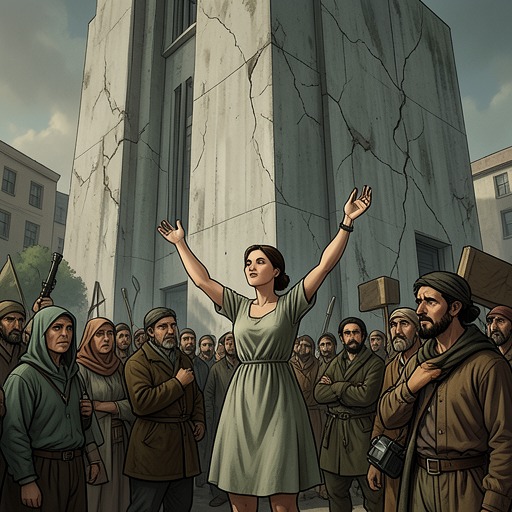
NeverthelessNavon’s Taboo Against Women Serving in the Military is an entrenched military and social convention that treats soldiering as a male role. The story shows it not through a cited written law but through recruitment decisions, assumptions about women’s capacities, and expectations about who should fight when Navon is threatened. Mabel Peloponnese’s repeated challenge makes the convention’s cost concrete: her willingness to serve is first dismissed, then tested in battle, while the kingdom continues to depend on her actions.
Social and military premise
The expectation that girls should prepare for domestic life appears early in Mabel’s story. While other girls might attend village fairs, shop for household provisions, choose fabric for formal dresses, or learn sewing and cooking from their mothers, Mabel spends her time in the fields with her father. The contrast establishes that gender roles are woven into ordinary life as well as military policy: a girl’s expected future is that of a wife, while Mabel’s interests and habits already set her apart from that pattern.
The military version of the convention is stated plainly when Mabel tries to enlist. The recruiting commander treats her sex as disqualifying and argues that a soldier must be a man. He invokes presumed differences in strength and endurance, and portrays a woman as unable to withstand a man in a confrontation. His conclusion is not that Mabel lacks commitment or that there is no practical need for recruits; he tells her that Navon does not need someone like her. The reasoning turns a general stereotype into an institutional decision about who may serve.
Mabel’s challenge at recruitment
Mabel does not present enlistment as a way to earn money. When the commander offers to arrange a hearing with the king and help if her family is in hardship, she declines that alternative and states that she wants to be a soldier. Her answer rejects the assumption that a woman seeking entry must be acting from desperation or financial need. She identifies military service itself as her purpose and argues that Navon needs every kind of help.
The commander nonetheless orders a nearby soldier to escort her to the gate. His authority makes the taboo effective in practice: Mabel is not merely disagreed with but physically removed from the recruitment space. The scene also sets the limits of an appeal based on merit or wartime necessity. Mabel’s willingness to contribute does not change the commander’s judgment because he treats her gender, rather than her stated purpose, as decisive.
Authority, permission, and exclusion
Navi Spyridaki’s response initially offers Mabel a path into the army, but not freedom from its risks. He recognizes the unprecedented nature of a woman joining Navon’s forces and warns her that she will be on her own once she enters the field; he will not intervene if anyone targets her. His permission allows her to proceed, yet the warning makes clear that access is exceptional and precarious, not evidence that the institution has revised its general expectations.
Navi later reverses that permission. When Mabel challenges him about his decisions, he tells her that she is no longer in the army and must stay away from the castle and from him. He grounds his authority partly in her exclusion from the military and describes her as an ordinary girl rather than someone entitled to an explanation. The episode shows how quickly the boundary can be enforced again: her place depends on a prince’s decision, and her service does not secure an independent claim to remain.
The book also distinguishes this gender barrier from other contests over command. Navi’s advisers question his judgment because he is young, while his father has not appointed him to lead the army despite his position as heir. Those challenges concern age, rank, and royal authority, not women’s access to service. They underline that command is contested more broadly, but they do not erase the separate restriction Mabel faces as a woman.
Wartime practice and the limits of change
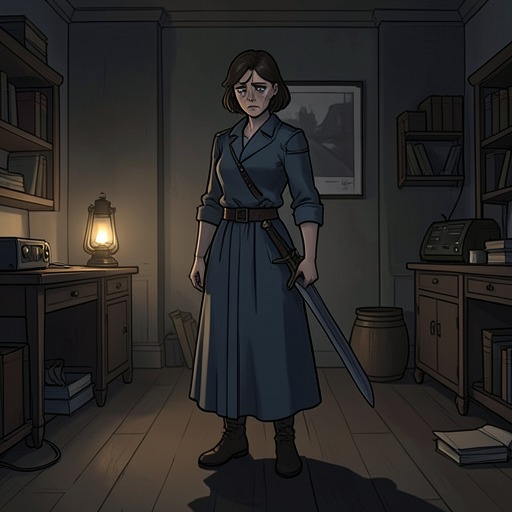
As Navon comes under attack, the distinction between those expected to fight and those expected to seek safety becomes explicit. The evacuation instructions direct women and children inside the castle walls and expect men to stand and defend the community. Mabel understands the plan but refuses to leave the soldiers she has stood beside. She puts on her trousers and armor, takes her sword, and goes to defend the city even though she believes it is not formally her job. Her choice exposes the human consequence of assigning protection and danger by gender: the rule would place her among those evacuated, while her sense of responsibility draws her toward the defense.
On another battlefield, Mabel seeks a weapon while the Expatriates’ Order prepares to resist Balthasar’s men. The person responsible for the arsenal refuses her request for a bow and arrows, expecting that she would waste them. Even among people fighting for survival, the assumption about her competence persists. Mabel does not remain outside the conflict, however; when a soldier attacks her, she uses his sword and kills him. The act is not presented as a simple triumph over prejudice. She had not intended to kill anyone, and afterward she is unable to respond when Shai checks on her. The war has made the exclusion untenable without making combat painless.
Later, Mabel captures an enemy general alive and declares him her prisoner, intending to take him to the King’s Army of Navon as a hostage. The reversal is precise: the woman once ordered out of a recruiting field now controls an officer’s captivity and determines his immediate status. Yet this achievement does not establish that women are generally admitted or that the military taboo has been formally abolished. Across recruitment, evacuation, battle, and command, the story presents a convention that can be challenged by necessity and individual action but remains available to those with authority to enforce it.</body_en