Athor 77
NightfallAthor 77, the director of the Saro University Observatory, is the towering figure of Kalgash's scientific establishment, the architect of the Theory of Universal Gravitation, and the reluctant prophet of the world's doom. His life's work, a mathematical masterpiece that explained the orbital motions of Kalgash and its six suns, becomes the very tool that reveals a catastrophic flaw in humanity's understanding of the cosmos. Athor's journey from revered patriarch to a broken, despairing witness of the apocalypse forms the tragic core of the narrative, embodying the conflict between rational science and the overwhelming, irrational forces of the universe.
Identity and Scientific Legacy
Athor 77 is a tall, thin, commanding man with an impressive shock of thick white hair, whose formidable presence has earned him the role of the "Austere Giant of Science" within the Observatory. He is the author of the classic codification of the Theory of Universal Gravitation, a work that Beenay 25 regards with "something very much like reverence" and considers one of the "pillars of the cosmos." This theory, which accounts for the complex motions of the six suns, brought Athor every scientific honor the planet offers and is his "passport to immortality." His reputation is so immense that the idea of challenging his work seems inconceivable; Beenay imagines that announcing a flaw in the theory would bring "gales of laughter" upon him. Athor's identity is so fused with his theory that the possibility of its error is, for him, a personal and existential threat.
Arc Through the Plot: The Shattering of Certainty
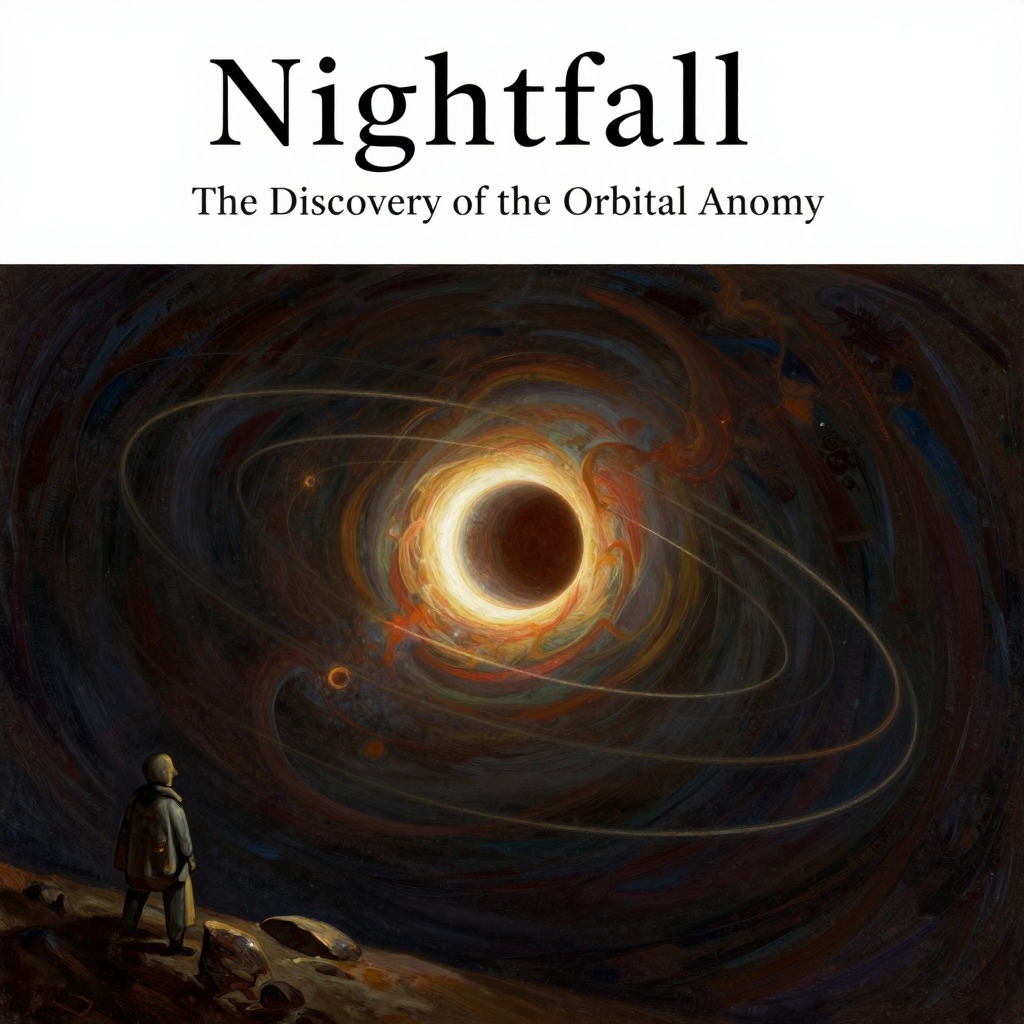
Athor's arc begins with a crisis of faith. When Beenay 25 presents him with computer calculations showing a deviation in Kalgash's orbit that contradicts the Theory of Universal Gravitation, Athor initially experiences a "deathly unreal calm." He is forced to confront the possibility that his life's work is wrong, a thought that every atom of common sense in him protests. However, he does not succumb to denial. Instead, he throws himself into a grueling, sixteen-hour-a-day research effort, pushing his nearly seventy-year-old body to its limits. He works through seven different postulates, each a "nonsense" attempt to salvage the theory, until he arrives at Postulate Eight: the existence of an invisible, non-luminous planetary body, Kalgash Two, whose gravitational pull perturbs Kalgash's orbit. This discovery saves his theory but reveals a far more terrifying truth: the universe is not as he believed, and a great strangeness exists within it.
Relationships and Conflict
Athor's relationship with his protégé, Beenay 25, is central to his character. He has been "like a second father" to Beenay, guiding his career with encouragement and love. This paternal bond makes Beenay's discovery of the orbital anomaly a source of profound anguish, as he fears he will be "stabbing" Athor by revealing it. Athor, however, reacts with fury—not at the discovery, but at Beenay's hesitation to bring it to him. He rebukes Beenay for assuming he would value his own reputation over the truth, declaring, "Do you really believe I love my own theory more than I do the truth?" This moment reveals Athor's core integrity as a scientist, even as it foreshadows his later collapse. His conflict with the journalist Theremon 762 is equally significant. Theremon's mocking columns, which portray Athor as a "superannuated crackbrain" and compare his predictions to the ravings of the Apostles of Flame, undermine any chance of a coordinated public response to the coming catastrophe. Athor's rage at Theremon is palpable, but his authority is ultimately powerless against the journalist's influence.
Change and Ending: The Collapse of the Iron Man
Athor's transformation from a figure of iron will to a broken, fatalistic old man is the novel's most poignant tragedy. In the final hours before the eclipse, he is described as "sad, tired, pathetic old wreck who's simply waiting for the end to come." The fight has gone out of him. He allows Theremon to stay at the Observatory against his own orders, a sign that his inner structure of character is giving way. During the eclipse, as the mob storms the Observatory, Athor does not flee. Instead, he rises "like a demigod above them, ordering them to leave," but this is not an act of defiance; it is the final, desperate performance of a man who has lost all will to survive. Beenay realizes that "Athor had gone insane, and that the small part of Athor's mind that was still capable of functioning rationally was eager for death." The great astronomer's final moments are a surrender to the holocaust, a hopeless acceptance of the end of the world he had tried to save.
Thematic Significance
Athor 77 embodies the tragic limits of rationalism. His Theory of Universal Gravitation, the pinnacle of scientific achievement, is both the instrument of discovery and the source of a devastating truth that science alone cannot manage. He represents the hubris of believing that the universe can be fully understood and controlled through intellect. His final, broken state—whimpering about the Stars and the walls breaking in—illustrates the fragility of the human mind when confronted with a reality that exceeds its conceptual framework. Athor's fate is a warning that the most brilliant theories are powerless against the raw, overwhelming force of the cosmos, and that the pursuit of knowledge can lead not to salvation, but to a deeper, more terrible understanding of one's own doom.