
Of Mice and Men
Overview
Of Mice and Men is a 1937 novella written by American author John Steinbeck, who would later win the Nobel Prize in Literature in 1962. The book is a classic of American literature, known for its poignant exploration of friendship, dreams, and the harsh realities of the Great Depression. Set in California, the story follows two displaced migrant ranch workers, George Milton and Lennie Small, as they move from place to place seeking employment. The novella is brief but powerful, with a tight narrative structure that builds to an inevitable, heartbreaking conclusion.
Plot Summary
George is a small, intelligent man, while Lennie is a large, mentally disabled man with immense physical strength. They share a simple dream: to own a piece of land where they can farm and, most importantly for Lennie, raise rabbits. Lennie's love for soft things—mouse fur, puppy ears, a woman's dress—leads to trouble. The story begins as they flee from Weed, where Lennie's innocent touch on a girl's dress was misinterpreted as an assault. They find work on a ranch near Soledad, California. There, they encounter a cast of characters who embody the loneliness and isolation of the era: Candy, an old swamper who lost his hand and fears being discarded; Curley, the boss's aggressive son who is insecure about his small stature; Curley's wife, who is unnamed and desperate for companionship; and Crooks, the black stable hand who is segregated from the other workers. Lennie accidentally kills a puppy given to him by Candy, and later, in a panic, he kills Curley's wife by shaking her to death when she screams. Realizing that Lennie will be caught and lynched by Curley's mob, George meets Lennie at their secret spot by the river and, after describing their dream one last time, shoots him to spare him a more brutal death. The novella ends with George walking away, his dream shattered.
Themes and Background
The title derives from Robert Burns' poem "To a Mouse," which observes that "the best-laid schemes o' mice an' men gang aft agley" (often go awry). This theme of thwarted plans permeates the novella. The American Dream is central: the desire for a small farm represents autonomy and dignity, yet it remains unattainable for the working poor. Loneliness is another dominant theme; each character is isolated in some way—Candy by age, Crooks by race, Curley's wife by gender, and George and Lennie by their itinerant lifestyle. The power dynamics of strength and weakness are also explored: Lennie's physical power contrasts with his mental vulnerability, and George's authority is tempered by his dependence on Lennie for companionship. Steinbeck's writing style is spare and direct, using colloquial dialogue and vivid natural imagery. He based the novella on his own experiences working alongside migrant farm workers in the 1910s, long before the arrival of the Dust Bowl migrants he would later chronicle in The Grapes of Wrath. The novella critiques the economic system that forces men into desperation and destroys their hopes.
Legacy
Of Mice and Men was an immediate success upon publication, praised by critics and readers alike. It was quickly adapted into a Broadway play (1937) starring Wallace Ford and Broderick Crawford, and later into several film adaptations, notably the 1939 version directed by Lewis Milestone and a 1992 version directed by Gary Sinise. Carlisle Floyd's operatic adaptation premiered in 1970. The novella has been both celebrated and challenged: it is frequently taught in schools, but it has also been banned for its profanity, racial slurs, and perceived moral ambiguity. The American Library Association lists it as one of the most challenged books of the 20th century. Despite this, its literary stature remains intact. Steinbeck's Nobel Prize in 1962 cited his "realistic and imaginative writing" and his "sympathetic humor and keen social perception." Today, Of Mice and Men is considered a masterwork of American fiction, a timeless meditation on friendship, sacrifice, and the crushing weight of circumstances.
Upon its release, the novella received the most favorable critical response of any Steinbeck work to that date, and was selected by the Book of the Month Club before publication. Notable critics such as Maxine Garrard, Christopher Morley, and Harry Thornton Moore offered praise, while Ralph Thompson of the New York Times called it a "grand little book, for all its ultimate melodrama." In the United Kingdom, the novel was ranked 52nd in the BBC's 2003 survey The Big Read, which sought the nation's best-loved novels.
About the Author
Early Life
John Ernst Steinbeck Jr. was born on February 27, 1902, in Salinas, California. His father, a German immigrant descendant, served as Monterey County treasurer, and his mother, a former teacher, instilled in him a love of reading. Steinbeck grew up in the fertile Salinas Valley, which would later serve as the setting for many of his works. He attended Stanford University intermittently from 1919 to 1925, studying literature and writing, but never graduated. During this period, he worked as a laborer on farms and ranches, gaining firsthand experience of the lives of migrant workers.
Writing Career
Steinbeck moved to New York in 1925 to pursue a writing career but failed to find success and returned to California. His first novel, "Cup of Gold" (1929), was a historical fantasy that earned little attention. He continued writing with "The Pastures of Heaven" (1932) and "To a God Unknown" (1933). His breakthrough came with "Tortilla Flat" (1935), a humorous novel about Monterey's paisanos. The following year, he published "In Dubious Battle" (1936), a strike novel that solidified his reputation as a social realist. In 1937, he published "Of Mice and Men," a novella that became an instant classic. His masterpiece, "The Grapes of Wrath" (1939), won the Pulitzer Prize for Fiction in 1940 and cemented his legacy. During World War II, he served as a war correspondent, writing dispatches from Europe and later publishing "A Russian Journal" (1948) with photographer Robert Capa. In the postwar years, he wrote "Cannery Row" (1945), "The Pearl" (1947), and "East of Eden" (1952), which he considered his greatest work. Later works include "The Winter of Our Discontent" (1961) and "Travels with Charley" (1962), a travelogue.
Later Life and Death
Steinbeck was married three times: to Carol Henning (1930–1943), Gwyn Conger (1943–1948), and Elaine Scott (1950–1968). He had two sons, Thom and John IV. In 1962, he was awarded the Nobel Prize in Literature, praised for his "realistic and imaginative writing" and his "sympathetic humor and keen social perception." He died of heart failure on December 20, 1968, in New York City, at the age of 66.
Legacy
Steinbeck is regarded as one of the greatest American writers of the 20th century. His works, translated into nearly 50 languages, continue to be widely read and studied. He is remembered for his empathy for the downtrodden, his keen social criticism, and his masterful storytelling. The John Steinbeck Center in Salinas and numerous academic institutions preserve his legacy. Despite polarizing critics, his novels remain central to the American literary canon.
StoryFlow
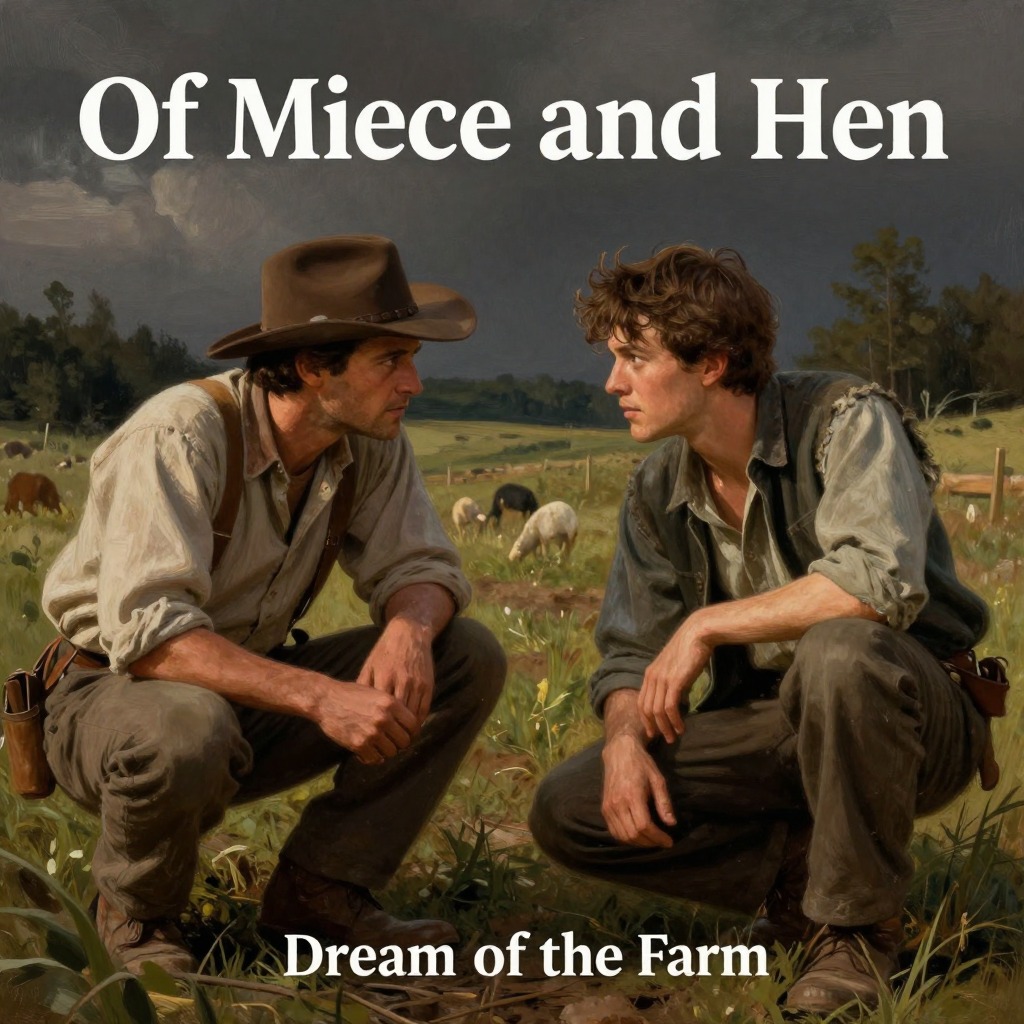
George and Lennie's Dream of the Farm
Traces the evolution of the shared dream of owning a small farm, which sustains hope and defines the relationship between George and Lennie throughout the novel.
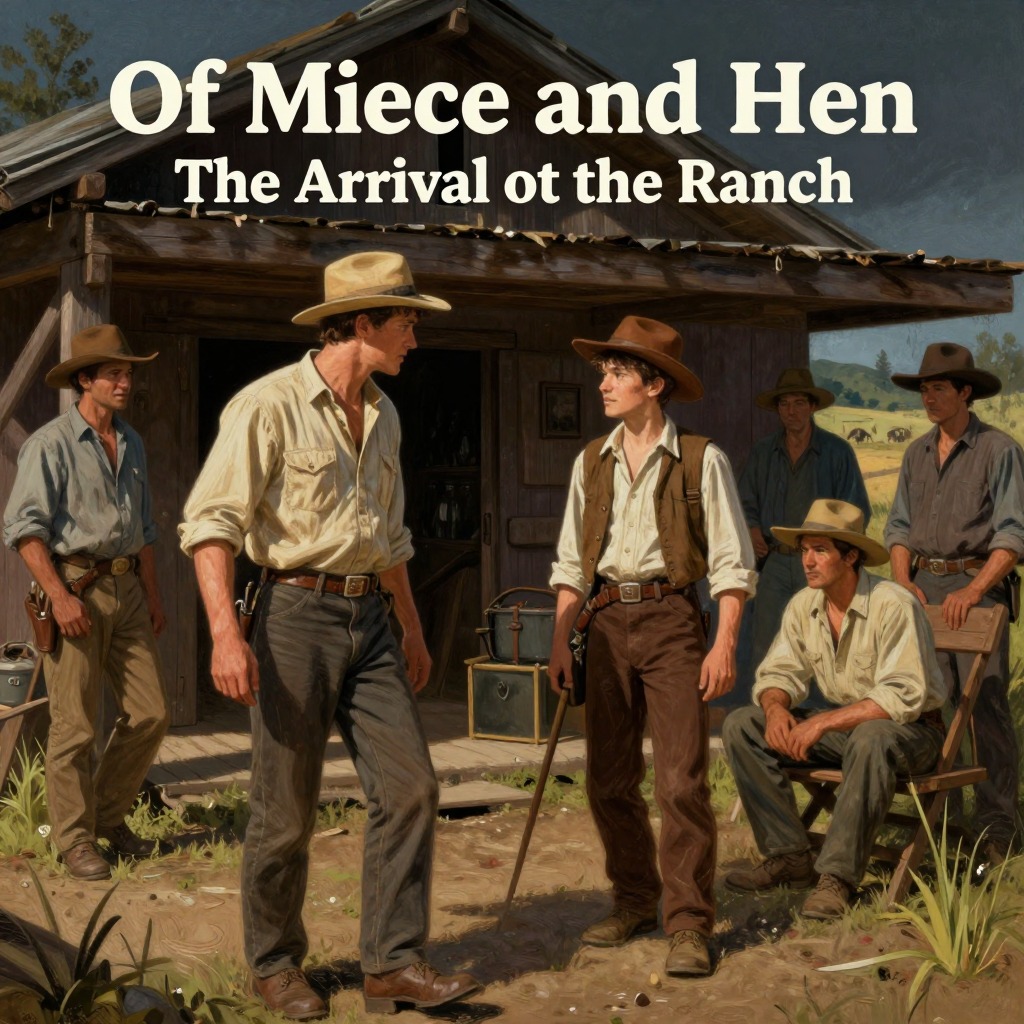
The Arrival at the Ranch
Follows George and Lennie's arrival at the ranch in Soledad, their introduction to the bunkhouse, and their first encounters with the other workers.
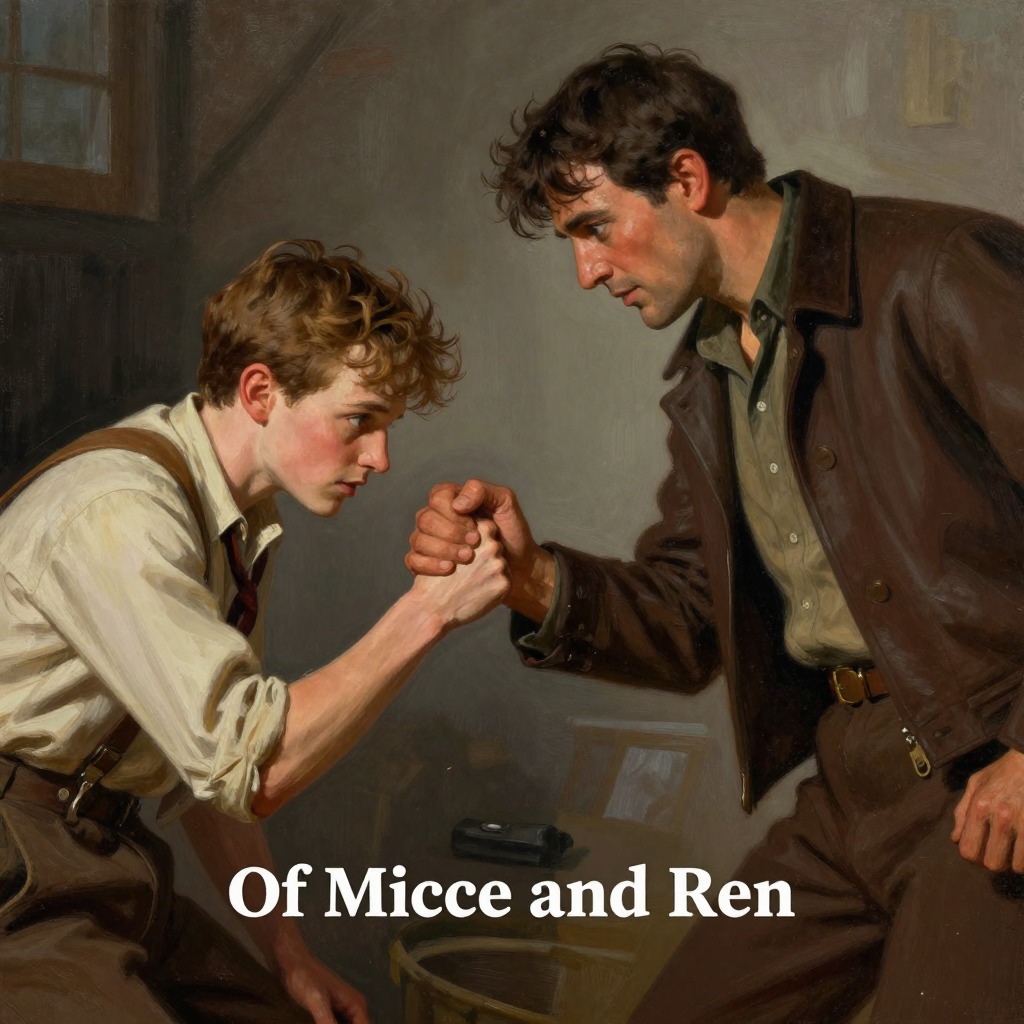
The Conflict with Curley
Traces the escalating tension between Lennie and Curley, from Curley's initial hostility to the fight that breaks Lennie's hand.
