
Privacy Under the Spotlight
Off CampusThis thread follows Tom Worthington’s effort to protect his private life from public exposure, then shows how fear of scrutiny begins to govern his relationships before he learns to take measured risks.
increasing Bearing strength in each event
 decreasing
Bearing strength in each eventdecreasingA Life Made Public

Private Pain as Public Material
The press at the gate
The Federal Bureau of Investigation’s case against Tom’s father turns the family into a story for newspapers and television. Reporters surround the home, question Tom about the case, and transform his visible distress into material that can be interpreted for an audience.
Exposure without consent
Tom’s father’s suicide attempt becomes another public fact, even though Tom experiences it as a private emergency. The attention teaches him that his name can make strangers feel entitled to his pain and that any reaction may be reframed as evidence of guilt or privilege.
When Tom later returns to campus, anonymity is not merely a preference. It is a defense formed by repeated experiences in which privacy seemed impossible to reclaim once other people had decided his life was newsworthy.
Keeping His Head Down
The Campus as an Audience
A return under conditions
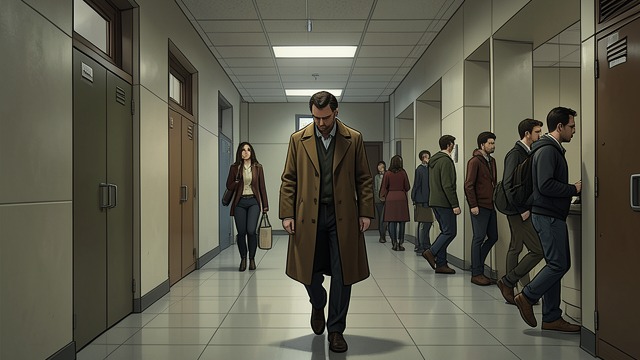
Tom returns to Carlisle College with a warning from the dean that he should keep a low profile. He reads the instruction as proof that his place at school is conditional and that any attention could become a reason to remove him.
Avoidance as protection
He limits his movements, studies alone, and avoids former teammates and other students who might recognize his name. His self-imposed isolation seems to reduce risk, but it also prevents him from testing whether campus life is actually as hostile as he expects.
Tom’s effort to stay invisible becomes a quiet surrender of ordinary experiences. He treats every conversation and public appearance as a possible leak, allowing anticipated scrutiny to shape his life even when no reporter is present.
A Room With a Door
An Experiment in Limited Visibility
Choosing a boundary
Tom and Reese Anders struggle over what it means for their relationship to be known. Reese does not want their intimacy treated as another secret, while Tom fears that being publicly identified as Reese’s boyfriend could draw journalists back into his life.
A controlled first step
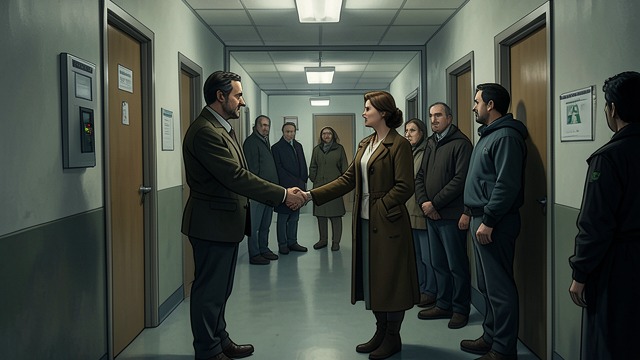
They settle on a compromise: Tom can be more openly together with Reese inside Perkins House, while still keeping a lower profile on campus. They begin spending time in shared spaces and allowing neighbors to see their closeness rather than hiding behind their room door.
The arrangement is imperfect, but it gives Tom a way to test visibility without pretending the risk is imaginary. He is not ready to control what others might do with his image; he is beginning to choose where he will stop letting that possibility make every choice for him.
The Photograph That Wasn’t

Fear Finds Its Evidence
A sudden camera flash
When Tom and Reese Anders leave Perkins House during a period of conflict, Tom reacts angrily as Reese tries to steady him on the steps. A student photographer captures the moment, and Tom immediately interprets the camera as proof that his private life has become public again.
The old story returns
Tom assumes that Reese has disregarded their agreement and exposed him through an interview. In reality, the photographer is there for Reese’s work, and the image of Tom is later removed. But the distinction arrives after Tom has already acted on years of accumulated fear.
The scene shows how past exposure can make a coincidence feel like an intentional attack. Tom’s response does not arise from the photograph alone; it comes from a learned expectation that someone is always waiting to turn his worst moments into a story.
Speaking Without Disappearing

Privacy as a Choice
Putting fear into words
Tom attends a meeting of an LGBTQ student organization and speaks about the scale of exposure in a world where personal information can travel far beyond its intended audience. He does not deny that visibility can be frightening; he explains why it has felt especially dangerous to him.
A risk he chooses
The conversation is not a public declaration forced upon him. Tom enters the room, stays for the discussion, and adds his perspective, accepting that other people may hear him without giving them control over what his experience means.
That measured participation marks a change in his relation to privacy. He still values limits, but he begins to see that self-protection need not require total silence or permanent withdrawal.
After the federal case against Tom’s father becomes national news
During Tom’s first weeks back at Carlisle College
After Tom and Reese define a private relationship
Near the end of the relationship’s first semester
After the separation, at an LGBTQ student organization meeting
