
The Suez Project
OrientalismThis thread follows how Ferdinand de Lesseps’s canal project presents a material transformation as the culmination of a European vision of the Orient.
increasing Bearing strength in each event
 decreasing
Bearing strength in each eventdecreasingA Canal Imagined
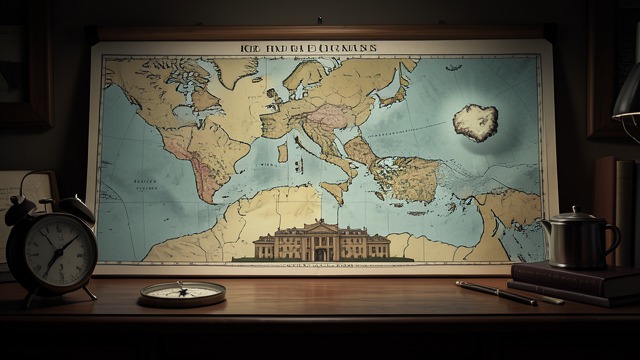
A Canal Imagined
An Older Ambition
Plans to connect the Mediterranean and Red Sea draw on earlier imperial and commercial visions.
A European Project
Ferdinand de Lesseps inherits a story in which geography appears available for transformation.
The Orient as Route
The proposed passage promises to make distant territories more accessible to European power.
The Promoter Returns

The Promoter Returns
Personal Conviction
De Lesseps returns to Egypt with confidence in his ability to realize the canal.
Persuasion and Support
He assembles political and financial backing by presenting the project as a service to humanity and commerce.
Grand Language
His rhetoric turns an engineering scheme into a world-historical mission.
Labor and Construction
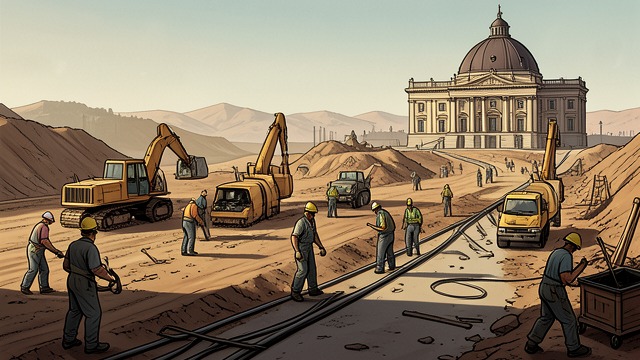
Labor and Construction
Long Work
The canal takes years of planning and construction in Egypt.
Geography Recast
The undertaking alters the physical route between Europe and Asia.
Unequal Benefit
Its universal language does not erase the asymmetry between European ambition and Egyptian political agency.
A World-Historical Opening
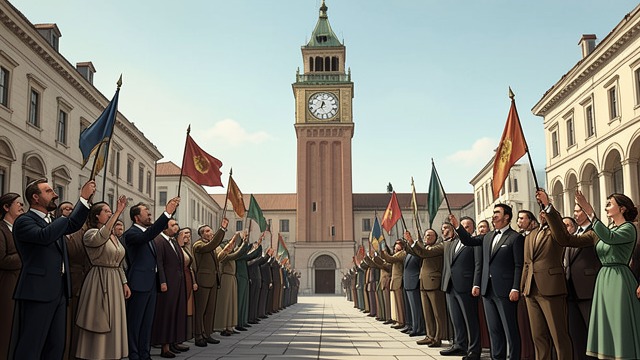
A World-Historical Opening
Ceremonial Celebration
The canal opens amid grand claims about joining East and West.
A European Spectacle
Speeches and ceremonies present the event as a civilizational triumph.
Distance Reduced
The new route makes the Orient seem less remote and more available to European movement.
A Symbol of Incorporation
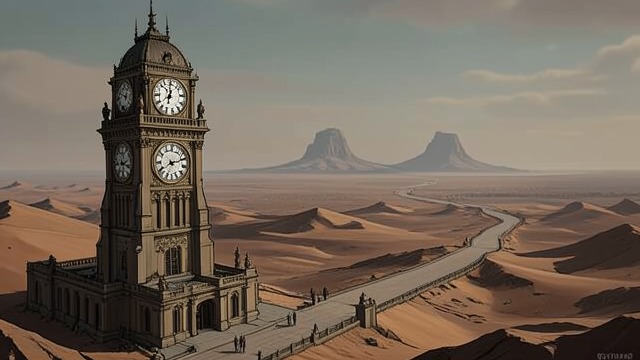
A Symbol of Incorporation
The Canal’s Meaning
Said treats the canal as more than engineering: it symbolizes the reorganization of East–West relations.
A Claim of One World
The language of unity can conceal the conditions under which Europe incorporates the Orient into its own sphere.
A Changed Balance
Egypt’s nationalization of the canal in 1956 shows that the project’s political meaning remains contested.
Before 1854
1854
1854–1869
November 1869
After 1869, reconsidered through 1956
