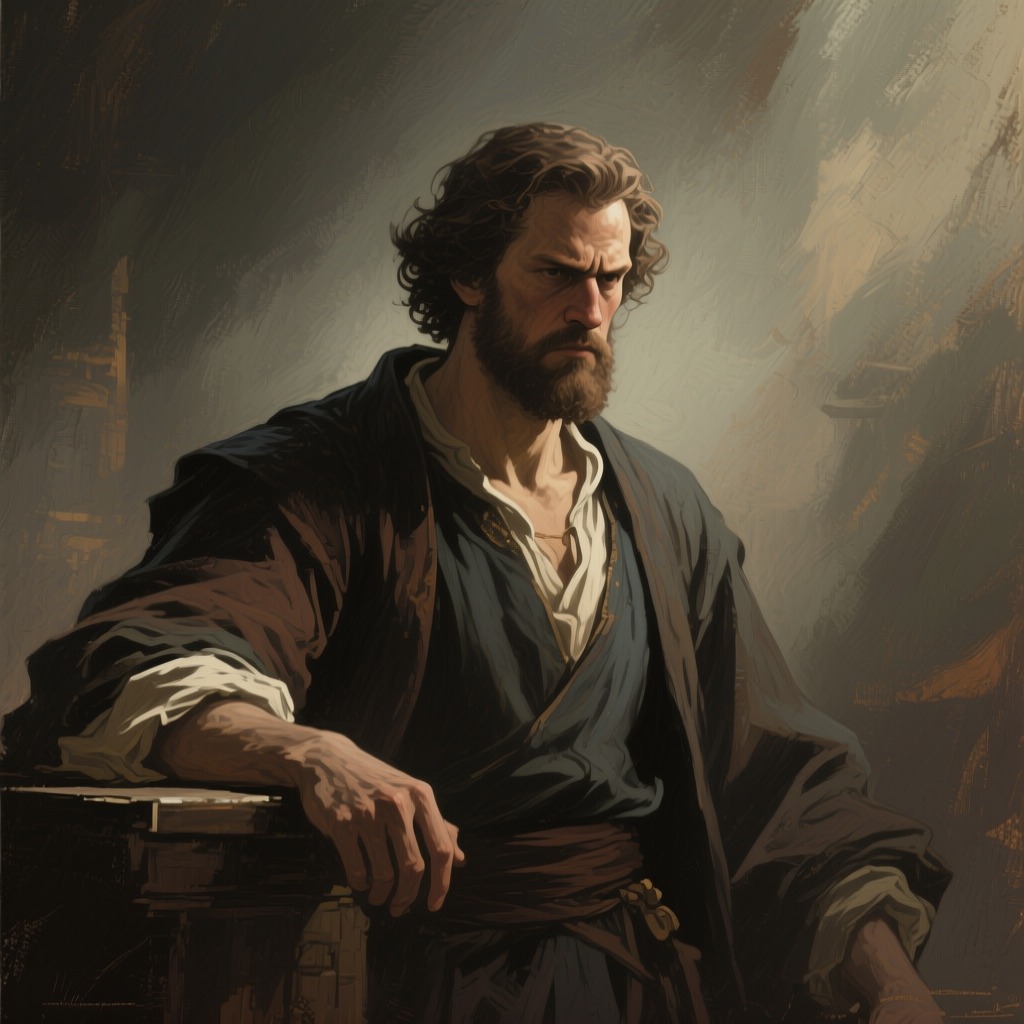
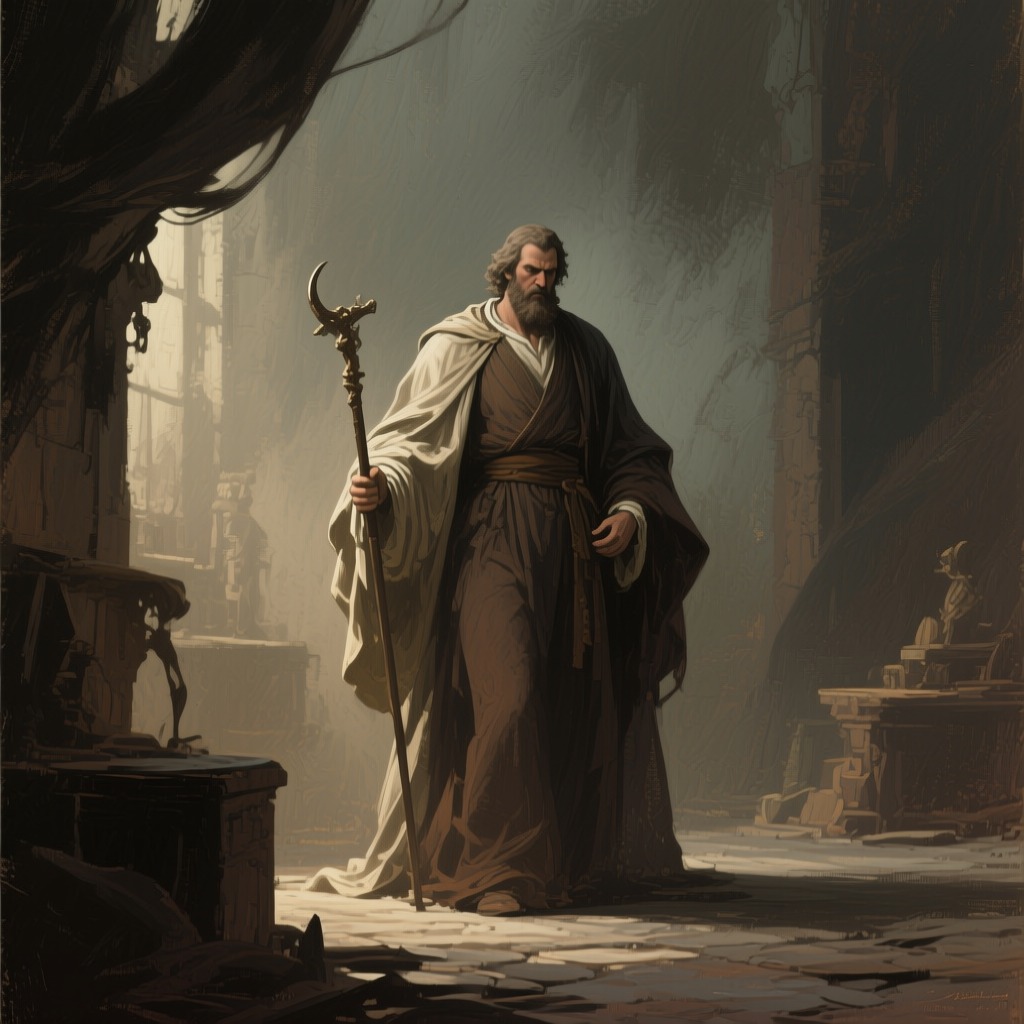
Charles Hayter
Charles Hayter is a country curate and the eldest son of the Hayter family, a connection of the Musgroves through Mrs. Musgrove's sister. Though amiable and well-educated, he occupies a distinctly inferior social and economic position to the Musgroves, a disparity that shapes his romantic prospects and his interactions with the more glamorous Captain Wentworth.
Identity and Background
Charles Hayter is the eldest of all the Musgrove cousins, a young man in orders who holds a curacy in the neighbourhood, allowing him to live at his father's house, only two miles from Uppercross. He has chosen to be a scholar and a gentleman, and is very superior in cultivation and manners to the rest of his family, who, due to their parents' inferior, retired, and unpolished way of living and their own defective education, would be hardly in any class at all but for their connection with Uppercross. His own father has some property, but it is insignificant compared with Mr. Musgrove's. Charles Hayter is, however, the eldest son, and will eventually inherit the estate at Winthrop, which is not less than two hundred and fifty acres, besides the farm near Taunton, some of the best land in the country. This future property, combined with his own good character, makes him, in the eyes of Charles Musgrove at least, a not contemptible match.
Arc Through the Plot
Before Captain Wentworth's arrival, there had been a considerable appearance of attachment between Charles Hayter and Henrietta Musgrove. His attentions to her had been observed by her father and mother without any disapprobation, and Henrietta fully thought herself attached to him. A short absence from home, however, leaves his fair one unguarded at a critical period, and when he returns, he has the pain of finding very altered manners and of seeing Captain Wentworth. He meets with much to disquiet and mortify him in his cousin's behaviour. When he had left, Henrietta had been interested, even to the height of his wishes, in his prospect of soon obtaining the curacy of Uppercross. When he comes back, the zeal of the business is gone by; Louisa cannot listen at all to his account of a conversation with Dr. Shirley, and even Henrietta has at best only a divided attention to give. After a short struggle, Charles Hayter seems to quit the field, refusing a regular invitation to dinner and being found by Mr. Musgrove with some large books before him, leading to talk of his studying himself to death. Anne Elliot can only feel that Charles Hayter is wise.
Relationships and Conflict
The central conflict for Charles Hayter is his rivalry with Captain Wentworth for Henrietta's affection. He is a very amiable, pleasing young man, but he is no match for the naval officer's glamour and the eager admiration he receives from the Miss Musgroves. Charles Hayter's presence in a room with Captain Wentworth is marked by tension; when he finds himself alone with Anne and the invalid child, and Captain Wentworth enters, he is probably not at all better pleased by the sight of Captain Wentworth than Captain Wentworth had been by the sight of Anne. He seats himself near the table, taking up the newspaper, and putting an end to Captain Wentworth's attempts at conversation. Later, when Captain Wentworth steps forward to relieve Anne from the troublesome child Walter, Charles Hayter is heard to say, in a vexed tone, "You ought to have minded me, Walter; I told you not to teaze your aunt," and Anne can comprehend his regretting that Captain Wentworth should do what he ought to have done himself. His relationship with Henrietta is eventually restored, and they are devoted to each other almost from the first instant of their all setting forward for Uppercross after the walk to Winthrop.
Change and Ending
Charles Hayter's fortunes are ultimately reversed. He is applied to by a friend to hold a living for a youth who cannot possibly claim it under many years, and on the strength of his present income, with almost a certainty of something more permanent, the two families consent to the young people's wishes. His marriage to Henrietta is likely to take place in a few months, quite as soon as Louisa's. The living is only five-and-twenty miles from Uppercross, in a very fine country, in the centre of some of the best preserves in the kingdom. Charles Musgrove observes that Charles is too cool about sporting, which is the worst of him. Anne Elliot is particularly glad that this should happen, and that of two sisters who both deserve equally well, the pleasant prospect of one should not be dimming those of the other.
Thematic Significance
Charles Hayter represents the quiet, respectable, but unglamorous alternative to the naval heroes who populate the novel. His story illustrates the power of steady character and modest but solid prospects to ultimately prevail over the dazzle of a more brilliant but transient attraction. His eventual success, secured by a stroke of professional good fortune, reinforces the novel's theme that true worth and constancy, though they may be temporarily overlooked, can find their reward. He also embodies the social realities of the clergy and the lesser gentry, whose lives are shaped by the slow accumulation of property and the careful negotiation of family connections.