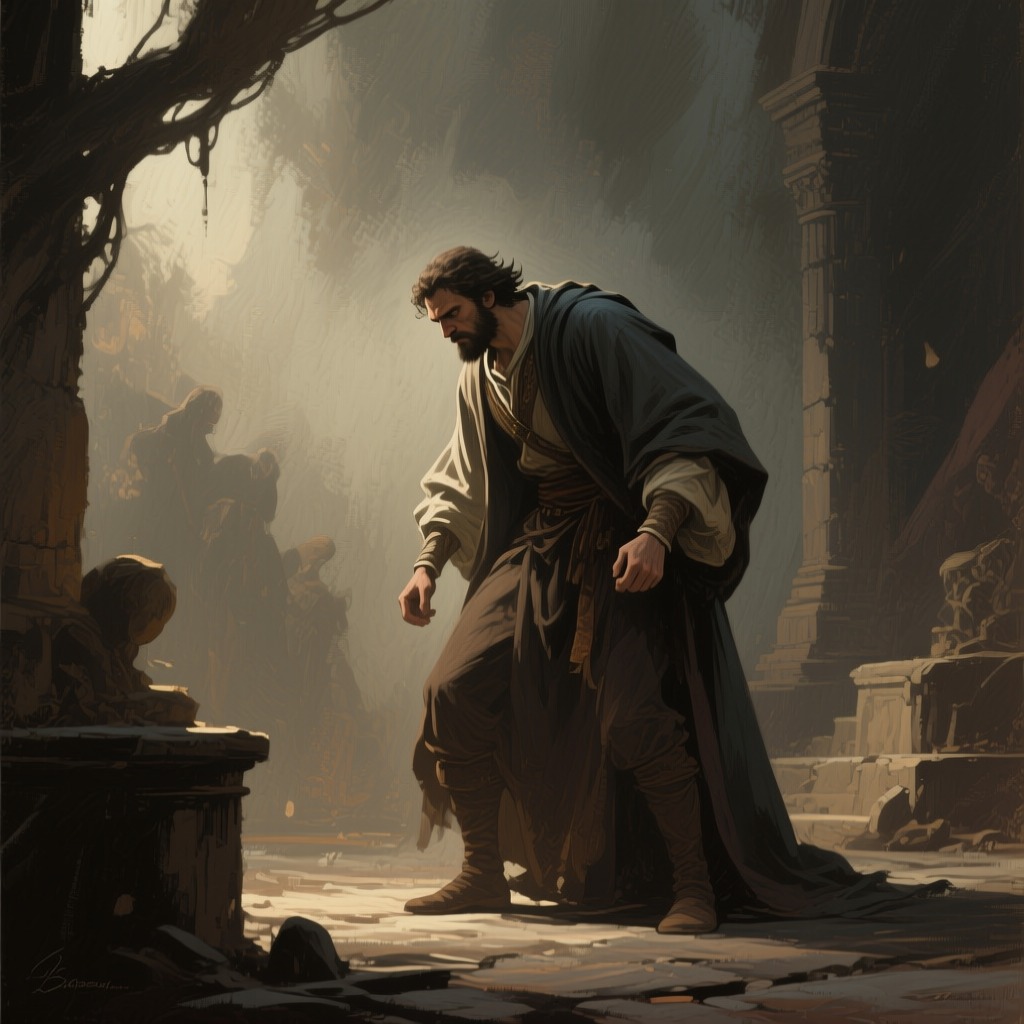
Charles Musgrove
Charles Musgrove, the eldest son of Mr. and Mrs. Musgrove of Uppercross, is a country gentleman of good nature and limited ambition, whose life revolves around sport, his family, and the management of his modest estate. He is a figure of steady, unreflective good humor, and his marriage to Mary Elliot places him at the center of the novel's domestic dynamics, where his practical sense and easy temper contrast sharply with his wife's hypochondria and social pretensions.
Identity and Background
Charles Musgrove is the eldest son and heir of a substantial landed family in Somersetshire, second in importance only to Sir Walter Elliot's Kellynch Hall. He is described as "civil and agreeable," with a sense and temper "undoubtedly superior to his wife," but lacking in powers of conversation, grace, or intellectual pursuits. His time is "trifled away, without benefit from books or anything else," and he does nothing "with much zeal, but sport." He married Mary Elliot, Anne's younger sister, after Anne refused his proposal—a fact that becomes a subject of family gossip and regret. The Musgrove family, like their house, is in a state of alteration: the parents are in the "old English style," while the young people, including Charles, are "in the new."
Life and Plot Trajectory
Charles's life at Uppercross is one of comfortable routine. He is a devoted but not overly attentive husband, bearing Mary's unreasonableness "sometimes to Anne's admiration." He is a keen sportsman, spending his days shooting, and his evenings in the company of his family and neighbors. When his son, Little Charles, suffers a bad fall and dislocates his collarbone, Charles is initially concerned but soon feels "no necessity for longer confinement" and goes to dine at the Great House to meet Captain Wentworth, leaving the nursing to Anne. This episode reveals his practical, if somewhat detached, approach to domestic crises. He is also a participant in the excursion to Lyme, where he is present during Louisa's fall from the Cobb, and is described as "a very affectionate brother," hanging over her with "sobs of grief." His role in the aftermath is practical: he helps carry Louisa and later returns to Uppercross to break the news to his parents.
Key Actions and Objectives
Charles's primary objective is the enjoyment of his life as a country gentleman. He is deeply interested in his father's property and the value of the Winthrop estate, which he defends against Mary's dismissive comments. He is also a loyal brother and cousin, taking Charles Hayter's side in the matter of Henrietta's affections, and showing a genuine, if unpolished, warmth toward his family. He is the one who, after Louisa's engagement to Captain Benwick is announced, expresses the most surprise and curiosity about Captain Wentworth's reaction. His most significant action in the plot is his casual decision to leave Anne alone with Captain Wentworth on the walk home from the White Hart, an act that directly enables their reconciliation.
Relationships and Conflict
Charles's relationship with Mary is one of constant, low-level friction. He is patient with her complaints but often dismissive, and they disagree on matters of family precedence and the management of their children. He is on excellent terms with his own family, particularly his father and sisters, and is a good friend to his cousin Charles Hayter. His relationship with Anne is one of easy, brotherly affection; he values her judgment and is grateful for her help with his children. He is also a cordial acquaintance of Captain Wentworth, with whom he shares a love of shooting, and he is instrumental in bringing the two together at the end of the novel.
Change and Ending
Charles undergoes no dramatic transformation. He remains the same good-natured, sport-loving country gentleman throughout the novel. His final appearance is at the White Hart, where he secures a box at the theatre and insists on going despite Mary's objections to the party at Camden Place. His careless remark that he "would not go for the sake of your father" and would "think it scandalous to go for the sake of his heir" reveals a straightforward, unpretentious character who values the present over future prospects. He ends the novel as he began: a contented, if unambitious, husband and father, whose main concern is the happiness of his immediate family.
Narrative Role and Evaluation
Charles Musgrove serves as a foil to the more complex male characters in the novel. Unlike Captain Wentworth, who is driven by pride and a desire for professional achievement, or Mr. Elliot, who is calculating and duplicitous, Charles is simple, honest, and without guile. He represents the comfortable, unreflective life of the landed gentry, and his presence underscores the novel's themes of constancy and the value of a steady, affectionate nature. His role in the plot is largely functional: he is a conduit for information, a source of comic relief, and, crucially, the unwitting agent of Anne and Wentworth's final reconciliation.