Captain Harville
Captain Harville is a naval officer, a close friend of Captain Frederick Wentworth, and a man whose domestic life and profound emotional depth serve as a crucial counterpoint to the novel's central themes of love, loss, and constancy. His presence in the story, particularly during the Lyme episode, provides a tangible model of masculine tenderness and fidelity that directly informs Anne Elliot's own reflections and, ultimately, her reconciliation with Wentworth.
Identity and Introduction
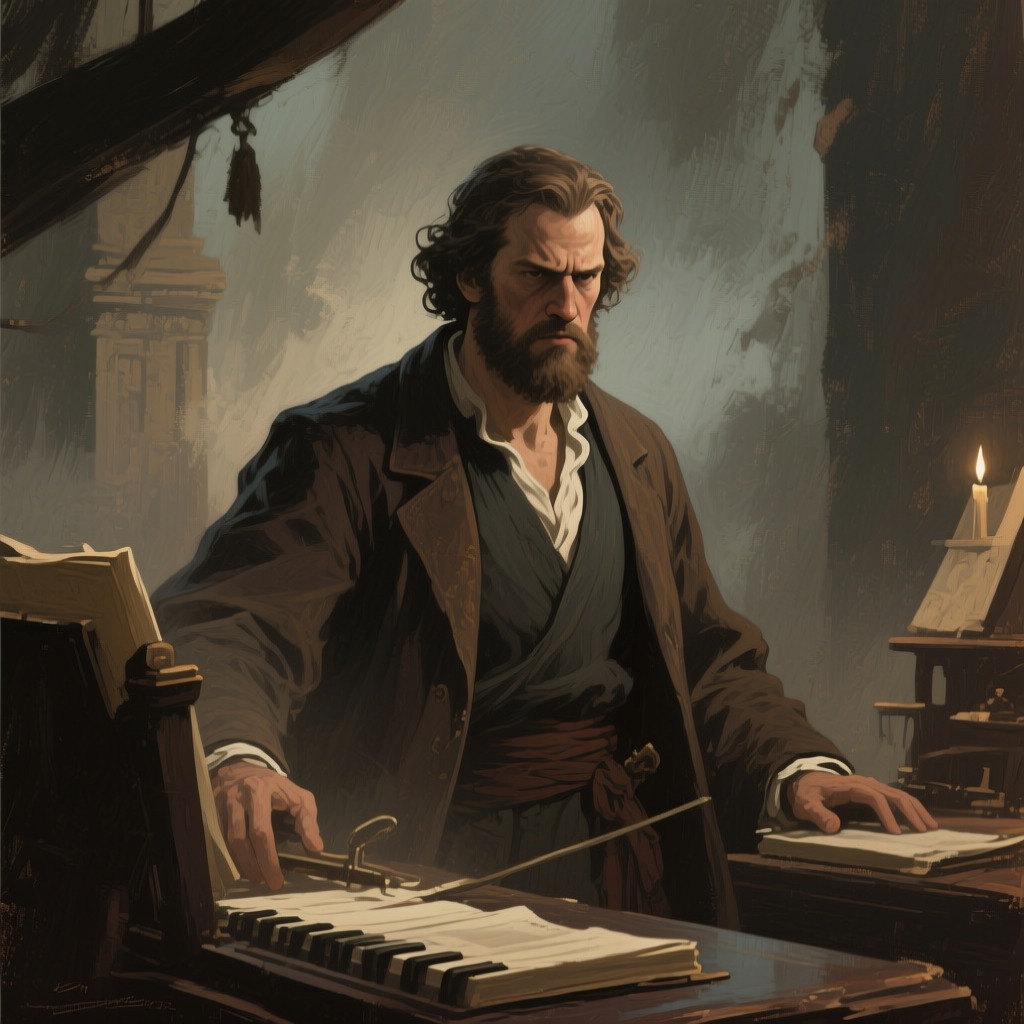
Captain Harville is introduced as a tall, dark man with a sensible, benevolent countenance, a little lame from a severe wound received two years prior, and looking much older than Captain Wentworth due to his strong features and want of health. He is a perfect gentleman, unaffected, warm, and obliging, though not equalling Captain Wentworth in manners. He is married to Mrs Harville, a woman a degree less polished than himself but possessing the same good feelings. The Harvilles have settled with their family at Lyme for the winter, living in a small house near the foot of an old pier, a residence chosen for its inexpensiveness and proximity to the sea, suiting his taste, health, and fortune. His lameness prevents him from taking much exercise, but a mind of usefulness and ingenuity furnishes him with constant employment: he draws, varnishes, carpenters, glues, makes toys for children, fashions new netting-needles and pins with improvements, and, when everything else is done, sits down to his large fishing-net.
Life, Domesticity, and the Naval Character
Captain Harville's home is a testament to his character. The rooms are small, but he has turned the actual space to the best account with ingenious contrivances and nice arrangements, supplying the deficiencies of lodging-house furniture and defending the windows and doors against winter storms. The varieties in the fitting-up of the rooms, where common necessaries are contrasted with a few articles of a rare species of wood, excellently worked up, and with something curious and valuable from all the distant countries he has visited, are more than amusing to Anne Elliot; they are connected with his profession, the fruit of its labours, and the effect of its influence on his habits, presenting a picture of repose and domestic happiness. He is no reader, but he has contrived excellent accommodations and fashioned very pretty shelves for a tolerable collection of well-bound volumes, the property of Captain Benwick. His home is a place of warm hospitality; he and his wife are almost hurt that Captain Wentworth should have brought any party to Lyme without considering it a thing of course that they should dine with them, and their entreaties for the whole party to dine with them are kindly hospitable. When Louisa Musgrove falls from the Cobb, the Harvilles immediately take her into their home, and Mrs Harville, an experienced nurse, along with her nursery-maid, provides all possible attendance. Captain Harville brings senses and nerves that are instantly useful in the crisis, and a look between him and his wife decides what is to be done.
Key Actions and Relationships
Captain Harville's most significant actions are rooted in his profound loyalty and emotional depth. He is the keeper of Captain Benwick's miniature portrait, drawn at the Cape, which was intended for his late sister, Fanny Harville, to whom Benwick had been engaged. With a quivering lip, he reveals to Anne that he now has the charge of getting it properly set for another—Louisa Musgrove—and that Captain Wentworth is writing about it. This act of carrying out a commission for his friend, despite the pain it causes him, demonstrates his deep sense of duty and his capacity to allow for another's happiness. His friendship with Captain Wentworth is one of the novel's most important male bonds. He speaks of Wentworth with immense gratitude, recounting how, when news of Fanny's death had to be delivered to Benwick, Wentworth travelled night and day to Portsmouth, rowed off to the Grappler, and never left the poor fellow for a week. Harville declares, "That's what he did, and nobody else could have saved poor James. You may think, Miss Elliot, whether he is dear to us!" This story solidifies Wentworth's character in Anne's eyes and underscores the code of honour and deep affection that governs these naval men.
Change and Ending
Captain Harville's role culminates in a profound conversation with Anne at the White Hart in Bath, where he argues for the constancy of men's feelings against her assertion that women love longest. He claims that men's feelings are the strongest, capable of bearing the most rough usage, and cites all histories, stories, prose, and verse as being against her on the point of woman's inconstancy. Anne counters that men have had every advantage in telling their own story, as the pen has been in their hands. Harville then delivers a passionate speech about what a man suffers when he takes a last look at his wife and children, and the glow of his soul when he sees them again, pressing his own heart with emotion. This exchange, overheard by Captain Wentworth, directly inspires him to write his letter to Anne, as he hears her defend the constancy of women's love. In the end, Harville is a part of the happy resolution, attending the party at Camden Place where Anne and Wentworth are reconciled, and he is described as having the kind-hearted intercourse of a brother and sister with Anne.
Narrative Role and Thematic Significance
Captain Harville serves as a living embodiment of the novel's ideal of masculine virtue: a man of action, deep feeling, domestic competence, and unwavering loyalty. He is a foil to the cold, calculating Mr Elliot and a contrast to the initially proud and resentful Captain Wentworth. His home at Lyme provides a vision of domestic happiness built on mutual affection and shared hardship, a stark contrast to the vanity of Kellynch Hall and the superficiality of Bath society. His argument with Anne about the nature of love and constancy is the philosophical climax of the novel, forcing the central question into the open and providing the catalyst for Wentworth's final, decisive action. He is not merely a plot device but a fully realized character whose values and experiences give weight and credibility to the novel's ultimate celebration of enduring, faithful love.