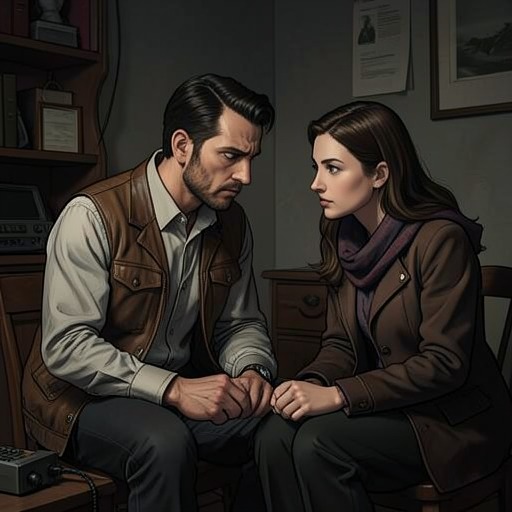
Swiss Army knife
PiercingThe Swiss Army knife is Sanada Chiaki’s compact, bright-red multi-tool, an everyday possession that becomes central to a moment of acute crisis. Its many functions suggest ordinary usefulness, but at the Keio Plaza Hotel its scissors become part of Chiaki’s self-harm, and the object shapes how Kawashima Masayuki approaches, restrains, and tries to help her. Afterward, he cleans it and places it back in her purse; it remains her possession rather than becoming a keepsake or a weapon taken from her.
Design and Place in Chiaki’s Routine
The knife appears among the things in Chiaki’s apartment, resting in a wicker bowl on the dining table. She notices it while she is considering what might ease her nausea and dizziness. Its red finish catches her attention, and she mentally inventories its functions: knife, scissors, can opener, bottle opener, corkscrew, and file. The brief list gives the object the character of a small, adaptable household tool, made to answer many ordinary needs.
Chiaki remembers that she has been forgetting to take it with her, then slips it into her handbag before opening the refrigerator. The account does not explain why she has decided to carry it, so its presence should not be treated as evidence of a plan to harm herself or anyone else. Instead, the detail establishes a simple sequence: the tool is already in her bag when she leaves, and later becomes available in the hotel bathroom. Its arrival there follows from the ordinary act of packing a familiar possession.
The Knife in Chiaki’s Crisis
At the hotel, Chiaki’s encounter with Kawashima turns frightening after he becomes angry. Her sense of panic intensifies; words recede from reach, and memories begin to surface. She tries to keep her appearance composed, but her usual understanding of the present is giving way to the onset of The Nightmare. The knife is in her handbag nearby, a practical object that enters the scene as her ability to communicate and orient herself deteriorates.
When Kawashima opens the bathroom door after receiving no answer, he sees Chiaki using the knife’s scissors to harm herself. The object is no longer simply a set of household implements: in this moment, its scissors are the means through which her distress becomes visible. She keeps her attention on Kawashima, and the scene makes the danger difficult for him to misread. Yet it does not make the knife a straightforward threat directed at him. Her actions and her reactions show that she is frightened and wants help, while also panicking when he moves closer or farther away.
That distinction governs Kawashima’s response. He recognizes that approaching her may provoke another scream, but leaving may intensify her fear. He holds his position, signals for calm, and tries to manage the situation without advancing toward her. The knife is therefore a practical obstacle as well as a sign of crisis: while it remains in Chiaki’s hand, any attempt to intervene risks bringing him into closer contact with someone who is already terrified.
Disarming and Returning It
Kawashima creates an opening by holding out the telephone receiver and presenting the call as a way for Chiaki to communicate. When she comes within reach, he takes hold of her wrist and opens her hand. The knife falls to the floor; he then moves it across the bathroom so it is farther from her. This removes the immediate means of self-harm, but the action is also a physical confrontation: Chiaki struggles, and Kawashima must restrain her while trying to prevent her from screaming or hurting herself further.
After Chiaki agrees to call her office, Kawashima gathers her belongings. He picks up the knife with a tissue, wipes its scissors, folds them back into the handle, and returns the tool to her purse. The exactness of these actions contrasts with the disorder of the preceding crisis. He does not discard the knife or keep it from her; he restores it to the bag among her things. His handling thus serves the immediate practical task of tidying and recovering her belongings, while also returning the object to its place as part of her personal property.
Narrative Significance
The knife’s significance comes from the change in its use and visibility. At home it is one familiar tool among many, named through its useful functions and carried along with Chiaki’s other belongings. At the hotel, the same versatility includes scissors that can be turned toward self-harm. Once Kawashima intervenes, it becomes an object he must move out of reach, retrieve, clean, and return. These changes do not alter what the knife is; they reveal how sharply its meaning depends on the situation around it.
The episode also keeps the object within a relationship defined by uncertainty rather than simple rescue. Chiaki’s possession of the knife is not itself an explanation of her crisis, and Kawashima’s removal of it does not resolve the fear or memories that have overwhelmed her. It does, however, give him a concrete action to take while he tries to help without worsening her panic. When he puts the cleaned tool back in her purse, the scene returns it to ordinary use without erasing what has happened. The Swiss Army knife remains both a commonplace possession and the material center of a brief, perilous encounter.