Event 1
Kawashima's childhood placement in the Home
[Kawashima Masayuki](entity:character-recall-character-kawashima-masayuki-263308ba20bd)’s childhood placement in the [Home](entity:organization-recall-organization-home-d29f76cb3d88) was a turning point in his separation from an abusive household, and the beginning of a pattern of drawing that later echoed the loneliness of his childhood. Recalled in adulthood, the event is neither an uncomplicated rescue nor a clean break: its aftermath includes a new place to live, a way to endure fear, and memories that remain active in his relationships and crises.
## Background and Separation
Kawashima’s father died when he was four. His mother then began abusing him, while leaving his younger brother untouched. Kawashima believed as a child that he must be at fault, and learned to prepare himself for the possibility of being hurt without warning. He also tried to distance himself mentally from what was happening, a strategy he later described as a way to make the experience more bearable.
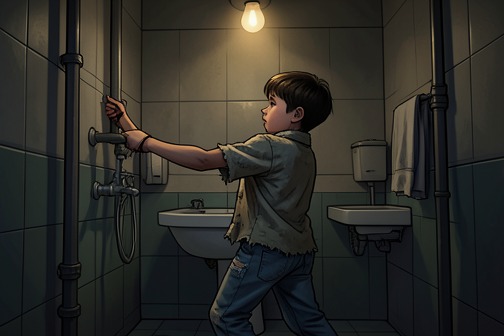
The separation deepened when Kawashima was about five or six. His mother began locking him inside while taking his younger brother to the children’s play area on the roof of a department store in [Odawara](entity:location-recall-location-odawara-9a29888788d3). On one occasion, Kawashima climbed out and followed them; his mother brought him back and tied him to the bathroom pipes. He remembered falling asleep on the tiled floor and waking after dark, looking out at an empty, narrow road. The episode joined physical isolation to an image that would recur in his early drawings.
## Placement and Life in the Home
Later, a middle-school teacher arranged for Kawashima to be placed in a home for abused children. Kawashima stayed there for a little over two years, then went to live with his paternal grandmother. The account establishes the teacher’s intervention as the route into care, but does not describe the placement as erasing what had preceded it.
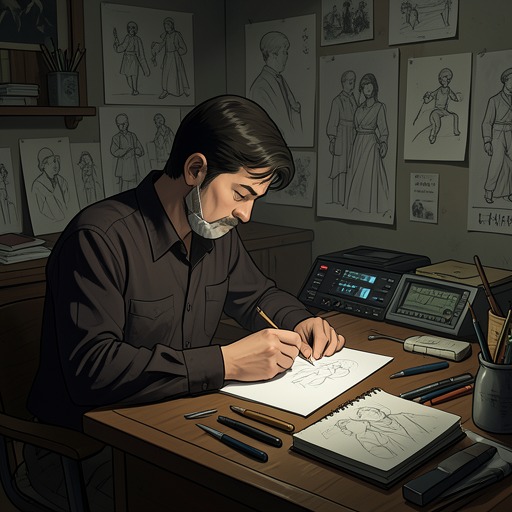
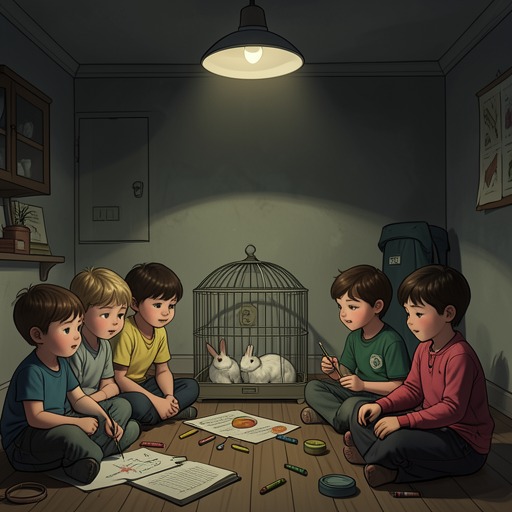
Kawashima began drawing after arriving at the Home, and at first drew only narrow roads at night. In adulthood, he could vividly picture the Home’s playroom: white sand in the sandbox, dolls, stuffed animals, puppets, model vehicles, toy telephones, blocks, a small trampoline, and art materials. He also remembered children who withdrew, resisted interaction, or struggled to control their behavior. His adult recollection slides from observing their difficulties into imagining why adults might reject or mistreat them. That reasoning does not excuse the abuse; it shows how deeply he had absorbed the idea that children could be treated as blameworthy.
## What Followed
At high-school graduation, Kawashima’s mother apologized for how she had treated him, then asked him to forgive her. He initially nodded, but something in him gave way and he slapped her. He later recalled this as the only time he ever struck her. The moment offers no simple reconciliation: the apology was, in his view, self-serving, and his response came after years of injury and estrangement.
Kawashima had not told anyone the full story before disclosing it to [Yoko](entity:character-recall-character-yoko-9ff200158b79). When he bowed his head after speaking, Yoko took his hand and squeezed it. Their relationship gave him a closeness in which he could finally recount what had been kept secret, while the memory of his childhood remained part of the history he brought into their marriage.
## Lasting Significance
The habits Kawashima formed in childhood recur later as ways of managing fear. He described preparing himself for his mother’s unpredictable violence and mentally separating himself from the experience; during a later crisis, he recognized an internal voice that had helped protect him as a child. The novel links this remembered coping strategy to his earlier life without making the placement itself a complete explanation for his adult conduct.
The contrast with his life with Yoko is marked. After meeting her, Kawashima’s bouts of self-loathing largely subsided, and he was not overwhelmed by his old panic when [Rie](entity:character-recall-character-rie-2bac3b40b761) was born. Yet he later describes the return of that fear. The Home therefore stands in his history as both a concrete change in where he lived and part of a childhood whose images, coping strategies, and emotional consequences persisted beyond it.
Event 2
Kawashima's ice-pick stabbing of his former lover
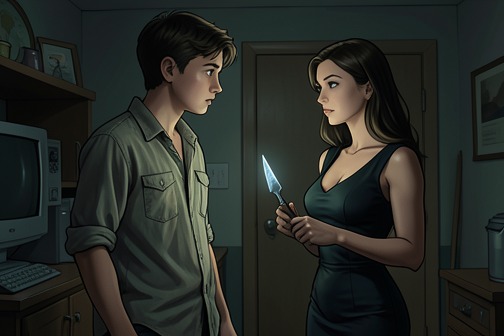
Kawashima’s ice-pick stabbing of his former lover is a formative act of violence that he remembers only in fragments. At seventeen, he became involved with a woman much older than himself; after she rejected him one night, his fear that she would leave became entangled with a need to punish himself and keep her close. The attack ended their shared life, but not its hold on his memory: he later dreamed of the ice pick and the apartment where it might have been left, while remaining unable to recall what happened immediately afterward.
## Relationship and Background
Kawashima met the woman when he was seventeen and lived with her for nearly two years. She was nineteen years older, and strangers sometimes mistook them for mother and son. She worked as a stripper in Gotanda when they met, and during their time together changed clubs many times. The age difference and their domestic closeness formed the setting for an attachment Kawashima experienced as both painful and indispensable.
Their household was unstable. The woman brought men she had met at work back to the apartment and presented Kawashima as her younger brother. After the men left, she would attack him for not intervening, sometimes demanding that he fight or kill them; when he eventually did rough some of them up, she also berated him for jeopardizing her employment. Kawashima viewed her behavior with anger, yet believed that he alone could care for her and that she would therefore never leave him. That conviction helps explain the stakes he attached to her rejection, without making the later violence inevitable or excusing it.
## The Night of the Stabbing
The episode took place after Kawashima returned to the apartment late at night, having sniffed thinner with a friend. His memory of the evening was already uncertain. A kerosene heater was burning, with a pot of water on top, while his former lover sat at a mirror removing her makeup. He tried to embrace her from behind. She pushed him away, and when he tried again, she rejected him more forcefully and objected to the fumes on his breath.
Kawashima understood her anger through the relationship’s established pattern of punishment and abandonment. He thought that he deserved punishment, and that if she was angry but did not punish him, she might leave. He acted against himself and showed her what he had done. She called him foolish and went to shower. Rather than reading her departure as temporary, Kawashima became convinced that she would leave the apartment and not return. His attention narrowed to the need to prevent that separation before she finished showering.
What followed was a sudden break in his awareness. Kawashima later recalled an abrupt sensory disturbance and then the ice pick in his hand as he entered the shower area and stabbed her. The narrative gives the act plainly but leaves its mental transition difficult to explain: fear, self-punishment, and the impulse to stop her departure converge, while the continuity of his memory fails. The scene is not presented as a considered plan. Its violence occurs within a relationship in which he had come to treat her continued presence as something he could not bear to lose.
## Uncertain Aftermath and Recurrent Memory
Kawashima could not remember clearly what happened after the stabbing, including whether the police came. His former lover survived and returned from hospital, but she never spoke to him about the incident. He was not taken in for questioning. He moved out without being asked; when he returned to the apartment in the following weeks, she refused to see him, and eventually she moved away. The account leaves the formal circumstances of the aftermath unknown to Kawashima rather than resolving them through a clear explanation from her or the authorities.
The missing memory returned in dreams. Again and again, Kawashima saw the ice pick fall onto the bathroom floor and roll beneath the tub; in the dream he searched for it and burned his hand at the water heater. Sometimes he woke convinced that his hand was actually on fire. He believed the ice pick might still be under the bathtub, and imagined that one day he would go back to look. The object thus became a focus for a past he could neither fully remember nor regard as finished.
## Later Recall and Significance
Years later, while walking to an all-night convenience store, Kawashima noticed a woman smoking at a window and began recalling his former lover. As the memories gathered, his heartbeat returned to normal; inside the store, however, an ordinary exchange between the clerk and arriving customers brought back his familiar sensation of being separated from his own body. The recollection therefore sits beside a larger pattern in which childhood experiences of abuse and dissociation return in the present. It does not establish that those experiences caused the stabbing, but it shows how the past remains active in his bodily and emotional life.
The episode also marks a limit in what Kawashima can tell [Yoko](entity:character-recall-character-yoko-9ff200158b79). When he decided to disclose the secrets he had kept from her, he excluded the stabbing, both because his memory of it was vague and because he feared that telling her might drive her away. His later marriage to Yoko and the near-disappearance of his old panic did not erase the episode; its return belongs to the renewed crisis that had begun ten nights earlier. The stabbing matters not only as an act of violence against a former lover, but as a concealed and unresolved memory that complicates Kawashima’s sense of the safer life he had built.
Event 3
Kawashima's intrusive fear of harming Rie
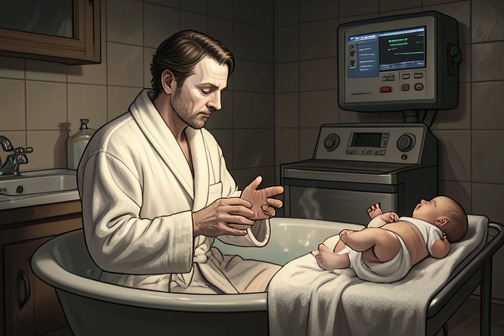
[Kawashima Masayuki](entity:character-recall-character-kawashima-masayuki-263308ba20bd)’s intrusive fear of harming his daughter [Rie](entity:character-recall-character-rie-2bac3b40b761) begins with a thought he cannot resolve and develops into a nightly ritual at her crib. Its importance lies in the change from dread of an unwanted possibility to a dangerous attempt to master that dread through violence against another person. The story distinguishes the fear that he might harm Rie from the later decision to plan an attack, while showing how the first becomes entangled with the second.
## The thought begins
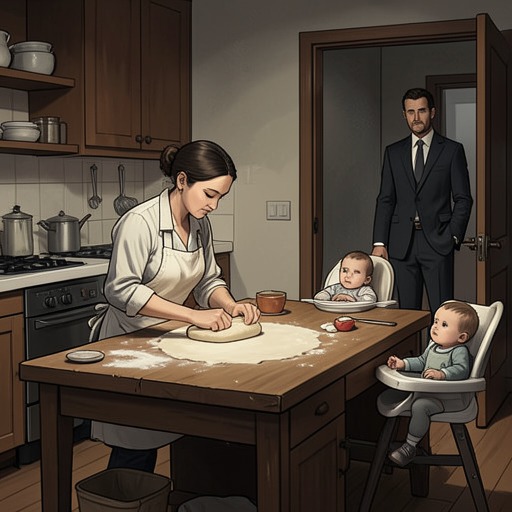
Ten nights before the scene at Rie’s crib, Kawashima had finished bathing her and handed her to [Yoko](entity:character-recall-character-yoko-9ff200158b79), who was waiting with a towel. As Yoko dried the baby and spoke to her, Kawashima sat in the warm bath, smiling at them. The sudden thought that he might stab Rie with an [Ice pick](entity:object-recall-object-ice-pick-e63115f333d4) interrupted this ordinary family moment. He became uncertain of himself and did not register Yoko’s calls until she had tried several times to get his attention. When he came back to the moment, he described himself as daydreaming, but his skin had turned to gooseflesh despite the warm water.
The thought unsettles him in part because it concerns a child he is caring for, rather than a threat he can locate outside himself. As Yoko’s pregnancy advanced and fatherhood became real to him, he had worried that the baby might inherit his insomnia, which had troubled him since elementary school. He understood sleep as essential to a newborn and feared the prospect of an infant who could not sleep. His concern for Rie’s wellbeing thus predates the violent thought; the thought does not arrive as an expressed wish to hurt her, but as a possibility that terrifies him precisely because he cannot dismiss it.
## A nightly check at the crib
After the image of the Ice pick appeared, Kawashima could not get it out of his mind. He tried repeatedly to reassure himself that he would never stab Rie, but the reassurance did not settle the doubt. Instead, each night he found himself unable to go to bed until he had stood over her crib with the Ice pick, checking that he would not harm her.
The narration gives this ritual a precise setting and duration. Well after midnight, Kawashima shades a penlight with his palm so that it illuminates Rie while the rest of the bedroom remains dark. He silently confirms that she is asleep, then looks back at Yoko, whose regular breathing tells him she has not woken. This has become a repeated pattern: he has watched over the baby for ten consecutive nights while Yoko sleeps. The quiet domestic scene is therefore also a private test that he cannot finish simply by telling himself he is safe.
Kawashima’s response includes physical symptoms of acute distress. The fear is associated with sweating, exhaustion, prickling pain, and, at times, a white mist that clouds his vision. He tries to calm himself by recalling his decision not to stab Rie and by repeating that everything will be all right. These efforts offer him a way to endure the immediate anxiety, but they do not prevent the thought from returning or end his nightly checking.
## From fear to a proposed solution
The decisive turn comes when Kawashima’s other self interprets his earlier experience of violence as evidence that stabbing someone else can overcome his fear. That voice connects the recollection of a woman he had stabbed with the temporary calming of his heartbeat and presents another attack as a way to relieve the anxiety about Rie. Kawashima absorbs this reasoning as a revelation. The shift is not that he has discovered that Rie is in danger from someone else; rather, his effort to answer uncertainty about his own thoughts is redirected toward a planned assault on another person.
After this turn, he begins to treat violence as a problem to organize. He decides that his intended victim must be a prostitute and weighs the location, the possibility of witnesses, and the risk that the victim might escape. He considers how to avoid identification and detection, including whether the victim would have a pimp or an office likely to report her missing. He also plans to restrain and gag her, reasoning that an attack would require control over the circumstances and the victim. The elaborate planning marks a consequential contrast with the earlier nightly scene: the Ice pick that had been present as the focus of a feared possibility is now incorporated into a deliberate plan against someone else.
## Planning, control, and interruption
Kawashima’s planning extends to the setting and the people who might notice him. He rejects a love hotel because staff or a caller from a sex business might check on the room, and because its narrow entrance could impede escape. He considers regular hotels, where a registration card and the front desk could expose him, then tests how little attention he might attract. At the [Keio Plaza Hotel](entity:location-recall-location-keio-plaza-hotel-f868f4820a36), he arrives by hotel bus at the scheduled time on a busy Friday, when wedding guests and other gatherings crowd the lobby. The reception congestion allows him to check in with little scrutiny; he carries the Ice pick and other belongings in an ordinary-looking overnight bag.
These preparations show how far the original fear has moved from an involuntary thought. Kawashima now searches for predictability, trying to reduce the risks of a crime by anticipating staff behavior, witnesses, and police investigation. Yet the plan depends on circumstances he cannot fully control. At the hotel, after avoiding an elderly couple in the corridor, he sees Sanada Chiaki stagger out of room 2902. Her unexpected appearance interrupts his movement through the corridor and prompts him to hurry toward her once the couple has gone. The encounter illustrates the instability of his carefully managed setting; the available evidence establishes the interruption, not a resolution of his fear about Rie.
The episode’s central contrast is between Kawashima’s repeated efforts to confirm that he will not harm his daughter and his later effort to make another person the object of violence. The night ritual briefly gives form to his fear, but it does not dispel it. As his thinking changes, the same Ice pick shifts from an instrument he dreads using against Rie to an element in a calculated plan. The narrative therefore treats the fear and the planned attack as connected developments, not as identical states: the first is an unwanted and recurring doubt, while the later scheme involves deliberate preparation and a chosen target.
Event 4
Kawashima's convenience-store revelation
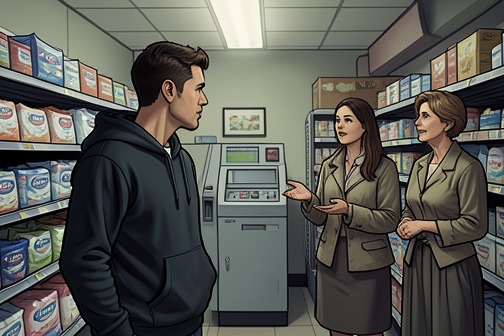
[Kawashima Masayuki](entity:character-recall-character-kawashima-masayuki-263308ba20bd)’s convenience-store revelation is the psychological turning point at which his fear of stabbing his baby is recast, in his own mind, as something to overcome by harming someone else. A brief errand for diapers becomes a scene of dissociation: an apparent second self appears among the shelves and supplies the answer Kawashima will use to organize a murder plan. The episode does not resolve his fear; it converts that fear into a rationale for violence.
## The Store and the Split Self
Kawashima reaches a convenience store after recalling an earlier assault on a woman with whom he had lived. At the entrance, he notices that his heartbeat has returned to normal. Inside, the warm air and the ordinary activity around the counter coincide with a familiar sense that he is no longer fully present in his own body, but has separated from it and is waiting nearby. The shift is not presented as a supernatural event: the vision that follows takes shape through Kawashima’s own experience of dissociation.
A clerk calls out to a young couple entering from the cold. After they move toward the magazines, Kawashima goes to the shopping baskets and then looks toward disposable diapers on a high shelf. He recalls [Yoko](entity:character-recall-character-yoko-9ff200158b79) saying that they never seemed to have enough. He decides to buy some, but the practical errand becomes bound up with his fear that he has separated from himself and is waiting among the packages.
Kawashima then sees this other self a few paces ahead, holding a package of diapers. The figure points to the baby pictured on it and beckons him closer. The baby image makes the vision’s connection to his current fear unmistakable: the object he has come to buy for his family becomes the surface on which the other self stages a disturbing message. As Kawashima approaches, the figure pinches the package so that the baby’s face is distorted. The scene joins ordinary domestic responsibility to the threat Kawashima fears within himself, without establishing that the threat has actually been carried out.
## The Explanation and Its Reversal
The other self recalls Kawashima’s puzzlement about having watched Basic Instinct calmly. It links that calm to his memory of stabbing his former lover: remembering the assault had settled his heartbeat and eased his anxiety about stabbing the baby. The explanation is consequential because it treats a past act of violence not as a warning or a source of remorse, but as a mechanism that can regulate present fear. Kawashima’s memories, rather than remaining behind him, become an argument for repeating violence.
The vision culminates in the statement, “There’s only one way to overcome the fear.” Kawashima cannot answer before the two selves merge. The voice continues within him and makes the implication explicit: he must stab someone else with an ice pick. He stands in a stupor, experiencing the conclusion as a revelation. The moment is therefore both an apparent end to his immediate uncertainty and a moral reversal: what had been fear of harming his child becomes a proposed reason to harm another person. Nothing in the episode makes the proposal necessary; it is the conclusion produced by Kawashima’s distorted reasoning.
## From Revelation to Plan
After the store episode, Kawashima describes his thoughts about violence as producing a kind of creative calm. He contrasts the man considering a killing with the man who had smiled at Yoko that morning, recognizing a gap between these states without being able to explain it. This contrast shows how the revelation can coexist with the appearance of ordinary family life: the calm he finds in planning does not mean that the underlying danger has passed.
He takes an article, sex-industry publications, and a notebook from his briefcase and begins setting out a plan. He decides that his intended victim should be a prostitute, and weighs how to choose someone whose disappearance would attract less attention. He rejects an outdoor location in favor of a hotel room, reasoning that he needs control over the setting and the opportunity to restrain the intended victim. His notes turn the revelation’s broad command into practical decisions about the target, location, concealment, and avoidance of identification. The planning is presented as deliberate, not as an action compelled by the vision.
He also researches hotel procedures and ways of misleading investigators. He tests a reservation at the [Akasaka Prince Hotel](entity:location-recall-location-akasaka-prince-hotel-5b4b0531457c), considers which [West Shinjuku](entity:location-recall-location-west-shinjuku-0f9bcd6e30b9) hotels might attract less attention, and writes that poor service could mean fewer eyes on a guest. These details reveal the widening distance between the revelation’s seemingly sudden certainty and the sustained calculation that follows it: the vision supplies his violent premise, while Kawashima himself develops the means and precautions.
## The Intended Encounter
Kawashima ultimately checks into the [Keio Plaza Hotel](entity:location-recall-location-keio-plaza-hotel-f868f4820a36), choosing a busy afternoon when the lobby is crowded with wedding guests and conference attendees. He arrives by hotel bus from [Shinjuku](entity:location-recall-location-shinjuku-17bbde8f9594) Station and carries an overnight bag containing an ice pick, a knife, and a change of clothes. His preparations reflect the assumptions formed during his planning: he expects crowds and inattentive staff to reduce scrutiny, and believes that his disguise and arrangements will limit the chance of recognition.
That expectation meets an unpredictable human encounter. As Kawashima heads back toward his room, he sees Sanada Chiaki stagger into the corridor from another room, naked and visibly distressed. He has already been considering the risks of being seen with the objects in his bag, and the appearance of another person in the corridor changes the immediate situation. The convenience-store revelation thus leads into a plan whose careful arrangements cannot control everything that happens around him. Its significance lies not in a successful resolution of fear, but in the sequence it initiates: dissociation and memory become a violent conclusion, the conclusion becomes a written scheme, and the scheme encounters circumstances Kawashima did not anticipate.
Event 5
Chiaki's first Nightmare episode
Sanada Chiaki’s first Nightmare episode occurs in her second year of high school and marks the beginning of a recurring psychological condition. The episode is first disclosed years later, when another onset prompts her to remember how the experience began: an ordinary gathering with classmates abruptly gives way to terror and a disorienting change in perception.
## Circumstances and Onset
Sanada Chiaki is at the home of a classmate whose parents are away. The group watches an explicit video that has not been rewound, so it begins in the middle of a scene. Sanada Chiaki cannot recall how long she watches. She remembers that her stomach begins to hurt, then, without warning, she is overwhelmed by a fear she cannot name.
The episode is rendered as a sudden break in perception rather than as a clearly understood event. Sanada Chiaki experiences something like a strobe flashing before her eyes, while a different scene seems to unfold in front of her. The account does not explain what that scene contains; its force lies in the abruptness of the transition and in her inability, at the time, to make sense of it.
## Recurrence and Effects
The first episode becomes the start of a pattern: by the time Sanada Chiaki recalls it, the Nightmare has visited her seven times. She identifies the loss of sexual desire as its earliest warning. Even when she tries to have sex to relieve the anxiety, the experience feels disconnected from her, and orgasm becomes impossible. At times, she loses track of where she is or what she is doing.
The episodes do not follow a fixed timetable. One period lasts 938 days, making the condition an extended interruption rather than a brief disturbance. Sanada Chiaki describes desire as if it has become unable to reach the surface, an account that connects the internal experience to its outward consequence: she recognizes that something is wrong before she can say precisely what is happening to her.
## Self-Observation and Narrative Return
During these states, Sanada Chiaki sometimes feels that another person is watching her from the ceiling. She recognizes this watcher as herself, observing herself from outside. At first she asks the imagined observer to stop looking; later she falls silent, afraid that speaking to it too much might divide her into two people. The first episode thus retrospectively acquires significance as the beginning of a fractured, alienating form of self-perception, not only as a moment of fear.
The memory returns when the Nightmare starts again years later. The narrative moves from Sanada Chiaki’s present distress back to the high-school gathering, then uses her account of recurrence to show what the first episode initiated. Its cause remains uncertain: the video and the onset of pain precede the terror, but the recollection does not offer a definitive explanation. The episode’s importance lies instead in the pattern it inaugurates and in the way later returns make its beginning newly legible.
Event 6
Chiaki's disclosure of her father's abuse
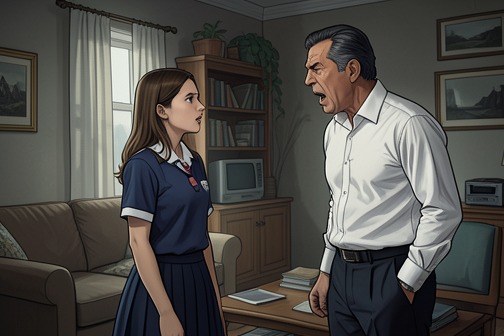
Sanada Chiaki’s disclosure of her father’s abuse is recalled as a turning point: after years of being made to keep the abuse secret, she told a friend and then [Yoko](entity:character-recall-character-yoko-9ff200158b79). Yoko confronted him, and he responded by yelling at Chiaki, turning disclosure into a new source of conflict.
## Background and Secrecy
In Sanada Chiaki’s recollection, her father’s public appearance stood in sharp contrast to his abuse. He wore a freshly laundered, starched white shirt and carefully creased trousers, and carried a white handkerchief wherever he went. He presented this fastidiousness as evidence of inner purity, a claim Chiaki later regarded as profoundly at odds with his conduct.
He had instructed Chiaki not to tell anyone about the abuse, including Yoko, and made secrecy seem necessary to protect the family. The memory thus links the abuse not only to his actions but to the pressure placed on Chiaki to conceal them.
## The Disclosure
In middle school, Sanada Chiaki first told a friend what had happened, then told Yoko. The sequence marks a break in the silence her father had demanded: she confided in someone outside the family before bringing the abuse to her mother.
Yoko spoke to Chiaki’s father about the disclosure. The confrontation brought the hidden conflict into the open, but the recollection does not describe it as an immediate resolution or reconciliation.
## Retaliation and Aftermath
As Yoko addressed him, Chiaki’s father listened while twisting his white handkerchief, then began yelling at Chiaki and accusing her of lying. Chiaki remembers this as the first time she had heard him raise his voice, but not the last. Afterward, she experienced him as a different person, one who shouted over even small matters.
The episode therefore has two opposing consequences: Sanada Chiaki breaks the imposed secrecy by telling others, yet her father’s response makes the household more openly hostile. The contrast between his immaculate clothes and his denial sharpens the memory’s central conflict between an image of purity and the abuse and intimidation concealed beneath it.
Event 7
The Keio Plaza Hotel encounter
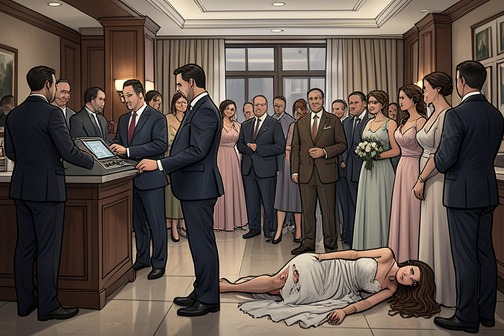
[The Keio Plaza Hotel encounter](entity:event-recall-event-the-keio-plaza-hotel-en-46beb9f630cd) is the point at which [Kawashima Masayuki](entity:character-recall-character-kawashima-masayuki-263308ba20bd)’s planned violence is disrupted by Chiaki’s self-harm crisis. What he has organized as a controlled, concealed operation instead becomes an emergency that draws him into caring for the very woman he had intended to kill.
## Causes and Setup
Before the encounter, Kawashima had spent hours turning his plan into a practical scheme. He meant to select a woman working independently, avoid places where staff or associates might check on her, and use a hotel room where he could restrain her. He also considered how to mislead the police, including planting clues that might suggest an irrational offender, and judged that hotels with busy reception desks would attract less attention. His notes show how much he relied on controlling the setting: the victim, the room, the staff, and even the appearance he would present at check-in all became parts of the plan.
He tested that strategy at the [Keio Plaza Hotel](entity:location-recall-location-keio-plaza-hotel-f868f4820a36). On a Friday afternoon, he arrived by hotel bus from the west exit of [Shinjuku](entity:location-recall-location-shinjuku-17bbde8f9594) Station and checked in amid a crowded lobby, where weddings and other gatherings kept the front desk busy. He was assigned a room on the twenty-ninth floor. His overnight bag contained the weapons and a change of clothes; he had also changed into a cheap suit and glasses at Haneda Airport, and acquired a discarded Kansai sports daily as a possible prop for his intended misdirection. The ordinary bustle that helped him pass unnoticed appeared to confirm that his preparations had worked, but the encounter would soon escape the limits he had tried to impose on it.
## The Plan Breaks Down
After Chiaki remained in the bathroom for more than fifty minutes without answering, Kawashima opened the unlocked door and found her injuring herself with the scissors of a [Swiss Army knife](entity:object-recall-object-swiss-army-knife-4ccb0e3d8b0e). He moved toward her, but her scream made him stop: she seemed to panic when he approached and to become frightened again when he withdrew. He recognized in this pattern the fear of children he had known at the [Home](entity:organization-recall-organization-home-d29f76cb3d88), and understood her actions as an attempt to ask for help when she had no other way to do so.
When the telephone rang, Kawashima used the moment Chiaki moved within reach to take the knife from her. She struggled, and when he held her to prevent another scream, she bit his hand. He did not pull away. Instead, he repeatedly reassured her in a gentle voice that she need not be afraid. The words gradually reached her; she recognized that she was both angry and frightened, feelings no one had previously named for her, and relaxed in his arms.
Kawashima carried Chiaki to the sofa, dried her, and assessed her injuries. His original intention had not yet disappeared: he considered whether he could still kill her, with the ice pick and knife nearby. But her vulnerable, withdrawn state made the act seem intolerable to him. He regarded her as a kindred spirit and abandoned the attack. The operation he had planned was now compromised: his hand was injured, his gloves were off, and his fingerprints and other traces could connect him to the room. He concluded that he would have to abandon this attempt and begin again.
## Recognition and Aftermath
The crisis did not end when Kawashima abandoned the attack. After a brief nap, Sanada Chiaki came back to her senses, realized she needed medical attention, and searched the room for the man who had stayed beside her. Finding his clothes and overnight bag but not him, she went into the corridor without realizing she was naked. Kawashima, who had been trying to avoid attracting notice from an elderly couple nearby, saw her emerge from the room and hurried to bring her back inside. She recognized him by the wound on his hand: the man who had held her and spoken calmly to her was the same person she had bitten.
Kawashima decided to take Sanada Chiaki to a hospital rather than return to his hotel or resume his plan. For her, the decision confirmed a bond she had already begun to imagine. She recognized him as the recurring, unidentified man who had taken her to a hospital before, and understood his actions that night—not only accompanying her for treatment but waiting outside—as evidence of unusual devotion. Her perception and his circumstances diverged: he was still trying to manage the consequences of a failed plan, while she saw someone who had chosen to remain with her.
After the hospital visit, Sanada Chiaki came through the emergency-room doors and found Kawashima waiting in the cold with two bags and her handbag. He ran toward her, and she moved to him despite the numbness in her treated leg, eager for his support. In the taxi, she invited him to stay at her apartment. He agreed in part because he could not take her back to the Akasaka hotel, where he had registered under his real name. The invitation carried a different weight for Sanada Chiaki: she had recast the encounter with a client as the arrival of the unknown man she believed had repeatedly cared for her. The failed attack thus left them bound by a crisis neither understood in the same way.
## Narrative Significance
The encounter turns on the collapse of Kawashima Masayuki’s effort to make violence predictable. His preparation treats the hotel as a system whose staff, entrances, guests, and traces can be managed; once Sanada Chiaki’s crisis begins, each decision instead depends on what she does next and how she responds to him. The practical scheme gives way to immediate obligations: he has to prevent further harm, get her medical care, and decide where they can go without exposing the plan he has abandoned.
The scene’s reversal is sharpened by the difference between what each character knows. Kawashima enters the room intending violence, then interprets Chiaki’s fear through his memory of frightened children at the Home; Chiaki, unaware of his original purpose, recognizes him as the man who has taken her to a hospital before. Her growing trust therefore does not arise from a shared understanding of the night. The encounter binds them through actions that mean different things to each: for Kawashima, an aborted attack and its consequences; for Chiaki, the apparent return of someone who has repeatedly cared for her.
Event 8
Chiaki and Kawashima’s apartment confrontation
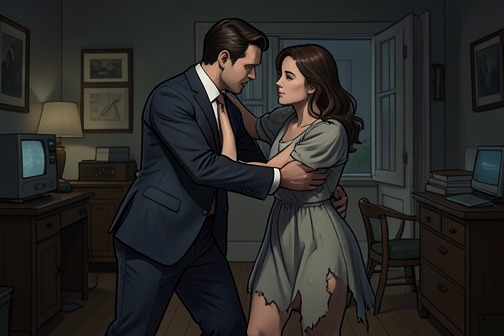
Chiaki and [Kawashima Masayuki](entity:character-recall-character-kawashima-masayuki-263308ba20bd)’s apartment confrontation is a violent reversal of the roles each has assigned the other: Sanada Chiaki first incapacitates and attacks him, but Kawashima Masayuki’s returning awareness turns the danger back on her. The encounter culminates not in the planned killing but in his collapse, her escape, and her discovery that the man she had partly imagined as a rescuer had prepared for murder.
## Background and Approach
The confrontation is framed by Kawashima Masayuki’s deliberate preparations for an attack on a sex worker. In his notes, he weighs how to select a target, where to carry out the killing, how to restrain the woman, and how to misdirect the police. He rejects public places and considers the practical risks of different kinds of hotel, including the possibility that staff or a client’s agency might notice trouble. For a regular hotel, he tests the registration process at the [Akasaka Prince Hotel](entity:location-recall-location-akasaka-prince-hotel-5b4b0531457c) and reasons that a false name and number could pass without identification if he checks in on time. Later he favors hotels in [West Shinjuku](entity:location-recall-location-west-shinjuku-0f9bcd6e30b9) with crowded desks and poor service, calculating that inattentive staff would focus less on guests.
At the [Keio Plaza Hotel](entity:location-recall-location-keio-plaza-hotel-f868f4820a36), his arrival initially seems to confirm the usefulness of those calculations. He checks in amid a crowded lobby, where weddings and other events have overwhelmed the front desk; neither the clerk nor a bellboy pays him much attention. His overnight bag contains a change of clothes and weapons, while his notebook records the practical details of the plan. This careful preparation establishes the danger that Sanada Chiaki faces, but the later confrontation shows how little control his elaborate scheme gives him once the people in it act unpredictably.
## Drugging and Reversal
At the apartment, Sanada Chiaki puts crushed [Halcion](entity:object-recall-object-halcion-16d018e9b9ce) tablets into Kawashima Masayuki’s soup, concealing the powder in a spice bottle whose label says thyme. She adds extra curry powder to disguise the medicine’s bitterness. He eats the soup and two buttered rolls without suspecting that she has drugged him. She expects the dose to make him unconscious, and her reasoning is shaped by her fear that a sexually aroused response might revive earlier traumatic memories. The meal is therefore both an ordinary domestic interlude and the means by which she tries to gain control of a dangerous situation.
As the drug takes effect, Kawashima Masayuki struggles to remain upright and calls for [Yoko](entity:character-recall-character-yoko-9ff200158b79). Sanada Chiaki hears the name and reacts with a sudden surge of anger. She takes a can opener from the kitchen drawer and strikes him as he calls for his wife. Her attack breaks through the drugged state enough for him to become acutely aware of danger. The shift is immediate: the man who had seemed helpless is no longer simply asleep, while Sanada Chiaki, having spent her anger in the assault, is left crying and unsure whether he will rise again.
## Trauma and Renewed Danger
Kawashima Masayuki’s return to awareness is bound to the childhood strategies he formed under his mother’s beatings. As a boy, he repeatedly told himself that the person being hit was not really him, training himself to separate from pain while remaining close enough, in his own mind, to return. During the confrontation, an inward voice recalls those rules: do not apologize, wait for the attack to end, and meet the other person’s eyes. The voice once helped him endure abuse; now it helps him orient himself after Sanada Chiaki’s blows. The memory does not simply explain his reaction but makes an old survival mechanism active in the present.
That partial recovery does not restore a safe or reliable understanding of the situation. Kawashima Masayuki hears himself calling for Yoko and interprets Sanada Chiaki’s fear through memories of his mother. He remembers striking his mother after she appeared frightened and asked for forgiveness, and the belief that no one could be helped becomes part of his distorted reading of the woman before him. He tells Sanada Chiaki to come closer, grabs her, and uses the cord from an espresso machine to bind her wrists. Her attempt to resist fails, and he brings her into the kitchenette. The power dynamic has reversed again: the person who had drugged and attacked him is now restrained, while his own past is directing his actions.
## The Ice Pick and Interruption
Kawashima Masayuki next turns to a package he has prepared. He expects to find a knife, but when the wrapping opens, he sees an ice pick. Its appearance brings an image of a baby in a crib to mind, linking the present threat to his recurring fear of harming the infant. He nevertheless moves to use the weapon against Sanada Chiaki. Before he can do so, his thoughts are overtaken by the remembered presence of his mother: the sound of a locked door and the sense that she has entered and taken possession of his body. The experience overwhelms him, and he loses consciousness.
This interruption prevents the attack from reaching its intended conclusion, but it does not erase the danger or resolve the confrontation through a clear reconciliation. The ice pick is both a practical instrument in Kawashima Masayuki’s plans and a trigger for memories that disorganize his present awareness. His carefully prepared course of action breaks down at the moment when the weapon becomes real and the past intrudes most forcefully.
## Escape and Discovery
Sanada Chiaki cuts the cord binding her wrists with cooking scissors and removes the cloth from her mouth. She watches Kawashima Masayuki, then searches his overnight bag. There she finds his notebook and another wrapped package containing a large knife. She reads the notebook from beginning to end, but cannot determine whether it records a real crime in preparation or the fantasies of a disturbed man. What it does make clear to her is that she was not the object of a distant admirer’s devotion and that he had not come to rescue her. Whether he is a murderer or someone pretending to be one, the notebook recasts their encounter as a transaction in which she was treated as a body to rent.
She does not call the police, anticipating that reporting the incident would require a prolonged time at the station. Instead, exhausted and in pain, she gets into bed beneath the covers. She is not afraid that Kawashima Masayuki will wake soon because the Halcion should keep him unconscious for hours, but she cannot sleep. She also revisits the moment when the ice pick was at her stomach and wonders why she felt no fear: perhaps she had accepted death, was too depleted to react, or had been curious about what the stabbing would be like. The event ends with that uncertainty rather than a settled interpretation. Sanada Chiaki has escaped immediate danger and learned the truth of his plan, but the confrontation leaves both her understanding of him and her own response to the threat unresolved.