
The House’s Forgotten Inhabitants
PiranesiThis flow traces the evidence of earlier inhabitants and the way Piranesi’s care gives their otherwise unknown lives a place in the present.
increasing Bearing strength in each event
 decreasing
Bearing strength in each eventdecreasingThe Biscuit-Box Man
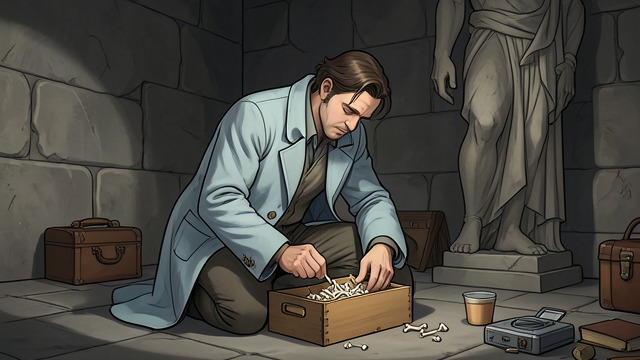
Bones in a Niche
An arranged skeleton
Piranesi discovers bones tied together with seaweed twine and small bones stored in a biscuit box. When the bindings decay, he repairs them with fish leather.
A person, not an object
The careful arrangement becomes a sign of someone’s past life. Piranesi maintains it as a form of respect, even though he cannot identify the person.
The Older Fish-Leather Man
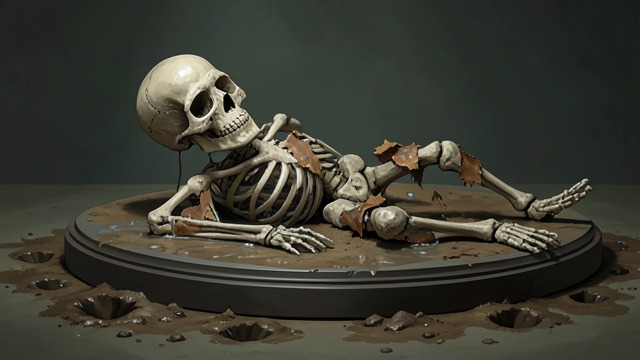
Traces of an Earlier Burial
Worn remains
One skeleton is incomplete, its bones worn by water and marked by small holes and fish-leather fragments. Piranesi infers that it was once displayed differently.
A community of the dead
He imagines later people patiently gathering the remains and placing them with their own. The arrangement suggests that care has passed through generations of inhabitants.
The Folded-Up Child
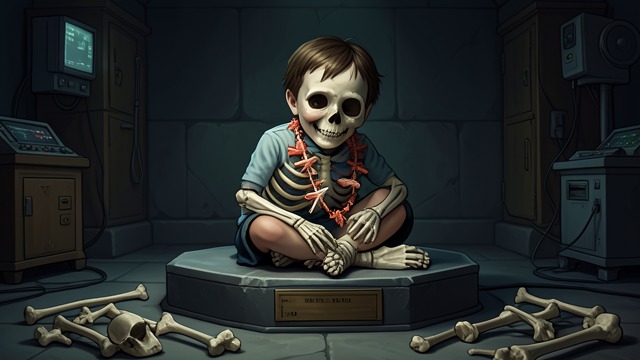
A Child on the Plinth
A small and solemn figure
Piranesi finds the child’s skeleton curled around its knees, wearing a necklace of coral and fishbones. He wonders how she belonged in a world with so few living people.
An imagined relationship
He believes the House may have intended her as his wife and begins bringing offerings. The thought gives shape to his hope of sharing what the House provides.
Thirteen Dead Evacuated
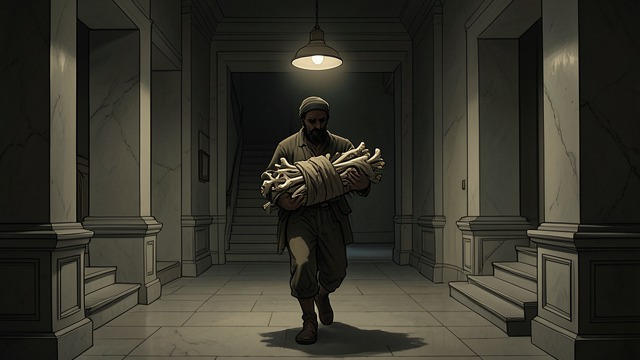
Moving the Remains
A dangerous task
Piranesi carries several groups of bones into the Upper Halls, wrapping them carefully so that fragments are not lost. He organizes the move around the nearest staircases and safe plinths.
Care under pressure
The work consumes days before the flood, but Piranesi refuses to treat the dead as expendable. Their safety is part of his responsibility for the House.
Names Still Unknown
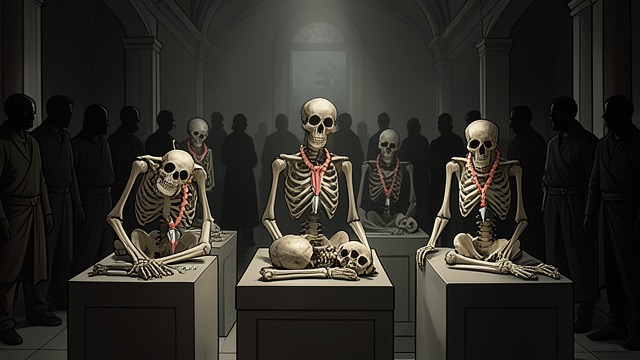
Questions Without Answers
Possible identities
Raphael asks whether the dead include Stanley Ovenden, Sylvia D’Agostino, and Maurizio Giussani. Piranesi cannot tell which bones belong to whom.
Humanity amid uncertainty
Their identities remain incomplete, but their lives matter to both visitors. The dead become a link between Piranesi’s House and the outside history that produced it.
During Piranesi’s early explorations
During Piranesi’s examination of the People of the Alcove
During Piranesi’s visits to the Sixth South-Eastern Hall
During the three days before the Great Flood
After the flood and Raphael’s arrival
