
Scientific Knowledge and Organic Life
PossessionAsh’s natural-history interests and Swammerdam poem explore how scientific observation unsettles religious certainty while intensifying wonder at life’s continuity.
increasing Bearing strength in each event
 decreasing
Bearing strength in each eventdecreasingAsh at the Seashore
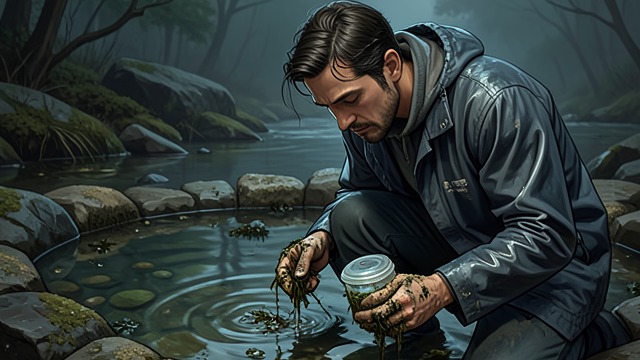
The Minute World
Collecting and Observation
Ash studies sea anemones, polyps, and microscopic organisms along the Yorkshire coast. He tries to understand reproduction, development, and the relation between individual life and larger systems.
Ethical Unease
His collecting is not harmless: specimens are killed and dissected in the name of knowledge. The novel connects curiosity to both discovery and damage.
The Swammerdam Monologue
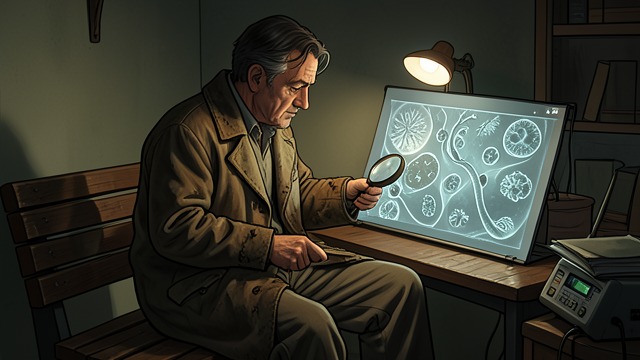
A Small Life at the Edge
The Scientist’s Vision
Ash imagines Jan Swammerdam at the end of his life, looking back on microscopic work and financial ruin. The poem makes minute organisms a route toward questions about creation and mortality.
The Cost of Knowing
The scientist’s discoveries multiply the world instead of reducing it to an easy order. Scientific vision brings wonder, but also fear that human beings are only one life-form among many.
Development and Faith
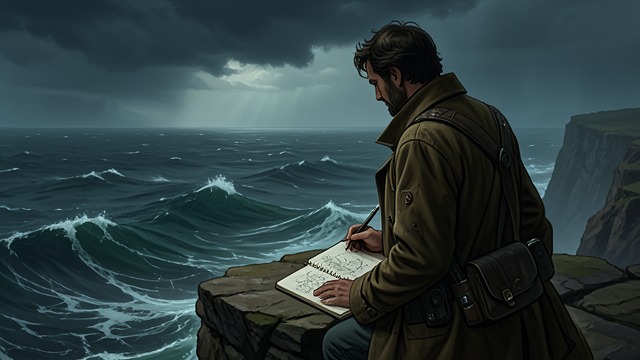
A Changing Earth
Darwin and Lyell
Ash considers geological time and the gradual modification of organisms. The evidence for development fascinates him even as it complicates belief in repeated acts of divine creation.
A Theological Question
Ellen’s journal records her own effort to reconcile new scientific knowledge with Christian faith. Their intellectual world does not resolve the tension; it makes the question more exact.
The World as an Organism
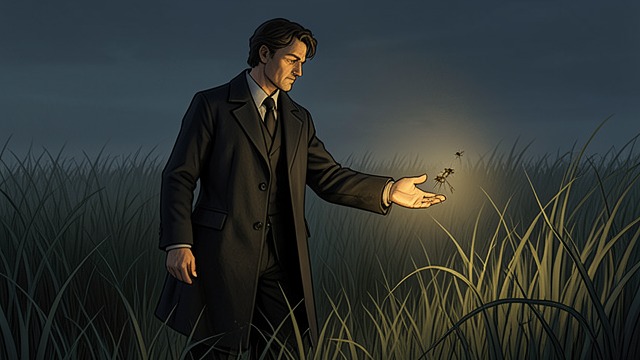
Life Connected Across Scale
A Shared System
Ash is drawn to the possibility that life continues through linked processes, from microscopic organisms to human bodies. The idea recalls Plato’s world animal and challenges a strictly individual view of death.
Individual Limits
Continuity does not guarantee personal survival. Ash’s poetry keeps both possibilities open: life may persist as a whole while each person remains finite.
The Novel’s Living Evidence

Reading as Observation
Language and the World
Roland rereads Ash’s nature-rich poetry and finds the words not merely symbolic but attentive to actual textures and living forms. The poem holds observation and metaphor together.
A Continuing Question
The scientific thread does not provide a final answer about souls, but it gives the novel a way to think about change, inheritance, and matter. Knowledge becomes a practice of wonder rather than mastery.
June 1859, during the Yorkshire expedition
Composed during Ash’s natural-history period
In Ash’s 1859 letters to Ellen
During Ash’s later scientific reflection
During Roland’s final reading in Putney
