Jamaica
QueenieJamaica functions in the novel less as a directly depicted setting than as a place carried through family memory and everyday speech. It is where Veronica recalls a difficult adolescence and a relationship that shaped her life; later, the island surfaces in family conflict and in the assumptions and habits that travel with the family to London. These references make Jamaica part of Queenie Jenkins’s present even when the narrative remains elsewhere: it is an origin, a remembered home, and sometimes an imagined destination invoked by relatives.
Family History and Veronica’s Memories
Veronica’s account gives Jamaica its most sustained connection to the family’s past. She recalls becoming pregnant at fourteen by the man Queenie Jenkins knows as her grandfather, Wilfred. After he disappeared, Veronica was left in Jamaica with her daughter Maggie, living with Gran-Gran. Her recollection locates early motherhood within a household shaped by the authority of an older generation and by the consequences of abandonment.
Veronica also remembers falling in love with Albert, a kind man who met her at the end of a lane and helped carry sugarcane to the house. Their relationship was secret: Veronica believed that bringing another man into Gran-Gran’s home would compound the shame she felt after her first pregnancy. Albert cared for Veronica and Maggie for two years, and Veronica describes him as generous and attentive. He saved money for gold and made a necklace himself, giving it a V for Veronica. The lane, the sugarcane, and the handmade pendant make the remembered Jamaica specific, while the secrecy around the relationship shows how little freedom Veronica felt she had within the household.
The account also complicates the family story Queenie Jenkins has inherited. Veronica’s present marriage to Wilfred might make her seem to have known no romantic loss, but her memories reveal an earlier separation and a love she could not openly acknowledge. Jamaica is therefore not simply a point of origin: it holds an intimate history that becomes visible only when Veronica chooses to tell it.
A Place of Separation and Family Conflict
Jamaica recurs as a location of distance between relatives. During an argument about Queenie Jenkins’s future, Veronica says that Queenie’s father is in Jamaica with young women, while Queenie is living under Veronica and Wilfred’s roof. The reference sharpens the practical stakes of the dispute: Veronica presents the grandparents’ home as the place available to Queenie, in contrast with a father who is elsewhere. Jamaica enters this exchange not through description of the island, but through its position in a family map of who is present, who is absent, and who can offer shelter.
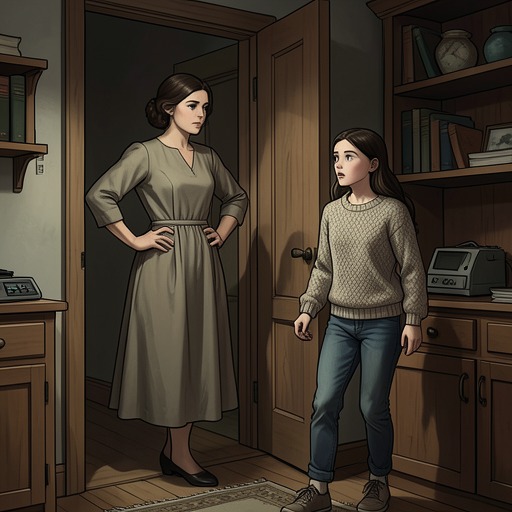
The novel also distinguishes between remembered family circumstances in Jamaica and Queenie Jenkins’s life in London. When she stays with her grandparents, her routine includes meals Veronica makes, shopping brought home in a trolley, and rules set by Wilfred. Veronica repeatedly jokes that Queenie should be sent to Jamaica to toughen her up when the food is too spicy for her. Queenie does not travel there in this episode; the remark turns Jamaica into a supposed training ground, using the island as a familiar reference point in the grandparents’ household. The recurring joke makes inherited ideas of toughness part of ordinary domestic life, even as Queenie struggles with the conditions of living at home.
Cultural Memory in Everyday Life
Jamaica also shapes the family’s language and social outlook in London. In one conversation, Veronica remarks that Jamaicans can be overfamiliar after an exchange with shopkeepers while buying baked goods. The comment is part of her everyday interaction with Queenie, not a detached account of the island. It presents cultural belonging as something carried into ordinary errands, through a shared vocabulary of familiarity, teasing, and family obligation.
Maggie’s remarks about contraceptive devices and Black women add another strand to this inherited knowledge. She connects the family’s concerns to the history of Black women being given implants or intrauterine devices without their knowledge, and invokes a family friend who struggled to become pregnant. The conversation takes place in London and does not establish that these events happened in Jamaica. Its relevance to the location is instead contextual: family memory and warnings about Black women’s bodies circulate within a family shaped by migration and Jamaican connections. Keeping that distinction matters; the island is part of the frame through which relatives understand their histories, but the account does not locate every experience there.
Narrative Significance
Across these references, Jamaica remains largely offstage while exerting a strong pull on the family’s understanding of home and belonging. Veronica’s memories give it the texture of lived experience: a household shared with Gran-Gran and Maggie, a lane where Albert waited, and a relationship kept secret. Later mentions shift from intimate recollection to family separation and domestic teasing. The changes in register show how a place can persist in family life without being physically present in the scene.
For Queenie Jenkins, Jamaica is consequently both inherited history and a point of comparison invoked by older relatives. It is where Veronica’s earlier life unfolded, where Queenie’s father is said to be, and where the grandparents imagine sending her to toughen her palate. The novel does not turn these references into a continuous portrait of the island. Instead, Jamaica’s significance emerges through what the family remembers, withholds, jokes about, and uses to explain the obligations between generations.