At Queenie Jenkins’s birth
Queenie’s Name
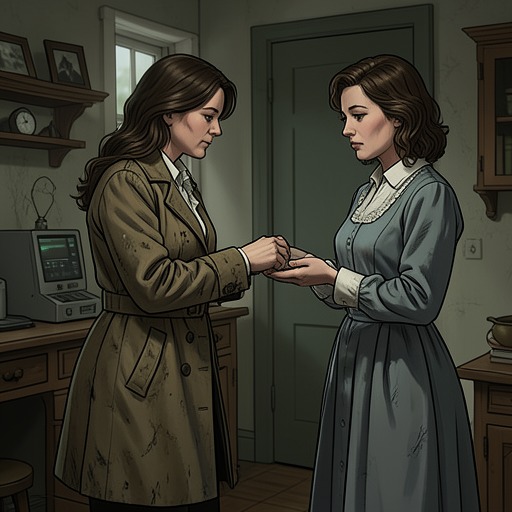
When [Sylvie](entity:character-recall-character-sylvie-20cad0cd2875) first held her newborn daughter, she saw a forceful little girl rather than the delicate princess she had once imagined. She named her [Queenie Jenkins](entity:character-recall-character-queenie-jenkins-3a05b9bfd91e) because the child seemed powerful enough to be a queen.
The name would become both an expression of Sylvie’s love and a promise of strength that Queenie Jenkins struggled to believe about herself.
During Queenie Jenkins’s early childhood
A Fractured Childhood
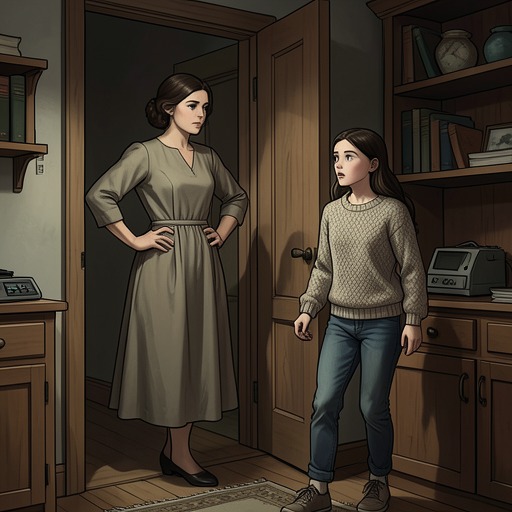
[Queenie Jenkins](entity:character-recall-character-queenie-jenkins-3a05b9bfd91e) grew up close to [Sylvie](entity:character-recall-character-sylvie-20cad0cd2875), and the two of them made a small world together before Sylvie entered a relationship with [Roy](entity:character-recall-character-roy-930e89321f14). At first, Queenie Jenkins remembered Roy’s home as clean and orderly, but his cruelty soon made it a frightening place.
He mocked her, broke her belongings, made false accusations, and sometimes forced her to sleep in a car. Sylvie’s withdrawal left Queenie Jenkins feeling increasingly alone and unwanted.
Around age eleven
Left Alone in an Apartment
After [Roy](entity:character-recall-character-roy-930e89321f14) drove [Sylvie](entity:character-recall-character-sylvie-20cad0cd2875) and [Queenie Jenkins](entity:character-recall-character-queenie-jenkins-3a05b9bfd91e) out of their home, they were placed in an apartment. Before long, Sylvie returned to Roy, leaving her young daughter to live there by herself for several months.
Queenie Jenkins tried to regard the arrangement as manageable and preferable to living with Roy. In adulthood, she would recognize that this was a dangerous abandonment that shaped her expectations of intimacy and care.
Before the family settled in London
Veronica’s Lost Love
[Veronica](entity:character-recall-character-veronica-68dfadfcf305) told [Queenie Jenkins](entity:character-recall-character-queenie-jenkins-3a05b9bfd91e) that when she was a young mother in [Jamaica](entity:location-recall-location-jamaica-5c4836c83849), [Wilfred](entity:character-recall-character-wilfred-1a51d23b068b) had disappeared for a time. During his absence, Albert lovingly helped Veronica and [Maggie](entity:character-recall-character-maggie-39724c72a859), and Veronica fell in love with him.
Wilfred eventually returned and took Veronica and Maggie to [London](entity:location-recall-location-london-420923d4a60a). Veronica never learned what became of Albert, but the story helped Queenie Jenkins understand that the older women in her family had also lived through heartbreak and loss.
Several years before the main story
Queenie Meets Tom
On [Clapham Common](entity:location-recall-location-clapham-common-5ec23210c935), [Queenie Jenkins](entity:character-recall-character-queenie-jenkins-3a05b9bfd91e) was reading when [Tom](entity:character-recall-character-tom-268ddde4835d) approached to talk about her book. Their awkward, funny conversation became an unexpected connection: Tom listened to her ambitions, and Queenie Jenkins was surprised that he seemed to like her without trying to correct or diminish her.
They exchanged numbers, and Tom encouraged her to pursue an internship at the [Daily Read](entity:organization-recall-organization-daily-read-788fcde6c593). The meeting began a relationship that offered Queenie Jenkins the security and closeness she had long wanted, while also exposing the differences in their experiences.
During the early years of their relationship
A Shared Home
[Tom](entity:character-recall-character-tom-268ddde4835d) and [Queenie Jenkins](entity:character-recall-character-queenie-jenkins-3a05b9bfd91e) eventually moved in together. Their first days in the new place were full of boxes, teasing, and plans for a future family; Tom joked that the [Q mug](entity:object-recall-object-q-mug-23074fb458af) was his because Queenie Jenkins was his.
The warmth of their domestic life mattered to Queenie Jenkins, who had never experienced a dependable family home. Yet their playfulness also sat alongside an imbalance: Tom often preferred logic and routine, while Queenie Jenkins struggled to explain what she felt.
During Queenie Jenkins’s first Christmas with Tom
Tom’s Family Welcome
Having rarely experienced a conventional [Christmas](entity:time-recall-time-christmas-a573265d0167), [Queenie Jenkins](entity:character-recall-character-queenie-jenkins-3a05b9bfd91e) was moved when [Viv](entity:character-recall-character-viv-3539fca38a48) invited her to spend the holiday with [Tom](entity:character-recall-character-tom-268ddde4835d)’s family. She accepted, hoping to belong to the kind of family she had imagined from the outside.
Tom gave her a silk headscarf he had chosen at a [Brixton](entity:location-recall-location-brixton-11b59f5cd4fc) hair shop, remembering the colors and details that mattered to her. The thoughtful gift became a tender reminder that Tom could make an effort to understand her world.
Before the separation
Racism at the Birthday Party
At a birthday gathering with [Tom](entity:character-recall-character-tom-268ddde4835d)’s family, Tom’s uncle made a racist joke during a game. [Queenie Jenkins](entity:character-recall-character-queenie-jenkins-3a05b9bfd91e) challenged him and looked to Tom for support, but Tom told her to leave it and treated her anger as an overreaction.
Queenie Jenkins left the house alone and waited outside until Tom came to find her. Rather than acknowledge the harm, he blamed her for creating drama and called her too much. The confrontation became a lasting fracture in their relationship.
Before the separation
A Future Imagined
[Tom](entity:character-recall-character-tom-268ddde4835d) and [Queenie Jenkins](entity:character-recall-character-queenie-jenkins-3a05b9bfd91e) sometimes imagined marriage, a house, and children together. At one dinner, Tom’s grandmother [Joyce](entity:character-recall-character-joyce-830d04161bf1) described the appearance she hoped their future children would have, including lighter skin and Tom’s features.
Queenie Jenkins pushed back against the idea that a child’s appearance could be selected to suit someone else’s preferences. Still, the couple’s domestic plans were real to her, which made the later ambiguity of their separation especially painful.
In the months before October
The Relationship Frays
Arguments accumulated between [Tom](entity:character-recall-character-tom-268ddde4835d) and [Queenie Jenkins](entity:character-recall-character-queenie-jenkins-3a05b9bfd91e). She often shut down or lashed out instead of explaining her distress, while Tom felt shut out and increasingly unable to reach her. Their arguments touched on money, sex, birthdays, and whether he made room for her in his life.
Tom’s family’s racism and his reluctance to confront it remained part of the strain. Queenie Jenkins still believed that love should be enough to bring them back together, but she had begun to fear that the relationship was failing.
Late October
The Three-Month Break
After another period of conflict, [Tom](entity:character-recall-character-tom-268ddde4835d) told [Queenie Jenkins](entity:character-recall-character-queenie-jenkins-3a05b9bfd91e) that he needed a break and suggested that she move out for three months before they reconsidered the relationship. He could afford to remain in their flat, while her entry-level salary left her with fewer options.
Queenie Jenkins accepted the arrangement as a temporary pause rather than a breakup. Tom then left for his parents’ home, and his silence left her anxiously waiting for him to return to their old life.
The day after Tom leaves
The Miscarriage
At [Lewisham Hospital](entity:location-recall-location-lewisham-hospital-427bc6dd3b16), [Queenie Jenkins](entity:character-recall-character-queenie-jenkins-3a05b9bfd91e) went for an examination because of pain and bleeding while using Queenie’s IUD. After an ultrasound, the doctor told her that she had miscarried, explaining clinically that the pregnancy had ended and the contraception had done its job.
Queenie Jenkins was left alone with the news and the sense that she had lost the possibility of choosing for herself, even though she had not wanted a child at that time. She did not tell [Tom](entity:character-recall-character-tom-268ddde4835d) or her friends, and the unspoken loss intensified her isolation.
The night after the hospital visit
Packing Up the Flat
Back at the apartment, [Queenie Jenkins](entity:character-recall-character-queenie-jenkins-3a05b9bfd91e) began packing the objects that marked her life with [Tom](entity:character-recall-character-tom-268ddde4835d): holiday souvenirs, plates, and the mugs they had used together. She carefully wrapped the memories, then took one souvenir back out of its box because she decided it could serve as an unwanted reminder.
The [Q mug](entity:object-recall-object-q-mug-23074fb458af) remained among the belongings, making their shared domestic life feel suddenly divided. Tom still had not come home or answered her messages.
A few days after the separation
Leaving the Shared Flat
[Queenie Jenkins](entity:character-recall-character-queenie-jenkins-3a05b9bfd91e) moved her belongings into a cheap, damp house in [Brixton](entity:location-recall-location-brixton-11b59f5cd4fc), helped by [Leigh](entity:character-recall-character-leigh-1ecab86d3052) and Eardley. The room was cramped and moldy, and the housemates she had found online were strangers, but it was the most affordable place she could manage.
The move made the separation tangible. Queenie Jenkins had to start over without the practical or emotional support she had depended on from [Tom](entity:character-recall-character-tom-268ddde4835d).
Soon after moving to Brixton
The Lost Brixton Bakery
Seeking familiar Jamaican bun in [Brixton Village](entity:location-recall-location-brixton-village-3645f0d35efd), [Queenie Jenkins](entity:character-recall-character-queenie-jenkins-3a05b9bfd91e) found that the bakery she remembered from childhood had been replaced by a fashionable burger bar. A fishmonger told her that the bakery had closed because it could no longer afford the rent.
The loss made gentrification personal: a place tied to her grandmother and childhood had been pushed aside for businesses aimed at newcomers. Queenie Jenkins was beginning to see that even the neighborhood where she expected to belong was changing around her.
The evening after the bakery visit
A Lift from Adi
With her stomach hurting and a bus approaching, [Queenie Jenkins](entity:character-recall-character-queenie-jenkins-3a05b9bfd91e) accepted a ride home from Adi, a former neighbor who had long made crude comments about her body. During the drive, he touched her thigh and resumed talking about her body as a sexual invitation.
The encounter showed how easily her loneliness and physical distress could leave her accepting attention she did not really want. Adi’s wedding ring and repeated comments about his wife did not stop him from testing her boundaries.
That night
Tom Ends the Break
When [Tom](entity:character-recall-character-tom-268ddde4835d) returned to the apartment, [Queenie Jenkins](entity:character-recall-character-queenie-jenkins-3a05b9bfd91e) tried to ask for more time together and to understand when they would speak again. Tom said he would go back to his parents the next day, and that he did not know when they would talk.
He told her that he felt she had refused to talk to him throughout their relationship and that he no longer knew whether he could keep forgiving her. They slept in the same bed, but by morning he was gone, leaving the [Q mug](entity:object-recall-object-q-mug-23074fb458af) beside her.
The first weekend after the move
The Racist Dating Party
[Queenie Jenkins](entity:character-recall-character-queenie-jenkins-3a05b9bfd91e) went to a party hosted by [Fran and James](entity:relation-recall-relation-fran-and-james-34320893c02a), where the guests treated her as a novelty and attempted to stage photographs for a dating profile. She drank heavily and felt conspicuous among the mostly white crowd, with [Sam](entity:character-recall-character-sam-d93f992a0ed0) refusing to acknowledge her as another Black guest.
The party offered a distraction from [Tom](entity:character-recall-character-tom-268ddde4835d) but also placed Queenie Jenkins in a setting where she felt exposed and alone. A man named Rich flirted with her, but her thoughts remained fixed on Tom and his silence.
Late that night
Adi and Queenie Have Sex
After [Tom](entity:character-recall-character-tom-268ddde4835d) sent a brief message saying he would not be home, [Queenie Jenkins](entity:character-recall-character-queenie-jenkins-3a05b9bfd91e) contacted Adi and agreed to meet him. In his car, Adi directed the encounter toward his fascination with her body; Queenie Jenkins went along with much of it while mentally distancing herself from what was happening.
The sex did not ease her loneliness. It instead left her feeling detached and uneasy, an early instance of using casual sex to blunt the pain of the separation rather than to seek mutual intimacy.
The days after the party
The First Dating Messages
At a party, friends installed OkCupid on [Queenie Jenkins](entity:character-recall-character-queenie-jenkins-3a05b9bfd91e)’s phone. The messages she received quickly reduced her to her breasts, body size, and skin color, with men addressing her through sexual demands and confectionery comparisons.
The attention temporarily distracted her from [Tom](entity:character-recall-character-tom-268ddde4835d), but it also reinforced her fear that men saw her as a body rather than a person. She continued using the app, hoping for connection while repeatedly encountering fetishization and harassment.
Late October
The Giant Cherub Date
[Queenie Jenkins](entity:character-recall-character-queenie-jenkins-3a05b9bfd91e) met an OkCupid date who immediately described his former Black girlfriend as crazy. Alarmed, she tried to end the evening and went home rather than follow his suggestion that they go to his place.
She reported the date to her friends in [The Corgis](entity:character-recall-character-the-corgis-09a9df486ab8) group chat. Their responses mixed concern and teasing, while Queenie Jenkins still hoped that dating could distract her from waiting for [Tom](entity:character-recall-character-tom-268ddde4835d).
Late October
Promises to Herself
[Queenie Jenkins](entity:character-recall-character-queenie-jenkins-3a05b9bfd91e) made a list of promises: work harder, reduce her dependence on dating apps, spend time with family, and stop letting men dictate her choices. She did not delete OkCupid, admitting that she still wanted the attention and excitement.
The promises exposed the gap between the person she hoped to be and the self-destructive habits she could not yet interrupt. Her friends supported her, but she also relied on them to reassure her that her decisions were acceptable.
Late October
Queenie Meets Ted
After [Queenie Jenkins](entity:character-recall-character-queenie-jenkins-3a05b9bfd91e) became faint at work, a colleague in tweed helped her back to her desk and made sure she was all right. He introduced himself as [Ted Noman](entity:character-recall-character-ted-noman-8e42b5633327), and their flirtatious emails began after he complimented her name and appearance.
Ted Noman’s attention felt different from the crude messages she was receiving online, and Queenie Jenkins was drawn to the idea that he might see her as a person. At the same time, her relationship with [Tom](entity:character-recall-character-tom-268ddde4835d) remained unresolved.
Early November
A Drink with Ted
[Queenie Jenkins](entity:character-recall-character-queenie-jenkins-3a05b9bfd91e) met [Ted Noman](entity:character-recall-character-ted-noman-8e42b5633327) for a quick drink after work, telling herself that a drink with a colleague was not a serious betrayal. Their conversation turned flirtatious, and she nearly kissed him before remembering the fireworks plans she had made with her friends.
[Darcy Betts](entity:character-recall-character-darcy-betts-81755b83adfd) had warned her about mixing work and romance. Queenie Jenkins left the pub in a hurry, pulled between her attraction to Ted Noman and her hope that [Tom](entity:character-recall-character-tom-268ddde4835d) would contact her.
Early November
Queenie’s Sexual Firsts
After a party, [Queenie Jenkins](entity:character-recall-character-queenie-jenkins-3a05b9bfd91e) went home with [Guy](entity:character-recall-character-guy-1509ece720ec), a Welsh man she had just met. Their sexual encounter was rough and at points painful; she struggled to communicate what she wanted, and Guy did not attend to her discomfort.
Queenie Jenkins later described the night to [Darcy Betts](entity:character-recall-character-darcy-betts-81755b83adfd) as exciting, but the account concealed how disconnected and used she had felt. The gap between her experience and her retelling showed how she was trying to turn unwanted intimacy into proof that she had chosen it.
The following days
The Sexual Health Examination
Concerned about her recent sexual encounters, [Queenie Jenkins](entity:character-recall-character-queenie-jenkins-3a05b9bfd91e) went with [Darcy Betts](entity:character-recall-character-darcy-betts-81755b83adfd) to a sexual health clinic. During the examination, the nurse found significant bruising and tearing and asked whether the injuries were consistent with sexual violence.
Queenie Jenkins insisted that the sex had been consensual and resisted the clinic staff’s concern, even as the findings made the harm difficult to dismiss. She was told to avoid sexual activity and return for follow-up care, but she soon resumed seeing [Guy](entity:character-recall-character-guy-1509ece720ec).
November
The Hair-Touching Incident
At a club in [Brixton](entity:location-recall-location-brixton-11b59f5cd4fc), a drunken white woman reached out and ran her hands through [Queenie Jenkins](entity:character-recall-character-queenie-jenkins-3a05b9bfd91e)’s twists without permission. [Kyazike](entity:character-recall-character-kyazike-4ba01e06943e) intervened, but the bouncer treated [Queenie Jenkins and Kyazike](entity:relation-recall-relation-queenie-jenkins-and-bbea38b3fb38) as the problem and ejected them.
The incident made explicit how Black women’s bodies could be treated as public property, even in a neighborhood Queenie Jenkins thought of as home. She wrote a short list of people allowed to touch her hair: herself, a hairdresser, and nobody else.
Christmas season
The Family Christmas Story
At a family gathering, [Queenie Jenkins](entity:character-recall-character-queenie-jenkins-3a05b9bfd91e)’s grandmother described her own youthful heartbreak, explaining how Albert had cared for her and [Maggie](entity:character-recall-character-maggie-39724c72a859) before [Wilfred](entity:character-recall-character-wilfred-1a51d23b068b) returned from [London](entity:location-recall-location-london-420923d4a60a). The story gave Queenie Jenkins a rare glimpse of [Veronica](entity:character-recall-character-veronica-68dfadfcf305) as a woman with a past beyond her role as a stern grandmother.
Veronica urged Queenie Jenkins to accept that everyone knew heartbreak and had to learn to live with it. Her account offered comfort without erasing the family’s habit of treating emotional pain as something to endure silently.
December
Queenie and Guy Continue
Despite the clinic’s warning and her growing discomfort, [Queenie Jenkins](entity:character-recall-character-queenie-jenkins-3a05b9bfd91e) continued to meet [Guy](entity:character-recall-character-guy-1509ece720ec) for sex. He made clear that he did not want a relationship, and treated her body as an available outlet rather than responding to her need for tenderness.
Queenie Jenkins tried to present their encounters as exciting and controlled. In reality, she was increasingly using sex to seek reassurance and closeness from men who did not offer either.
Christmas Eve and Christmas Day
Christmas with Her Family
Unable to reach [Tom](entity:character-recall-character-tom-268ddde4835d), [Queenie Jenkins](entity:character-recall-character-queenie-jenkins-3a05b9bfd91e) spent [Christmas](entity:time-recall-time-christmas-a573265d0167) with her grandparents and relatives. [Sylvie](entity:character-recall-character-sylvie-20cad0cd2875) appeared at midnight mass, but Queenie Jenkins kept her at a distance, still hurt by her mother’s absence during childhood.
The family gathered for Christmas dinner, where Queenie Jenkins overheard Sylvie discussing the abuse she had suffered from [Roy](entity:character-recall-character-roy-930e89321f14) and the court case to recover money he had taken. Queenie Jenkins learned that Sylvie regretted leaving her, but she was not yet ready to forgive her.
Christmas Day
Tom’s Silence at Christmas
While working at the [Daily Read](entity:organization-recall-organization-daily-read-788fcde6c593) over the holiday, [Queenie Jenkins](entity:character-recall-character-queenie-jenkins-3a05b9bfd91e) saw an affectionate email from [Ted Noman](entity:character-recall-character-ted-noman-8e42b5633327), who said he wished he could spend [Christmas](entity:time-recall-time-christmas-a573265d0167) with her. She did not reply, uncertain what his intentions were and still emotionally waiting for [Tom](entity:character-recall-character-tom-268ddde4835d).
She sent Tom a [New Year](entity:time-recall-time-new-year-3081c4d3858f)’s message, and he answered with a brief greeting and a kiss. Queenie Jenkins treated the reply as evidence that their relationship might still be repaired, though Tom’s silence continued.
Boxing Day
The Office Affair
On Boxing Day, [Ted Noman](entity:character-recall-character-ted-noman-8e42b5633327) came into the nearly empty office and pressed [Queenie Jenkins](entity:character-recall-character-queenie-jenkins-3a05b9bfd91e) to talk. She tried to avoid him, but later allowed herself to be drawn into a sexual encounter in the disabled toilet on his floor.
The encounter was hurried and unsatisfying, and Ted Noman left quickly. Queenie Jenkins told [The Corgis](entity:character-recall-character-the-corgis-09a9df486ab8) group chat, hoping his insistence and their history of flirtation meant he cared, while [Cassandra](entity:character-recall-character-cassandra-64055e2aac8a) warned that he might disappear.
New Year’s Eve
The New Year Resolutions
Alone in the house, [Queenie Jenkins](entity:character-recall-character-queenie-jenkins-3a05b9bfd91e) wrote a long list of resolutions. She promised to improve her work, rebuild family ties, consider therapy, use protection, and stop sleeping with men who treated her badly.
She also resolved to try to repair things with [Tom](entity:character-recall-character-tom-268ddde4835d), still believing that the separation was temporary. The list acknowledged her self-sabotage, but it could not yet explain why she repeatedly sought validation in encounters that left her feeling worse.
Early January
Ted Noman Disappears
After their office encounter, [Ted Noman](entity:character-recall-character-ted-noman-8e42b5633327) stopped replying to [Queenie Jenkins](entity:character-recall-character-queenie-jenkins-3a05b9bfd91e)’s emails. When she eventually found him, he said he had family matters and avoided looking at her, leaving her embarrassed and confused.
The rejection came as Queenie Jenkins was already struggling with work and with [Tom](entity:character-recall-character-tom-268ddde4835d)’s silence. She continued to seek comfort in sex with [Guy](entity:character-recall-character-guy-1509ece720ec), without knowing that Guy was also involved with [Cassandra](entity:character-recall-character-cassandra-64055e2aac8a).
January
Adi’s Wife Confronts Her
After a day of rejection, [Queenie Jenkins](entity:character-recall-character-queenie-jenkins-3a05b9bfd91e) saw Adi in his car and approached him. Adi’s wife jumped out, accused Queenie Jenkins of having sex with her husband, and insulted her body and skin while grabbing her hair.
Adi tried to deny the affair and left with his wife. Queenie Jenkins was humiliated in public and then searched for the meaning of the insult his wife had used, adding another racialized wound to her growing sense of worthlessness.
January
The Brixton Protest
After reading about police killings of Black people, [Queenie Jenkins](entity:character-recall-character-queenie-jenkins-3a05b9bfd91e) joined [Kyazike](entity:character-recall-character-kyazike-4ba01e06943e) at a [Black Lives Matter](entity:organization-recall-organization-black-lives-matt-ff56d9ddb6ff) march in [Brixton](entity:location-recall-location-brixton-11b59f5cd4fc). She began quietly, uncomfortable in the crowd, but the speakers’ accounts of loss and injustice drew her into the march.
As the protesters passed the changed market, Queenie Jenkins recognized how much of the Brixton she remembered had disappeared. She eventually joined the chant and raised her fist, connecting the loss of her neighborhood to the larger struggle to be heard and valued.
The day after the march
The Blocked Article Pitch
[Queenie Jenkins](entity:character-recall-character-queenie-jenkins-3a05b9bfd91e) asked [Gina](entity:character-recall-character-gina-e29e7661b6b9) to let her write about police killings and [Black Lives Matter](entity:organization-recall-organization-black-lives-matt-ff56d9ddb6ff). Gina sympathized but said the subject was too radical for the [Daily Read](entity:organization-recall-organization-daily-read-788fcde6c593) and asked her to make the idea more palatable.
At a pitch meeting, a colleague replied that all lives mattered. Queenie Jenkins explained that Black Lives Matter did not deny anyone else’s humanity; it named the particular violence and disregard faced by Black people. The room offered little support, revealing the distance between the paper’s diversity branding and its editorial priorities.
January
Queenie Accepts Counseling
After another sexual health visit, [Elspeth](entity:character-recall-character-elspeth-eed8b5b30dee) gave [Queenie Jenkins](entity:character-recall-character-queenie-jenkins-3a05b9bfd91e) a referral for talk therapy. Queenie Jenkins resisted the suggestion at first, then accepted an assessment after repeated anxiety, fainting, and difficulty eating and sleeping began to disrupt her daily life.
Her grandparents initially opposed the idea, especially [Veronica](entity:character-recall-character-veronica-68dfadfcf305), who believed that seeking therapy was shameful and unnecessary. [Wilfred](entity:character-recall-character-wilfred-1a51d23b068b) surprised Queenie Jenkins by arguing that the family might have carried less pain if earlier generations had learned to talk about their troubles.
January
Guy Revealed as Cassandra’s Boyfriend
[Guy](entity:character-recall-character-guy-1509ece720ec) arrived at [Queenie Jenkins](entity:character-recall-character-queenie-jenkins-3a05b9bfd91e)’s house late at night, drunk and unable to find his way home. The next morning, [Cassandra](entity:character-recall-character-cassandra-64055e2aac8a) came to see Queenie Jenkins and discovered Guy coming downstairs from her bedroom.
Cassandra revealed that Guy was her boyfriend and accused Queenie Jenkins of sleeping with him knowingly. Queenie Jenkins insisted that she had never known his identity and had not met him through Cassandra, but the discovery shattered their friendship and exposed Guy’s sustained deception.
Several weeks after the discovery
Cassandra Chooses Guy
When [Queenie Jenkins](entity:character-recall-character-queenie-jenkins-3a05b9bfd91e) visited [Cassandra](entity:character-recall-character-cassandra-64055e2aac8a), she learned that Cassandra planned to move to Winchester with [Guy](entity:character-recall-character-guy-1509ece720ec), despite his cheating. Cassandra defended the relationship and blamed Queenie Jenkins for being self-destructive and emotionally damaged.
She called Queenie Jenkins damaged goods and said [Tom](entity:character-recall-character-tom-268ddde4835d) had been right to leave. Queenie Jenkins walked away devastated, while Cassandra left the friendship behind and prepared to build a new life with the man who had betrayed them both.
After the friendship rupture
The Severe Panic Attack
Soon after learning that [Tom](entity:character-recall-character-tom-268ddde4835d) had a new girlfriend, [Queenie Jenkins](entity:character-recall-character-queenie-jenkins-3a05b9bfd91e) returned to their old apartment to plead her case. Tom told her their relationship was over and explained that he had understood their three-month arrangement as a breakup; he was now with [Anna](entity:character-recall-character-anna-ea2421a71401).
Queenie Jenkins returned home in shock, collapsed, and struggled to breathe. [Maggie](entity:character-recall-character-maggie-39724c72a859) took her to stay with [Veronica](entity:character-recall-character-veronica-68dfadfcf305) and [Wilfred](entity:character-recall-character-wilfred-1a51d23b068b), where her family recognized that she was in acute distress even though they did not fully understand its causes.
After Tom confirms the breakup
Moving Back with Her Grandparents
With no job security and unable to manage her rent, [Queenie Jenkins](entity:character-recall-character-queenie-jenkins-3a05b9bfd91e) moved into [Veronica](entity:character-recall-character-veronica-68dfadfcf305) and [Wilfred](entity:character-recall-character-wilfred-1a51d23b068b)’s home. She hoped to recover there through rest, but instead found herself subject to chores, strict routines, and her grandparents’ expectations.
The move felt like a humiliating loss of independence, yet the household also provided food and a place to stay. Queenie Jenkins continued to experience panic and concealed much of her distress from her family.
A remembered episode from Queenie Jenkins’s childhood
Roy Attacks Sylvie at Dinner
In therapy, [Queenie Jenkins](entity:character-recall-character-queenie-jenkins-3a05b9bfd91e) recalled a dinner from her childhood when [Roy](entity:character-recall-character-roy-930e89321f14) mocked her and ordered her to finish food she could not eat. When [Sylvie](entity:character-recall-character-sylvie-20cad0cd2875) tried to defuse the situation, Roy grabbed the back of her head and forced her face into the dinner.
The incident clarified the violence Queenie Jenkins had witnessed and the fear that had shaped her childhood. She had repeatedly tried to defend Sylvie, but felt that she had not been able to protect her mother or herself.
After moving in with her grandparents
The First Therapy Session
[Queenie Jenkins](entity:character-recall-character-queenie-jenkins-3a05b9bfd91e) attended an initial assessment with Janet and described the losses that had accumulated: her relationship, her job, her home, and her sense of control. She spoke about exhaustion, sleeplessness, anxiety, and the persistent feeling that something bad was about to happen.
Janet questioned Queenie Jenkins’s belief that she was insane or abnormal and asked what she thought of herself. Queenie Jenkins left convinced she would not return, but Janet’s patient response gave her a place to begin understanding the crisis.
During the first weeks of counseling
Queenie Tells Janet About Roy
In later sessions, [Queenie Jenkins](entity:character-recall-character-queenie-jenkins-3a05b9bfd91e) described the abuse and neglect she experienced after [Roy](entity:character-recall-character-roy-930e89321f14) entered her family’s life. She explained how he mocked her as a “bounty,” broke her belongings, isolated her, and eventually left her living alone in an apartment at about eleven.
Janet challenged Queenie Jenkins’s tendency to minimize the danger and emphasized that she had been a vulnerable child. Telling the story brought long-suppressed memories into the present and began to connect her childhood fear with her adult relationships.
During the first weeks of counseling
Veronica Forbids Therapy
When [Veronica](entity:character-recall-character-veronica-68dfadfcf305) discovered [Queenie Jenkins](entity:character-recall-character-queenie-jenkins-3a05b9bfd91e)’s therapy appointment letter, she angrily forbade her from attending. She compared Queenie Jenkins’s distress with the suffering endured by other family members and treated therapy as a source of shame.
[Wilfred](entity:character-recall-character-wilfred-1a51d23b068b) interrupted and defended Queenie Jenkins’s right to go, suggesting that talking about pain might spare the next generation from carrying it in silence. His support allowed Queenie Jenkins to continue counseling despite the family’s conflicting beliefs.
During counseling
The Lido Panic Attack
At Janet’s suggestion, [Queenie Jenkins](entity:character-recall-character-queenie-jenkins-3a05b9bfd91e) tried swimming at [Brockwell Lido](entity:location-recall-location-brockwell-lido-07fb1cbf8f10) as a form of physical release. She felt exposed among the other swimmers and overheard women discussing a mold problem in their rental property, echoing the damp room she had been forced to leave.
When a child splashed water on her and pulled her hair, the adults around them failed to acknowledge the harm. Queenie Jenkins fled the pool in a panic and called Janet, realizing that her fear of not belonging was tied to childhood exclusion and her recent pregnancy loss.
February
Queenie’s Twenty-Sixth Birthday
On her twenty-sixth birthday, [Queenie Jenkins](entity:character-recall-character-queenie-jenkins-3a05b9bfd91e) reluctantly went out with [Diana](entity:character-recall-character-diana-baf651a1725a) and then returned home to find Darcy, [Maggie](entity:character-recall-character-maggie-39724c72a859), and [Sylvie](entity:character-recall-character-sylvie-20cad0cd2875) waiting with a cake. The family gathering overwhelmed her, but it also brought together people who had remained present through her crisis.
Sylvie explained why she had named her daughter Queenie: she had recognized the strength in the newborn she held. Hearing the story helped Queenie Jenkins see her mother as a person shaped by her own injuries, not only as the mother who had failed to protect her.
After Queenie Jenkins’s birthday
A New Understanding of Her Mother
After the birthday gathering, [Sylvie](entity:character-recall-character-sylvie-20cad0cd2875) sent [Queenie Jenkins](entity:character-recall-character-queenie-jenkins-3a05b9bfd91e) a card expressing pride and support for her therapy. Queenie Jenkins answered that it had been good to see her, taking a small step toward rebuilding their relationship.
In counseling, she began to understand that Sylvie had been abused and isolated by [Roy](entity:character-recall-character-roy-930e89321f14) and had not simply chosen to abandon her daughter without consequence. That understanding did not erase the harm, but it made room for a more complicated form of compassion.
Later in the recovery period
Sylvie Wins the Lawsuit
After nearly three years of legal proceedings, [Sylvie](entity:character-recall-character-sylvie-20cad0cd2875) told [Queenie Jenkins](entity:character-recall-character-queenie-jenkins-3a05b9bfd91e) that she had won her case against [Roy](entity:character-recall-character-roy-930e89321f14). She would recover only some of the money Roy had taken, but the decision brought the long ordeal to an end.
Sylvie gave Queenie Jenkins part of the recovered money so she could rent a place of her own. Queenie Jenkins initially resisted accepting it, but the gift offered a practical route back toward independence.
During Queenie Jenkins’s recovery
Ted Noman Is Married
[Queenie Jenkins](entity:character-recall-character-queenie-jenkins-3a05b9bfd91e) learned from [Ted Noman](entity:character-recall-character-ted-noman-8e42b5633327)’s colleague that Ted Noman was married. The revelation explained his secrecy and his pattern of pursuing her intensely, then withdrawing after getting what he wanted.
Her friends urged her to stay away, but Ted Noman later approached her again, trying to explain himself and asking for her forgiveness. Queenie Jenkins recognized that his personal pain did not excuse his choices or make her responsible for him.
Before Queenie Jenkins returns to work
Queenie Is Suspended
[Gina](entity:character-recall-character-gina-e29e7661b6b9) told [Queenie Jenkins](entity:character-recall-character-queenie-jenkins-3a05b9bfd91e) that [Ted Noman](entity:character-recall-character-ted-noman-8e42b5633327) had filed a complaint accusing her of pursuing him and making him uncomfortable. Because Queenie Jenkins already had an official warning for poor performance, the [Daily Read](entity:organization-recall-organization-daily-read-788fcde6c593) suspended her while it investigated.
The complaint reversed the story of their affair and left Queenie Jenkins fearful that she would lose her livelihood. Her distress became so visible that Gina and [Darcy Betts](entity:character-recall-character-darcy-betts-81755b83adfd) contacted [Maggie](entity:character-recall-character-maggie-39724c72a859) for help.
After the suspension
The Family Move
With her job and housing uncertain, [Queenie Jenkins](entity:character-recall-character-queenie-jenkins-3a05b9bfd91e) moved her belongings from the [Brixton](entity:location-recall-location-brixton-11b59f5cd4fc) house into her grandparents’ home. She struggled with the loss of privacy and independence but began to accept that she needed support.
The family’s care was uneven and sometimes expressed through chores, food, and supervision rather than conversation. Even so, living there kept Queenie Jenkins from facing the crisis entirely alone.
During the investigation
Ted’s Final Confrontation
[Ted Noman](entity:character-recall-character-ted-noman-8e42b5633327) confronted [Queenie Jenkins](entity:character-recall-character-queenie-jenkins-3a05b9bfd91e) outside work and asked her to forgive him. He disclosed that he had previously attempted suicide after breakups and said his marriage had been driven by fear of being alone, then described Queenie Jenkins as an excitement that had consumed him.
Queenie Jenkins rejected the idea that his pain excused his behavior. [Kyazike](entity:character-recall-character-kyazike-4ba01e06943e) arrived and forcefully ordered him to leave Queenie Jenkins alone, challenging the bystanders who had ignored his harassment until she intervened.
Soon after the confrontation
Ted Is Dismissed
[Ted Noman](entity:character-recall-character-ted-noman-8e42b5633327) left [Queenie Jenkins](entity:character-recall-character-queenie-jenkins-3a05b9bfd91e) a letter apologizing for his conduct, but also asked her not to tell his pregnant wife about their affair. Queenie Jenkins took the letter to [Gina](entity:character-recall-character-gina-e29e7661b6b9) rather than keeping his secret.
The [Daily Read](entity:organization-recall-organization-daily-read-788fcde6c593)’s investigation concluded that Ted Noman’s actions did not fit his complaint, and the company decided to dismiss him. Queenie Jenkins’s willingness to report him marked a turning point in refusing to protect a man at her own expense.
May
Queenie Returns to Work
After a long leave, [Queenie Jenkins](entity:character-recall-character-queenie-jenkins-3a05b9bfd91e) returned to the [Daily Read](entity:organization-recall-organization-daily-read-788fcde6c593) with [Darcy Betts](entity:character-recall-character-darcy-betts-81755b83adfd) beside her. The office felt intimidating, but most colleagues simply continued working, and Jean offered a private message of welcome and support.
Queenie Jenkins managed the first day and then the following weeks, using the coping tools she had learned in therapy. [Gina](entity:character-recall-character-gina-e29e7661b6b9) praised her work and allowed her to remain, making the return a difficult but concrete step toward rebuilding her professional life.
After Queenie Jenkins’s return to work
The Courtney Date
Hoping to try a healthier kind of dating, [Queenie Jenkins](entity:character-recall-character-queenie-jenkins-3a05b9bfd91e) arranged to meet Courtney, a man who had initially seemed considerate in their messages. During the date, he made racist remarks and challenged her support for [Black Lives Matter](entity:organization-recall-organization-black-lives-matt-ff56d9ddb6ff), framing his provocation as open-minded conversation.
Queenie Jenkins kept her coat on through the argument and eventually left. The date showed that a man could appear polite while still expecting her to defend her humanity and educate him about racism.
After her return to work
Queenie Moves Into Her Own Flat
With money from [Sylvie](entity:character-recall-character-sylvie-20cad0cd2875) and the help of Eardley, [Queenie Jenkins](entity:character-recall-character-queenie-jenkins-3a05b9bfd91e) moved out of her grandparents’ home and into a very small studio flat. Her grandparents worried that she was not ready to live alone, but [Wilfred](entity:character-recall-character-wilfred-1a51d23b068b) told her she would manage.
Before she left, Wilfred admitted that he had feared she would become as defeated as Sylvie had been after [Roy](entity:character-recall-character-roy-930e89321f14)’s abuse. He told Queenie Jenkins that she was full of fight, giving her an affirmation she had rarely heard from him.
Soon after moving out
Queenie Writes About Music
[Gina](entity:character-recall-character-gina-e29e7661b6b9) assigned [Queenie Jenkins](entity:character-recall-character-queenie-jenkins-3a05b9bfd91e) a review of a live performance after a colleague was unavailable. At the venue, Queenie Jenkins felt anxious in the crowd but stayed for the performance, accompanied by [Kyazike](entity:character-recall-character-kyazike-4ba01e06943e).
She completed the review, and Gina was impressed enough to offer her a regular music-writing slot. The opportunity gave Queenie Jenkins a way to rebuild her career through work she could do well, even if it was not yet the political journalism she had originally hoped to pursue.
Near the novel’s ending
The Recovery Celebration
[Queenie Jenkins](entity:character-recall-character-queenie-jenkins-3a05b9bfd91e)’s family and friends gathered for a dinner celebrating her recovery. The celebration was noisy and chaotic, with her relatives arguing over food and drink, but the people at the table were there because they cared about her.
[Cassandra](entity:character-recall-character-cassandra-64055e2aac8a) also appeared after ending her relationship with [Guy](entity:character-recall-character-guy-1509ece720ec). She apologized, and Queenie Jenkins accepted the apology without pretending that the friendship had caused no harm. The evening showed how her relationships could change without requiring her to return to old patterns.
During the recovery celebration
Queenie Deletes Tom’s Number
When the family’s commotion stirred [Queenie Jenkins](entity:character-recall-character-queenie-jenkins-3a05b9bfd91e)’s anxiety, she slipped into the bathroom and felt the urge to call [Tom](entity:character-recall-character-tom-268ddde4835d) for comfort. She began listing the ways her life had started to improve: her work, her friends, her safety from [Ted Noman](entity:character-recall-character-ted-noman-8e42b5633327), and the tools she had gained in counseling.
Queenie Jenkins realized that she missed what Tom had represented more than the relationship they had actually shared. She deleted his contact details and returned to the table, where [Sylvie](entity:character-recall-character-sylvie-20cad0cd2875) smiled and silently called her “my queen.”