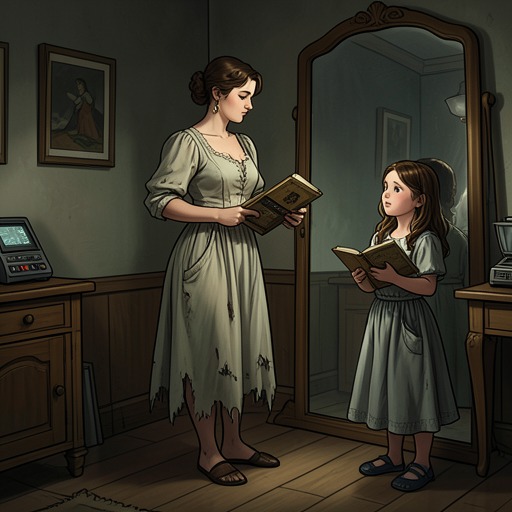
Shannon Delain abandons film role incident
REThe event in which Shannon Delain abandoned her role in Lucas is the hidden turning point behind her later identity as Tabitha Moore’s embittered, agoraphobic mother. Shannon had reached the professional success she once imagined would define her: after modeling work, advertising shoots, small television appearances, and repeated auditions, she won the role of Maggie in a feature film. Yet she left the production only two months into filming, broke her contract, and returned to Springton with Alan Moore. The choice ended one version of her future while exposing the fear, shame, and exploitation that made that future unbearable.
Ambition and the Film Role
Shannon’s path to the role had been built through incremental successes rather than instant celebrity. She traveled to Los Angeles, worked on photoshoots and videos for toothpaste and deodorant advertisements, and appeared in a few sitcoms, sometimes with only one spoken line. The part in Lucas therefore represented a qualitative change: it was not another commercial or brief television appearance but a genuine acting role and what she called her big debut.
She was cast as Maggie and expected to kiss Charlie Sheen. The role carried the promise of a public identity she had pursued through modeling, acting, and the idealized image of becoming a movie star. In the alternate history remembered by Tabitha, however, the film did not become a lasting cultural landmark. Kerri Green ultimately took the part and was nominated for Exceptional Performance by a Young Actress in a Feature Film. The replacement’s later recognition makes Shannon’s abandonment feel both consequential and strangely invisible: she surrendered a real opportunity, but the world continued without preserving her as the person who had nearly occupied that role.
Withdrawal from Production
Shannon disappeared two months into filming while the production was working at Lake Ellyn Park, Illinois, only about five hours from Springton. She broke her contract and refused to speak with her agent from Fox Studios. Alan Moore, described by Shannon as the only person she could trust, drove to retrieve her without asking why. She cried throughout the trip, returning not as a triumphant actress but as a young woman fleeing a situation she could not explain to her parents or the people managing her career.
Her parents paid the penalty fee and were furious, while Shannon remained unable to tell them the truth. She later described the entertainment business as filthy and said that it had been making her feel filthy. Her account does not identify every act that occurred on the set; instead, it is structured around a refusal to disclose, a refusal she extends even to Tabitha. Shannon says that she believed she would do anything to become a movie star, whatever it took, and then discovered that she was not strong enough—or did not want to be the kind of person required to continue. Her decision to leave is consequently both an act of self-preservation and the source of enduring shame.
Consequences for Shannon and Tabitha
After returning to Springton, Shannon had Tabitha and became the person Tabitha knows as her mother. Shannon’s language leaves the exact chronology of the pregnancy and the abandonment partly unclear, but she presents the return to Alan and the birth of Tabitha as bound to the life she chose after leaving the film industry. She insists that Alan is an honest, simple man who was what she needed after the experience, and she eventually tells Tabitha that Tabitha did not ruin her life.
That admission revises the emotional logic of the Moore household. Tabitha had understood her mother’s bitterness as resentment toward the daughter who had interrupted or destroyed an unrealized career. Shannon instead reveals that her bitterness also came from unresolved humiliation, grief for a discarded dream, and the psychic damage of an industry she believed protected itself by silencing vulnerable young women. When Tabitha begins losing weight rapidly and expresses a desire to become an actress, Shannon reacts with disproportionate alarm because Tabitha’s transformation resembles the young woman Shannon once was. The abandoned role thus returns as a living threat inside their mother-daughter conflict.
Silence, Complicity, and Historical Perspective
Shannon’s explanation distinguishes between being harmed and accepting responsibility for entering a system she already recognized as dangerous. She says that the industry’s participants knew what was happening, that other women on the set experienced similar treatment, and that those who were not directly involved either tolerated it or lacked the power to stop it. She also believes that anyone who spoke out could be destroyed through whatever damaging information could be found about them. Her fear is therefore not merely private embarrassment; it is an understanding of institutional silence as a mechanism that turns exposure into another form of punishment.
Tabitha urges her to tell the police, the media, or someone capable of intervening, especially for the sake of the next inexperienced girl. Shannon rejects the role of uncomplicated victim, insisting that she knew the risks and thought she could make the system work for her. This self-condemnation complicates the event’s ethics. A duty-based response would demand testimony and protection for future victims; a consequence-based response might measure disclosure against the danger of retaliation; a virtue-based reading asks what kind of person Shannon can become after surviving through silence. Shannon chooses withdrawal and secrecy, while Tabitha demands public accountability. Their argument gives the abandoned role a second life as a dispute over whether survival without disclosure is enough.
The narrative places Shannon’s experience in the entertainment industry of the 1980s, decades before the MeToo movement exposed predatory filmmakers and producers to broad public scrutiny. Tabitha, carrying memories from a later life, recognizes that protective regulatory structures for young actresses would not yet exist in the form she knows. Her historical awareness deepens rather than resolves the scene: she can see the structural conditions that trapped Shannon, but she cannot force Shannon to narrate what she still cannot bear to say.
Narrative Significance
The event is a story of a failed professional debut, but its decisive value lies in the reversal of appearances. From Tabitha’s earlier perspective, Shannon seemed to have simply abandoned a glamorous dream and then blamed family life for the loss. The confession reveals that leaving Lucas was also an escape from a predatory system and a retreat toward the honest stability Shannon associated with Alan. At the same time, Shannon’s silence and later bitterness have injured Tabitha, so the explanation does not erase the consequences of her choices.
The event also establishes a recurring tension between appearance and lived identity. Shannon once pursued the image of the actress she thought she should become; Tabitha later attempts an equally dramatic transformation into a more capable, attractive, adult-like self. Both are shaped by an imagined public gaze, yet Shannon’s withdrawal demonstrates that the desired role can conceal a destructive social order. In this sense, abandoning Maggie is not simply the loss of a career. It is the moment Shannon refuses an identity imposed by the film industry, only to remain haunted by the mirror of that abandoned possibility for the rest of her family life.
At the broader plot level, the revelation changes how Tabitha understands both her mother and her own responsibility. Shannon explicitly separates Tabitha from the catastrophe of her unrealized career, while Tabitha must confront the possibility that her efforts to resemble Shannon are reopening an old wound. The event therefore becomes a buried origin for the Moore family’s estrangement and a necessary disclosure in their attempt at repair: the past cannot be corrected by restoring Shannon to the screen, but it can be understood as more than a simple story of selfish abandonment.