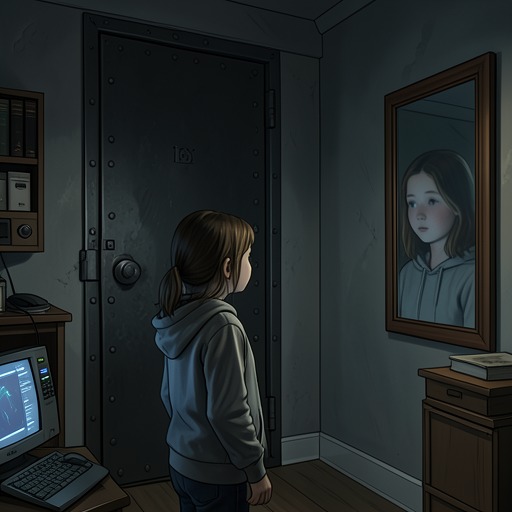
Event 1
2045年MRI事故与时间回溯
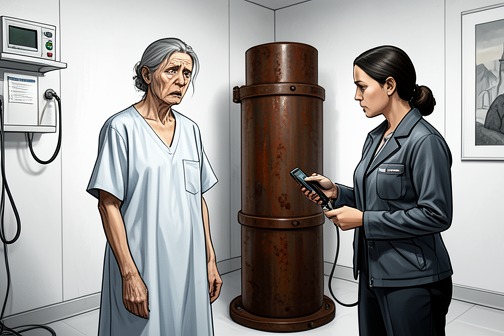
The [2045](entity:time-recall-time-2045-8c2eee6aacd6) MRI incident and time displacement transforms [Tabitha Moore](entity:character-recall-character-tabitha-moore-cc0b03363aff)’s life into a recursive history. In 2045, the sixty-year-old Tabitha enters an old prototype MRI at [University of Louisville Hospital](entity:location-recall-location-university-of-louisv-9b30b870b561), recognizes that the machine resembles the one involved in a catastrophe forty-seven years earlier, and is thrown back to [May 7, 1998](entity:time-recall-time-1998-5-7-88ab9af9215b), inside her thirteen-year-old body. The event gives her an impossible second chance, but it also forces an adult consciousness to inhabit the body, family, social position, and self-hatred she remembers escaping.
## Causes and Temporal Setup
The incident begins in a futuristic medical setting that sharply contrasts with the machine itself. The University of Louisville Hospital chamber has hypermodern fixtures, glossy white walls, holographic menus, and a nurse using a ring-mounted interface, yet the MRI is almost half a century old. Tabitha is sixty, frail, gray-haired, and physically marked by a difficult life; the outdated device therefore appears less like an ordinary medical instrument than like a material remnant of her past. Her unease becomes explicit when she recalls that the machine has not had a mishap in forty-seven years and recognizes the interval as significant.
The remembered catastrophe occurred at [Emsie St. Juarez Children's Hospital](entity:location-recall-location-emsie-st-juarez-chil-36a67c1f6b4c) in 1998. A prototype MRI emitted an unbearable screech resembling violently scraping glass, followed by the pop of an electrical breaker. The disturbance was felt by people within a quarter-mile, and the power failed across Jefferson County. Thirteen-year-old Tabitha was trapped inside the overheated, smoke-filled room while the backup generators restored power. Her father, [Alan Moore](entity:character-recall-character-alan-moore-ede3efaeff3e), forced his way into the room with others and called for her to be removed from the machine; Tabitha saw his worried face before fainting. The later 2045 accident thus repeats the conditions of the earlier disaster while revealing that the older Tabitha is connected to the very event she had remembered as history.
## First Displacement into 1998
After the 2045 scan, Tabitha wakes amid people and surroundings that she cannot initially identify. A man resembles her late father so closely that she assumes he may be a paternal relative, but his familiar manner and address make the resemblance increasingly disturbing. Her voice sounds childlike, her body feels different, and the supposedly outdated hospital walls do not match the University of Louisville Hospital she entered. When the doctor gives the date as May 7, 1998, her suspicion becomes undeniable: the MRI has returned her mind to the day of the original accident.
The temporal shock is also a bodily shock. Tabitha discovers that she has become an overweight adolescent again, the person she remembers as “[Tubby Tabby](entity:expression-recall-expression-tubby-tabby-5cc50c7fc225),” and experiences the return not as a neutral rejuvenation but as a renewed sentence of self-loathing. She fears being forced to live again as a “fat and useless trailer trash little girl,” and even pleads internally for the experience to be a fatal electrical seizure rather than a real return. The event therefore makes time travel inseparable from body image: the past is not merely a date to revisit but a physical identity she believes she had escaped.
Once the first panic subsides, her adult memory becomes practical as well as painful. At home she confronts a refrigerator filled with unhealthy leftovers, take-out containers, mystery jars, beer, and nearly expired eggs, and begins planning how to obtain fresh produce and ration food. She misses the bracelet-mounted personal computer and web access, realizing that she has been thrown back into the dial-up era. She also considers how to preserve future knowledge, wondering whether 1998 has flash drives, CDs, or only floppy disks, and plans to obtain a word processor so she can begin writing novels. Her awareness of middle-school material gives her confidence about passing exams, but she must deliberately use sophisticated vocabulary so her parents will interpret her adult knowledge as an adolescent phase rather than evidence of displacement.
## Memory, Divergence, and the Burden of Knowledge
The first return does not restore Tabitha’s original life in a simple, repeatable form. She initially believes that becoming thin and attractive will solve the social isolation she associates with her earlier adolescence, but her first weeks at school challenge that assumption. Even after changing her appearance, she makes only one friend and realizes that body size and beauty were not the sole causes of her former loneliness. The displacement therefore revises her understanding of the past before it revises the past itself: adult knowledge can identify patterns, but it cannot guarantee mastery over them.
Her interventions also create altered relationships and public consequences. When Tabitha runs toward Darren MacIntire after he is shot during the [Springton South Main shooting](entity:event-recall-event-springton-south-main-sh-487d055d7795), [Alicia Brooks](entity:character-recall-character-alicia-brooks-090f3366fb12) photographs the rescue with a Kodak disposable camera. Channel 7 News reports that multiple officers were involved in the gun battle with [Jeremy Redford](entity:character-recall-character-jeremy-redford-0bc7f5c9fabf), that two officers were injured, and that one remained in critical condition. Rumors later exaggerate Tabitha’s role, claiming that Matthew Williams took her to [Louisville](entity:location-recall-location-louisville-d871424f8dfb), asked her out, and kissed her, while other students accuse her of fabricating her involvement. Tabitha’s confusion over the rumor shows how quickly a changed timeline can produce social facts that neither her memories nor her intentions can control.
The altered life also changes the texture of her friendships and emotional responses. At a [Halloween](entity:time-recall-time-halloween-c9b359236295) gathering, Alicia’s mother uses a Kodak disposable camera to take group pictures, while Tabitha worries about whether [Shannon Moore](entity:character-recall-character-shannon-moore-b58dcef4d0d7) is still outside and learns that Alan Moore has arrived. Later, she tells Alicia that she no longer feels certain of who she is and has been crying almost every day for weeks. Compared with her first life, when pain and pleasure both seemed distant and she felt trapped inside self-hatred, the new timeline makes her more emotionally exposed rather than simply more successful. The second chance produces greater connection, but also greater vulnerability.
## Second Restart and the Limits of Escape
The temporal pattern repeats after Tabitha is injured at the [Williams family lake house](entity:location-recall-location-williams-family-lake-d690fee88e10). In the account she later gives to Alicia and [Elena Seelbaugh](entity:character-recall-character-elena-seelbaugh-62ca324e0fdb), she says that Erica Taylor’s attack led to her apparent death and that, seconds after blacking out, she woke again in the MRI in May 1998. The second restart is devastating because she believes she has lost the relationships and accidental circumstances developed during the first altered timeline. She also cannot bear the prospect of resolving her relationship with Shannon Moore from the beginning once more, and admits that she did not handle the loss well.
The second MRI sequence intensifies the event’s impossible structure. The prototype again screams, the breaker blows, Jefferson County loses power, smoke fills the pediatric ward, and thirteen-year-old Tabitha lies motionless inside the machine. She remembers blood on the lake-house floor, then sees her adolescent hands and understands that she is back at the beginning. In an apparent transition beyond ordinary reality, an F-22 fighter falls away beneath her while she glimpses the sixty-year-old body inside the MRI going still. Just as she begins to fall, an unseen small hand catches hers and holds her above the darkness. The scene refuses a stable distinction between bodily death, dream, psychic vision, and temporal mechanism, leaving the reader to accept recurrence as a governing rule rather than reduce it to ordinary medical explanation.
## Narrative Significance
The incident establishes a time loop in which the future contains the evidence of the past, and the past becomes the source of the future’s defining trauma. Tabitha recognizes the 2045 MRI because it is the same kind of machine that sent her back in 1998, while the 1998 accident is simultaneously an event she remembers and an event she is now reliving. This circularity makes chronology unstable: each version of her life supplies knowledge to the next, but no version guarantees control.
The event also makes technology a medium of memory and a source of material danger. The 2045 bracelet-PC, holographic interfaces, and modern hospital emphasize the distance Tabitha has traveled from the pre-Internet world, while the prototype MRI collapses that distance in an instant. In 1998, she struggles to find a way to store novels and preserve information; Alicia’s disposable camera, Channel 7 News footage, and the fragile circulation of rumors become competing forms of evidence. The timeline is therefore changed not only by knowledge but by what can be recorded, misinterpreted, or lost.
Most importantly, the displacement turns “a second chance” into an ethical and psychological trial rather than a wish-fulfillment device. Tabitha can use future knowledge to prepare, intervene, and seek different relationships, yet her altered choices generate unforeseen effects and do not erase social anxiety, trauma, bodily distress, or family conflict. Her adult mind remains divided from her adolescent identity: she knows what her life became, but must still endure the immediate limitations and emotions of a child’s body. The 2045 MRI incident consequently functions as both plot engine and thematic wound, asking whether a life can truly be remade when the person attempting to remake it carries every failure, loss, and memory from the life that came before.
Event 2
1998年圣华雷斯儿童医院MRI事故
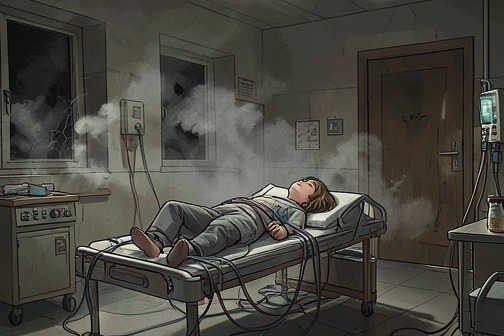
The 1998 Emsie St. Juarez Children’s Hospital MRI incident is the technological and chronological rupture on which [Tabitha Moore](entity:character-recall-character-tabitha-moore-cc0b03363aff)’s second life depends. During an examination of her childhood concussion, the prototype MRI fails with a county-wide blackout, extreme heat, smoke, and physical danger; when Tabitha regains consciousness, she is again a thirteen-year-old girl in 1998, carrying memories of a life that has already reached [2045](entity:time-recall-time-2045-8c2eee6aacd6). The event is therefore both a medical emergency and an impossible return to the point of origin of her adult identity.
## Causes and Background
The incident is later understood through Tabitha’s adult recollection of her first life. At sixty, after years of worsening migraines and repeated medication changes, she finally insisted on more thorough testing and was sent to the [University of Louisville Hospital](entity:location-recall-location-university-of-louisv-9b30b870b561). The custom MRI there somehow sent her mind backward in time. The destination was not arbitrary: it was the same MRI accident at Emsie St. Juarez Children’s Hospital, where her childhood self had undergone examination after being pushed from a trampoline and suffering a concussion. Tabitha’s recollection identifies a forty-seven-year interval between the two machine failures, making the 1998 disaster the earlier occurrence in a repeating technological pattern rather than an isolated malfunction.
The event also depends on a distinction between body and memory. Tabitha’s adult consciousness does not simply travel through ordinary time with her sixty-year-old body. It returns to the past through the younger version of herself, leaving her with adult knowledge inside a child’s physical form. Her later explanation suggests that the MRI transmitted the electrical or neural signals constituting her memories backward in time, although she remains uncertain about the mechanism and acknowledges that time travel itself defeats ordinary realism. The accident thus makes the body an unstable record: the child in the scanner is physically present in 1998, while the mind experiencing the event has already lived decades beyond it.
## What Happens in the Scanner
The failure begins with a terrible screech from the prototype MRI, compared to impossibly loud scraping glass and then to nails dragged across a chalkboard. The sound ends with the sharp pop of an electrical breaker blowing out, and everyone within a quarter-mile visibly flinches as pain strikes their eardrums. Power goes out across Jefferson County, turning a clinical procedure into a regional emergency and making the machine’s material presence impossible to ignore.
Thirteen-year-old Tabitha is still trapped inside the scanner when backup generators restore power to the MRI room. The enclosed space has risen more than thirty degrees in temperature and is rapidly filling with smoke. The fire alarm activates while Tabitha screams, shudders, and feels intense pain begin to subside. The crisis is not presented as an abstract scientific anomaly: it is experienced as heat, noise, ringing ears, panic, and the immediate fear of being unable to escape an obsolete machine.
Hospital personnel force their way through the smoke and pull the examination table from the cylindrical aperture. A familiar male voice orders them to get her out, and Tabitha struggles with the hospital gown in which she has become caught. As rescuers try to sit her up, she notices that her fingers look bloated and stubby. Her entire body seems swollen, misshapen, and shrunken at once, producing a grotesque mismatch between what she sees and what she understands. She hyperventilates, recognizes that her center of gravity is wrong, looks up at the worried face of [Alan Moore](entity:character-recall-character-alan-moore-ede3efaeff3e), and faints.
The immediate aftermath is marked by perceptual evidence rather than instant explanation. Tabitha’s voice sounds childlike, the hospital has outdated plastic-panel walls instead of the glass-like surfaces she associates with the medical institutions of 2045, and Alan Moore appears to be a younger version of the father she remembers. When she asks for the date, the doctor checks her chart and identifies it as Thursday, [May 7, 1998](entity:time-recall-time-1998-5-7-88ab9af9215b). The date confirms the suspicion that has been forming around her: the prototype has returned her mind to the earlier MRI accident, when she herself was the child inside the machine.
## Medical Consequences and Misrecognition
The accident’s medical consequences remain important even after its time-travel meaning becomes clear. In the later account of the associated head trauma, Tabitha explains that a brain bleed had clotted before she reached the hospital. The clot was dangerous, and the swelling caused by the trauma made its position unfavorable for a more invasive operation. Doctors used an endoscope through a small incision, performed a surgical bypass to drain excess fluid, and placed her under observation. The clot eventually disappeared, but the disappearance coincided with the loss of all apparent brain activity, causing everyone to fear that she had suffered an irreversible catastrophe.
That medical uncertainty culminates in a later misdiagnosis of brain death. Tabitha is declared brain dead, taken off life support, and treated as a patient in a permanent vegetative state who will quietly die after several days of final visits from her grieving family. Instead, she begins to move, furrow her brow, and whisper for help. When a doctor questions her after she awakens, he tells her that she has been legally dead for two days and calls her death certificate an unusual document. Her return exposes the gap between legal status, clinical observation, and lived consciousness: the institution’s labels describe what can be measured, but they fail to account for the impossible continuity of Tabitha’s mind.
Tabitha later suspects that her survival may be connected to the time displacement itself. She wonders whether the neural signals carrying her memories were transmitted backward and whether the damage that should have remained with her was somehow dispersed between timelines. She cannot prove that interpretation, but the event has already forced her to treat medical machinery, diagnosis, and chronology as connected systems rather than separate realities.
## Effects on Tabitha’s Second Life
Returning through the MRI does not restore an uncomplicated childhood. Tabitha wakes with the body and social position of the girl she remembers as “[Tubby Tabby](entity:expression-recall-expression-tubby-tabby-5cc50c7fc225),” an overweight child from a low-income neighborhood whose earlier life was shaped by self-hatred, social anxiety, isolation, and bullying. At first she assumes that becoming thinner and more attractive will solve the problems she once attributed to her appearance. Her first weeks at school challenge that assumption: despite her changed body, she makes only one friend and realizes that physical transformation cannot by itself create belonging.
The time displacement also leaves Tabitha materially stranded in an earlier technological world. She misses the bracelet personal computer she had used for years, recognizes that she is trapped in the dial-up era, and must think about ordinary 1998 substitutes for digital tools, including a CD or floppy diskette instead of a flash drive. She plans how to obtain a library card, reach the library on foot, and find a word processor so she can begin writing novels. Her adult memory gives her unusual competence, but it does not give her immediate access to the infrastructure that made her later life possible.
The event’s psychological burden becomes clearer when Tabitha compares the returned life with the first one. She tells [Alicia Brooks](entity:character-recall-character-alicia-brooks-090f3366fb12) that her earlier self had been damaged, emotionally distant, lonely, and unable to change, whereas the new life makes her cry almost every day and leaves her feeling overwhelmed by hormones, injury, and the consequences of her decisions. The accident therefore creates a second chance without creating a second self from nothing. Tabitha must inhabit the same childhood history while possessing knowledge of its eventual outcomes, and that mismatch produces both agency and emotional instability.
## Narrative Significance
As a narrative device, the MRI incident binds beginning, end, and repetition into one circuit. The 2045 machine sends Tabitha back to the 1998 machine, while the 1998 machine becomes the event that explains why her future self later enters the custom MRI at all. This structure makes the accident a time loop rather than a simple origin story: the later event points backward to the earlier one, and the earlier one supplies the conditions for the later event.
The incident also turns technology into a medium of memory and evidence. The MRI is designed to examine the body, yet its failure reveals a hidden continuity between bodily injury, recorded medical facts, legal death, and personal recollection. The same broad world that preserves news through television, images through disposable cameras, and social contact through early internet forums cannot adequately verify Tabitha’s experience, because the decisive evidence is an adult consciousness occupying a child’s body across timelines. The machine makes that contradiction concrete.
Finally, the accident gives the novel’s idea of a second chance its cost. Tabitha gains the possibility of changing her relationships, education, health, and future, but she also returns to the scene of her original vulnerability with memories that no child should possess. The MRI does not erase the past; it makes the past physically present again. Its screech, heat, smoke, blackout, neurological damage, and failed diagnoses remain the recurring material signs of a life that has been broken open and forced to begin again.
Event 3
Tabitha的暑期减重与训练
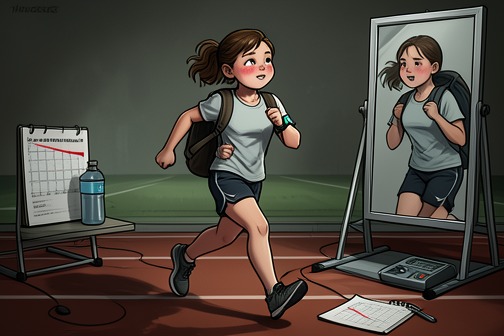
[Tabitha Moore](entity:character-recall-character-tabitha-moore-cc0b03363aff)’s summer weight-loss and training is the first sustained project through which her time-displaced adult consciousness attempts to remake the thirteen-year-old body returned to her. Beginning at 148 pounds, she sets herself the goal of losing fifty pounds before high school starts, combining running, calisthenics, playground games, and strict control over food. The effort changes how she moves through the world and how others see her, but it also makes clear that a younger, thinner body cannot by itself repair the loneliness and self-hatred carried over from her previous life.
## Motivation and Objective
Tabitha’s first response to discovering that she has become a young girl again is horror at the physical identity she recognizes from childhood. She sees herself not as an ordinary adolescent but as the “fat and useless trailer trash little girl” she remembers being, a return to the hated figure of “TUBBY FUCKING TABBY.” The shock is intensified by the outdated hospital surroundings, which help her realize that she has not merely suffered memory loss but has returned to an earlier historical moment.
Once the initial panic passes, the younger body becomes an opportunity. Tabitha recognizes that she is no longer trapped in the sixty-year-old body she had inhabited and believes she can prevent the physical decline and self-loathing that shaped her former life. She knows how to cook, understands exercise, and imagines using her future knowledge to solve old problems. Her ambitions extend beyond appearance: she wants to write Goblina and Goblin Princess again, publish them before the market becomes oversaturated, save Julie from taking her own life, and somehow protect her parents from destroying themselves. Weight loss is therefore both a concrete health project and the first visible symbol of her attempt to write her life over.
Her stated target is severe but precisely defined: she tells Mike that she wants to lose fifty pounds before high school begins. She identifies 148 pounds as her starting weight and estimates that four pounds per week is the upper limit her body can endure. The numerical precision gives the project the appearance of rational control, even though the goal itself is extreme and the available bathroom scale is unreliable.
## Training Through the Summer
The regimen develops rapidly. What begins as walking becomes a slow jog, then a run, and eventually a daily run containing sprints intended to raise her heart rate. The effort is so repetitive and intense that holes form in the creases of her sneakers, whose soles she repeatedly repairs with superglue. The worn shoes become a material record of labor: the transformation is not effortless or magical but accumulated through strain, repetition, and the gradual expenditure of her body.
Tabitha also trains through play. She visits [Grandma Laurie](entity:character-recall-character-grandma-laurie-cee8a3e4369e) frequently and takes her four cousins to the playground, where tag becomes an informal testing ground for her speed, prediction, and agility. Even before she has fully transformed, she can anticipate when the boys will lunge and maneuver them into corners. As her weight falls, her stamina and acceleration make her increasingly difficult to catch. In team games she takes only [Joshua](entity:character-recall-character-joshua-3816a503f6f7) onto her side to balance the contest, and eventually faces all four boys under rules that require any one of them to tag her while she must tag each of them in succession.
The games become more athletic and more intimidating. Tabitha jumps, kicks off playground equipment, performs dive-rolls to evade tags, and once escapes with a hand-spring. The cousins are exhausted after their hours of play, while Tabitha continues improving. Her physical competence reverses the earlier social arrangement in which the boys mocked the overweight girl. After [Sam](entity:character-recall-character-sam-d93f992a0ed0) mistreats her, she warns him that another attack will be met with a blow he must take directly to the face, then resumes playing with the others. [Aiden](entity:character-recall-character-aiden-b4bb3917d0f7), [Nick](entity:character-recall-character-nick-71bd8d1fa63d), and Joshua side with her, while Sam’s sneering opposition no longer leads him to challenge her again.
## Visible Transformation and Its Costs
The most powerful effect of the regimen is the daily appearance of a new face in the mirror. As the fat recedes, Tabitha begins to see a beautiful young woman emerging from the features she had once despised. Her neck becomes slender, her chin and jaw more defined, her nose changes in her perception from a “toad-like blob” to a button nose, and her eyes appear brighter and larger as her cheeks slim. The mirror supplies a recurring confirmation that the past may be altered, and her hesitant smiles gradually become part of a more hopeful self-image.
The transformation is nevertheless medically and emotionally unstable. Tabitha aches constantly, and the speed of the weight loss makes clear that she is damaging her young body. Her first menstrual cycle in this new life is irregular enough to cause mild panic, a physical warning that her plan is not simply a disciplined improvement. She acknowledges that the regimen is unhealthy but dismisses the warning because changing her life seems necessary for her mental survival. Her hostile thoughts about menstruation show how thoroughly she treats the body as an obstacle to be overruled rather than as a living process with its own limits.
Even measurement fails to provide the certainty she wants. Weighing herself twice within ten minutes produces a fourteen-pound difference because nudging the old scale changes its reading. The mobile home’s uneven plywood and particleboard flooring prevent reliable calibration. The unstable scale consequently mirrors the instability of the project itself: Tabitha seeks exact control through numbers, but her impoverished environment and changing body make those numbers impossible to trust.
## Arrival at [Springton](entity:location-recall-location-springton-c2a14fbdba24) High
By the first day at [Springton High School](entity:location-recall-location-springton-high-schoo-af91b6c309cd), the summer’s work has altered both Tabitha’s appearance and her social visibility. In her past life, she remembers boarding the bus unnoticed, greeted with indifference. This time, when she steps onto the bus, a boy at the back gives a jeering welcome and several others turn to stare. The attention is evidence that her transformation has succeeded in one narrow sense, but it also exposes her to a new kind of scrutiny. She freezes under the sudden gaze of the students, discovering that being noticed is not the same as being accepted.
Her presentation for that morning is carefully engineered. She wears her copper-red hair loose in a deliberate tangle, using her mother’s curling iron and styling product to create volume. Subdued eyeliner frames her hazel eyes, and she has avoided tanning because her skin turns either Irish white or redneck red. She shifts her running schedule to early morning and late night and skips that day’s run to concentrate on her appearance. Her white blouse is made from a discounted thrift-store dress cut apart and re-hemmed, while Grandma Laurie helps create a school bag from discarded denim, with real belts threaded through belt loops as straps. The outfit joins bodily discipline to thrift, craft, and family assistance: the new self is constructed from limited resources rather than purchased whole.
Yet the first weeks at school complicate the promise of reinvention. Tabitha had intellectually understood that thinness and attractiveness were not enough to create friendship, but only experiencing school again makes the point undeniable. She had unconsciously blamed the loneliness of her former life almost entirely on weight and appearance; after several weeks, despite the transformation, she has made only one friend. The event therefore punctures the fantasy that changing the body will automatically change the social world.
## Significance for Identity and Recovery
The summer project temporarily gives Tabitha what her former life denied: speed, physical possibility, visible beauty, and the feeling that action can produce a different future. The contrast is especially sharp when she performs a pushup that would have been impossible at sixty and realizes that youth can be useful rather than merely humiliating. Her body becomes a vehicle for agency, allowing her to run, play, defend herself, and approach high school as someone who might choose her fate.
At the same time, the project establishes the central contradiction of her second life. Tabitha possesses adult memories and techniques but inhabits a developing adolescent body whose hormones, injuries, emotions, and limits cannot be governed entirely by adult intention. Later, she admits that she is no longer sure who she is and feels like an emotional wreck, crying almost every day and making decisions she considers foolish. She contrasts this with her former childhood self, who was emotionally distant, lonely, and self-hating but rarely cried. The difference shows that the new life has not simply produced a healthier version of the old Tabitha; it has created a volatile overlap between adult knowledge, adolescent development, trauma, and hope.
That overlap eventually becomes an identity crisis. Thirteen is normally imagined as a period of transformation, but Tabitha experiences a reversal in which adulthood lies in the past and childhood is unfamiliar territory. Her intelligence cannot always control feelings that overwhelm rational judgment, while unexpected changes in the timeline make her future knowledge less dependable. The summer’s weight loss is thus both a genuine accomplishment and an incomplete solution. It changes the body that once seemed to imprison her, but it cannot eliminate the social conditions, family wounds, or temporal dislocation that produced her despair. Its lasting significance lies in that tension: Tabitha learns that she can alter herself, yet must also learn that a second chance requires more than becoming visibly different.
Event 4
Tabitha的创作笔记失窃事件
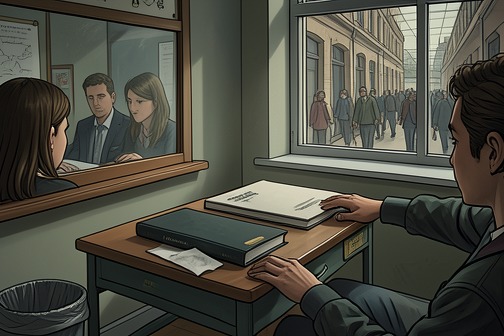
Tabitha’s creative-notes theft is the decisive incident in which her Goblina project binder is stolen from her desk while she sleeps through part of Algebra I, concealed in a restroom waste bin, and later recovered through a school disciplinary investigation. The episode turns a private writing object into visible evidence of [Springton](entity:location-recall-location-springton-c2a14fbdba24) High’s harassment: what classmates treat as a joke is, for Tabitha, an assault on the material container of her thoughts, her creative identity, and the fragile sense of safety she has been trying to preserve at school.
## Causes and Immediate Setting
After lunch, Tabitha reaches her fifth-period Algebra I class already exhausted. She is academically far ahead of the freshman class, having completed nearly all of the workbook assignments well before they are due, but she cannot concentrate on the broad outline of Goblina. Her attention keeps returning to Hannah, the lively young girl she imagines reading the story, and to questions about how fictional characters should be defined through foils, interactions, mannerisms, and contrasting traits.
Writing in the project’s ideas section becomes a practical means of managing that exhaustion. Tabitha records scattered thoughts that she intends to reorganize into formal outline pages later, including questions about balancing concurrent subplots and resolving them in sequence. Her notes also contain reminders to ask Mrs. Albertson about research on serial fiction, to practice character mannerisms with her mother, to teach her mother a cauliflower-rice recipe, and to ask [Grandma Laurie](entity:character-recall-character-grandma-laurie-cee8a3e4369e) for help with simple meal preparation. The binder therefore contains not merely schoolwork but an interwoven record of literary ambition, domestic responsibilities, health concerns, and mental strain.
## The Theft and Tabitha’s Withdrawal
The act of writing briefly gives Tabitha relief. She feels that the troubling thoughts have been transferred out of her head and onto paper, adjusts the strap of her sling, and rests her cheek on her arm. She then falls asleep for almost thirty-five minutes in the middle of class. When she wakes, the binder is gone.
The loss is immediately disorienting because the binder has become a tangible representation of Tabitha’s mind. She instinctively searches for it, checks the backpack beside her even though she knows she did not put it there, and looks around for a nearby student who might be reading it. Several girls avoid her eyes in unison. Their coordinated silence makes the disappearance legible as deliberate humiliation rather than an accident.
Tabitha remembers that classmates stole her belongings in her first life, but the present theft reaches her at a moment when she is already physically and emotionally beyond her limits. Her anger, hurt, and vulnerability overwhelm the disciplined posture she has tried to maintain through successive crises. She tells Mr. Stern that the missing binder held a personal project of great importance, then says she is going home because she does not feel well or safe. Although Mr. Stern promises to address the matter, Tabitha insists that she must go to the main office and admits that she does not know whether she will ever return.
## Investigation and Recovery
The binder is eventually found in the restroom waste bin. Mr. Stern’s account establishes the crucial chain of evidence: he had allowed [Clarissa Dole](entity:character-recall-character-clarissa-dole-e721834a6001) to leave class for the restroom; Tabitha had not gone there; no other student in that period had needed to use it; and the missing notebook was discovered there immediately. The surrounding girls had earlier denied taking anything, even though another student had reported their suspicious behavior.
During questioning, Clarissa repeatedly calls the theft a joke and claims that the girls intended to tell Tabitha where the binder was. Her language shifts responsibility from an individual to a group through the repeated use of “we.” Mrs. Cribb presses her to identify the other participants, making the collective nature of the harassment part of the disciplinary inquiry rather than allowing the prank explanation to erase its consequences. The recovered binder is placed before Clarissa as evidence of what was taken and where it was hidden.
## What the Binder Reveals
[Pamela Cribb](entity:character-recall-character-pamela-cribb-bf464f81adbc) initially sees an inexpensive, plain blue plastic binder marked with [Tabitha Moore](entity:character-recall-character-tabitha-moore-cc0b03363aff)’s name inside. Its ordinary appearance contrasts sharply with its contents. The three-ring binder is almost overfilled, contains very few blank pages, and is filled with neat, orderly handwriting. It has no conventional class or assignment headings, which first makes its purpose unclear.
As Mrs. Cribb reads, the object changes status. It is no longer an apparently disposable school notebook but an unusually extensive outline for a fiction novel titled Goblina. The organization of the story, the attention to structure, and the depth of the analysis strike her as university-level work, astonishing in a thirteen-year-old freshman. The binder makes Tabitha’s unseen intellectual life materially undeniable: the girl whom classmates have treated as vulnerable and available for ridicule has produced work that an adult school official recognizes as exceptional.
The theft consequently exposes two forms of violence at once. The girls have discarded a personal project in a trash bin, reducing Tabitha’s creative labor to refuse, while the recovered pages force the institution to confront the value of what was discarded. Mrs. Cribb’s dismay is sharpened by the fact that the binder was not random clutter but a sustained imaginative enterprise, carefully assembled and nearly complete in its physical form.
## Consequences and Narrative Significance
The event produces an immediate value reversal. Before Tabitha sleeps, the binder is a private source of order and catharsis; on waking, its absence makes the classroom hostile and strips away the security it represents. Recovery restores the object but cannot restore the conditions in which it was kept. Tabitha leaves school declaring that she no longer feels safe, so the investigation becomes a direct precursor to her possible withdrawal from Springton High.
The incident also makes a central contradiction visible: Tabitha is intellectually ahead of her class yet institutionally exposed within it. Her advanced work does not protect her from harassment, and her maturity does not prevent exhaustion from making her vulnerable. At the same time, the binder gives authority figures a form of evidence that cannot be dismissed as oversensitivity. Its contents document the seriousness of Tabitha’s inner life even though the theft itself has attempted to deny that seriousness.
As a material object, the binder carries the narrative’s emotional burden. While present, it is nearly transparent to Tabitha as a trusted tool; once removed, it becomes conspicuous through its absence, and once recovered, it becomes an exhibit that allows adults to see what Tabitha has been carrying alone. The theft therefore marks more than the loss of notes. It is the moment when private creativity, peer cruelty, school discipline, and Tabitha’s decision to leave converge around one damaged sense of belonging.
Event 5
Shannon Delain放弃电影角色事件
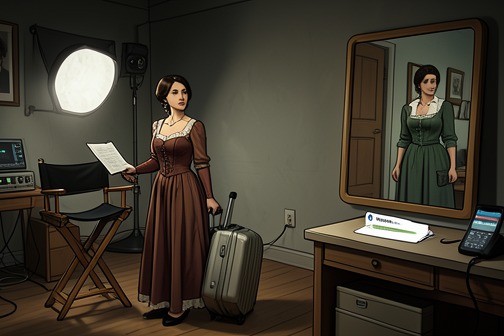
The event in which Shannon Delain abandoned her role in Lucas is the hidden turning point behind her later identity as [Tabitha Moore](entity:character-recall-character-tabitha-moore-cc0b03363aff)’s embittered, agoraphobic mother. Shannon had reached the professional success she once imagined would define her: after modeling work, advertising shoots, small television appearances, and repeated auditions, she won the role of Maggie in a feature film. Yet she left the production only two months into filming, broke her contract, and returned to [Springton](entity:location-recall-location-springton-c2a14fbdba24) with [Alan Moore](entity:character-recall-character-alan-moore-ede3efaeff3e). The choice ended one version of her future while exposing the fear, shame, and exploitation that made that future unbearable.
## Ambition and the Film Role
Shannon’s path to the role had been built through incremental successes rather than instant celebrity. She traveled to Los Angeles, worked on photoshoots and videos for toothpaste and deodorant advertisements, and appeared in a few sitcoms, sometimes with only one spoken line. The part in Lucas therefore represented a qualitative change: it was not another commercial or brief television appearance but a genuine acting role and what she called her big debut.
She was cast as Maggie and expected to kiss Charlie Sheen. The role carried the promise of a public identity she had pursued through modeling, acting, and the idealized image of becoming a movie star. In the alternate history remembered by Tabitha, however, the film did not become a lasting cultural landmark. Kerri Green ultimately took the part and was nominated for Exceptional Performance by a Young Actress in a Feature Film. The replacement’s later recognition makes Shannon’s abandonment feel both consequential and strangely invisible: she surrendered a real opportunity, but the world continued without preserving her as the person who had nearly occupied that role.
## Withdrawal from Production
Shannon disappeared two months into filming while the production was working at Lake Ellyn Park, Illinois, only about five hours from Springton. She broke her contract and refused to speak with her agent from [Fox Studios](entity:organization-recall-organization-fox-studios-bd5d17094c78). Alan Moore, described by Shannon as the only person she could trust, drove to retrieve her without asking why. She cried throughout the trip, returning not as a triumphant actress but as a young woman fleeing a situation she could not explain to her parents or the people managing her career.
Her parents paid the penalty fee and were furious, while Shannon remained unable to tell them the truth. She later described the entertainment business as filthy and said that it had been making her feel filthy. Her account does not identify every act that occurred on the set; instead, it is structured around a refusal to disclose, a refusal she extends even to Tabitha. Shannon says that she believed she would do anything to become a movie star, whatever it took, and then discovered that she was not strong enough—or did not want to be the kind of person required to continue. Her decision to leave is consequently both an act of self-preservation and the source of enduring shame.
## Consequences for Shannon and Tabitha
After returning to Springton, Shannon had Tabitha and became the person Tabitha knows as her mother. Shannon’s language leaves the exact chronology of the pregnancy and the abandonment partly unclear, but she presents the return to Alan and the birth of Tabitha as bound to the life she chose after leaving the film industry. She insists that Alan is an honest, simple man who was what she needed after the experience, and she eventually tells Tabitha that Tabitha did not ruin her life.
That admission revises the emotional logic of the Moore household. Tabitha had understood her mother’s bitterness as resentment toward the daughter who had interrupted or destroyed an unrealized career. Shannon instead reveals that her bitterness also came from unresolved humiliation, grief for a discarded dream, and the psychic damage of an industry she believed protected itself by silencing vulnerable young women. When Tabitha begins losing weight rapidly and expresses a desire to become an actress, Shannon reacts with disproportionate alarm because Tabitha’s transformation resembles the young woman Shannon once was. The abandoned role thus returns as a living threat inside their mother-daughter conflict.
## Silence, Complicity, and Historical Perspective
Shannon’s explanation distinguishes between being harmed and accepting responsibility for entering a system she already recognized as dangerous. She says that the industry’s participants knew what was happening, that other women on the set experienced similar treatment, and that those who were not directly involved either tolerated it or lacked the power to stop it. She also believes that anyone who spoke out could be destroyed through whatever damaging information could be found about them. Her fear is therefore not merely private embarrassment; it is an understanding of institutional silence as a mechanism that turns exposure into another form of punishment.
Tabitha urges her to tell the police, the media, or someone capable of intervening, especially for the sake of the next inexperienced girl. Shannon rejects the role of uncomplicated victim, insisting that she knew the risks and thought she could make the system work for her. This self-condemnation complicates the event’s ethics. A duty-based response would demand testimony and protection for future victims; a consequence-based response might measure disclosure against the danger of retaliation; a virtue-based reading asks what kind of person Shannon can become after surviving through silence. Shannon chooses withdrawal and secrecy, while Tabitha demands public accountability. Their argument gives the abandoned role a second life as a dispute over whether survival without disclosure is enough.
The narrative places Shannon’s experience in the entertainment industry of the 1980s, decades before the MeToo movement exposed predatory filmmakers and producers to broad public scrutiny. Tabitha, carrying memories from a later life, recognizes that protective regulatory structures for young actresses would not yet exist in the form she knows. Her historical awareness deepens rather than resolves the scene: she can see the structural conditions that trapped Shannon, but she cannot force Shannon to narrate what she still cannot bear to say.
## Narrative Significance
The event is a story of a failed professional debut, but its decisive value lies in the reversal of appearances. From Tabitha’s earlier perspective, Shannon seemed to have simply abandoned a glamorous dream and then blamed family life for the loss. The confession reveals that leaving Lucas was also an escape from a predatory system and a retreat toward the honest stability Shannon associated with Alan. At the same time, Shannon’s silence and later bitterness have injured Tabitha, so the explanation does not erase the consequences of her choices.
The event also establishes a recurring tension between appearance and lived identity. Shannon once pursued the image of the actress she thought she should become; Tabitha later attempts an equally dramatic transformation into a more capable, attractive, adult-like self. Both are shaped by an imagined public gaze, yet Shannon’s withdrawal demonstrates that the desired role can conceal a destructive social order. In this sense, abandoning Maggie is not simply the loss of a career. It is the moment Shannon refuses an identity imposed by the film industry, only to remain haunted by the mirror of that abandoned possibility for the rest of her family life.
At the broader plot level, the revelation changes how Tabitha understands both her mother and her own responsibility. Shannon explicitly separates Tabitha from the catastrophe of her unrealized career, while Tabitha must confront the possibility that her efforts to resemble Shannon are reopening an old wound. The event therefore becomes a buried origin for the Moore family’s estrangement and a necessary disclosure in their attempt at repair: the past cannot be corrected by restoring Shannon to the screen, but it can be understood as more than a simple story of selfish abandonment.
Event 6
Springton South Main shooting

[Springton South Main shooting](entity:event-recall-event-springton-south-main-sh-487d055d7795) is a violent 1998 turning point whose outcome differs sharply from the future [Tabitha Moore](entity:character-recall-character-tabitha-moore-cc0b03363aff) remembers. Her intervention saves Officer Darren MacIntire in a related shooting sequence, while the altered chain of events leads police to [Jeremy Redford](entity:character-recall-character-jeremy-redford-0bc7f5c9fabf), the gunman whose death leaves Tabitha burdened by the knowledge that her attempt to repair the past has also helped produce another fatal outcome.
## Background and Foreknowledge
The shooting belongs to the pattern created by Tabitha’s return from a later lifetime to 1998. She remembers events that have not yet happened, but that knowledge is incomplete, emotionally charged, and difficult to use without changing the surrounding circumstances. Before the South Main confrontation, she has spent time in the [Springton High School Library](entity:location-recall-location-springton-high-schoo-d29f2a7785e6) studying emergency gunshot treatment and police response procedures. [Alicia Brooks](entity:character-recall-character-alicia-brooks-090f3366fb12) later identifies that preparation as one reason Tabitha’s apparently impossible intervention in Officer Darren MacIntire’s shooting seemed more than ordinary luck.
Tabitha’s knowledge is not presented as a perfectly controlled plan. She remembers only that the MacIntire shooting should occur after school in early October, so she positions herself at the relevant location every day. The strategy is repetitive and uncertain rather than precise. It allows her to be present when the crisis begins, but it also shows the danger of acting on memories that are decades old and only partially preserved.
## The Altered Confrontation
In Tabitha’s original lifetime, she heard a gunshot while watching television and learned afterward that Officer Darren MacIntire had bled out in the ambulance on the way to the hospital. The doctors could not resuscitate him. In the changed timeline, Tabitha reaches him quickly, helps get the emergency response called in earlier, and reduces the blood loss. Alicia describes the result more directly: Tabitha saved his life because he was supposed to die and did not.
The rescue gives the event its first decisive value shift. A remembered death becomes a life preserved, not through abstract destiny but through preparation, physical presence, and immediate action. Tabitha resists taking full credit, calling it a matter of luck and insisting that she merely helped bring assistance sooner. Alicia rejects that modest account, emphasizing that the difference between dying and surviving was created by Tabitha’s intervention.
The South Main outcome is darker. Because of Tabitha’s actions, Jeremy Redford’s white Lincoln Continental is spotted a little over a mile down South Main, and police cruisers pursue it in a brief high-speed chase. The chase ends when a cruiser traveling on a perpendicular route T-bones the Continental, forcing it through a curb, sidewalk, and concrete divider before it crashes into several parked cars at a shopping plaza.
Redford, identified as being from West Virginia, stumbles from the wreck and fires several wild shots. [Springton](entity:location-recall-location-springton-c2a14fbdba24) police respond with overwhelming gunfire and kill him. The local Channel 7 News repeatedly broadcasts variations of the South Main shooting, turning the incident into a public spectacle even though Springton ordinarily has few major breaking stories. For Tabitha, the televised repetition makes the consequences impossible to keep at a distance.
## Responsibility and Moral Injury
Tabitha experiences Jeremy Redford’s death as a personal consequence rather than as a neutral police result. During her morning exercise, with the crime scene still taped off along the lower end of her route, she thinks, “Jeremy Redford died because of me.” The thought is accompanied by physical nausea: she sees the crime scene at sunrise, vomits into a living-room wastebasket after checking the news, and considers skipping breakfast because she cannot stop retching and dry heaving.
Her guilt is complicated by the way she had previously imagined the gunman. In her mind, Redford had been less a person than a plot device: a faceless criminal who was never identified and then disappeared into the history of her first life. The altered timeline forces that abstraction to become concrete. His car, pursuit, crash, gunfire, and death are now connected to decisions Tabitha made, and the former background figure becomes a human cost she can no longer treat as part of an inevitable script.
This is why the event matters beyond the question of whether the rescue succeeded. Tabitha’s time travel gives her an opportunity to prevent suffering, but it does not grant her control over every consequence. Saving Officer Darren MacIntire demonstrates that the past can be changed; Jeremy Redford’s death demonstrates that change can redirect violence rather than abolish it. The moral burden lies in the gap between what Tabitha intended to repair and what the altered sequence actually produces.
## Connections to Other Revelations
The shooting is discussed alongside Tabitha’s broader failures of knowledge and responsibility. She is furious when [Grandma Laurie](entity:character-recall-character-grandma-laurie-cee8a3e4369e) tells her that [Danny Moore](entity:character-recall-character-danny-moore-89183162a3e0) was arrested a week and a half earlier for stealing $30,000 worth of IBM, Compaq, and Toshiba personal computers from a pallet behind the Service Merchandise department store at [Sandboro Mall](entity:location-recall-location-sandboro-mall-4613b5dc0ef4). Tabitha had remembered the arrest from her first life and expected to be prepared, yet her distance from her parents meant that the news passed without their telling her. The missed warning makes her question the practical value of returning to the past if she cannot repair the matters that affect the people around her.
The same conflict between memory and action appears in her recollection of Ashlee Taylor’s abuse. Tabitha remembers seeing fresh bruises layered over older ones, hidden beneath clothing, and recalls that Ashlee was terrified of Erica Taylor and [Brittney Taylor](entity:character-recall-character-brittney-taylor-51f7909a3a72). In the original timeline, Erica and Brittney pushed Tabitha from their trampoline; the fall caused severe head trauma, and the girls threatened both of them into silence. They promised to make Ashlee’s life unbearable if Tabitha spoke, and Tabitha withdrew instead of reporting what she understood. Decades later, she recognizes that silence as a moral failure and decides that it is time to tell the truth, forty-seven years late.
[Elena Seelbaugh](entity:character-recall-character-elena-seelbaugh-62ca324e0fdb)’s response to Tabitha’s apparent death supplies another variation on the same ethical structure. Believing Tabitha has died, Elena blames herself for assuring her that a dangerous situation was safe and persuading her to go. Her panic shows how quickly an act intended as friendship can become, in retrospect, an unbearable responsibility. When Tabitha later explains her foreknowledge, Elena is not comforted by the apparent cleverness of the plan; she feels betrayed and cannot understand why Tabitha and Alicia would let her remain terrified.
## Narrative Significance
Springton South Main shooting functions as a paired reversal: Officer Darren MacIntire survives the death Tabitha remembers, while Jeremy Redford dies in an altered confrontation that Tabitha experiences as partly caused by her intervention. Alicia Brooks and Elena Seelbaugh learn that Tabitha’s preparation, uncanny timing, and knowledge of the shooter’s getaway car were connected to memories from a first lifetime. The revelation changes their understanding of her behavior from mysterious competence to evidence of a secret history.
The event therefore turns time travel from a fantasy of correction into an ethics of intervention. Tabitha is neither a detached observer nor an all-powerful author of outcomes. She studies, waits, acts, and sometimes succeeds; she also misjudges, forgets, remains silent, and watches the past produce new victims. The recurring image of news coverage and the taped-off crime scene gives the altered timeline a physical afterimage. Every replay of the South Main shooting reminds Tabitha that a second chance at life is not the same thing as a second chance to make every consequence harmless.
Event 7
Tabitha's First Time Travel
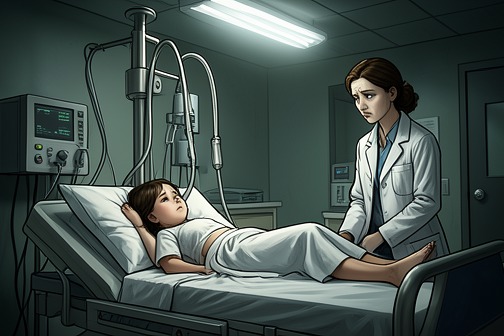
[Tabitha's First Time Travel](entity:event-recall-event-tabitha-d3c9ebc5e885) is the catastrophic MRI-induced displacement in which [Tabitha Moore](entity:character-recall-character-tabitha-moore-cc0b03363aff)'s mind is sent from [2045](entity:time-recall-time-2045-8c2eee6aacd6) back to [May 7, 1998](entity:time-recall-time-1998-5-7-88ab9af9215b), where it awakens in her thirteen-year-old body at [Emsie St. Juarez Children's Hospital](entity:location-recall-location-emsie-st-juarez-chil-36a67c1f6b4c). The event does not merely move her through history: it confronts an elderly woman with the physical identity, family circumstances, and emotional wounds of the child she believed she had escaped, making time travel both a second chance and a violent restoration of the past.
## Causes and Background
Tabitha later explains that the journey began when she was sixty and suffering persistent migraines. Because medication did not resolve the headaches and she was beginning to miss work, doctors sent her from [Springton](entity:location-recall-location-springton-c2a14fbdba24) to [Louisville](entity:location-recall-location-louisville-d871424f8dfb) for a more thorough examination in a large custom MRI machine. The machine malfunctioned, and her mind was sent backward rather than simply being examined. The destination was not arbitrary: in 1998, her younger self had been inside the same kind of machine while receiving treatment for a concussion caused by being pushed from a trampoline.
The connection between the two moments is presented as a rule rather than a fully understood scientific mechanism. Tabitha believes that the younger version of herself had to interact with the MRI in the earlier time for the displacement to occur. When [Alicia Brooks](entity:character-recall-character-alicia-brooks-090f3366fb12) asks whether other people could use the machine to bridge their future minds into their younger bodies, Tabitha can offer only possibilities: the MRI might have to produce the same violent screeching and electrical failure, and a future self might overwrite the consciousness of the person in the past. Even Tabitha admits that the mechanics may depend on perspective. The novel therefore treats the event as a real experience within the story while preserving uncertainty about how its impossible causality operates.
## What Happens
The first journey begins with the prototype MRI machine in the [Emsie St. Juarez Pediatrics ward](entity:location-recall-location-emsie-st-juarez-pedi-666d0595d38f) emitting a screech that grows both louder and higher until it becomes physically painful. The breaker blows with an unsettling pop, the fire alarm sounds, smoke pours from the machine, and the power fails across Jefferson County. Inside the device, thirteen-year-old Tabitha Moore lies motionless as the backup power comes online. Her physical surroundings register the disaster, but the decisive transformation occurs in consciousness: the sixty-year-old Tabitha is suddenly forced into the body of the child undergoing the scan.
Her first recognition is bodily and horrifying. The clues that had seemed confusing fall into place when she realizes that she is not merely injured, altered, or temporarily impaired; she is younger. She sees small hands with chubby fingers and understands that she has become the overweight child she once called [Tubby Tabby](entity:expression-recall-expression-tubby-tabby-5cc50c7fc225). The hospital's outdated plastic panels, unlike the glass-like surfaces of the [University of Louisville Hospital](entity:location-recall-location-university-of-louisv-9b30b870b561), confirm that she is not in her own era. When the doctor gives the date as May 7, 1998, the forty-seven-year gap becomes undeniable.
The date also restores the people and conditions of a life she had spent decades trying to outgrow. Tabitha understands that [Alan Moore](entity:character-recall-character-alan-moore-ede3efaeff3e) is alive and that [Shannon Moore](entity:character-recall-character-shannon-moore-b58dcef4d0d7) is probably alive as well. Instead of experiencing the return as a clean opportunity, she initially experiences it as the confiscation of everything she had gained. She fears being made to repeat the life of the isolated, self-loathing girl she remembers, and the thought of enduring that existence again produces sobbing, physical shaking, and a desperate wish that the experience might only be an electrical seizure in the MRI.
Her confusion is intensified by the fact that the returning mind retains the habits and knowledge of adulthood while occupying a child's body. At home, she immediately notices the material limits of 1998: a refrigerator full of leftovers, take-out containers, mystery jars, beer, and little food she finds appetizing. She hard-boils nearly expired eggs to ration against her hunger and begins planning how to obtain fresh produce. She reaches automatically for the bracelet-style personal computer she had worn for years, only to remember that it is absent and that she has been thrown back into the dial-up era. Even practical tasks become historical problems: she needs a word processor for her novels and must determine whether 1998 offers a flash drive, a CD, or only a floppy diskette.
The displacement also gives her immediate academic and strategic advantages. She expects to pass middle-school finals with little review, although she recognizes that high-school calculus and physics would be more demanding. To conceal the adult source of her knowledge, she plans to use unusually sophisticated vocabulary around her parents so that they will interpret it as an adolescent phase rather than question how she knows words she should not yet possess. Future memory thus becomes both an instrument of control and a burden requiring constant performance.
## Consequences and Temporal Logic
The first time travel creates a new life rather than restoring the old one exactly. Tabitha initially assumes that becoming thin and attractive will solve the social isolation she associated with her former adolescence, but her first weeks at school undermine that theory. Even after changing her appearance, she makes only one friend and begins to recognize that loneliness cannot be explained entirely by weight or self-esteem. The event consequently changes her understanding of the past: the body she hated was part of her suffering, but it was not the sole cause of her estrangement.
Her actions also generate outcomes that do not belong to the life she remembers. During the Springton South shooting, Alicia Brooks photographs Tabitha running toward a wounded police officer. The picture becomes part of the public story of the rescue, and reports connect Tabitha with Officer Darren MacIntire's critical condition. At school, students repeat a distorted version in which Matthew Williams has become romantically interested in her and has taken her to Louisville to visit his father. Tabitha recognizes that the rumor confuses Officer MacIntire with [Officer Williams](entity:character-recall-character-officer-williams-6982ec288c12), and the misinformation exposes the butterfly effect in social as well as historical form: a single altered act produces photographs, news coverage, gossip, resentment, and new relationships.
The changed timeline also gives Tabitha access to friendships that had not existed in her first life. Alicia's disposable-camera photograph, Channel 7 News coverage of the shooting, and later family photographs taken with a Kodak disposable camera at the [Halloween](entity:time-recall-time-halloween-c9b359236295) gathering all become artifacts of a life she is now actively making. Yet the return does not make her emotionally invulnerable. She tells Alicia that she has become a wreck, crying almost every day and making decisions she considers stupid. Compared with her first life, when bad and good experiences had seemed distant and she felt trapped, the new life is more immediate and painful precisely because she is capable of attachment.
## Repetition and Ending
The first displacement is not the novel's final temporal rupture. During the Halloween lake-house crisis, Tabitha's older body is caught in the disaster surrounding the MRI's impossible machinery. She reaches toward the back of the device, suffers another ruptured blood vessel, and falls into darkness. In the void, a small hand catches hers while the falling F-22 fighter jet slips away; she sees a frail sixty-year-old body become still inside the MRI before the image disappears into the churning darkness. The rescue leaves the mechanism unresolved, but it establishes that consciousness can cross a boundary where bodies, time, and death no longer remain stable categories.
Tabitha later tells [Elena Seelbaugh](entity:character-recall-character-elena-seelbaugh-62ca324e0fdb) and Alicia Brooks that she believes Erica Taylor killed her in the lake house. A few seconds after blacking out, she says, she began the timeline again by awakening in the MRI in May 1998. This second restart transforms the meaning of the first journey. What once looked like a single miraculous return becomes part of a cycle of repetition, loss, and attempted correction. Tabitha believes she has lost the moments that arose by chance with her friends and cannot bear the prospect of repairing her relationship with Shannon Moore from the beginning again. The first time travel therefore ends not with mastery over history but with the discovery that a second life can itself be taken away and restarted.
## Narrative Significance
As an event, Tabitha's First Time Travel joins medical technology to autobiographical crisis. The MRI is a machine intended to reveal hidden conditions inside the body, yet it instead exposes the hidden structure of Tabitha's life: the child she was, the adult she became, and the memories that bind those identities together. The forty-seven-year interval is both a historical distance between 1998 and 2045 and a measure of the self-hatred, bereavement, poverty, and isolation she carries back into adolescence.
The event also makes time a contested form of knowledge. Tabitha knows what later happened to Alan Moore, Shannon Moore, her own body, and her social life, but future knowledge does not guarantee emotional readiness or causal control. Her predictions are repeatedly complicated by altered rumors, new friendships, public photographs, and the possibility that the MRI's rules are matters of perspective. The reader must therefore distinguish between remembered history, present observation, inference, and uncertainty rather than treating the future as a fixed script.
Most importantly, the journey changes the novel's governing question from whether Tabitha can become attractive or successful to whether she can inhabit a life without reproducing the contempt that once defined it. Her first reaction is a refusal to become the fat, powerless child again; her later experience shows that the new timeline gives her not only different circumstances but greater vulnerability, attachment, and agency. The event is consequently both a fantastical premise and a test of whether a person can return to the scene of an old identity without allowing that identity to determine the limits of a second life.
Event 8
Tabitha's Misdiagnosis of Brain Death and Awakening
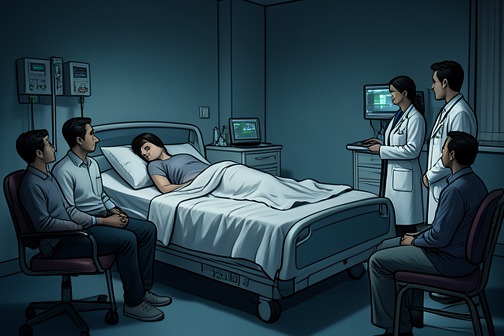
[Tabitha's Misdiagnosis of Brain Death and Awakening](entity:event-recall-event-tabitha-304c6461daac) is the central life-and-death reversal in [Tabitha Moore](entity:character-recall-character-tabitha-moore-cc0b03363aff)'s second chance at life. The event begins in the language of finality: Tabitha Moore has been declared brain dead, taken off life support, and placed in a hospital room where her grieving family waits for her body to pass away. It ends when her apparent serenity breaks into movement, distress, and a whispered plea for help, followed by her return to consciousness. The reversal is not presented as a simple medical correction; it is filtered through a child's insistence, a mother's shock, Tabitha's trapped awareness, and the unsettling fact that she has already been legally dead for two days.
## Medical Finality and the Human Cost of Certainty
Tabitha's condition is treated as irreversible. The doctors' judgment, as explained to [Hannah MacIntire](entity:character-recall-character-hannah-macintire-f46c0e0ba09f), is that Tabitha has no brain activity and will never wake up again. She is described as being in a vegetative state and permanently comatose, with life support already withdrawn and only a few days of visiting remaining before the Moore family expects a quiet death. The medical explanation tries to make the situation comprehensible to Hannah by comparing Tabitha to Sleeping Beauty: she is said to be resting, free from pain and distress, but unable to return.
That explanation creates a sharp contrast between institutional certainty and the signs available to an attentive witness. Tabitha's body had appeared peaceful for several days, and the bandages around her head were the only obvious evidence of the injury. Yet the apparent calm conceals an experience that the medical account cannot explain. Her face becomes troubled, her brow furrows, her eyes clamp shut as if she is suffering, her breathing accelerates, and her lips tremble. The event therefore turns on a failure of interpretation: the same body read by adults as peacefully dying is read by Hannah as someone having a nightmare.
## Hannah MacIntire's Recognition and Sandra's Reversal
Hannah MacIntire is the first person to resist the official conclusion. She calls for her mother and insists that Tabitha is having a bad dream, despite being told that someone without brain activity cannot dream or wake. When Hannah reports that Tabitha grabbed her hand, her observation gives the supposedly impossible claim a physical confirmation. Hannah does not possess medical authority, but she notices contact, movement, and distress rather than accepting the explanation imposed on her.
[Sandra MacIntire](entity:character-recall-character-sandra-macintire-1c8d150ba37b) initially tries to reassure Hannah that nothing is wrong, but she freezes when she sees Tabitha's altered condition. The girl's body is no longer serene: it jerks slightly, her breathing grows faster, and a barely audible plea emerges from her. Tabitha's fragmented request for help changes the scene from a vigil for the dead into an emergency. Sandra immediately recognizes that the diagnosis cannot account for what is happening and panics, declaring that Tabitha cannot be brain dead before rushing to find someone.
Hannah remains physically involved in the rescue. Sandra tells her to keep holding Tabitha's hand and not let go, and Hannah squeezes it while repeatedly urging Tabitha to wake up. Her insistence becomes a form of witnessing: she does not merely report an anomaly but stays connected to Tabitha while Tabitha struggles toward consciousness. The event's reversal is thus carried by a child whose attention outlasts the adults' certainty.
## Awakening After Legal Death
Tabitha's return is harsh rather than serene. Her eyelids flutter, her body stirs restlessly, and she fights to pull herself back into consciousness. When she finally jolts awake, the first sensation is not relief but pain: smelling salts burn through her sinuses, bright light overwhelms her, and her exhausted body feels stiff and difficult to control. Three faces crowd around her, while an emotionally choked woman speaks to her from a reality Tabitha cannot immediately identify.
A doctor tells Tabitha that she is lucky and that she has been legally dead for two days. The remark gives the event an especially disturbing paradox. Tabitha has not merely survived a grave injury; she has crossed a legal and medical boundary that was supposed to be permanent, leaving behind a death certificate that records a condition contradicted by her living body. Her first conscious contribution is a pain rating of six, rising toward seven, a precise bodily report that reasserts her as a speaking patient rather than a silent medical object.
The awakening does not conclude the injury. It begins Tabitha's long convalescence, with severe pain, exhaustion, confusion, and the need for morphine and continued medical attention. The event changes the expected outcome from quiet death to difficult recovery, but it does not erase the damage or make the return uncomplicated. Survival is presented as an opening into treatment, memory, and consequences rather than as an instant restoration of ordinary life.
## Guilt, Memory, and the Burden of Second Chances
The awakening gains its full significance from the guilt surrounding Tabitha's attempt to alter the timeline. Earlier, she believes that [Jeremy Redford](entity:character-recall-character-jeremy-redford-0bc7f5c9fabf) died because of her actions, even though her intervention also changes the circumstances surrounding the South Main Shooting and leads police to him. She experiences the death not as an abstract improvement to history but as a personal moral burden. The same pattern appears when she realizes that her parents failed to tell her about [Danny Moore](entity:character-recall-character-danny-moore-89183162a3e0)'s arrest, an event she had expected to anticipate and repair through her knowledge of the future.
Her guilt also returns through the bullying investigation. When Mrs. Cribb asks why the harassment against Tabitha was so intense, the discoloration beneath Tabitha's cast recalls the childhood friend she abandoned. She understands that forty-seven years have passed without her confronting what she failed to do for Ashlee Taylor. The later disclosure about the Taylor sisters' abuse clarifies the ethical structure of Tabitha's memory: she had witnessed unexplained bruises, threats, and Ashlee's withdrawal, but fear and class-based powerlessness kept her silent.
The crisis affects other witnesses as well. [Elena Seelbaugh](entity:character-recall-character-elena-seelbaugh-62ca324e0fdb), believing Tabitha may have died after Elena encouraged her to go somewhere she considered safe, collapses under the conviction that she caused Tabitha's death. Her reaction shows how Tabitha's disappearance produces secondary guilt in those who think they should have prevented it. When Tabitha awakens, that apparent death is reversed, but the fears and responsibilities produced by it do not simply vanish.
## Narrative Significance
The event is a decisive peripeteia: the story moves from life toward death and then reverses direction at the point when death seems settled. Its recognition scene belongs first to Hannah MacIntire, whose ordinary observation exposes the limits of the official diagnosis, and then to Sandra MacIntire, who sees the evidence and acts. The sequence turns a hospital vigil into a rescue and makes attention—not authority alone—the condition of recognition.
The episode also concentrates the book's recurring conflict between the body as a managed medical status and the body as lived experience. Tabitha is classified as brain dead, vegetative, permanently comatose, and legally dead, yet her distress, grasping hand, changing breath, whispered speech, and returning consciousness contradict those categories from within. Her body is not merely a symbol of miraculous survival; it is a damaged, suffering body whose condition must still be assessed, medicated, and rehabilitated.
Most importantly, the awakening gives Tabitha's temporal displacement an ethical shape. Knowledge of the future has not allowed her to control every consequence: she misses Danny Moore's arrest, carries guilt for Jeremy Redford's death, and remains haunted by her failure to protect Ashlee Taylor. Her return from presumed death therefore supplies neither omnipotence nor absolution. It gives her another opportunity to act, tell the truth, and accept the costs of intervention. The event's deepest reversal is consequently not only from death to life, but from passive certainty to renewed responsibility.
Event 9
Tabitha's Second Timeline Restart
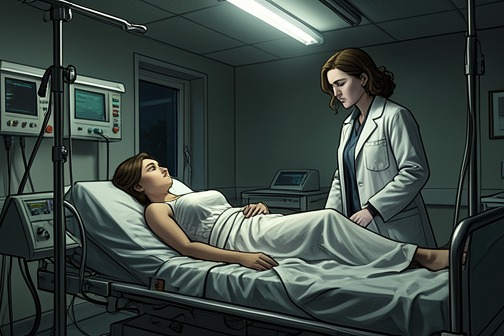
[Tabitha's Second Timeline Restart](entity:event-recall-event-tabitha-bc0f163107da) is the second major temporal rupture experienced by [Tabitha Moore](entity:character-recall-character-tabitha-moore-cc0b03363aff): after apparently dying in 1998, she awakens again at the beginning of the same displaced life, with her body, relationships, and circumstances restored to their earlier state. The event turns time travel from an improbable escape into a cycle of trauma and loss. Its decisive effect is not merely that Tabitha returns to the past, but that the life she had painstakingly rebuilt is stripped from her, leaving her to face a repetition she had believed she had already survived.
## Causes and Temporal Background
The restart follows the crisis at the [Williams family lake house](entity:location-recall-location-williams-family-lake-d690fee88e10), where Tabitha had been left with a severe head injury and understood herself to have died. She later explains to [Alicia Brooks](entity:character-recall-character-alicia-brooks-090f3366fb12) and [Elena Seelbaugh](entity:character-recall-character-elena-seelbaugh-62ca324e0fdb) that, seconds after blacking out on the lake-house floor, she somehow restarted the timeline by waking inside the MRI in May 1998. Her account connects the second reset to the earlier MRI-induced displacement that had sent her mind forty-seven years backward from [2045](entity:time-recall-time-2045-8c2eee6aacd6). The first discovery had already forced her to recognize that the familiar machine from her future was the same prototype involved in the original disaster; the second restart makes that temporal mechanism more terrible because it does not simply transport her, but appears to overwrite the life produced by her first intervention.
The immediate trigger is the prototype MRI machine in the [Emsie St. Juarez Pediatrics ward](entity:location-recall-location-emsie-st-juarez-pedi-666d0595d38f). It emits a shriek so powerful and painful that people several blocks away cover their ears, then blows the electrical breaker and causes a power outage across Jefferson County. When backup power returns, black smoke pours from the machine, the room becomes dangerously hot, and the fire alarm sounds. Thirteen-year-old Tabitha lies motionless inside the device while the medical staff struggle to remove her. The scene mirrors the original awakening closely enough to make repetition itself part of the horror: her father, [Alan Moore](entity:character-recall-character-alan-moore-ede3efaeff3e), again bursts in angrily and demands that she be taken out of the machine, repeating the same response as before.
## What the Restart Erases
The first sign of the reset is bodily. Tabitha looks down and finds small, chubby fingers where she remembers a different body, and the lean muscles developed through her summer training have disappeared beneath a soft, heavy frame. Her blue orthopedic cast, decorated with Alicia's artwork and the signatures of her close friends, is gone. The wrist and hand beneath it are pudgy but unbroken. The cast had represented not only an injury but a visible record of friendship and survival; its disappearance makes the reset materially legible before Tabitha can fully understand it.
The physical reversal reopens the self-hatred she had hoped to escape. Returning to the overweight adolescent body makes her fear that she has been forced to become the same useless, stigmatized girl again. Her reaction is not simple disappointment about weight or appearance: the body signals the loss of an entire achieved identity, including the discipline, confidence, and social connections attached to her transformation. The restart therefore restores an earlier body while also threatening to restore the emotional conditions in which she had hated that body.
The greater loss is relational. Tabitha cries that the reset has taken everyone and everything she had gained, including moments that arose by happenstance and could not be recreated through planning. She later tells Alicia and Elena that she could not bear to sort things out with her mother again from the beginning. The second timeline is consequently defined by absence: the people remain potentially reachable in the past, but the particular bonds she formed with them have been erased as lived history. A second chance becomes a second bereavement, because Tabitha remembers what the others no longer remember.
## The Nightmare Between Deaths
The restart is narrated through unstable transitions between waking reality, memory, and dream. After the MRI crisis, Tabitha experiences a grotesque intermediate sequence in which [Julia](entity:character-recall-character-julia-dd9a6077f139) appears at the [Perkins restaurant](entity:location-recall-location-perkins-restaurant-d100b809cad3), the familiar place where Tabitha used to stop while traveling down I-275 after Julia's suicide. Julia's appearance places grief inside the machinery of temporal displacement: the restaurant is not simply a location but a recurring memorial space where Tabitha had preserved her friend's memory by returning to the same booth and sometimes crying over a dinner special. Julia's sudden disappearance and the shift from daylight to evening make the scene feel like a memory being replayed and then abandoned.
The nightmare then gathers several figures associated with Tabitha's fear and past. [Carrie](entity:character-recall-character-carrie-b1f54942458b) tells her that she is dead and that she has wasted a second chance. An eighth-grade Elena Seelbaugh and Erica Taylor appear beside Carrie, while Erica carries the [Louisville](entity:location-recall-location-louisville-d871424f8dfb) Slugger from the [Halloween](entity:time-recall-time-halloween-c9b359236295) party. The figures are drawn from different times and contexts, so the scene refuses ordinary chronology even as it expresses the emotional logic of the reset: past antagonists, lost friends, and threatened identities collapse into one accusatory tableau. Tabitha insists that they are not real, but the denial cannot protect her from what they represent.
Her attempted escape takes the form of the [Dream F-22 Fighter Jet](entity:object-recall-object-dream-f-22-fighter-jet-dcefd614cf46), a vehicle associated with an earlier fever dream and with the fantasy of leaving the nightmare behind. The aircraft rises despite having no runway and despite Tabitha's inability to fly it. Escape fails when something grabs her ankle and pulls her backward. The cockpit becomes the circular aperture of the prototype MRI at the [University of Louisville Hospital](entity:location-recall-location-university-of-louisv-9b30b870b561), joining the dream's image of flight to the medical apparatus that governs her temporal fate. The transition makes the machine appear less like a neutral instrument than a recurring threshold through which body, memory, dream, and historical time are forcibly exchanged.
## Death, Survival, and the New Timeline
Inside the MRI, Tabitha experiences herself as an aged woman, with frail muscles, aching joints, and blood running from her nose. Medical personnel hear her screaming and struggle to remove her while the machine scrapes, squeals, and fills with black smoke. Through painful flashes she sees the sky beyond the enclosure as the F-22 tumbles backward in an uncontrolled tailspin. The fading dream image and the failing machine converge as parallel versions of collapse.
At the climax, another blood vessel ruptures in Tabitha's brain and everything goes dark. She then falls through a void while the fighter jet drops away beneath her. A small hand catches hers, allowing her to hang in darkness, and she sees a final glimpse of a frail sixty-year-old body lying still inside the MRI. This image leads her to suspect that her future self, left behind in 2045, is now dead, even though some part of her consciousness has escaped back into the dream. The restart thus does not provide a clean resurrection. It divides Tabitha across ages and realities, leaving survival uncertain and making identity itself a matter of which version of her remains active.
The event's aftermath is a renewed 1998 rather than a simple return to an unchanged past. Tabitha understands that she is back at the beginning all over again, and her later explanation confirms that the second timeline began with her awakening in the MRI in May 1998. Her knowledge of the previous altered history remains, but the social world does not carry its memory with her. This creates a severe asymmetry: Tabitha possesses the consequences of a life that everyone else has lost, while also lacking the power to restore its unrepeatable accidents exactly.
## Narrative Significance
Tabitha's Second Timeline Restart gives the novel's time-travel premise its central traumatic pattern: recognition, attempted repair, apparent progress, and forced repetition. The event repeats the MRI awakening with altered stakes, turning the earlier miracle into a form of temporal violence. What once looked like a route away from an unwanted life now threatens to make every attachment provisional. The repetition also exposes the limits of personal agency. Tabitha can remember, choose, and struggle, but she cannot guarantee that the people, injuries, friendships, or moments that shaped her will recur in the same form.
The restart also complicates the meaning of a second chance. Tabitha had treated the first displacement as an opportunity to become someone other than the girl she remembered with shame. The second displacement reveals the cost of that transformation: losing the new life hurts precisely because it had become real to her. Her grief therefore contains both fear of returning to the old self and mourning for the self she had become. The event's emotional force lies in that double movement, as time reverses the body and circumstances while leaving memory intact enough to make reversal unbearable.
As a piece of unnatural narration, the sequence asks the reader to accept several incompatible states at once: Tabitha may be dead, alive in 1998, trapped in a dream, or divided among versions of herself. The narrative does not resolve these contradictions into ordinary realism. Instead, its fragmented transitions reproduce Tabitha's disorientation, so that the reader experiences chronology as something that can shear apart between one image and the next. The second restart is therefore both a plot mechanism and a formal expression of trauma: the past returns not as stable history, but as an intrusive repetition that demands to be lived again without promising that anything can be recovered.
Event 10
Ashlee Reunites with the “New Tabitha”
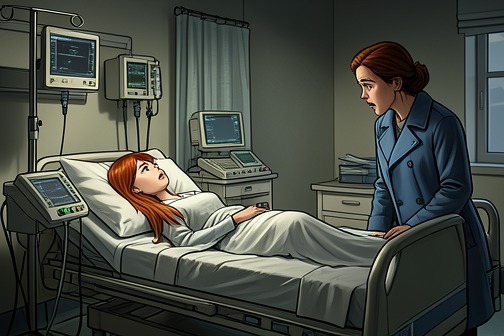
[Ashlee Reunites with the “New Tabitha”](entity:event-recall-event-ashlee-tabitha-7a1b82d79422) is the decisive hospital encounter in which Ashlee, separated from her parents and recovering from the Taylor family’s abuse, is brought to see [Tabitha Moore](entity:character-recall-character-tabitha-moore-cc0b03363aff) after months apart. The visit promises friendship, education, and recovery, but instead produces a terrifying failure of recognition: the slender red-haired girl in the hospital bed looks vaguely like Tabitha yet feels to Ashlee like an alien replacement. Ashlee’s refusal to accept appearances exposes the emotional and narrative break between the old Tabitha she knew and the transformed person now claiming her identity.
## Invitation and Context
Mrs. Cribb arranges the visit after speaking with Ashlee by telephone and offers to drive her to the hospital. Her cheerful assurance that Tabitha is doing much better unsettles Ashlee, who knows that the fading marks on her body do not mean the injuries have disappeared. The bruises may lessen, but Ashlee expects to carry their effects for the rest of her life; neither psychiatrists nor therapists, in her view, fully understand why the wounds still hurt. Tabitha is the one person who has seen what survival in the Taylor family required, which makes the promised reunion emotionally important rather than merely social.
The meeting also carries a practical promise. Mrs. Cribb tells Ashlee that Tabitha is out of school for a while and suggests that the two girls study together. With Tabitha’s help, Ashlee might prepare enough English and mathematics to test into tenth grade, despite not having attended ninth grade and not being enrolled at the time. The proposed study partnership gives the visit a forward-looking shape: friendship could become both witness to Ashlee’s past and a route back into education.
## The Hospital Reunion
Ashlee arrives at [Springton General Hospital](entity:location-recall-location-springton-general-ho-ef883fbd952f) already worn down by spending much of the day traveling to or staying in hospitals. She wants to discover whether seeing Tabitha again will dispel the surreal feeling that has followed her since being separated from her parents, yet she is also reluctant to enter the room. Mrs. Cribb announces her presence, identifies her as Tabitha’s friend, and withdraws down the corridor with a newspaper so the girls can speak privately.
The expected reunion immediately becomes strange. The person on the bed is a slender, almost frail-looking girl with pale skin, reddish-orange hair, delicate features, and a bandaged headband. She gives Ashlee an uncertain wave and greets her as someone she has not seen for a long time. Ashlee does not experience this as the return of a familiar friend. The scene’s central value shift is from anticipated connection to radical uncertainty: the hospital room, meant to restore a relationship, instead makes identity itself the object of suspicion.
## Recognition and Rejection
Ashlee states that the girl is not Tabby and asks who she is. The girl acknowledges that she looks very different and begins to explain that she lost a significant amount of weight over the summer, but the explanation cannot bridge the distance Ashlee perceives. The issue is not simply a changed body. Ashlee can identify a few vague physical similarities to the Tabitha she knew, yet those similarities make the difference more disturbing because they resemble a familiar form without restoring the person within it.
Ashlee’s recognition depends on more than facial features. She had always felt instinctively comfortable around Tabitha because their presence seemed familiar and spiritually aligned. The girl before her possesses a different calmness and clarity. Her posture lacks the muddled tension Ashlee associated with the old Tabitha; her speech, word choices, and patterns of thought feel foreign. The longer Ashlee looks, the more the apparent resemblance becomes evidence of substitution rather than continuity. In this sense, the encounter treats identity as relational and embodied: Ashlee knows her friend through manner, tension, language, and atmosphere as much as through appearance.
The pressure of that mismatch drives Ashlee toward panic. She imagines that someone has replaced Tabitha, wonders whether Erica Taylor killed the real girl, and fears that the adults around her may be concealing a murder from her. She also considers whether therapists or psychiatrists have staged the encounter to protect her from an unbearable truth. These possibilities are not confirmed as facts, but they show how quickly the failure of recognition reactivates Ashlee’s fear, family trauma, and distrust of institutional explanations.
## The Demand for Truth
Ashlee rejects the disguised or incomplete explanation outright, insisting that she knows her best friend and cannot be fooled. Her alarm turns into grief as tears form and she asks where her Tabby is, what happened to her, and whether she is dead. The repeated demand is both an accusation and a plea: Ashlee is not merely testing the girl’s identity but trying to recover the person whose companionship had made her own suffering intelligible.
The girl in the bed responds with visible consternation and finally concedes that the situation has become impossible to conceal. Her blunt reaction, “Well, shit,” punctures the polite hospital setting and confirms that Ashlee has discovered a secret rather than misunderstood an ordinary physical transformation. The meeting therefore ends not with reassurance or reconciliation but with disclosure poised to begin. Ashlee’s insistence on the truth becomes the event’s immediate consequence and its lasting significance: no official introduction, medical explanation, or visual resemblance can override the testimony of intimate recognition.
Event 11
Springton High欺凌与纪律处分事件

The [Springton](entity:location-recall-location-springton-c2a14fbdba24) High bullying and disciplinary proceedings are a turning point in [Tabitha Moore](entity:character-recall-character-tabitha-moore-cc0b03363aff)’s struggle to remain safe and believed at school. What begins as rumor-driven hostility develops into the theft of her personal project, disciplinary hearings, and a public reckoning after later violence leaves Tabitha in a vegetative state. The episode contrasts the school’s belated institutional response with Tabitha’s painstaking attempt to decide what justice, apology, and friendship should mean after harm has already been done.
## Causes and Background
The disciplinary crisis grows out of a campaign in which students repeat malicious claims about Tabitha and [Mr. Simmons](entity:character-recall-character-mr-simmons-c3e2ff172fab), creating a rumor serious enough to threaten Mr. Simmons’s job. Kaylee Mendolson is identified as the student responsible for spreading that rumor. The atmosphere of suspicion also turns Tabitha’s fractured wrist into another object of disbelief: students claim that her unusual-looking cast is fake, even though the injury is real. The rumor therefore attacks both Tabitha’s character and the visible evidence of her suffering.
[Clarissa Dole](entity:character-recall-character-clarissa-dole-e721834a6001) contributes to the escalation by stealing Tabitha’s notebook while asking for a bathroom break and throwing it into the trash can in a nearby ladies’ room. The notebook is not merely school property to Tabitha. It contains a personal project on which she has worked extensively, so its disappearance confirms her fear that Springton High is not a safe place for her work or her person. The theft becomes the immediate reason she leaves school, but Tabitha understands it as the latest pressure added to an already overwhelming accumulation of bullying, injury, and humiliation.
## Investigation and School Response
Mrs. [Pamela Cribb](entity:character-recall-character-pamela-cribb-bf464f81adbc) tells Tabitha that Clarissa admitted to stealing the notebook. She also explains that Kaylee’s rumor has been treated as malicious because its possible consequence was the loss of Mr. Simmons’s employment. Clarissa, Kaylee, [Chris Thompson](entity:character-recall-character-chris-thompson-54b7b165338e), [Brittney Taylor](entity:character-recall-character-brittney-taylor-51f7909a3a72), and Erica Taylor are suspended, with expulsion proceedings initially pending after [Halloween](entity:time-recall-time-halloween-c9b359236295). Mrs. Cribb acknowledges that Springton High’s administration acted too little, too late, or not at all when the situations required immediate attention, and she says the school board should issue Tabitha a formal apology after the hearing.
The school simultaneously tries to present continued enrollment as a repair. Mrs. Cribb says several teachers have recommended advancing Tabitha because the freshman curriculum does not challenge her, and she proposes that Tabitha return after a short break as a sophomore. Her praise recognizes an ability the school previously failed to protect: Mrs. Cribb has read the material in Tabitha’s notebook and is surprised that Mrs. Albertson did not know about the project. Yet the offer also reveals the limits of institutional remedy. Academic advancement cannot by itself restore the safety and trust destroyed by harassment and theft, and Tabitha refuses to accept the flattering label of brilliance without qualification.
## Clarissa’s Apology and Tabitha’s Choice
At the Halloween party, [Alicia Brooks](entity:character-recall-character-alicia-brooks-090f3366fb12) directly questions Clarissa about her hostility toward Tabitha. Clarissa admits that Tabitha had done nothing to her; she had believed what everyone else was saying and had acted without thinking. She apologizes for the stolen work and for doubting Tabitha’s fractured wrist, explaining that she did not understand the injury until afterward. Her apology identifies conformity and ignorance as motives, but it does not erase the damage produced by her decision to join the harassment.
Tabitha answers with unusual precision. She says that she is not angry, but remains hurt because everything in the binder mattered to her. Leaving school, she explains, was not an overreaction: after the injury, the cruelty, and the theft, she no longer felt secure there. Clarissa accepts that Tabitha’s withdrawal was justified and notes that the punishment may hold her back a year. Alicia Brooks responds with distrust and satisfaction at the prospect of Clarissa’s academic penalty, emphasizing the difference between punitive justice and emotional repair.
Tabitha does not simply demand punishment. She offers friendship as an alternative, saying that becoming friends would help her more than Clarissa being held back for what she did. At the same time, she refuses to let Clarissa accept the offer merely to avoid consequences. Tabitha insists that Clarissa think seriously rather than react or make a decision to protect herself from academic punishment, because a false friendship would hurt them both. This exchange gives Tabitha control over a decision that the school’s procedures cannot settle: whether accountability can include the possibility of trust rebuilt through deliberate action.
## Hearings, Violence, and Uneven Consequences
The Monday expulsion hearing passes with little fanfare. [Alan Moore](entity:character-recall-character-alan-moore-ede3efaeff3e) and [Shannon Moore](entity:character-recall-character-shannon-moore-b58dcef4d0d7) are too overwhelmed by Tabitha’s apparent loss to attend, and the final disciplinary result is less sweeping than the earlier suspensions suggest. Chris Thompson is expelled, while the other girls are released from suspension and permitted to return under academic probation. The disparity leaves the school’s response visibly uneven, especially because the proceeding occurs against the backdrop of a larger failure to intervene promptly.
The later Halloween-party assault changes the public scale of the matter. Tabitha is left in a vegetative state, and Channel 7 News connects the assault to the earlier bullying, recognizing a story that the local news had previously overlooked. Erica Taylor is not expelled; instead, she is transferred to a juvenile detention center in Breathitt County to await her court date, a decision expedited as hostility toward her grows in Springton. The sequence shows discipline moving from school administration into law enforcement and detention only after physical violence makes the consequences impossible to ignore.
## Public Reckoning and Narrative Significance
The event’s consequences spread beyond the students directly involved. Tabitha’s earlier involvement in the Springton South Shooting allows Channel 7 News to reuse old footage, while schools across the district remove students from class for lectures on teen violence and introduce new zero-tolerance anti-bullying measures into their codes of conduct. Democratic Kentucky Governor Paul E. Patton issues condolences and links the incident to Bill Clinton’s First Annual Report on School Safety and earlier public arguments about the West Paducah, Kentucky, school shooting.
The resulting attention turns Tabitha into a favored hometown hero in the eyes of the Springton Police and helps drive a furious community response. Supportive calls and letters arrive at the Moore household, where [Grandma Laurie](entity:character-recall-character-grandma-laurie-cee8a3e4369e) handles them while crowding herself and the boys into the small trailer to watch over Alan Moore and Shannon Moore. Public recognition therefore arrives in a distorted form: the community celebrates Tabitha only after the private damage of bullying has become a televised catastrophe.
As a narrative event, the proceedings trace a movement from invisible social violence to visible institutional crisis. Rumor, mockery, and the stolen notebook are initially treated as school problems that can be delayed, minimized, or managed through suspension. The later assault forces those same conditions into public view, but the belated attention cannot undo Tabitha’s injuries or restore the trust she lost. The episode’s decisive reversal is consequently not that the school discovers bullying, but that it is compelled to admit the cost of having failed to act when the harm was still preventable.
Event 12
Darren MacIntire shooting

[Darren MacIntire shooting](entity:event-recall-event-darren-macintire-shooti-354b6f073f37) is a pivotal crisis in which [Tabitha Moore](entity:character-recall-character-tabitha-moore-cc0b03363aff)’s decision to intervene in a foreseeable act of violence changes the boundary between rescue and responsibility. The shooting is remembered not as an isolated crime but as the event that forces Tabitha to confront what it means to possess knowledge of the future and to act on it.
## Causes and Background
In Tabitha Moore’s original timeline, the shooting was part of the chain of events that would have taken Officer Darren MacIntire’s life. Returning to 1998 gives Tabitha advance knowledge that danger is approaching, but that knowledge does not make intervention emotionally simple. She understands that remaining silent might allow the event to follow its original course, while acting can create consequences she cannot fully control.
Tabitha’s later explanation to [Karen Williams](entity:character-recall-character-karen-williams-01a291da2948) presents the choice in stark ethical terms. She says that if she had allowed the shooting to happen, Officer Darren MacIntire would have died, and because she was able to do something, she had to act. Karen rejects Tabitha’s belief that she would have been blameworthy for failing to confront an unexpected gunman, insisting that witnessing a firearm attack is terrifying and that no one would have blamed a teenage girl for running away. Tabitha nevertheless admits that she would have blamed herself, revealing that the event is governed as much by self-imposed duty as by external obligation.
## What Happens
The supplied account describes the shooting retrospectively rather than presenting the full attack as a continuous scene. Its decisive fact is that Tabitha intervenes and Officer Darren MacIntire survives the crisis. By [Thanksgiving](entity:time-recall-time-thanksgiving-060be728c565), Mrs. Williams reports that Darren MacIntire has been released from the hospital, and Tabitha explains that the Williams family held Thanksgiving a day early so that they could celebrate with the MacIntire family. His release therefore provides the event’s clearest immediate value shift: the expected death that haunts Tabitha has become survival and reunion.
The shooting belongs to a wider atmosphere of public violence in [Springton](entity:location-recall-location-springton-c2a14fbdba24). The same altered chronology also produces the South Main Shooting, in which [Jeremy Redford](entity:character-recall-character-jeremy-redford-0bc7f5c9fabf) is pursued after his white Lincoln Continental is identified and is killed by police gunfire. Tabitha distinguishes the two events psychologically: she feels responsible for Jeremy Redford’s death because her actions changed the circumstances that led police to him, while Officer Darren MacIntire’s survival confirms the positive result she believes she was obligated to secure. The contrast makes intervention morally unstable rather than simply heroic. Saving one person does not erase the death connected to the same disturbance of the timeline.
## Consequences and Aftermath
Officer Darren MacIntire’s recovery changes the practical shape of the MacIntire family’s holiday and strengthens Tabitha’s connection with them. His release allows the family to gather, while [Hannah MacIntire](entity:character-recall-character-hannah-macintire-f46c0e0ba09f) continues to speak about Tabitha and asks when she can come over and babysit with her. The aftermath thus converts a violent encounter into evidence of chosen family and mutual care, even as Tabitha’s relationship with her own parents deteriorates.
The event also deepens Tabitha’s pattern of moral injury. She repeatedly interprets later disasters and disruptions as consequences of her willingness to enter situations that, in another life, would have passed unnoticed. She compares her interference with putting a hand into flowing water and disturbing the current, then criticizes herself for being upset when ripples follow. The shooting becomes the strongest case against her attempt to remain passive: nonintervention would have meant Darren MacIntire’s death, but intervention means living with the unpredictable effects of altering history.
## Narrative Significance
The shooting is a central test of Tabitha’s second life because it converts future knowledge into an ethical demand. Her altered appearance, school conflicts, family crises, and other interventions are all entangled with her effort to become an agent rather than a spectator. In this event, however, agency is inseparable from guilt. Tabitha does not merely ask whether the outcome was good; she asks whether she had the right to act and whether every later consequence belongs to her.
The retrospective structure emphasizes delayed understanding. Tabitha recognizes the shooting’s importance through later conversations, the hospital recovery, and the emotional pressure of Thanksgiving rather than through a single explanatory account. That delay parallels the other wounds surrounding her: she carries responsibility for failing to protect Ashlee Taylor from abuse, fears that [Elena Seelbaugh](entity:character-recall-character-elena-seelbaugh-62ca324e0fdb)’s invitation to the [Halloween](entity:time-recall-time-halloween-c9b359236295) party led to Tabitha’s death, and treats Jeremy Redford’s killing as another consequence of her interference. Against these episodes, Darren MacIntire’s survival is both a genuine rescue and a challenge to Tabitha’s self-punishing logic.
Karen Williams’s response supplies the event’s counterargument. She tells Tabitha that she must not claim responsibility only for everything that goes wrong; if she blames herself for failures, she must also give herself credit for what goes right. The shooting therefore ends not with a complete release from guilt but with a competing interpretation of agency: Tabitha’s actions disturb the current, yet they also save a life. Its significance lies in holding those truths together rather than allowing either heroic rescue or catastrophic responsibility to explain her second life by itself.
Event 13
Tabitha Moore Leaves Springton High
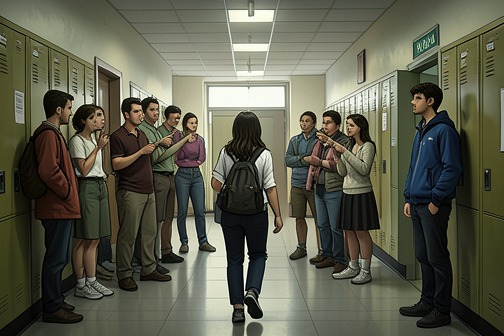
[Tabitha Moore Leaves Springton High](entity:event-recall-event-tabitha-moore-springton-72fa3e07cd71) is the turning point that physically removes [Tabitha Moore](entity:character-recall-character-tabitha-moore-cc0b03363aff) from [Springton](entity:location-recall-location-springton-c2a14fbdba24) High while leaving the school’s rumor machine free to invent explanations for her absence. Her withdrawal follows bullying and an assault by Erica Taylor, but the event is remembered less as a voluntary escape than as the visible consequence of a hostile environment that failed to protect her.
## Causes and Circumstances
Tabitha’s departure is linked to the harassment she endured at Springton High and to Erica Taylor’s violent attack. By the time [Bobby Anderson](entity:character-recall-character-bobby-anderson-9731b0d20292) encounters her at the [Minit Mart](entity:location-recall-location-minit-mart-62f33073cc14), she has become known as the “freshman dropout of Springton High,” a label that turns a specific act of withdrawal into an identity. Bobby remembers that she was generally quiet, kept to herself, and was targeted by the school’s girls, while students who tried to harm or harass her, including [Chris Thompson](entity:character-recall-character-chris-thompson-54b7b165338e), Kaylee, and [Clarissa Dole](entity:character-recall-character-clarissa-dole-e721834a6001), were suspended or expelled. Those disciplinary consequences made Tabitha seem important or protected to rumor-minded students, even as they did nothing to clarify what had actually happened.
The withdrawal therefore sits at the intersection of direct violence and institutional uncertainty. The school community knows that something serious occurred, but its lack of reliable knowledge becomes an invitation to speculation. The event is not narrated as a clean administrative decision; it is the aftermath of a social environment in which bullying, punishment, gossip, and parental absence overlap.
## What the Withdrawal Means in the Plot
When Tabitha later returns to the Minit Mart, Bobby recognizes her immediately, but her appearance suggests exhaustion rather than liberation: her red hair is uncombed, her pale skin makes the dark circles beneath her eyes prominent, and she seems frazzled. Their conversation supplies a concrete memory of the withdrawal. Tabitha tells Bobby that they shared several classes and that he walked her to the office on the day she withdrew, when she was a “blubbering mess.” Bobby tries to soften the memory by insisting that she had only been sniffly and teary, but his reassurance confirms how distressed she was at the time.
That recollection gives the event a human scale absent from the school rumors. “Freshman dropout” sounds dismissive and categorical; the remembered walk to the office reveals a thirteen-year-old who was emotionally overwhelmed and required accompaniment. The difference between the label and the scene is central to the event’s significance: the school turns a crisis into gossip, while Tabitha’s memory preserves it as a moment of fear and humiliation.
## Rumor and Misrecognition
The dominant theory at Springton High is that Tabitha left because she was pregnant. Students connect the supposed pregnancy to the bullying, imagining that she withdrew before she began showing. Another version claims that she stole a boyfriend and was attacked because of it, even though nobody can establish that Erica Taylor was dating anyone. Matthew Williams is repeatedly drawn into the speculation, but Bobby’s acquaintances reject the idea that he and Erica were romantically involved.
The rumors multiply because Tabitha’s actual relationships remain obscure to her former classmates. She had been seen eating lunch with a thin Black girl and briefly interacting with [Elena Seelbaugh](entity:character-recall-character-elena-seelbaugh-62ca324e0fdb) before Elena’s own reputation became entangled with strange gossip about occult practices and sexuality. The less the students know, the more confidently they fill the gaps. Tabitha’s withdrawal thus produces not silence but a distorted afterlife in which pregnancy, stolen romance, occult associations, social class, and hidden family power are treated as competing explanations.
Bobby’s response is unusual but not wholly free of the same culture. He is drawn to Tabitha partly because the girls who ridicule her seem false, reasoning that whatever contradicts their claims is probably closer to the truth. His sympathy begins through opposition to the school’s “bitch brigade,” yet he still approaches Tabitha carrying the residue of its curiosity. His invitation to spend time together, followed by his surprise when she reminds him that she is only thirteen, shows how the rumor culture has made her seem older, more mysterious, and more available for interpretation than she actually is.
## Consequences and Aftermath
The withdrawal isolates Tabitha from ordinary school life, but it does not end the danger surrounding her. Later, [Karen Williams](entity:character-recall-character-karen-williams-01a291da2948) sees Tabitha at the [Williams residence](entity:location-recall-location-williams-residence-3d24856bf473) with a cast still on her arm, exhausted and visibly unwell, after she has fled her home because [Lisa Moore](entity:character-recall-character-lisa-moore-0dc27995c319) is staying there while using drugs. Karen’s anger connects the school crisis to a broader chain of adult failures: Tabitha was bullied out of school, nearly killed at Karen’s [Halloween](entity:time-recall-time-halloween-c9b359236295) party by an enraged girl, and then left without dependable protection from her parents or neighborhood.
The cast makes the consequences of the earlier violence materially visible. Tabitha’s departure is not simply an absence from classes; it belongs to a continuing period of injury, upheaval, and dependence on other households. Karen’s reaction also reframes the event through the language of responsibility. The parents and the surrounding community, rather than Tabitha herself, are judged for allowing the circumstances to reach this point.
## Narrative Significance
As a plot event, Tabitha’s withdrawal marks the failure of Springton High as a place of safety, belonging, and recognition. The school continues to discuss her after she leaves, but its stories are detached from the girl who actually walked to the office in tears. The event therefore creates a sharp contrast between institutional visibility and personal invisibility: everyone has an explanation for Tabitha, yet almost nobody understands her.
The withdrawal also begins a repeated pattern in Tabitha’s story in which departure is both imposed and protective. Leaving school removes her from immediate harassment, but it exposes her to the social cost of being classified as a dropout and leaves her vulnerable to family and community crises beyond the school’s walls. Its lasting importance lies in that double movement. Tabitha escapes one hostile system without yet possessing a secure place elsewhere, and the gap is filled by rumor until later events reveal how much suffering the label concealed.
Event 14
Lisa Moore重返子女身边
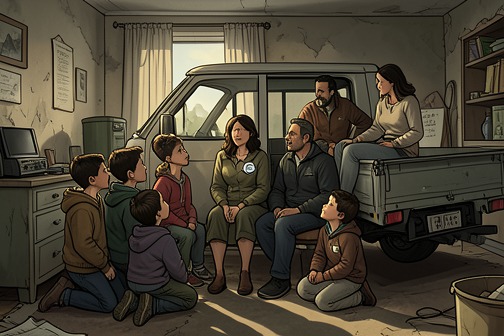
[Lisa Moore](entity:character-recall-character-lisa-moore-0dc27995c319)’s return to her four sons is presented as a family reunion, but for [Tabitha Moore](entity:character-recall-character-tabitha-moore-cc0b03363aff) it becomes a scene of betrayal, suspicion, and moral division. During an early Moore family [Thanksgiving](entity:time-recall-time-thanksgiving-060be728c565) at [Grandma Laurie’s apartment](entity:location-recall-location-grandma-laurie-s-apa-431b5a0e5825), [Lisa](entity:character-recall-character-lisa-f8f8fe21b70f) is welcomed with tears and open affection by children she abandoned, while Tabitha watches the reunion as evidence that family love can survive abandonment even when trust cannot. The event changes the emotional meaning of the holiday and helps propel Tabitha toward confronting Lisa’s alleged drug use and protecting the boys from further harm.
## Circumstances and Altered Family Time
This Thanksgiving does not occur on November 25. The Moore family celebrates a day early so that the Moores can join the MacIntires on the actual holiday, immediately marking the gathering as part of the altered chronology produced by Tabitha’s return to 1998. Tabitha sits between [Alan Moore](entity:character-recall-character-alan-moore-ede3efaeff3e) and [Shannon Moore](entity:character-recall-character-shannon-moore-b58dcef4d0d7) in Alan’s truck, holding her cast, while Lisa rides in the open truck bed. The physical arrangement makes the family’s changed condition visible: Tabitha is now slender and self-possessed, Shannon has lost weight and overcome the agoraphobia that once kept her inside the mobile home, and Lisa has re-entered a family structure that no longer resembles the one Tabitha remembers from her previous life.
Lisa’s appearance is therefore not a simple restoration of the past. Tabitha observes that nearly everything differs from the earlier timeline, including the people present, their relationships, and the circumstances of the holiday. The possibility of reunion exists inside a history that has already been radically rewritten. Alan anticipates the boys’ joy at seeing their mother again, but the silence in the truck shows that the adults do not share a common interpretation of what her return means.
## The Reunion at [Grandma Laurie](entity:character-recall-character-grandma-laurie-cee8a3e4369e)’s Apartment
When the truck turns into the development and Grandma Laurie’s apartment comes into view, Lisa calls out to the boys. [Aiden](entity:character-recall-character-aiden-b4bb3917d0f7) responds by sprinting across the yard, and Alan slows the truck to keep from striking him. Lisa jumps from the truck bed and greets him with the theatrical energy of a returning hero. Aiden collides with her so forcefully that he nearly knocks her over, transforming the reunion into an immediate display of physical need and uncomplicated attachment.
The other boys gather around Lisa as well. Aiden cries out for his mother, [Joshua](entity:character-recall-character-joshua-3816a503f6f7) asks where she has been, and the children’s wet eyes move the rest of the family even as they devastate Tabitha. Lisa pats Aiden’s back carefully with her palms so that her long acrylic nails will not break, presenting affection through a conspicuous gesture that Tabitha reads as possessive rather than maternal. The children see their mother’s return; Tabitha sees the danger of a bond that makes them vulnerable to her again.
## Tabitha’s Suspicion and Moral Conflict
Tabitha believes Lisa has resumed heroin use and has returned primarily for money. She suspects that drugs are hidden in Lisa’s purse because Lisa guards it constantly, but suspicion alone cannot establish what the purse contains. Even if Tabitha found needles, she worries that she could not prove they were connected to heroin rather than insulin or another explanation. Her knowledge is further weakened by the way her parents already understand her: she expects them to regard her as an emotional teenager who is instinctively opposed to Lisa, making any accusation appear personal rather than protective.
This evidentiary problem turns the reunion into an ethical trap. Tabitha believes she is watching a dangerous truth that everyone else is choosing not to see, yet she cannot reveal it without proof and cannot easily obtain proof without violating Lisa’s privacy. Aiden’s embrace therefore intensifies her helplessness. She considers separating them and making a public accusation, but the thought remains an angry impulse rather than an action. The boys’ love gives Lisa immediate moral authority, while Tabitha’s knowledge of the past gives her reasons that no one else can verify.
## Abandonment, Attachment, and the Divided Family
Tabitha cannot accept the children’s joy as evidence that Lisa deserves their trust. Her anger rests on the memory that Lisa left them, and she understands that a mother occupies an unusually powerful place in young children’s emotional world. The reunion thus separates biological attachment from moral reliability: the boys’ longing is genuine, but it does not erase the abandonment that caused it. Tabitha feels betrayed when her cousins surround Lisa, even while recognizing that their response is not wrong. Her jealousy is inseparable from sympathy for children whose love has been directed toward the parent they most want to recover.
The scene also redraws Tabitha’s own definition of family. She regards Alan, Shannon, Grandma Laurie, and the four cousins as her family in the changed timeline, while excluding Lisa and [Danny Moore](entity:character-recall-character-danny-moore-89183162a3e0) from that category. Lisa’s return does not repair those boundaries; it hardens them. Shannon remains silent whenever Lisa is mentioned, perhaps because she has nothing to say or because she shares Tabitha’s hostility, and her silence contrasts with Alan’s hope that the reunion will be happy. The household is physically reunited but emotionally divided over whether Lisa’s presence represents recovery or renewed danger.
## Consequences and Narrative Significance
Lisa’s return creates a value reversal at the heart of the scene. The reunion begins as an apparent movement from separation toward family restoration, but Tabitha experiences it as a movement from safety toward threat. The boys’ happiness is real, yet it increases the stakes of Tabitha’s suspicion because their attachment could allow Lisa to regain access to them, their trust, and possibly the family’s money. The holiday’s public image of reconciliation therefore conceals a private conflict over evidence, responsibility, and protection.
The event also echoes Tabitha’s broader burden of delayed responsibility. Elsewhere, she carries guilt over [Jeremy Redford](entity:character-recall-character-jeremy-redford-0bc7f5c9fabf)’s death after her actions altered the South Main shooting, frustration that her parents failed to tell her about Danny’s arrest, and shame over having once abandoned Ashlee Taylor after witnessing abuse. Those memories make her unusually alert to the cost of failing to act, but they also make her distrust her own judgment. Lisa’s return is significant because it forces that conflict into a family setting: Tabitha must decide whether to remain silent while an apparently happy reunion unfolds or risk being dismissed in order to expose what she believes is happening. The scene ends without emotional resolution. The boys receive their mother as a returning hero, while Tabitha stands apart, convinced that the reunion may be the beginning of another family disaster.
Event 15
Moore家族感恩节冲突

The Moore family [Thanksgiving](entity:time-recall-time-thanksgiving-060be728c565) conflict is the decisive domestic rupture in which a supposedly communal holiday becomes a test of who will protect children when family loyalty is used to excuse abuse. [Lisa Moore](entity:character-recall-character-lisa-moore-0dc27995c319)’s return to the household brings open hostility toward her sons, while [Tabitha Moore](entity:character-recall-character-tabitha-moore-cc0b03363aff)’s accumulated knowledge of [Lisa](entity:character-recall-character-lisa-f8f8fe21b70f)’s abandonment and heroin use turns a dispute over food into a confrontation over responsibility, truth, and the meaning of family.
## Causes and Background
The gathering is already strained by Lisa Moore’s reappearance after abandoning her four sons. The meal is being prepared as an attempt at ordinary family life: [Shannon Moore](entity:character-recall-character-shannon-moore-b58dcef4d0d7) and Tabitha Moore have made fresh dishes together, [Grandma Laurie](entity:character-recall-character-grandma-laurie-cee8a3e4369e) has bought ham, and the household has tried to accommodate the boys’ preferences. Lisa Moore immediately rejects that compromise, objecting that a Thanksgiving meal without turkey is unacceptable even after Grandma Laurie explains that the boys will not eat it.
Lisa’s anger is not limited to the menu. She insists that the children must eat whatever adults put before them and threatens to deny dessert unless every plate is clean. Tabitha Moore recognizes the distortion beneath the performance of discipline: the boys had politely refused ham, but Lisa Moore placed portions on their plates herself and then treated their reluctance as defiance. The conflict therefore begins with an argument over food but is rooted in control, resentment, and Lisa’s attempt to reassert authority over children she had previously abandoned.
## Escalation at the Table
Lisa Moore’s threats become increasingly abusive as she insults the boys and demands obedience. When Tabitha Moore objects, Lisa orders her to sit down and claims that Tabitha has no right to tell her how to raise her children. Grandma Laurie attempts to mediate, reminding everyone that it is Thanksgiving, while [Alan Moore](entity:character-recall-character-alan-moore-ede3efaeff3e) also tries to contain the argument. Their appeals to family harmony fail because they treat Lisa’s conduct as a temporary loss of temper rather than a danger to the children.
The decisive escalation comes when Lisa Moore backhands [Joshua Moore](entity:character-recall-character-joshua-moore-147c54f577d4) across the cheek in front of the family. The blow makes him rock backward in his chair, and Tabitha Moore reacts before she can deliberate. Her chair topples as she rushes around the table, driven by a violent protective impulse that she herself does not fully control. She takes [Joshua](entity:character-recall-character-joshua-3816a503f6f7) from Lisa’s reach despite her cast and carries the roughly sixty-pound eight-year-old into Grandma Laurie’s bedroom, locks the door, and holds him until the immediate threat has passed.
Joshua initially insists that he is all right, but he looks to Tabitha Moore for permission before leaving the room, revealing how thoroughly the incident has unsettled him. Alan Moore later suggests that Joshua return to the living room and watch television with his brothers. Tabitha allows him to go, yet the encounter leaves her exhausted and emotionally cornered: the family’s demand that she accept Lisa as an aunt conflicts with the visible fact that Lisa has just struck her own child.
## Family Loyalty and the Discovery of Abuse
After the confrontation, Alan Moore tells Tabitha Moore that Lisa Moore is still family and describes her as merely a more down-to-earth person who has lost her temper. Tabitha rejects that euphemism. She identifies Lisa as a mother who abandoned her sons, returned for money, and uses drugs. Her accusation is not presented as a vague suspicion: Tabitha states that Lisa keeps heroin in her purse and has puncture marks on the inside of her arm, details she connects to the warning signs taught through the [Drug Abuse Resistance Education](entity:organization-recall-organization-drug-abuse-resis-7bed3fe9c30a) program.
The argument exposes a broader family-system failure. Alan Moore’s insistence on kinship places the burden of tolerance on Tabitha Moore rather than requiring Lisa Moore to answer for her actions. The phrase “she is your aunt” functions as an attempted exemption from accountability, while Tabitha’s response insists that blood relation cannot erase violence, neglect, or addiction. The scene’s central conflict is thus between family as a moral obligation and family as a shield against consequences.
## Consequences and Aftermath
Tabitha Moore’s intervention changes her position within the household. She is no longer merely enduring Lisa Moore’s behavior or privately judging it; she physically removes Joshua Moore from danger and openly challenges the adult authority that has failed to protect him. Her cast makes the rescue more difficult and painful, but it also underscores the extent to which she assumes responsibility beyond what her age or condition should require.
The Thanksgiving conflict also contributes to Tabitha’s eventual decision to leave her parents’ home. The immediate scene ends with Lisa Moore outside cooling her head and the family trying to restore order, but no genuine resolution follows. Lisa remains protected by the language of kinship, while Tabitha’s knowledge of the heroin and the children’s treatment remains a source of escalating alarm. When Tabitha later speaks weakly with Shannon Moore from the [Williams residence](entity:location-recall-location-williams-residence-3d24856bf473), the flight from home is understood as the result of a larger pattern: school bullying, the [Halloween](entity:time-recall-time-halloween-c9b359236295) attack, parental distance, and the presence of a drug-using adult in the home have made the family environment untenable.
## Narrative Significance
The conflict gives concrete form to Tabitha Moore’s recurring struggle with guilt and delayed responsibility. In other parts of the story, she remembers having failed to protect Ashlee Taylor from abuse, fears responsibility for [Jeremy Redford](entity:character-recall-character-jeremy-redford-0bc7f5c9fabf)’s death after her altered actions redirect the police pursuit, and worries that forgotten knowledge has made her ineffective in her second life. At Thanksgiving, however, memory and moral recognition converge in the present: Joshua Moore’s face and Lisa Moore’s blow leave no room for postponement.
The event also reverses the expected emotional script of Thanksgiving. Food, hospitality, and family reunion become instruments of coercion; a child is struck at the table; and the person who performs the most immediate protective labor is the injured thirteen-year-old rather than the adults who claim authority. Its value shift is stark: family belonging moves from apparent security to active threat, while estrangement begins to look like a form of protection. Tabitha Moore’s decision to intervene does not repair the Moore household, but it clarifies the ethical boundary that the household has tried to blur: being family is not a license to harm children, and refusing to accept that harm is not betrayal.
Event 16
Tabitha Takes Lisa's Drug Evidence and Flees Home
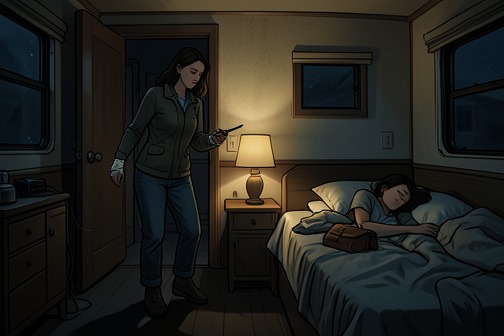
[Tabitha Takes Lisa's Drug Evidence and Flees Home](entity:event-recall-event-tabitha-lisa-9678e7a96d15) is the decisive escape in which [Tabitha Moore](entity:character-recall-character-tabitha-moore-cc0b03363aff) removes suspected heroin and drug paraphernalia from [Lisa Moore](entity:character-recall-character-lisa-moore-0dc27995c319)’s possession and flees the family trailer with help from [Karen Williams](entity:character-recall-character-karen-williams-01a291da2948). The episode transforms Tabitha’s accumulated fear and helplessness into a dangerous act of evidence-gathering: she does not merely accuse [Lisa](entity:character-recall-character-lisa-f8f8fe21b70f) of using drugs, but risks being caught in order to carry proof to someone who may be able to protect Lisa’s children and separate the woman from the family.
## Causes and Background
The escape is prepared in an atmosphere of suffocating tension. Tabitha waits until [Alan Moore](entity:character-recall-character-alan-moore-ede3efaeff3e) and Mrs. Moore have gone to bed, then pretends to be asleep while listening for Lisa to turn on the shower. The timing matters because Lisa has kept her purse close, even sleeping with it tucked beneath her, making ordinary access impossible. Tabitha therefore chooses the brief interval when Lisa is distracted and the sound of running water may conceal the small noises of an intrusion.
Tabitha enters the attempt already physically compromised, with only one good hand available. She carries a flathead screwdriver from the kitchen’s junk drawer and uses it to work the locked bathroom doorknob. When the metal makes a small sound, she does not retreat; the shower spray masks the noise, and her decision has passed from preparation into commitment. The screwdriver is left on the floor because she needs her usable hand free, turning a household tool from an instrument of entry into an abandoned obstacle in the narrow escape route.
The immediate motive is not only suspicion about Lisa’s drug use but the danger that suspicion represents. Tabitha later explains to Karen Williams that Lisa was shooting up heroin in the bathroom and that she needed confirmation from people who could act. She connects the drug evidence to Lisa’s treatment of her children, especially the moment during the family’s early [Thanksgiving](entity:time-recall-time-thanksgiving-060be728c565) dinner when Lisa struck her eight-year-old son across the face because he was trying to get her attention during an angry rant. That assault makes the situation, in Tabitha’s judgment, impossible to leave alone.
## What Happens in the Bathroom
When Tabitha bursts into the bathroom, Lisa is still behind the shower curtain. The purse is open on the counter, and beside it lies a worn Batman thermos that appears to have been borrowed long ago from one of Lisa’s sons’ plastic lunch boxes. On the sink are a disposable lighter, a blackened spoon, and a syringe. These objects are significant because they turn a concealed and disputed danger into a visible arrangement of materials. The purse, once a private container Lisa refuses to surrender, becomes the place where Tabitha gathers the evidence against its owner.
Tabitha carefully lifts the syringe and drops it into the open purse as Lisa begins to call out from the shower. She then adds the spoon and lighter in rapid succession, followed by the Batman thermos. The thermos is already screwed shut, but Tabitha feels its contents shift and notices that they do not seem liquid; they resemble clumps of dirt. She believes the material is heroin, though she cannot verify that herself, and the uncertainty does not stop her because the evidence must first be removed from Lisa’s immediate control.
Lisa realizes what is happening before Tabitha can collect Lisa’s clothing to slow the pursuit. She yanks the vinyl curtain back hard enough to separate several curtain rings from the rod, then emerges naked, soaking wet, and visibly frenzied, lunging after Tabitha. The scene reverses the expected security of the bathroom. Water, the curtain, the locked door, and the purse all become unstable physical elements in a struggle over who controls the evidence and who can escape with it.
Tabitha bolts down the hallway with the purse pinched closed against her body. Terror freezes her movements, and Lisa’s heavy footsteps close the distance behind her. At the front door, Tabitha manages to wrench the door open despite the panic and her injured hand. Lisa is only feet away, but she hesitates in the doorway, naked and wet, unwilling to run outside into the November night. That brief pause supplies the margin Tabitha needs.
## Escape and Immediate Rescue
A waiting car suddenly flashes its high beams as Tabitha reaches the outside. Karen Williams is behind the wheel of a Ford Taurus, and the lights expose the exit while Lisa’s continued hoarse screaming remains inside the trailer. Karen responds with anger and alarm rather than detached observation: she repeatedly sounds the horn to drown out Lisa’s shouting and urges Tabitha to get into the vehicle. The car thus becomes part of the escape itself, not merely transportation after the danger has ended.
Tabitha enters carrying the closed purse and confirms that she has the evidence and is unhurt. Karen immediately orders her to close the door, fasten her seatbelt, and leave. She accelerates past the trailer and puts Lisa out of sight. The movement away from the home is both literal flight and a temporary severing of Lisa’s reach; the evidence has crossed the threshold, and Lisa can no longer reclaim it by chasing Tabitha through the trailer.
The escape also exposes the limits of Tabitha’s confidence. In the car, she admits that she is not certain the substance is heroin because she has no way to verify it herself. Her conclusion rests on a puncture mark at Lisa’s vein, the syringe, the blackened spoon, the lighter, and the thermos containing a suspicious substance. Karen’s shock is so immediate that she brakes and stops in the deserted streets of [Springton](entity:location-recall-location-springton-c2a14fbdba24) after hearing the word heroin. The pause gives the stolen objects a new status: they are no longer merely frightening things in a bathroom but potential evidence now held inside Karen’s car.
## Evidence, Abuse, and Consequences
Tabitha’s account gives the theft its legal and moral stakes. She insists that the material must be confirmed by people capable of doing something about it, and she states that Lisa must be kept away from both her own family and her children. The objective is therefore larger than escape from a violent aunt. Tabitha is attempting to convert private knowledge into an intervention that can address drug use, child endangerment, and physical abuse.
The objects gathered from the sink and counter function as a material chain of proof. The syringe suggests injection; the spoon and lighter suggest preparation; the puncture mark supplies bodily corroboration; and the thermos may contain the suspected drug itself. None of these items alone gives Tabitha certainty, but together they explain why she is willing to break into the bathroom while Lisa is present. Their ordinary domestic surroundings intensify the danger: a child’s Batman thermos is repurposed as a possible drug container, while the bathroom of a family trailer becomes the site where addiction, secrecy, and violence are forcibly made visible.
The event’s immediate consequence is that Karen becomes a witness to both Tabitha’s fear and her evidence. Karen’s initial disbelief changes into alarm when Tabitha describes the heroin use and the assault on Lisa’s son. The escape therefore shifts the matter from an endangered girl’s private suspicion to an adult’s acknowledged crisis. Tabitha has not solved the danger, and the evidence still requires confirmation, but she has created the possibility of outside action by removing the materials Lisa was guarding.
## Narrative Significance
The episode is structured as an escape and a discovery at once. Its suspense comes from the pursuit through the bathroom and hallway, but its deeper reversal is that Tabitha, a thirteen-year-old girl with one good hand, acts where the adults around Lisa have failed to secure safety. She is frightened, uncertain, and physically disadvantaged, yet she proceeds because Lisa’s violence toward her son has made passive endurance intolerable.
The scene also gives material objects an unusual narrative force. The screwdriver opens the door; the shower conceals the first intrusion; the curtain fails as a barrier; the purse becomes a container for incriminating evidence; and the Batman thermos carries the most uncertain but potentially decisive substance. Each object changes function under pressure. Household things that ordinarily disappear into the background become conspicuous agents in the movement from secrecy to exposure, and their altered roles reveal how thoroughly the domestic environment has been contaminated by Lisa’s drug use.
Most importantly, the escape establishes Tabitha’s objective in explicit terms: she wants Lisa away from the children and wants the suspected drug use confirmed by authorities or professionals who can intervene. The event ends not with Lisa’s arrest or the family’s restoration, but with Tabitha inside Karen’s accelerating car, clutching evidence and leaving the trailer behind. Its resolution is therefore provisional. Tabitha wins the immediate pursuit, while the larger conflict—whether the evidence will be verified and whether Lisa’s children will be protected—has only begun.
Event 17
Lisa Moore因毒品与盗窃被捕
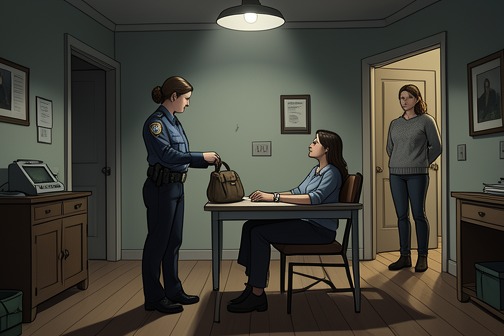
[Lisa Moore](entity:character-recall-character-lisa-moore-0dc27995c319)’s arrest for heroin possession and theft is the decisive legal aftermath of [Tabitha Moore](entity:character-recall-character-tabitha-moore-cc0b03363aff)’s attempt to protect herself and the [Moore cousins](entity:character-recall-character-moore-cousins-927342cadeb9) from [Lisa](entity:character-recall-character-lisa-f8f8fe21b70f)’s drug use. The event brings a dangerous household crisis into the reach of the police, but it does not make justice simple: the heroin is genuine, yet Tabitha removed it before Lisa was caught with it, leaving the prosecution vulnerable to disputes over possession and proof.
## Causes and Background
The arrest grows out of a crisis that has been accumulating across the story. At school, [Pamela Cribb](entity:character-recall-character-pamela-cribb-bf464f81adbc) recognizes that the harassment surrounding Tabitha is not resolved merely because Principal Edwards wants to declare it finished. [Clarissa Dole](entity:character-recall-character-clarissa-dole-e721834a6001) admits stealing Tabitha’s notebook and throwing it into a ladies’ room trash can, while Kaylee Mendolson is implicated in spreading a malicious rumor involving Tabitha and [Mr. Simmons](entity:character-recall-character-mr-simmons-c3e2ff172fab). Clarissa, [Chris Thompson](entity:character-recall-character-chris-thompson-54b7b165338e), Kaylee Mendolson, [Brittney Taylor](entity:character-recall-character-brittney-taylor-51f7909a3a72), and Erica Taylor face suspension and possible expulsion, showing that Tabitha’s danger has already crossed from private distress into institutional investigation.
At home, the immediate threat is Lisa Moore. After waiting until Lisa begins showering, Tabitha uses a flathead screwdriver from the kitchen junk drawer to open the bathroom door. She has only one good hand, but she proceeds because she is committed to taking action. The scene turns a household object into a practical instrument of escape and a private family emergency into a potential criminal case.
Tabitha carries the suspected drugs and related belongings to the Williams household, where [Officer Williams](entity:character-recall-character-officer-williams-6982ec288c12) examines the material spread across the dining-room table. The Batman thermos is especially important: he unscrews its lid, shifts the contents, and confirms that the substance inside is heroin. The discovery gives Tabitha’s accusation material support, but the way she obtained the evidence immediately complicates its legal value.
## The Evidence and Legal Risk
Officer Williams tells Tabitha that she is right about the substance, but he also explains the bad news. Because Lisa was not caught with the heroin, the case may become Lisa’s word against Tabitha’s. The evidence was not recovered directly by a police officer during an arrest; Tabitha took it from Lisa, creating a chain-of-custody and possession problem even though the material itself is genuine. The family’s connection to [Seelbaugh and Straub](entity:organization-recall-organization-seelbaugh-and-st-523f48f22bd3) offers some legal assistance, but it cannot erase the procedural weakness.
The timing of a drug test becomes another central issue. Officer Williams explains that opiates have a short half-life and that proof of recent use may be difficult after roughly three hours. Trace amounts could remain detectable for several days, but Lisa might later claim that they came from an ordinary prescription painkiller. Tabitha adds that the last two codeine tablets prescribed after her broken wrist have disappeared from the medicine cabinet, although the orange container is not in Lisa’s purse. That missing medication creates an additional uncertainty about what a future test might show.
Even with those complications, Officer Williams takes the collected material to the station and plans to have Lisa brought in for questioning and tested. He also considers testing Tabitha, so that the record can establish that she had not used the drugs herself. The procedure therefore protects Tabitha as a possible witness while reminding everyone that her rescue attempt has placed her inside the evidentiary machinery she was trying to invoke.
## The Arrest
Officer Stephens later finds Lisa Moore stranded on a smaller back road where [Springton](entity:location-recall-location-springton-c2a14fbdba24) begins to give way to [Fairfield](entity:location-recall-location-fairfield-16d12e6e6e31). Her [1988 Oldsmobile Cutlass Supreme Classic](entity:object-recall-object-1988-oldsmobile-cutlas-5f239cae6aac), with black paint and matching plates, will not start because its alternator is defective; Stephens also suspects failures in the idle air intake and electronic control module. Lisa asks him for a ride to a friend near Fairfield, and he agrees while planning a stop at the station.
The apparent roadside assistance is therefore an arrest disguised, at first, as transportation. Stephens privately realizes that apprehending Lisa may be easier than expected. He suspects that she has taken Tabitha’s car, which had been intended for repair before Lisa appropriated it, and considers whether grand theft auto can be added to the possession case. The disabled Oldsmobile becomes more than a broken vehicle: its mechanical failure prevents Lisa from leaving Springton and allows the investigation to catch up with her.
Lisa is taken to the station, where she wakes to Miranda rights and handcuffs. Her positive opiate test supplies the confirmation that the earlier evidence alone could not securely provide. Existing possession and misdemeanor theft matters from Shelbyville further narrow her room to evade consequences. The arrest thus combines the heroin evidence, the drug screening, Lisa’s prior legal troubles, and the disputed use of Tabitha’s car into a broader case against her.
## Consequences and Aftermath
[Sandra MacIntire](entity:character-recall-character-sandra-macintire-1c8d150ba37b) tells Tabitha that Lisa was arrested late the previous night. The Oldsmobile did not carry her out of Springton; it was taken to the impound lot, where the officers could inspect it. Sandra also reports that Lisa passed out in the cruiser and urinated on herself, an undignified collapse that contrasts sharply with the control Lisa had exercised over the household. The arrest is not presented as an abstract legal development but as the removal of an immediate physical and emotional threat.
Sandra further explains that Lisa tested positive for opiates and already faced possession and misdemeanor theft allegations in Shelbyville. The state trooper is expected to take custody of her, while child-protective authorities are to arrange custody of the Moore cousins by the following morning. Tabitha responds with relief that the crisis is over. Sandra embraces her and insists that the entire mess should never have been Tabitha’s responsibility, even though circumstances forced her to become the person who found the evidence and set the authorities in motion.
The arrest also exposes the Moore family’s unstable relationship to property and responsibility. When Sandra asks how much money [Alan Moore](entity:character-recall-character-alan-moore-ede3efaeff3e) and [Shannon Moore](entity:character-recall-character-shannon-moore-b58dcef4d0d7) paid Lisa for the Cutlass Supreme, they explain that no formal title transfer occurred. It was an informal exchange: Lisa needed money, and she left the car with them, only to take it back. The vehicle’s uncertain ownership helps explain why Lisa’s attempted escape can become part of the criminal consequences, while also revealing how poverty and improvised family arrangements blur the boundary between help, possession, and theft.
## Narrative Significance
The event produces a sharp value shift. Before the arrest, Tabitha’s safety and credibility are uncertain; after it, Lisa is physically removed, tested, handcuffed, and placed under state control. Yet the shift is deliberately qualified. Officer Williams’s warning that common sense and the letter of the law may diverge prevents the arrest from functioning as a simplistic moral victory. Tabitha does the right thing in an emergency, but the legality of her method remains contestable.
The sequence also repeats the book’s larger pattern of rescue through imperfect means. Tabitha cannot rely on her parents to solve the danger, so she uses the screwdriver, the Batman thermos, the testimony of the Williams family, and the cooperation of the police. Each object and intermediary carries risk. The screwdriver enables entry; the thermos preserves the suspected heroin; the broken Oldsmobile traps Lisa; the police procedure converts private evidence into public action. The outcome depends on an assemblage of vulnerable people, damaged property, medical facts, and imperfect legal timing rather than on one clean institutional solution.
Lisa Moore’s arrest therefore closes the immediate crisis without erasing its costs. It protects Tabitha and the children, confirms the reality of Lisa’s opiate use, and creates a path toward custody intervention, but it also leaves behind questions of evidentiary admissibility, informal ownership, and parental failure. The event matters because it is both a rescue and a legal compromise: freedom from Lisa is achieved, but only after Tabitha has been forced to carry responsibilities that should have belonged to the adults around her.
Event 18
Tabitha离家并暂住MacIntire家
[Tabitha Moore](entity:character-recall-character-tabitha-moore-cc0b03363aff)’s departure from her parents’ home and temporary move into the MacIntire household marks a decisive shift from endurance to self-protection. After the Moore family’s conflict exposes how little safety or understanding the home can provide, Tabitha chooses to leave, while [Sandra MacIntire](entity:character-recall-character-sandra-macintire-1c8d150ba37b) and [Karen Williams](entity:character-recall-character-karen-williams-01a291da2948) offer practical shelter, adult supervision, and a place where Tabitha’s welfare is treated as an urgent responsibility rather than a private family matter.
## The Crisis Behind the Departure
The decision follows a broader accumulation of danger and neglect. Tabitha has remembered that the Taylor sisters abused both her and Ashlee Taylor when they were children, and that one of those abusers has remained part of her high-school life. Her shock is intensified by the realization that she had forgotten Ashlee entirely, a memory failure that makes the earlier violence newly immediate. The household crisis therefore occurs against a background in which Tabitha is already confronting the buried consequences of childhood abuse and the failure of adults to protect her.
The Moore home also carries the pressure of recurring family disorder. At [Thanksgiving](entity:time-recall-time-thanksgiving-060be728c565), [Lisa Moore](entity:character-recall-character-lisa-moore-0dc27995c319) threatens [Aiden](entity:character-recall-character-aiden-b4bb3917d0f7) and the other boys over food, insisting that they eat what has been placed on their plates and using dessert as leverage. Tabitha experiences the scene not as ordinary discipline but as another expression of coercion and disregard: the boys had politely refused the ham, yet it was forced onto their plates by hand. Her anger reflects the widening gap between the family’s claims to authority and the care that authority actually provides.
## The Offer of Another Home
Sandra MacIntire presents leaving as a genuine choice rather than an order. She tells Tabitha that returning to her parents is possible, provided that the damaging episode never happens again, but also says that she and Karen will make other arrangements if Tabitha does not want to go back. The offer recognizes that Tabitha’s immediate need is not merely transportation or a temporary hiding place; it is the restoration of agency after adults have repeatedly spoken over her and defined her circumstances for her.
The MacIntire proposal is concrete. Sandra has a spare bedroom and explains that Tabitha has withdrawn from school for the immediate future. She would like Tabitha to live with the family as a live-in nanny for [Hannah MacIntire](entity:character-recall-character-hannah-macintire-f46c0e0ba09f), while also remaining present in case Darren MacIntire, still recovering from being shot during a routine traffic stop, suffers an emergency. Sandra explicitly distinguishes this support from medical or intimate caretaking: Tabitha would not be expected to bathe Darren, change his urine bottle, or wait on him. Her role would be to help with Hannah and to ensure that someone is present who can call for assistance.
The proposal is also shaped by affection and practical strain. Hannah adores Tabitha, Sandra says that she loves her, and Darren imagines repairing Tabitha’s car, possibly getting it running before arranging a trade-in for a vehicle Tabitha actually wants. Sandra has already taken substantial time off work in [Fairfield](entity:location-recall-location-fairfield-16d12e6e6e31), and worries about finances approaching [Christmas](entity:time-recall-time-christmas-a573265d0167). The arrangement thus joins emotional attachment to household necessity: Tabitha is wanted as a person, but her presence would also help a family coping with injury, childcare, and money.
## Leaving the Moore Home
When Tabitha returns with an overstuffed schoolbag, she tells her father that she is going to stay somewhere else for a while. [Alan Moore](entity:character-recall-character-alan-moore-ede3efaeff3e) immediately rejects the idea and orders her back to her room, insisting that she cannot run off again. His response preserves parental control at the very moment Tabitha is trying to establish a boundary. When he tells her that she will understand when she is grown up, the effect is devastating: the visible emotion drains from her face, and Sandra recognizes that the words have not reassured her but extinguished her remaining hope of being understood.
Tabitha then states that she is leaving and asks for permission to stay with the MacIntires for as long as necessary. Alan begins to object, but [Shannon Moore](entity:character-recall-character-shannon-moore-b58dcef4d0d7) interrupts him. In a breakdown of the household’s previous power arrangement, Shannon strikes her husband with both fists and gives Tabitha permission to go, crying that she is sorry. Her intervention does not resolve the family’s damage, but it changes the immediate outcome: Tabitha is no longer forced to remain in the home while the adults argue over whether she has the right to escape it.
Tabitha’s exit is controlled, almost numb. She apologizes, says that she loves her parents, and takes the remaining scalloped potatoes from the refrigerator. She tells her father that when he calls and apologizes, she will be where she needs to be and able to forgive him, then cautions him not to call too soon. The dish of potatoes becomes a small, concrete remnant of family life carried across the threshold, but the emotional movement is in the opposite direction: she is leaving the household while refusing to pretend that forgiveness can erase what happened.
## Immediate Aftermath and Significance
Sandra holds the door and leaves with Tabitha in silence, accepting the glass dish so that the girl does not have to struggle with her backpack and the food. Tabitha is not crying, shouting, or asking to be comforted; she appears psychologically far away. Sandra understands that the absence of visible distress does not mean that Tabitha is safe or recovered. Her decision to give Tabitha time and space establishes the MacIntire response as protective rather than intrusive.
The move also exposes the limits of the traditional family as the novel’s automatic refuge. Sandra and Karen do not claim legal or moral perfection, and Sandra says that criticizing Tabitha’s parents is not their place, yet she plainly concludes that the surrounding circumstances form an intolerable pattern. Their proposed household offers an alternative structure in which adults can acknowledge danger, negotiate care, and let a thirteen-year-old’s refusal carry weight.
As an event, the departure turns the value of home from positive to negative and then begins to rebuild it elsewhere. Tabitha leaves a place associated with coercion, humiliation, and emotional abandonment, carrying only a schoolbag and a dish of potatoes, while the MacIntire family opens a spare room and assumes responsibility for her immediate safety. The temporary nature of the arrangement preserves uncertainty, but the choice itself is permanent in significance: Tabitha has learned that protection may come not from unquestioned blood ties but from people willing to make room, listen, and act.